Sierra Club shines light on mountain lakes and the plan that threatens them
By John Osborn, M.D., Columbia River Future Project
John Muir created Sierra Club’s tradition of outings as a way to introduce people to places in trouble, with the idea that this would foster efforts to protect endangered wild places — explore, enjoy and protect. Walking in our founder’s footsteps in September and October 2015, we led outings to Kachess Lake and Bumping Lake. The controversial 2012 Yakima Plan would put both of these areas at risk. These Sierra Club outings enabled us to see firsthand what is at stake.
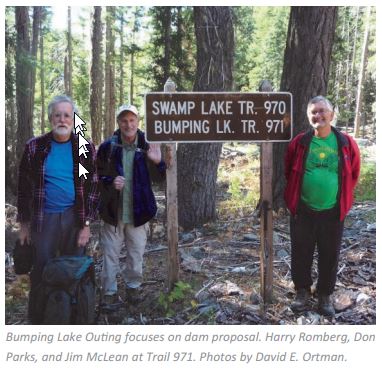
Bumping Lake campout
On Sept. 26 and 27, we held our fourth annual Sierra Club campout at Bumping Lake, co-hosted by Friends of Bumping Lake. After gathering at the Maykut family cabin, we walked the lakeside trail (a few participants canoed the lake against a stiff headwind) until reaching the groves of ancient forests at the southern end of the lake. This area was designated a critical habitat for the northern spotted owl by the U.S. Fish and Wildlife Service.
After our first day of hiking, Naydene Maykut prepared the spaghetti feed for the group. In the 1970s, Maykut worked with other environmental activists, to defeat a previous proposal to build a Bumping Lake dam.
On our second day, as fog lifted, we hiked to groves of massive trees at the lake’s northern end. Touching the bark on these massive trees and gazing up to the treetops from the quiet forest floor, we felt connected to this sanctuary of ancient life. We were inspired to take a stand and protect the many life forms that would be drowned and destroyed by a new irrigation dam.
Kachess Lake
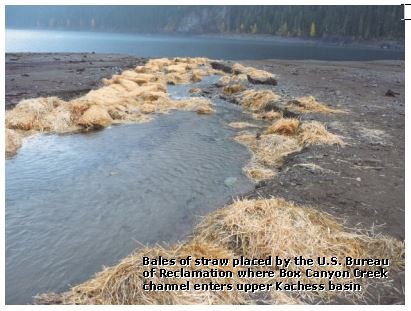 Three weeks later, on Oct.18, we held our outing at Kachess Lake, hosted by the Friends of Kachess Lake. Many Seattleites know of this lovely mountain lake near Snoqualmie Pass, just an hour’s drive from Interstate 5 traffic jams. A popular national forest campground is located on the lake.
Kachess Lake is perhaps Washington state’s most threatened lake. Grant Learned Jr., from Friends of Kachess Lake, led the group to Box Canyon Creek, which supports bull trout. Plastic and bales of straw lined the entrance to Box Canyon Creek in an attempt to protect the fish from decreasing water levels. Thousands of freshwater mussels lay dead in the exposed mudflats. The 2012 Yakima Plan would lower the level of Kachess Lake by 81 vertical feet, turning the lake into a mud pit.
Yakima irrigators who benefit from publicly subsidized water have had ample opportunities to improve water efficiencies and reassess appropriate crops. Yet an article published recently in The Seattle Times (Bernton, July 12, 2015) reported on the incredible water waste of the Wapato Irrigation District. It is this kind of water waste, corruption, and public subsidies that now puts Kachess Lake in the crosshairs.
The months ahead
David Brower, who battled to save Glen Canyon from being dammed, reminds us in his book “The Place No One Knew” of the importance of visiting and documenting these natural places threatened by government water projects. We look forward to you joining us next year for Sierra Club outings to Kachess Lake, Bumping Lake, and other places threatened by the Yakima Plan. With legislation moving in Washington, D.C., that threatens these mountain lakes, we will also need your help in the weeks and months ahead.
For more information or to get involved, contact Elaine Packard (chair, Water and Salmon Committee) or John Osborn (Columbia River Future Project).