When More Than Just a River Runs Through It
A massive sewage spill in the Potomac points to the need for improved infrastructure
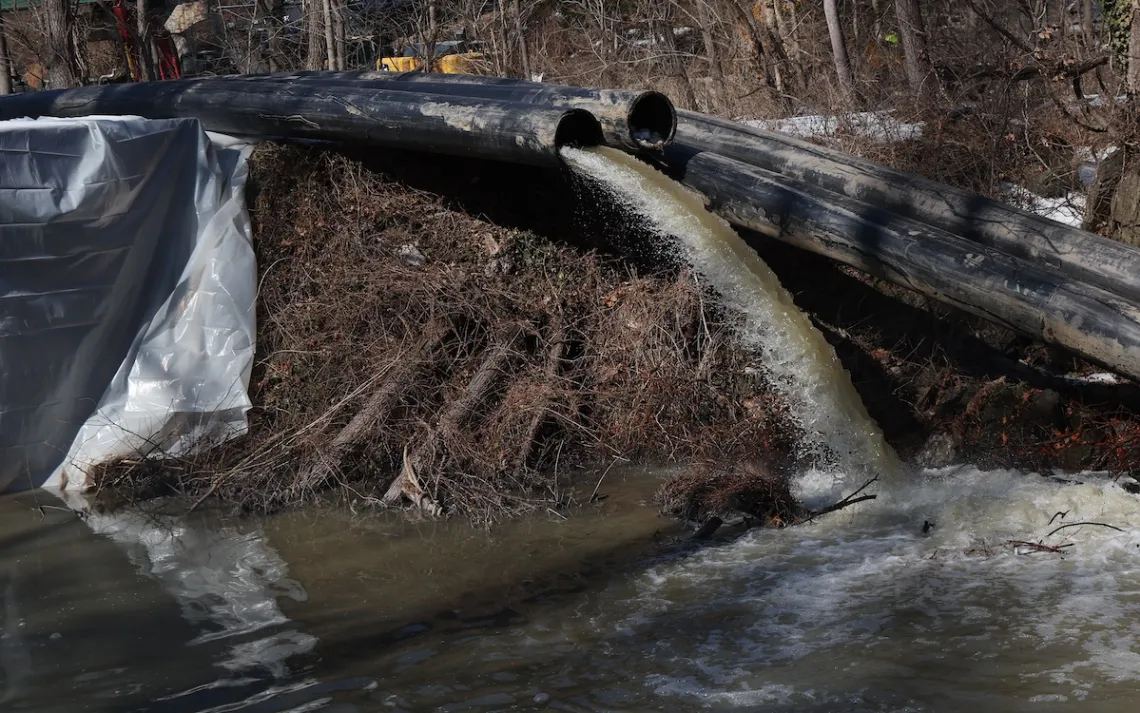
As much as 300 million gallons of sewage flowed into the Potomac River after a pipe ruptured on January 19. | Photo by mpi34/MediaPunch /IPX via AP
In August 2022, the singer Lorde performed in Washington, DC. In between songs, she revealed that before the show, she had taken a swim in the Potomac River. The waterway, like many American rivers, was victim to heavy pollution for generations, and Congress banned swimming in the Potomac in 1971.
Some were appalled, but others defended the free-spirited New Zealander. They argued that because so much had been done to clean up the Potomac in recent decades, spending a lazy afternoon on the water, as Lorde had, was not as dangerous or reckless as it sounded. “Lorde isn’t gross. We should all be allowed to swim in the Potomac River,” went the headline of an op-ed in The Diamondback, the student newspaper of the University of Maryland, which is in the Washington suburbs.
It is highly doubtful that, should Lorde perform in the DC area anytime soon, she will be taking any dips in the Potomac, as she did about four years ago.
On January 19, a six-foot stretch of a sewer pipe known as the Potomac Interceptor collapsed. As a result, some 300,000 gallons of raw sewage spilled into the Potomac. More than a month later, the pipe is still broken, though waste is being routed into the long-defunct Chesapeake & Ohio Canal, now part of a 185-mile public park that includes wetlands, forest, and a very popular multipurpose path.
The solution is imperfect to say the least. On Super Bowl Sunday, "flushable wipes" clogged the pumps shuttling water from the broken pipe into the canal, and another 600,000 gallons of wastewater ended up in the Potomac. (DC Water shared an image of the offending clog.)
It could take many months to fix what is already being called the worst sewage spill in American history.
“A lot of people still don’t understand the implications,” said Betsy Nicholas of the Potomac Riverkeeper Network. Those implications will become clear as the weather gets warmer and people return to the riverfront, which is popular with kayakers, fishers, and hikers.
Many of those implications are also invisible, though dangerous. Two days after the spill, researchers from the University of Maryland School of Public Health recorded levels of E. coli bacteria 10,000 times above the federal limit. The water was also rife with Staphylococcus aureus, the bacterium that causes staph infections.
“The quality of water that we're seeing is similar to raw sewage that we see coming into waste treatment plants,” said Rachel Rosenberg Goldstein, a UMD microbiologist who is heading the team conducting investigations of the spill. “Bacteria remain live in the ice and snow,” Nicholas explained. Eventually, the bacteria will make its way into the water. So will nutrients like nitrogen, which will likely lead to the proliferation of harmful algal blooms.
As Gary Belan of advocacy group American Rivers explained to NPR, “It’s not just waste and bacteria, but you have all sorts of pharmaceuticals that end up in the pipe system. You have different chemicals that people pour down the sink or into drains. So a lot of that stuff can sink to the bottom of the river, have impacts on fish reproduction, bird reproduction, killing a lot of the insects, contaminating the soil.”
Then there’s our aging sewer infrastructure, which the Center for American Progress flagged as badly in need of repair—more than a decade ago. Other assessments have sounded similar alarms. Combined sewage overflows, which usually occur when stormwater overwhelms municipal pipelines, deposit 850 billion gallons of sewage into US waters, according to the Environmental Protection Agency. And unlike in the Potomac disaster, they is usually no notice.
The sewage that escaped from Potomac Interceptor was headed to the Blue Plains Advanced Wastewater Treatment Plant, a massive facility on the southern edge of the District of Columbia. The Interceptor ruptured near Cabin John, a Maryland suburb to the north and west of Washington. That has also made the mess in the water a jurisdictional mess. To make matters even more complex, there’s the C&O Canal, which runs along the river and is managed by the National Park Service.
President Donald Trump, instead of focusing on these complex nuances, has instead used the disaster as just the latest opportunity to clobber the solidly Democratic leadership of DC and most of the surrounding region. “Maryland, Virginia, and Washington, DC, who are responsible for the massive sewage spill in the Potomac River, must get to work, IMMEDIATELY,” he wrote in a mid-February social media post.
DC Mayor Muriel Bowser, new Virginia Governor Abigail Spanberger, and Maryland Governor Wes Moore did not exactly rush to the (stinky) scene of the crime. That most likely had to do with jurisdictional issues, and in particular, DC Water is overseen by the federal EPA. The unresolved situation created a space for outrage from right-wing influencers who eagerly painted the disaster as a referendum on Democratic governance.
The attention from conservative figures caught Trump’s attention, which turned out, somewhat surprisingly, to redound to the river’s benefit. In late February, after blaming Democratic leaders for the spill and subsequent to Mayor Bowser’s request for federal disaster support, Trump approved DC’s emergency declaration and dispatched the Army Corps of Engineers to help in the response.
As March began, there was finally some good news. Though a full repair of the Potomac Interceptor is still on the distant horizon (workers still need to remove rocks that have created a blockage in the collapsed section), the river has managed to stage a remarkable comeback since a more earnest response began in mid-February. And DC Water says it "has begun the rehabilitation and environmental restoration" of areas along the Potomac contaminated with waste from the Potomac Interceptor.
On March 2, Bower wrote in a social media post that DC’s health department “has lifted the recreational advisory for the Potomac River. Consistent water quality testing shows bacterial levels are now within safe ranges for recreation.”
But, she added, swimming in the Potomac is still prohibited.