 The Magazine of The Sierra Club
The Tijuana River Sewage Crisis is One of America’s Longest-Lasting Public Health Calamities
Political gridlock has allowed the situation to worsen for decades
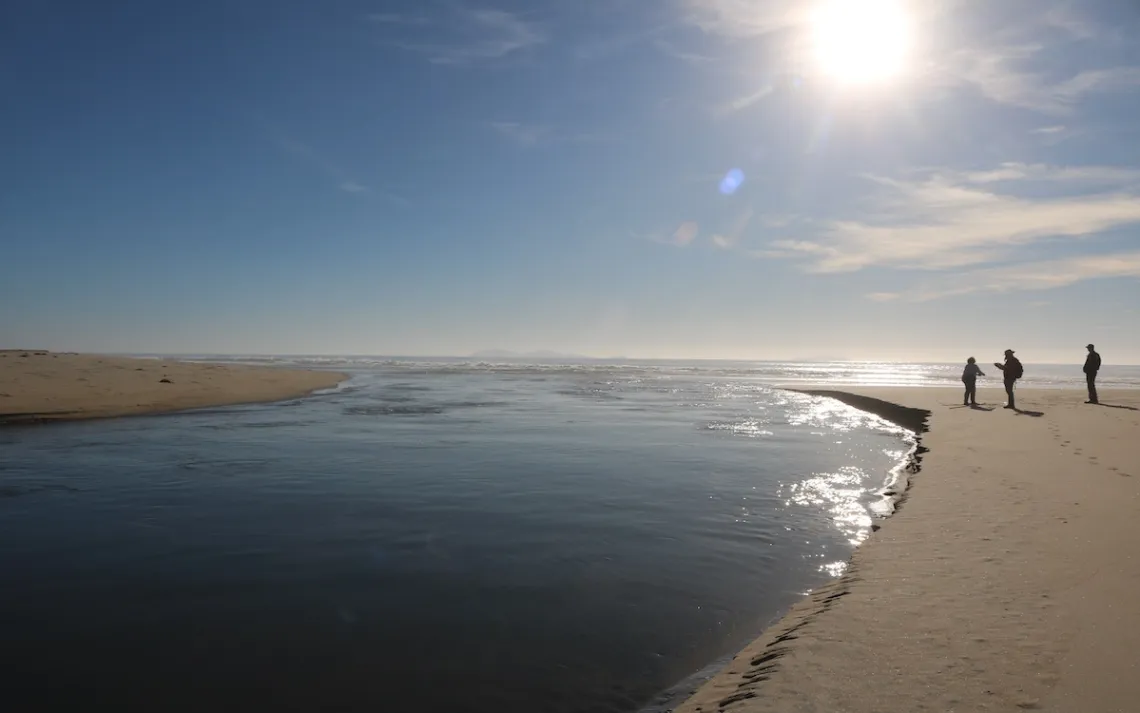
Billions of gallons of sewage-filled water flows into the Pacific Ocean at the mouth of the Tijuana River.
I stand at the mouth of the Tijuana River—a Stygian cesspool that flows 120 miles north from Baja California, through the working-class city of Tijuana with its hundreds of factories manufacturing gadgets for American consumers—before crossing the US-Mexico border. The river meanders through south San Diego’s frontline communities and Southern California’s largest estuary before emptying into the Pacific Ocean on what would otherwise be one of San Diego’s iconic beaches, famous for surfers and sunsets. A yellow warning sign reads “Keep Out.”
“This is one of the most beautiful beaches in all of California,” says Ángel Granados, a filmmaker and lecturer in TV, film, and new media studies at San Diego State University. He is married to SDSU associate professor Paula Stigler Granados, an environmental health scientist making waves for her research and advocacy over the befouled river. “There's a stark difference in the feeling of being here—seeing the waves and the salt spray in the air—and knowing how polluted that water is with sewage, toxic chemicals from industrial runoff or dumping, and pathogens that are being aerosolized.”
He hands me a gas mask.
This beach has been closed for more than 1,500 days due to fecal bacteria creating unsafe conditions for surfers, beachcombers, and casual visitors alike. The earliest complaints about sewage reaching Imperial Beach occurred in 1933 when Tijuana’s population was 14,000 (today it is 2.3 million), making this the United States’ longest-lasting ongoing public health crisis. And that is only north of the border.
In addition to bacterial contamination of beach, ocean, river, and estuary, studies have detected more than 170 chemicals including phthalates, polycyclic aromatic hydrocarbons, polychlorinated biphenyls, heavy metals including arsenic and cadmium, chlordane and DDT—pesticides banned in the US—as well as Salmonella, Trichomonas, and antibiotic-resistant genes. The nonprofit Wildcoast installed two “trash booms” along the river that have, since 2021, captured 326,000 pounds of garbage that would otherwise wash to sea.
But it was atmospheric scientist Kim Prather’s discovery of alarming levels of hydrogen sulfide (H2S)—a flammable, poisonous gas also known as hydrosulfuric acid, sewer gas, or stink damp—emanating from the river that is fueling a new groundswell of community anger over the political constipation that has allowed the situation to worsen decade after decade. A distinguished professor of atmospheric chemistry at the Scripps Institution of Oceanography at the University of California, San Diego, Prather and her team produced a 2025 Science paper showing that the river’s pollutants become airborne, contributing to declining regional air quality—with nighttime hydrogen sulfide measuring thousands of times higher than typical urban air.
“There's nowhere else in the United States of America that you would allow millions of gallons of sewage to flow through,” says Prather. “You cannot say—and this is what they do say—we have to wait for five more years. It'll be fixed. No, these people should not be breathing this.… I don't know how else to say it; it is inhumane to treat people that way.”
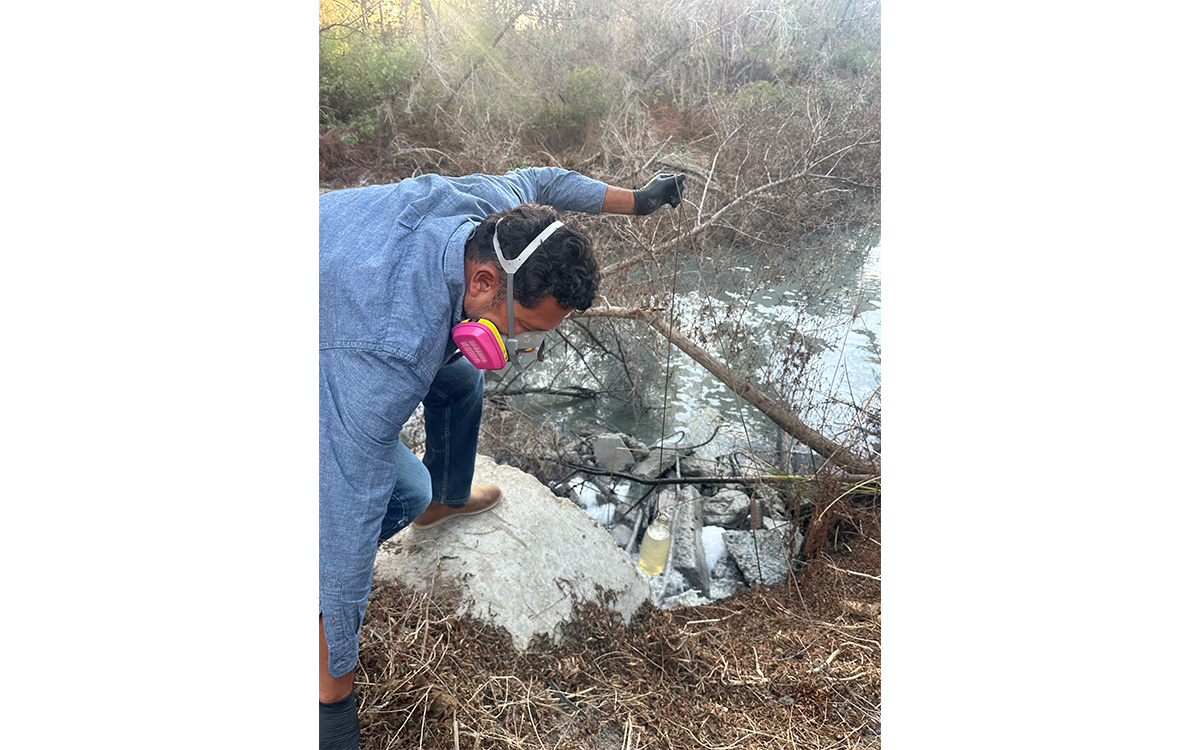
At the edge of San Diego, Ramon Chairez collects a water sample from the Tijuana River’s Saturn Avenue “hot spot.” Fecal bacteria levels (Enterococcus) measured this day by Paula Stigler Granados were exceedingly high.
“There’s nowhere else in the United States of America that you would allow millions of gallons of sewage to flow through.”
A modern Prometheus
In 93 years of political wrangling, community outrage, lawsuits, government reports, infrastructure failures, legal settlements—during which time people invented the computer, the internet, antibiotics, vaccines, organ transplants, and nuclear power, and landed on the moon—the sewage problem only worsened. Not since London’s River Thames exuded the “hideous stench of human excrement” culminating in the infamous Great Stink of 1858, has a modern metropolis faced such a solvable calamity.
“In 2019, it kind of started going to hell,” says Falk Feddersen, a professor at the Scripps Institution of Oceanography. “There were a number of pretty bad infrastructure failures, and that has continued.” Despite numerous requests, neither California’s Governor Gavin Newsom nor any US president has declared a state of emergency, which could bring funds and focus to solve the problem, as the British Parliament did for Father Thames.

Not since London’s River Thames exuded the “hideous stench of human excrement," culminating in the infamous Great Stink of 1858, has a modern metropolis faced such a solvable calamity. The British Parliament hired an engineer to create a system of massive underground sewage pipes. The solution still serves as London’s main sewer system. Today, the Thames is one of the world’s cleanest rivers, with "rewilded" wetlands and reed beds that filter runoff that enters the river.
While some find it convenient to blame Mexico for not maintaining its system of pipes, pumps, and wastewater treatment facilities, the reality is more nuanced. Tijuana’s exponential growth resulted directly from US economic and immigration policies, and its waste management falls under the binational International Boundary and Water Commission (IBWC), established by an 1889 US-Mexico treaty.
In 2020, US Mexico-Canada Act (USMCA) included $300 million to upgrade border sewage treatment—partly from IBWC’s settlement over Clean Water Act violations in the river. Doug Liden, head of the EPA’s Border Water Infrastructure Program who has overseen the Tijuana River crisis for decades, led a working group on best use of limited funding.
The EPA reached out to Feddersen, whose previous experiment releasing a nontoxic pink dye at the river mouth as a proxy for pollution noted how it moved and mixed. They wanted to know, “Which project gives the most benefit?” with limited funds, Feddersen says.
“The clear winner was to do some moderate fixing of the Tijuana River estuary and to fix Punta Bandera,” he explains, referring to Tijuana’s San Antonio de los Buenos plant at Punta Bandera. It had massive sewage lagoons baking in the sun, overflowing during rains. Mechanical issues, “urban drool,” and failing infrastructure are also blamed for the increasing flow of sewage from Tijuana, where wastewater treatment has not kept up with the city’s rapid growth.
Using Feddersen’s optimal alternative, the EPA’s 2021 “Comprehensive Infrastructure Solution” includes 10 projects to improve collection systems, divert water, expand water treatment, and better control pollution at the source. If the model’s predictions hold, the "solution" will reduce the frequency sewage crosses the border by 76 percent and the frequency of impaired water during tourist season by 95 percent.
“We live in a desert, but these episodic, huge rain events are coming faster and more seriously,” Stigler Granados tells me as she collects ocean water with a telescoping pole by the Imperial Beach Pier, five miles from the river mouth. Tropical Storm Hilary sent 2.3 billion gallons of water, trash, chemicals, and sewage coursing through the riverway, flooding nearby communities over several days in 2023. Two January 2024 deluges each sent 3 billion gallons downriver. “[We’re] ill-prepared for it, especially low-lying, low-income areas.”
But it’s the dry seasons that have seen the most dramatic rise in what, historically, was a dried-up riverbed much of the year. Climate change has increased atmospheric rivers—long, narrow regions carrying large amounts of rainfall—in the West. One study linked more than two-thirds of the spikes in California coastal water pollution to atmospheric rivers. Unfortunately, per the environmental impact statement, the “solution” does not fully address extreme rain events.
“The Solution is consistent with the nearly century-old approach at the border—a cycle of building upgraded wastewater treatment plants when the problem reemerges and worsens every few decades,” Keari Platt wrote in a 2023 Hastings Environmental Law Journal paper. To solve the crisis, she adds, politicians must recognize that the issue is “rooted in a longer history of US imperialism and private enterprise,” citing a Washington Post commentary written by then-UCSD Center for US-Mexican Studies scholar Kevan Malone.
Tijuana’s rapid growth started during Prohibition, when Americans crossed the border for alcohol and gambling. The town grew. In 1942, facing labor shortages from World War II, the US established the Bracero or Farm Labor Program, allowing Mexicans to legally work as railway and farm workers. People migrated to border towns seeking opportunity. When the program ended in 1964—after decades of farm labor activism against unfair working conditions—Mexico established their Border Industrialization Program, and US companies set up maquiladoras in Tijuana due to easy water access, cheaper labor, and fewer regulations. The city grew—along with its sewage.
With the 1994 North American Free Trade Agreement (NAFTA), maquiladoras proliferated, manufacturing everything from metal and machinery to textiles and furniture. These factories expose people, mostly low-income women, to poor working conditions and numerous chemicals, with the majority of goods manufactured there imported to the US to satisfy our ever-growing need to consume.
“It’s a slap in the face to the community that has to live with this.”
Discovering the stink damp
Following Stigler Granados, I drive away from Imperial Beach—a working-class town of 25,000 residents, about half Hispanic—toward the Saturn Boulevard “hot spot” on the edge of San Diego. Around 2024, she and Prather started coordinating research and joined Imperial Beach Mayor Paloma Aguirre—since elected to the San Diego County Board of Supervisors—to strategize solutions. Looking at satellite images, the team noticed an unusually bright white spot.
The shocking discovery of toxic sewer gas at this spot brought renewed attention to the nonagenarian crisis.
A narrow, two-lane road runs through lower-income residential neighborhoods, schools, and farmland, including a horse ranch that hosts outdoor events such as quinceñeras. The odor of sulfur and rotten eggs hangs thick in the air, a quarter mile from the river, where the team hangs silicone wristbands, passive sampling devices to detect air pollutants.
We reconvene at the hot spot, where the team dons head-to-toe hazmat suits. Waning afternoon sun reflects golden light through a tangle of ghostly branches. Like the frothing mouth of a rabid dog, white foam collects atop the water as it rushes from the culvert. Some days, the foam measures five feet deep.
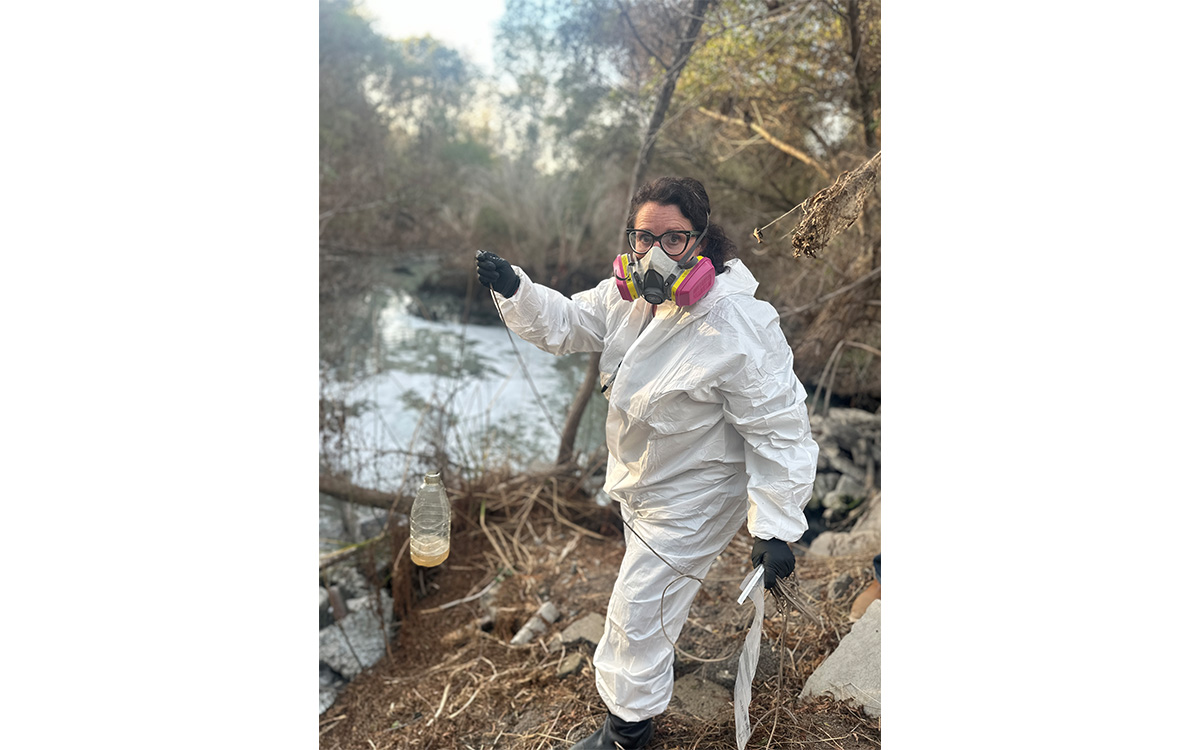
Paula Stigler Granados holds up a sample of river water at the Saturn Avenue “hot spot" in San Diego, located in a lower-income residential neighborhood near schools and farmland.
Community partner Ramon Chairez climbs atop a concrete culvert to collect urine-colored water using a plastic bottle on a string. Until recently director of education and environmental advocacy for the San Diego-based nonprofit Un Mar de Colores, he occasionally joins the researchers in the field.
Fecal indicator bacteria (Enterococcus specifically) measured by Stigler Granados this day were exceedingly high: 101,000/100ml at Saturn Boulevard, 1,715/100ml at the river mouth, and 524/100ml at the pier. Before they switched to the PCR technique, the county shut down any beach that tested above 104/100ml.
“There's something infuriating and almost backwards about what's happening,” says Chairez, who cut his teeth surfing at Imperial Beach before the beaches closed. “It's a slap in the face to the community that has to live with this.”
At the river’s edge, odor overwhelms the senses, pungent, like a hearty whiff of a full cat litterbox or a porta-potty. “What we've learned … is that the river itself is a source of gases and aerosols,” particularly at the hot spot, says Greg Sandstrom, a research engineer in Prather’s lab. Prather’s team has detected methyl mercaptan, dimethyl sulfide, benzene, and hundreds of other hazardous air pollutants. These mixes create complex chemical exposure profiles for nearby residents. The most concerning, however, is the stink damp.
The highest hydrogen sulfide level, 16ppm, in September 2024, also corresponded to the highest river flow volume. That’s 150 to 500 times higher than California’s air quality standard for acute hydrogen sulfide exposure, 0.03ppm—the level at which the county started alerting residents in November 2024. And a thousand-fold greater than your average air.
Exposure to hydrogen sulfide, a mucous membrane and respiratory tract irritant, can cause shortness of breath, coughing, nausea, and irritation of skin and eyes. Its neurological effects include dizziness, headache, tremors or convulsions, problems concentrating, and impaired memory and motor function; many symptoms may persist long after exposure, even permanently.
Sulfurous at first, the gas becomes odorless above 100ppm, causing “olfactory paralysis,” and can cause unconsciousness, reducing the chance that a person can flee. More deadly than carbon monoxide, hydrogen sulfide leaves a small margin of safety—especially in enclosed spaces. It is also flammable and explosive.
People living near the river experience its toxic smells daily, most without hazmat suits or gas masks. For long-term exposure to hydrogen sulfide, the EPA established a reference concentration—“a continuous inhalation exposure … without an appreciable risk of deleterious effects”—of 0.0015 ppm. Anything higher on a regular basis could cause health concerns, with children and people with underlying health conditions more vulnerable.
Experts know less about how chronic exposure affects people, but research near municipal landfills and concentrated animal feeding operations—mostly pig farms—found it increased blood pressure, upper respiratory symptoms, stress, and negative mood. Like communities nearest to the Tijuana River, these are lower-income communities of color, which already face greater health risks and poorer health outcomes.
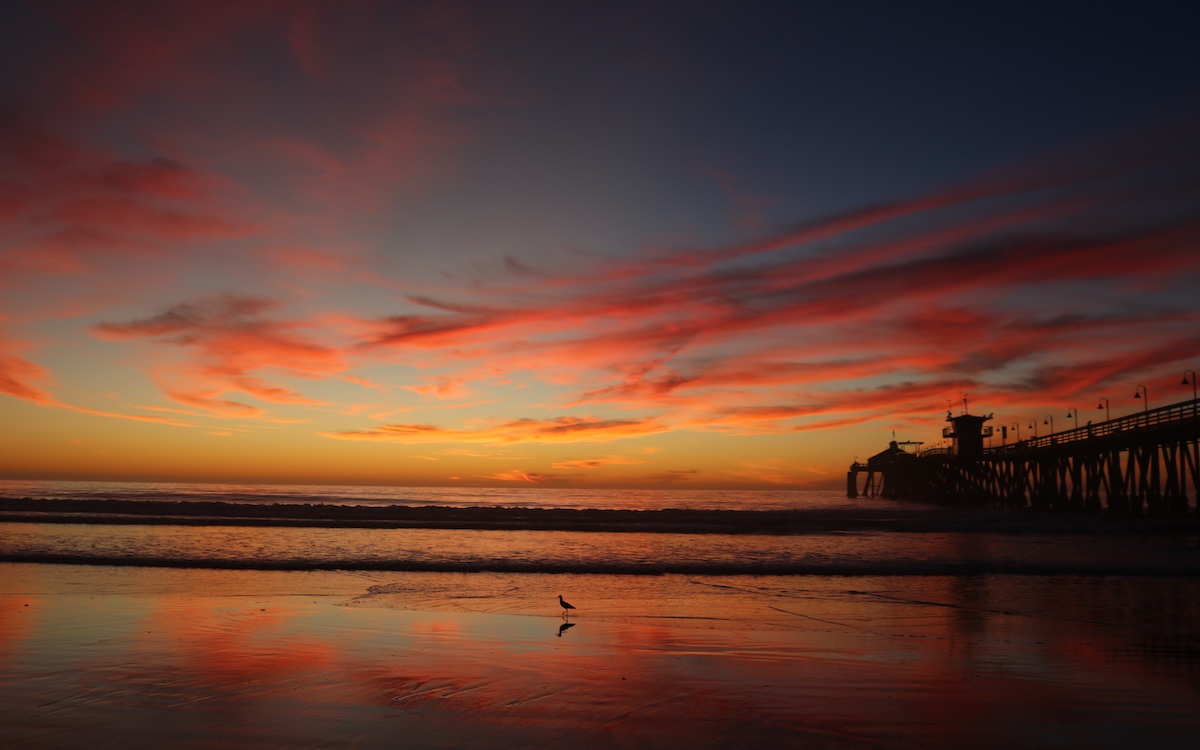
“This is one of the most beautiful beaches in all of California,” says Ángel Granados. “There's a stark difference in the feeling of being here—seeing the waves and the salt spray in the air—and knowing how polluted that water is.”
“There’s sewage that’s been pouring through our river valley for years now … and they’re asking us whether or not we’re getting sick. It’s like putting the pressure on us to provide them the answers so they can decide whether or not we merit funding.”
Community illness and discontent
The Tijuana crisis shares similarities to the water contamination crisis that hit the city of Flint, Michigan, from 2014 to 2019. Veolia—a French company that manages waste, water, and energy—was involved. Veolia provided technical advice to Flint, and though it denies guilt, settled a $25 million lawsuit over it. Despite four active lawsuits against IBWC over Clean Water Act violations from Tjiuana River sewage, including two “mass tort” cases, the commission still contracts Veolia to run the South Bay plant. And in both cases, the local county initially dismissed the concerns of scientists and residents.
With pressure mounting, the county joined the US Centers for Disease Control and Prevention in conducting a community assessment for public health emergency response (CASPER) survey in 2024, drawing questions from Stigler Granados’s and Prather’s own.
CASPER asks “questions around health concerns, air pollution, water, including drinking water, [and] the impact on mental health as well as physical health, on school and education, and some of those concerns we're hearing from parents with children,” says Ankita Kadakia, San Diego County deputy public health officer. It was also used in Flint. “Knowing that we were hearing similar concerns, we wanted to use a validated scientific method.”
The survey found 83 percent of households reported that the sewage crisis negatively affected their health, peace of mind, property, or finances. Of the 69 percent of households reporting at least one individual experiencing a sewage-related health issue, 70 percent improved when they left the area. “These data are … comparable to household experiences during the Flint Water Crisis,” says the report, adding, “the crisis has created a pervasive sense of distress among the community that extends beyond potential physical health concerns.”
Many in the community have righteous anger. “There's sewage that's been pouring through our river valley for years now … and they're asking us whether or not we're getting sick,” says Chairez, a longtime resident in the region. “It's like putting the pressure on us to provide them the answers so they can decide whether or not we merit funding.”
Links between health and pollution are still being studied, but unusual health complaints have surfaced, from surfers hospitalized with methicillin-resistant Staphylococcus aureus (MRSA) to US Customs and Border Patrol agents—who slog through the river and estuary—diagnosed with rashes, infections, and necrotizing fasciitis, a.k.a. flesh-eating bacteria. Navy Seals have been getting gastrointestinal illness after conducting exercises in the ocean waters off their Coronado Island base.
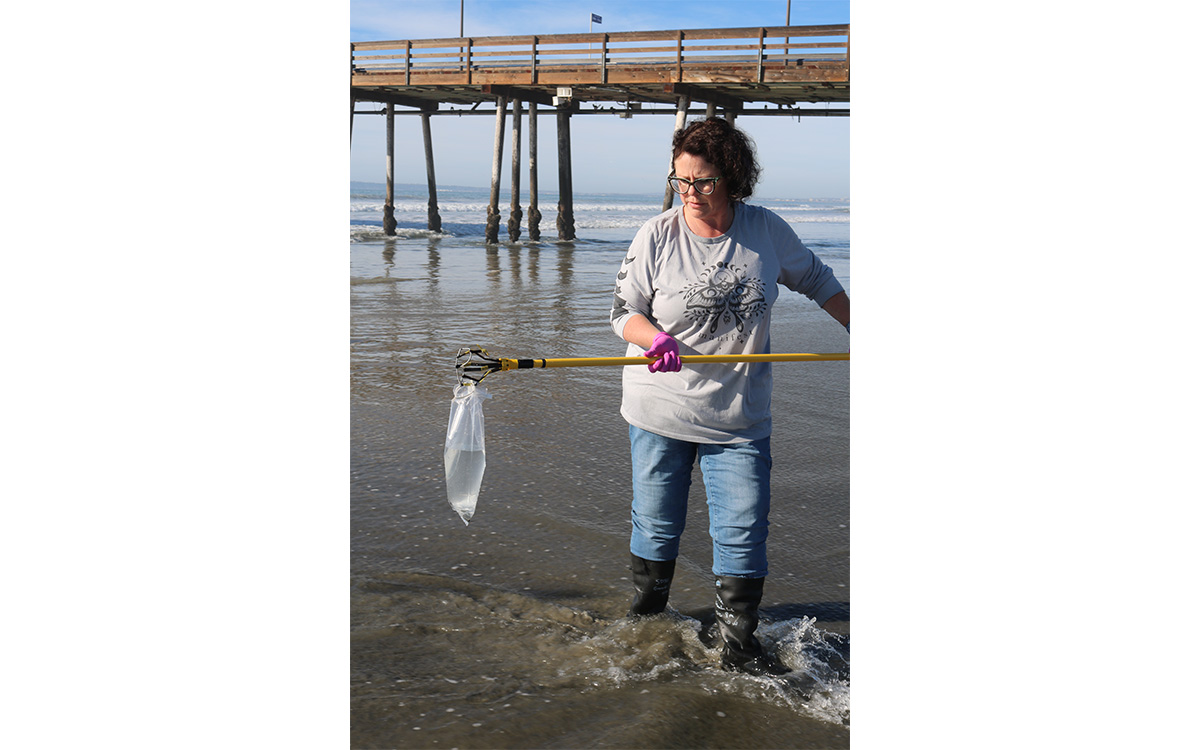
Paula Stigler Granados collects water at the Imperial Beach pier, some five miles from the mouth of the Tijuana River. Swimming and surfing in the ocean remain off-limits from the mouth to the pier due to high bacteria levels.
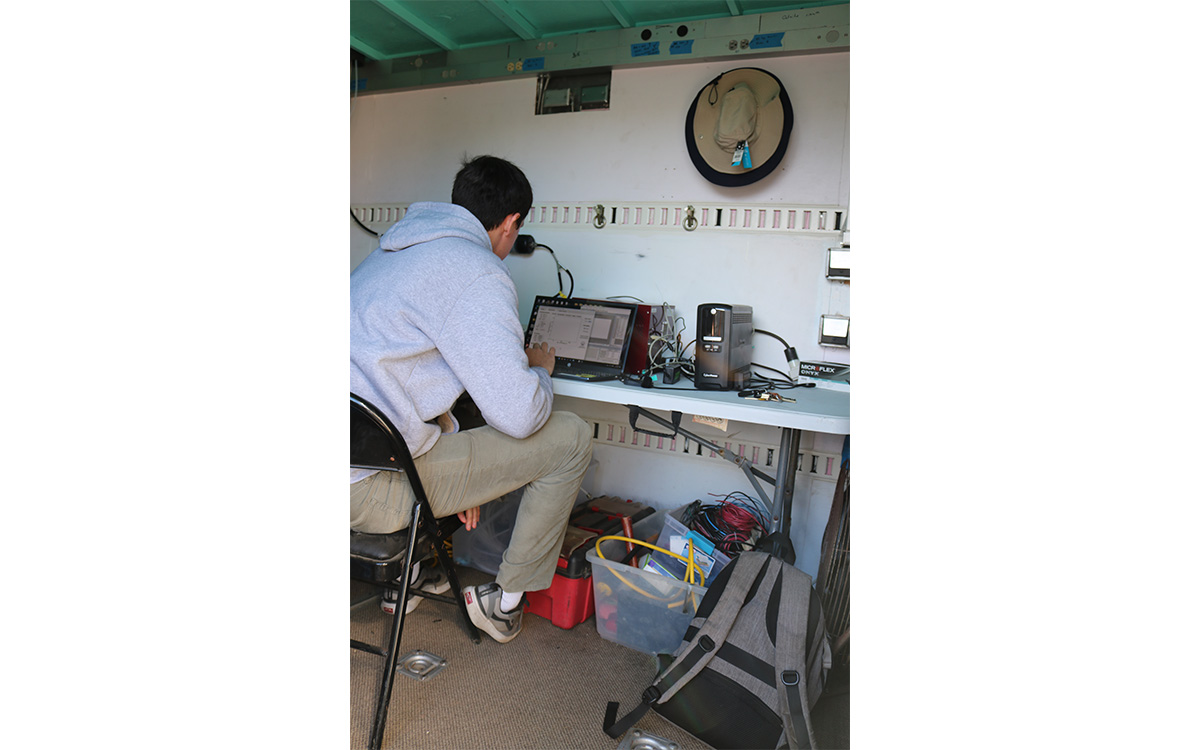
Ben Rico checks air pollutant measurements in the mobile lab, which tests for ammonia, NOx, hydrogen sulfide, and sulfur dioxide at spots near the Tijuana River. A recent PhD graduate from Kim Prather’s lab at UCSD, Rico was lead author on the 2025 paper revealing how Tijuana River pollutants become airborne, affecting regional air quality.
“What really frustrates me is we have the technology available not just to treat the water but to turn it into a resource.”
A 100 percent fix, or a Sisyphean struggle?
Some tout infrastructure construction on both sides of the border in the last year as progress. Tijuana’s Punta Bandera plant started treating wastewater again last April. Repairs to San Diego’s South Bay International Wastewater Treatment Plant increased its capacity from 25 to 35mgd last year, with a goal of 50mgd by 2027.
The US and Mexico sections of IBWC signed “Minute 333” last December, committing to infrastructure improvements above and beyond the previously agreed upon “solution” plus enhanced research to plan for the future growth of Tijuana. This followed a binational commitment signed by the EPA and its Mexican counterpart, SEMARNAT (Secretary of the Environment and National Resources of Mexico) in July touted by President Donald Trump.
Most additional changes, however, shunt sewage to the Tijuana side of the border and require Mexico to foot the bill.
Is it just more of the same build-grow-repeat cycle? While acknowledging progress, Aguirre insists these efforts fall short. In a December 2025 video, Aguirre said, “Our community is still constantly exposed to these pollutants through our air, through our water.”
“A lot of people are saying, ‘It's just sewage,’ or ‘It's been happening for a long time.’ And I think that the longevity and the quantity of pollution is an incredible environmental justice concern,” says Stigler Granados. “This amount of sewage for this long, with this much toxic stuff in it would not be allowed anywhere else.”
Asked about the most frustrating part of the crisis at the Voice of San Diego Politifest in 2024, Liden replied, “As an engineer, what really frustrates me is we have the technology available not just to treat the water but to turn it into a resource.” It's said that tomorrow’s wars will be fought over water. Yet “in an area that’s so dry, we are fighting over having too much water in the Tijuana River.”
Tijuana gets water from the Colorado River via treaty agreement with the US, all the while millions and billions of gallons of wastewater flow, unused, to the sea. “We need to create a financial incentive for Mexico to turn the water back into a drinking water supply,” added Liden, and “treat this wastewater less like waste and more like water.” Water reuse is being considered, but it is not a top priority, nor would it solve the problem of how the sewage, trash, and toxic chemicals get there in the first place, or how it affects the health of people north or south of the border.
Not far from the river mouth lies the border wall, steel bollards 18 feet high stretching into the sea. Once the location of a popular International Friendship Park, where families separated by the border could touch and see each other, in 2009, the Department of Homeland Security reinforced the wall, preventing people from touching. In 2020, the government closed the park due to the pandemic. It has not reopened.
While walls may keep people in or out, “the river pollution affects everybody,” says Ángel Granados as the team packs up to head home. “It doesn't stay on the Mexican side or the US side.”
The Coalition Advocating for a Tijuana River Solution
A local coalition of environmental and community advocacy groups, including the Sierra Club’s San Diego chapter, is working to support communities impacted by the Tijuana River crisis and champion solutions. “When I moved to San Diego and took on the job, I was astonished that there wasn't as much knowledge about what I believe is the biggest environmental crisis in our country,” says Charles Rilli, now deputy director of the Sierra Club San Diego chapter. “There's a huge public health crisis going on, and it was terrifying that there was not as much on-the-ground activism.”
Sierra Club San Diego joined forces with the Tijuana River Coalition, an umbrella group that now includes more than 50 nonprofit organizations, elected officials, and scientists, including Kim Prather at University of California, San Diego and Paula Stigler Granados at San Diego State University, to “align our collective activism to have concrete asks of our local, state, federal, and binational officials,” says Rilli. The coalition advocated for government funds which have now been allocated to wastewater treatment upgrades, helped get Paloma Aguirre elected to the County Board of Supervisors, and organized the “Unite to Heal our Coast” rally. There, they handed out masks bearing names of pollutants found in the Tijuana River valley. Adds Rilli, “People have been begging for help.”
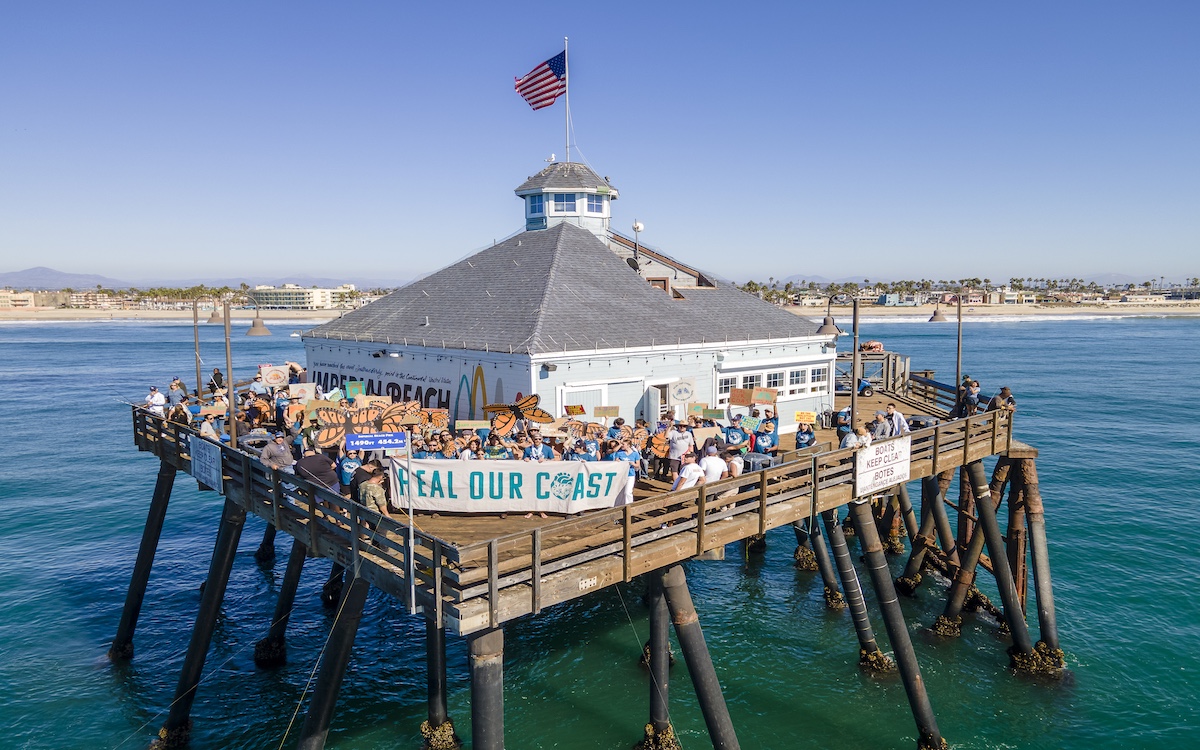
Photo by Kevin Jeffery
Along with Chapter Director Mark West, a former Imperial Beach council member, they also formed the South County Sierra Club San Diego Task Force and will soon launch “From Pollution to Protection,” a campaign to transform the narrative to what the watershed could become: a beautiful, life-giving ecosystem.
“The scale of the crisis really outpaced the scale of political engagement,” says Lisa Ross, the chapter’s board chair, who advocated for the funds to hire Rilli. “We're a powerhouse on that front, working with legislators. Sacramento is paying attention. Our local state legislators are paying attention. So, things are moving, but public awareness is extremely important.”