A Winter With Less Snow Could Create Huge Problems for the West
State leaders fret about the threats that could extend well into summer and beyond
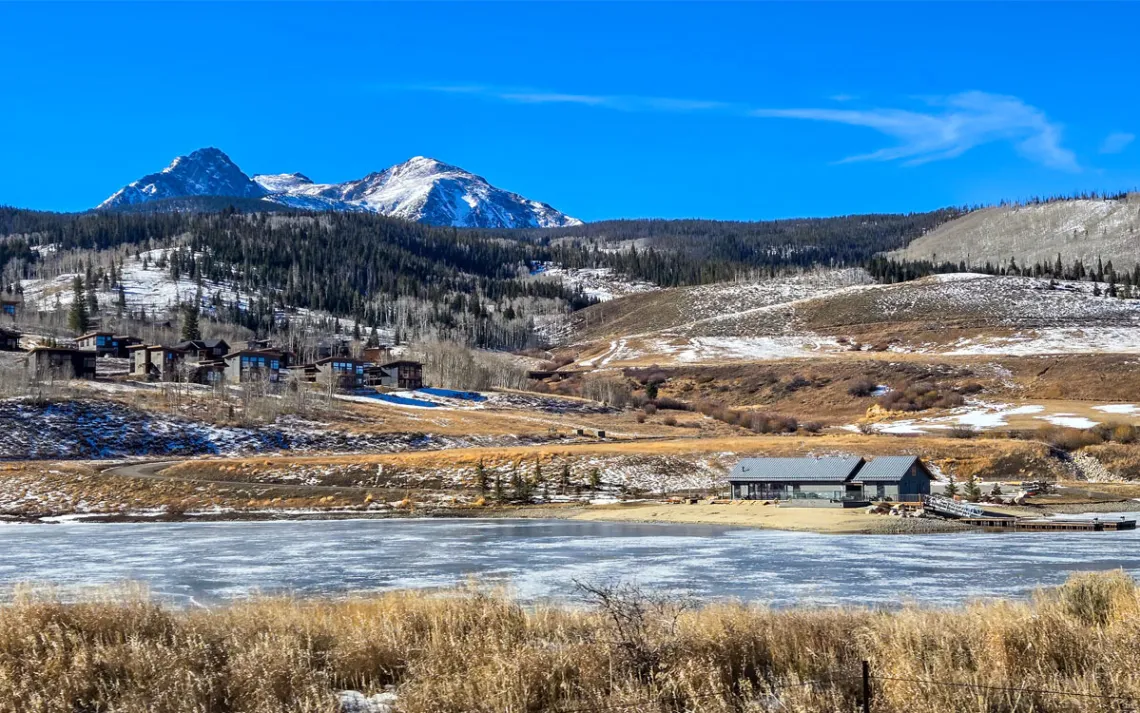
Photo by Leigh Ann Speake/iStockPhoto
In January, staff at a Colorado marina said that they’ll operate at limited capacity this spring due to low water levels. By March, Denver Water—which provides water for the metro area’s 1.5 million residents—announced a plan to increase water restrictions this summer. And, as of the middle of this month, the state has experienced 74 fires in 2026. All of this is due to one thing: record-low snowpack.
In fact, Alaska and every continental state west of Colorado is experiencing some level of snow drought, a period of abnormally little snow. Leaders at state agencies are now worried that the lack of snowpack and a warm winter could lead to a more severe threat: an unprecedented wildfire season.
“We are looking at conditions that are far worse than we have seen in some of the previous years that turned out to be very active fire years,” said Tracy LeClair, a public information officer for the Colorado Division of Fire Prevention and Control.
Snowpack acts like a natural fire extinguisher by keeping the ground and surrounding vegetation wet. Meanwhile, thawing snowpack helps fill reservoirs that millions of Americans rely on for their water. For example, snowmelt contributes to as much as 85 percent of the Colorado River Basin’s water, which serves 40 million residents across seven states.
But those benefits are at risk this year. As of March 12, Colorado has the lowest snowpack of any western state, with 97 percent of snowpack-measuring stations reporting a snow drought. The prognosis isn’t much better in Oregon and Washington, where similar weather stations are reporting lower than average snowfall.
As it stands, LeClair’s department is fully staffed and regularly collaborates with other state agencies, local departments, and federal partners, such as the US Forest Service and Bureau of Land Management, to fight wildfires. However, as fire risk increases, personnel or equipment for fire suppression—such as engines, hand tools, wildland firefighters, and even communications staff—are spread thin. That’s because state officials work with a federal tool called the Interagency Resource Ordering Capability (IROC). Since it’s a national resource, aid can come from outside of the state requesting help and resources often go to the states that need it most.
“We kind of have a neighbors-helping-neighbors point of view,” LeClair said. “We'll go help [other states] during a time when our fire activity isn't as high, knowing that sometime later in the summer, they'll do the same for us.”
But even with this outside assistance, LeClair explained, certain personnel or resources will be marked as “unable to fill.” That’s because there are sometimes too many fires for local staff to deal with, leaving some states to manage their crews and fires with the materials they have. State agencies are trying to anticipate what they might need if the upcoming wildfire season is severe and encourage wildfire preparedness among residents. But as the climate crisis continues to push weather toward more extreme ends, these agencies are being forced to make a plan when they don’t know what to plan for.
“We are seeing a much longer fire season than we have historically,” LeClair said. “And with a year like this, with no snow at all, we say there's not really a fire season anymore. The fire potential in Colorado is really year-round.”
According to Peter Goble, an assistant state climatologist with the Colorado Climate Center, the Intermountain West’s snow drought is primarily due to high-pressure atmospheric conditions blocking moisture from the Pacific and cold air from the north. And while states in the Pacific Northwest are also experiencing a snow drought, it’s not for the same reason. That corner of the country has experienced a warm winter, which meant that when precipitation did fall, it fell as rain, which hastened the melting of any snowpack present.
“Many of [Colorado’s] worst wildfire years are years where we had low snowpack, had an early snowmelt, and had a warm first half of summer,” Goble said. “So the first ingredient is there, and the other two ingredients are arguably more likely than not.”
And this threat doesn’t just apply to western states. Wisconsin experienced 73 wildfires in January of last year, coinciding with a below-average snowpack. This past January, with snowpack back up to five to 10 inches in the more fire-prone areas, the state experienced just two fires.
To draw connections between snowpack and fire risk, scientists look at various data points, ranging from National Weather Service weather reports to moisture content in the surrounding landscape. They also look at the type of snow in snowpack; wetter, denser snow mitigates wildfires better than powdery snow because the former holds more moisture. Scientists combine these various data points to determine whether they’ll compound to create a recipe for a wildfire.
“All of this data just helps create a picture of what might happen if a fire were to start,” LeClair said. “And what might contribute to extreme fire activity.”
While snowpack influences wildfires, fires can also affect the amount of snowpack an area retains. A 2025 study showed that “under average winter conditions, snow melts earlier in the first year postfire in 99 percent of the snow zone.” Arielle Koshkin, the study’s lead author, explained that this is primarily due to the shedding of “black carbon” onto the snowpack and a lack of tree canopy. Similar to someone standing in an unshaded area wearing all black, the snow melts more quickly when wearing a charred debris blanket without sun protection.
Even though burned areas are more likely to experience less snowpack, this doesn’t mean they’re then more susceptible to fire. With not much fuel left on the ground, these areas avoid a feedback loop by offering nothing substantial to the next hungry fire.
While a much-needed dump of snow in March or April could still occur, many regions would need as much as multiple feet of wet, dense snow to catch up to typical conditions. For states like Colorado, it’s now probably too late to make up for the lost snow.
“With it being almost mid-March and with another really warm spell on the horizon in the forecast,” Goble said, “we can now say we're not going to get back to normal snowpack this year.”