 The Magazine of The Sierra Club
Can the Colorado River Survive 2026?
This mighty river’s water levels are approaching dangerous lows, which could impact millions of people

A Utah State University research team works at Lake Powell in Arizona. | Photo by Brittany Peterson/AP
The Colorado River is reaching a breaking point. A 26-year drought is sucking the river dry, and unprecedented heat is rapidly evaporating this year's record-low snowpack. These two conditions are leading to low water levels at Lake Powell and Lake Mead, the nation’s two largest reservoirs. That, in turn, jeopardizes critical water infrastructure for a large swath of the West.
If water levels fall below 3,500 feet in Lake Powell, water releases, which help create hydropower and serve as the primary water source for millions of Americans, could be halted. To stave off such a catastrophe, dam managers with the Bureau of Reclamation (BOR) are impounding water in Lake Powell and unleashing trillions of gallons of water from Flaming Gorge, an upstream reservoir.
Complicating matters, the seven states that count on the river disagree on a long-term plan to deal with the shifting climate. And recently, Interior Secretary Doug Burgum, whose agency oversees the BOR, announced an imminent federal intervention that he said, “nobody will be happy” with. It’s an untenable situation that water managers, experts, and even state leaders say puts the river and those who rely on it on a disastrous collision course.
“There’s only so much water that can be shuffled around,” Eric Balken, executive director of the nonprofit Glen Canyon Institute, told Sierra. “Eventually, every state will have to make a sacrifice.”
Sharing a shrinking river
The Colorado River problems started over a century ago, when the federal government divvied up the water. Under an agreement signed in 1922, the Southwest was split into two basins. The Upper Basin includes Wyoming, Colorado, Utah, and New Mexico, and the Lower Basin is Arizona, California, and Nevada.
Under an agreement, called the Colorado River Compact, each region is allotted a certain amount of water measured in million-acre-feet (MAF)—an acre-foot of water is the equivalent of a football field in a foot of water. Seven and a half MAF of water goes to each basin annually. And 1.5 MAF goes to Mexico over the same period.
However, the compact doled out more water than what actually flows through the Colorado River, and that was long before the current drought. "The conventional wisdom is that the 1922 compact commissioners did the best they could,” Brad Udall, a climate research scientist at Colorado State University's Colorado Water Center, explained. “But the truth is that they didn’t do their homework—there was plenty of evidence at the time to suggest that the river had much less flow than they allocated."
The region is now suffering as a result of that ill-fated decision. Since 2000, Colorado River flows have shrunk by 20 percent compared with 20th-century amounts.
To cope, water managers rely upon a series of drought-management plans. The latest guidelines, from 2019, expire this October. Earlier this year, the BOR, also referred to as Reclamation, released five proposed updates to manage future releases from Lake Powell and Lake Mead. Despite testing them for extreme ranges of future river flows, all proposed plans would fail under the current drought conditions.
State leaders were supposed to agree to one of the proposals or put forth their own. After blowing past a February 14 deadline to submit a plan, the only common ground between the states is disapproval for all alternatives put forward.
In all proposals, drought-induced water cuts are enforced only on the Lower Basin states. Without mandatory cuts for the Upper Basin, Arizona Governor Katie Hobbs said she wouldn’t sign an agreement. On the other hand, Becky Mitchell, Colorado’s appointee to handle river negotiations, countered that Upper Basin states are already constrained by Mother Nature's variability.
“Fundamentally, there's not enough water for everybody who says they're entitled to a certain amount of water to be right," Aidan Manning, rivers and waters program associate at New Mexico Wild, said. "And that's true regardless of how much runoff we get."
Arizona and Utah are both preparing for possible litigation over the impasse. No one is yet certain of what Burgum's intervention will entail. In hopes of avoiding lawsuits, Upper Basin representatives are calling on Reclamation to mediate talks. The states could still end up in court if the Upper Basin fails to meet the legally mandated 10-year water deliveries of 82.5 MAF to the Lower Basin and Mexico.
Udall said that the requirement is unlikely to be met. The entire basin is experiencing what he calls a persistent hot drought, distinguished by high temperatures in addition to low precipitation. This combo causes more precipitation to fall as rain instead of snow and increases evaporation. Both reduce spring runoff, the main source of water for the Colorado River.
As of April 2026, Lake Powell is barely above 3,500 feet. Damage to Glen Canyon Dam's lower outlets will impede water releases below that threshold. And Lake Mead will decline by 20 feet, which will reduce Hoover Dam hydropower production by 40 percent. To date, there are no plans to fix damage done to the dam, only moving water around to temporarily keep Powell functional. The Flaming Gorge releases began on April 23 and will continue through April 2027.
Kyle Roerink, executive director of the nonprofit Great Basin Water Network, said Reclamation is relying on outdated temporary solutions for long-term problems. He cited the agency's use of a similar emergency strategy in 2022 and 2023, when Lake Powell and Lake Mead dropped to record lows. Even after the anomalously wet winter of 2023 boosted waters in Lake Powell, the reservoir is now less than seven feet above its all-time low recorded in April 2023.
"It’s an example of how foolish it is to just cross your fingers and say, 'Well, Mother Nature will deliver again,'" said Roerink.
Sideline impacts
If water levels sink below 3,500 feet, one of the first casualties might be the threatened humpback chub. This native fish evolved to spawn in the Colorado's warm, turbid waters. Yet introduced smallmouth bass, which pose a predatory risk to the chub, also like these balmy temperatures.
Since 2024, scheduled cooler water releases have stymied the spawning of the warm-water-loving bass. As Powell approaches 3,500 feet, the buffer of cooler water vanishes and is further hampered by the dam's dysfunction. Taylor McKinnon, Southwest director for the Center for Biological Diversity, said he has seen this coming for a decade. Now his organization is pushing Reclamation to create barriers that would keep the bass out.
“It's an emergency measure,” McKinnon said. “As goes the Grand Canyon's humpback chub population, so goes the species writ large. It's the last large source population of that original Colorado River fish on Earth."
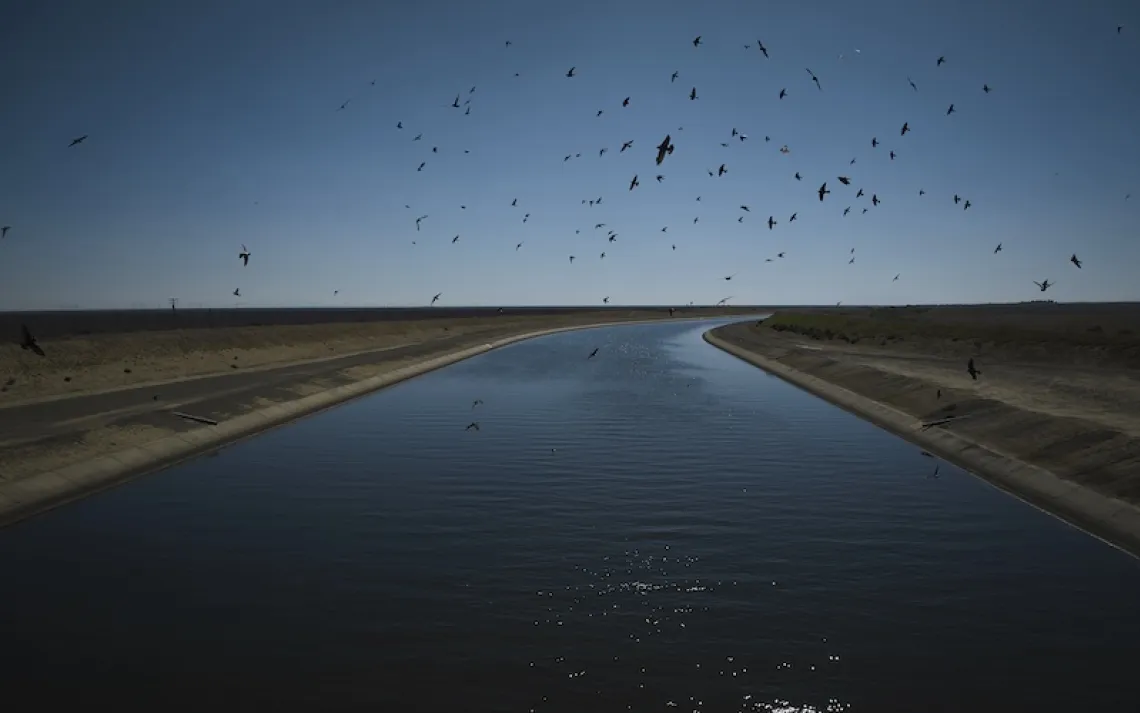
For hope, the fish might look to California, the state with the largest Colorado River allotment. While much of that water, a 20 percent share of the Colorado River, flows to the Imperial Valley for agriculture, it creates an overlooked environmental benefit—allowing water to flow through the entire length of the river rather than diverting it all upstream.
This means 32 endangered, threatened, and endemic species in the Lower Basin depend on Southern California agriculture. Industries can pivot, and households can cut back, but that’s not something wildlife can do, said Jennifer Pitt, Colorado River program director for Audubon. "There's not economic adjustments that the birds can make. A payout doesn't help the birds that use those habitats."
The effects will also ripple toward desert communities and wildlife beyond the riverbanks. "If Colorado River supplies become more constrained, communities will often turn to groundwater as a replacement source," explained Olivia Tanager, director of the Sierra Club Toiyabe Chapter. This draws down water in the Colorado River basin springs and tributaries.
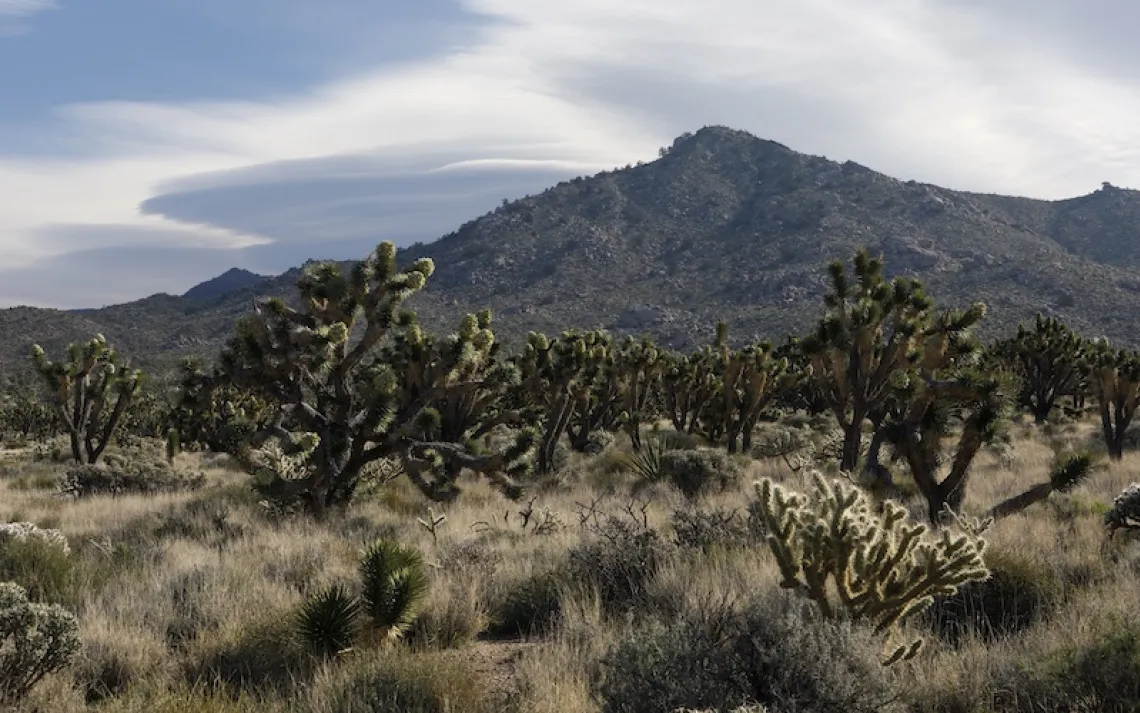
According to Tanager, the side effects of over-pumping affect protected species, including those seemingly far removed from the river. "The health of the Colorado River system affects tortoise habitat through groundwater levels and vegetation patterns," Tanager said. "Pumping groundwater can lower water tables and therefore reduce flows from springs or cause them to dry up entirely."
These types of ancillary water sources are not part of the Colorado River negotiations and are left to states to manage. Yet groundwater contributes up to 56 percent of the upper Colorado River's water. NASA’s Gravity Recovery and Climate Experiment reports that pumping has reduced basin groundwater by 65 percent since 2002.
As water supplies constrict, it could threaten water for 25 Lower Basin tribes as well, all of which hold some of the basin's most senior water rights—at least on paper. Yet tribes still do not have decision-making seats at the table and are represented by the states. Any water cuts will impact each tribe differently based on their individual settlements.
Amelia Flores, from the Colorado River Indian Tribes (CRIT), asserted how critical it is to honor tribal treaties and the rights of the river itself. Last year, CRIT granted the Colorado River legal personhood under tribal law. "The needs of this river have been long overlooked," Flores said. "We have taken and taken and taken and taken from this river. Nobody's looking at [the river] holistically. Nobody's looking at it from their heart. The CRIT Tribal Council wanted to ensure the needs of the river for future generations. Now is the time that we need to give back to the river."