 The Magazine of The Sierra Club
Treasures
The winning essay in the 2026 Sierra Seedlings Youth Essay Contest
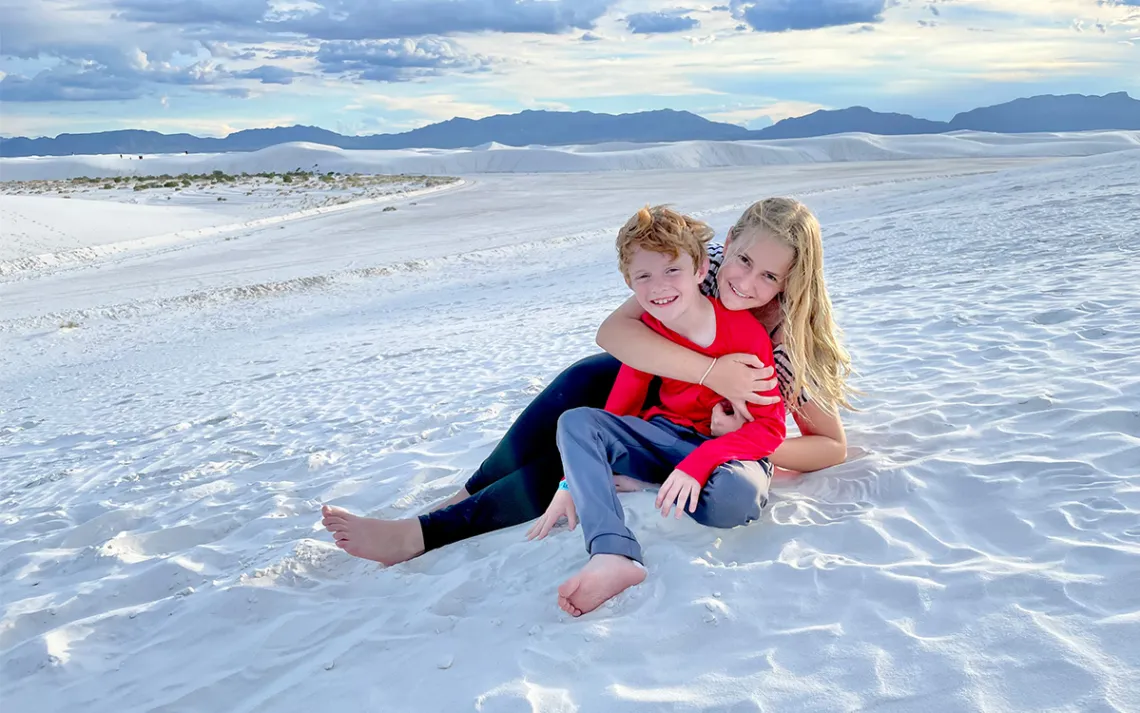
Katelyn and her brother at White Sands National Park, New Mexico. | Photos courtesy of Katelyn Ziegler
Do you have something that you treasure? Maybe you love a special bracelet that you received as a gift like my friend Kira. Perhaps there is an old family recipe that you keep safe like my parents. Or maybe you cherish a stuffed animal like several of my friends.
As for me, I cannot put what I treasure in a box or on a shelf because what I value most is the thrill of exploring national parks with my family (26 parks so far and counting). I admit that being trapped in the backseat of a car with my squirrely little brother isn’t always peaceful. But despite the arguments, orange Cheetos crumbs, and the occasional mysterious odor, the experience is nothing short of magical.
My parents leave their work behind. We all sing along to Keith Urban, and no matter what time our car finally pulls in, the national parks are there to greet us. They nudge us to leave our screens behind and to play outside. They teach us about the past, make us experience the present, and think about the future. They promote national identity and inspire a sense of pride. In a 1934 radio address from Glacier National Park, President Franklin D. Roosevelt said, “There is nothing so American as our national parks. The fundamental idea behind the parks is … that the country belongs to the people.”
I asked Kira why she treasures her bracelet, and she said that it reminds her of the holidays when she gets to see her cousins who all have the same one. From oldest to youngest, they set the table, help bring out the food, and spend time together. This made me think of an exhibit at White Sands National Park where 21,000-year-old fossilized footprints of small children and teens working or playing together were found. How incredible that so long ago kids of all ages also hung out together and had fun! They were not the only ones who enjoyed being together in this area of what is now New Mexico.
My brother and I absolutely loved this national park because we were able to bring sleds to the giant sand dunes and to race each other down the slopes. The sand is made of gypsum, and it is so white that it looks like snow. When the sun reflected off the dunes, it was so bright that it was hard for us to see. That did not stop us, though. We slid down and climbed back up over and over until the sun went down. It was one of the most unique national parks I have ever visited, and I will never forget what a great time we had there.
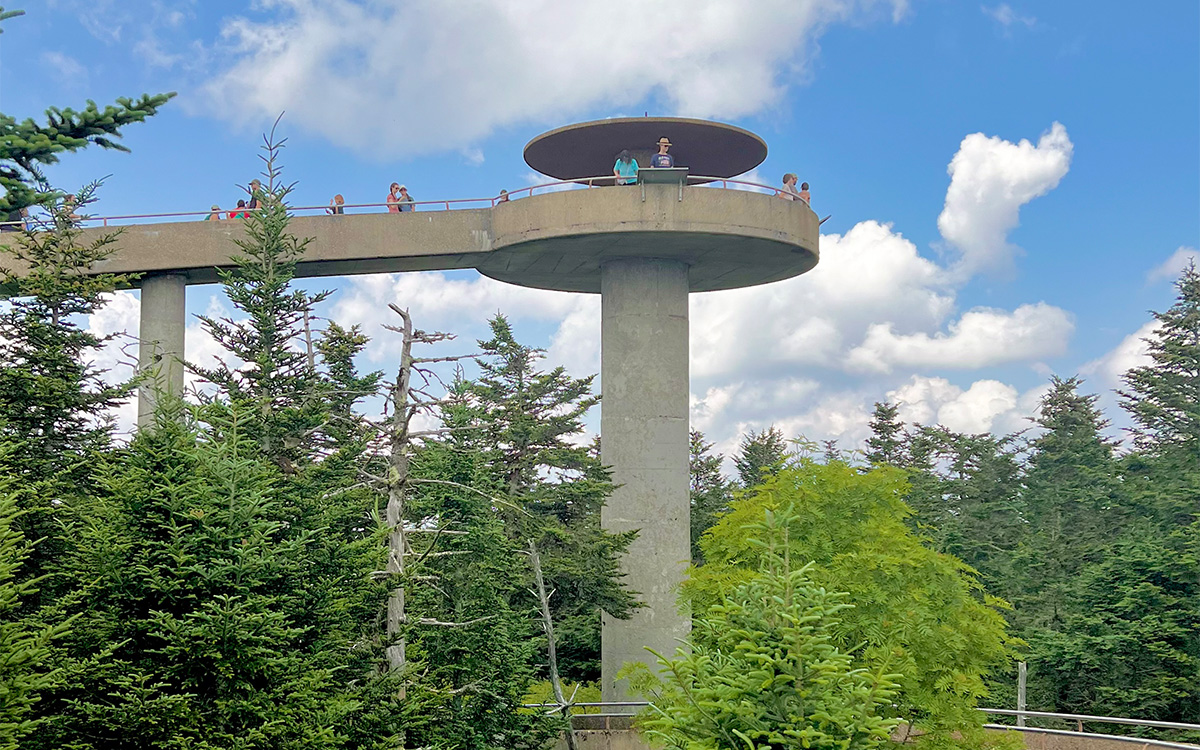
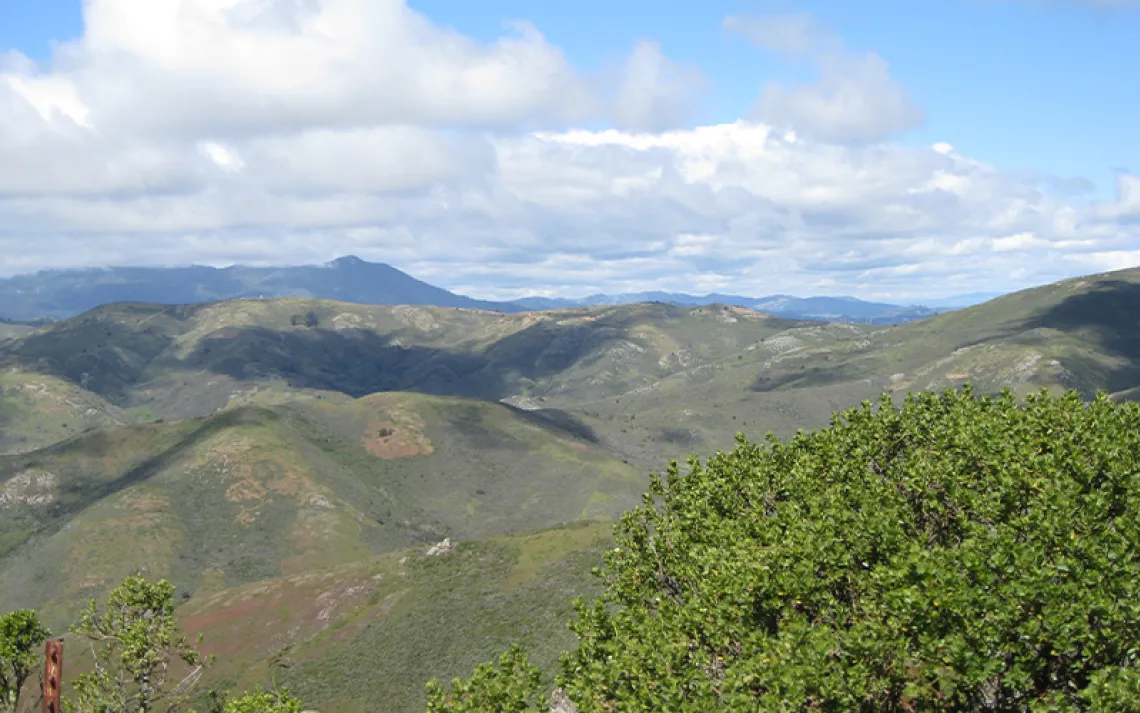
A lookout at Great Smoky Mountains National Park.
Remember that old family recipe that my parents treasure? I asked them about it, and they said that the value isn’t necessarily in what it says. It is special because it was handwritten by my late great-grandma in her native language.
This reminded me of the petroglyphs I saw when we visited Petrified Forest National Park. The rock carvings depict various clan symbols, migratory paths, water sources, and celestial calendars. The messages and instructions themselves aren’t as meaningful to us today. What makes the carvings important now is how old they are, that they were used for many generations by the Puebloan people, and that they are still here for us to see.
At this national park, it was also interesting to look at all the petrified wood and to learn about how it was formed. I remember a park ranger telling us that the rings on petrified wood are the preserved growth rings from the original trees, which turned into stone millions of years ago. Like pages in a book, the rings tell a story about prehistoric environmental conditions and how old the trees were when they were fossilized. We saw wide rings, which meant that the tree got plenty of rain. We saw narrow rings, which meant that the conditions for growth were not as good, and we even saw charred rings, which meant that the tree was scarred during an ancient forest fire.
In addition to ancient treasures, Petrified Forest National Park preserves artifacts from the recent past. We got to see a section of the historic Route 66 and imagined American tourists just like us admiring the natural beauty in this area from their vintage cars one hundred years ago. On this particular road trip, we were excited to have a fifth passenger, our dog, Winnie, who was certified as a Petrified Forest National Park BARK Ranger. She showed off her new, flashy tag and proudly served as an example of how following pet etiquette can protect the national parks as well!
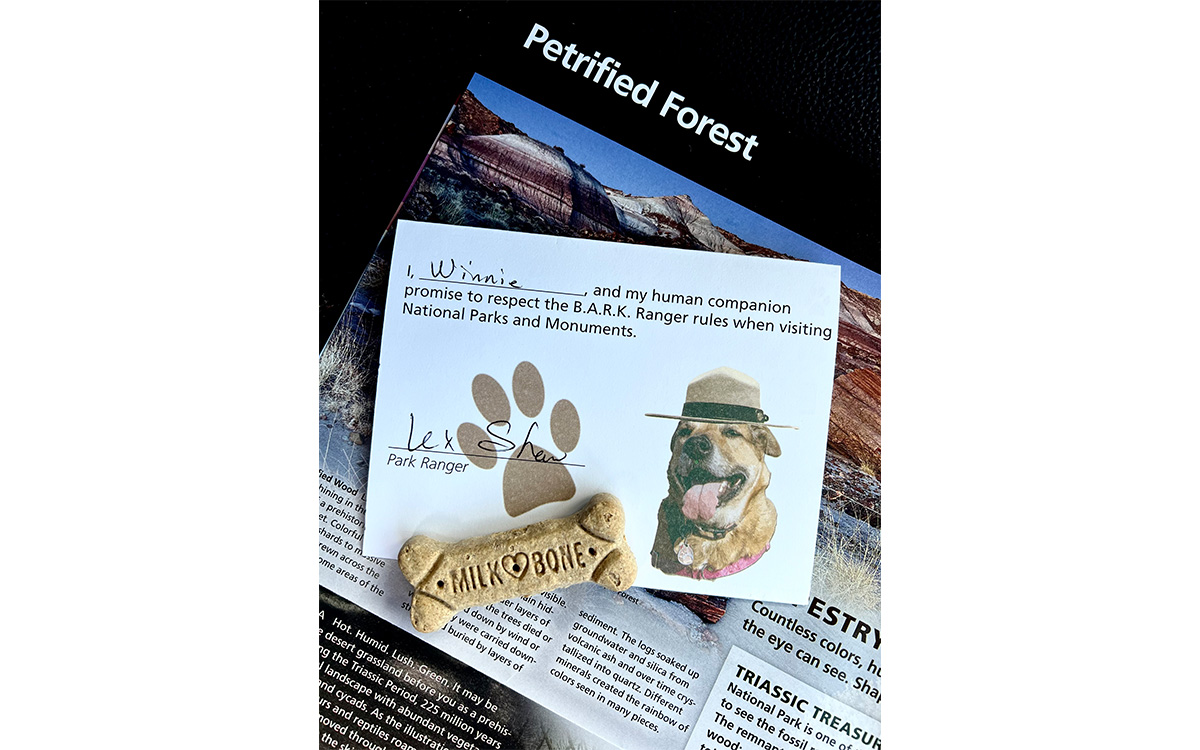
Winnie's BARK Ranger certification at Petrified Forest National Park, Arizona.
*
Finally, I asked my friends about their treasured stuffed animals, and it was interesting how different they all were. Bears, giraffes, penguins, and unicorns all made the list of VIPs (a.k.a. very important plushies). Even though Great Smoky Mountains National Park may not be the home of all these animals and mythical creatures, it is the most biodiverse national park in the US, with over 19,000 documented species. Varying elevations create habitats for animals like black bears, white-tailed deer, elk, bobcats, coyotes, and foxes. And while hiking there with my family, I was lucky enough to see deer and elk.
In addition to admiring the wildlife at Great Smoky Mountains National Park, we also explored human-made treasures. We climbed the steep spiral ramp of the Kuwohi Observation Tower and got a 360-degree view of forested ridges and valleys from the highest point in Tennessee. We saw Mingus Mill, which was built in 1886. It served as a gathering place for families to grind corn and trade goods and continues to impress visitors with its working turbine. We explored historic log buildings at the Mountain Farm Museum and learned what it was like for Appalachian people to live in this area back then. As we were leaving, a polite rooster made a point to say goodbye and encouraged us to come back to the most visited national park in the country.
We all treasure different things and have different reasons for doing so. For my parents and friends, their treasures remind them of relatives or bring them comfort. For me, exploring White Sands, Petrified Forest, and Great Smoky Mountains National Parks allowed me to learn and have fun with my family. No matter what we value and why, it is instinctual for us to keep it safe. Sometimes we even pass it on to others so they can protect it when we are gone, or we put it into a time capsule for someone to rediscover and treasure again many years later.
National parks essentially serve as a time capsule because they preserve unique natural and historical treasures and keep them frozen in time. It is amazing to think that when I go to Glacier National Park later this year, I will see the same park that inspired Franklin D. Roosevelt’s radio address almost a century ago. And if we continue to protect and treasure our national parks, they will be the same parks that inspire future generations centuries from now.
"Treasures" is the winning essay in the 2026 Sierra Seedlings Youth Essay Contest. This annual competition, a collaboration between Sierra magazine and the Sierra Club’s Outdoors for All campaign, invites young writers across the country to craft a story about public lands that matter to them and why those natural spaces should be protected. The winning essay is published in the Summer Seedlings special issue of Sierra magazine.