 The Magazine of The Sierra Club
How a School Trip to the Marin Headlands Changed the Way I See Nature
The runner-up essay in the 2026 Sierra Seedlings Youth Essay Contest
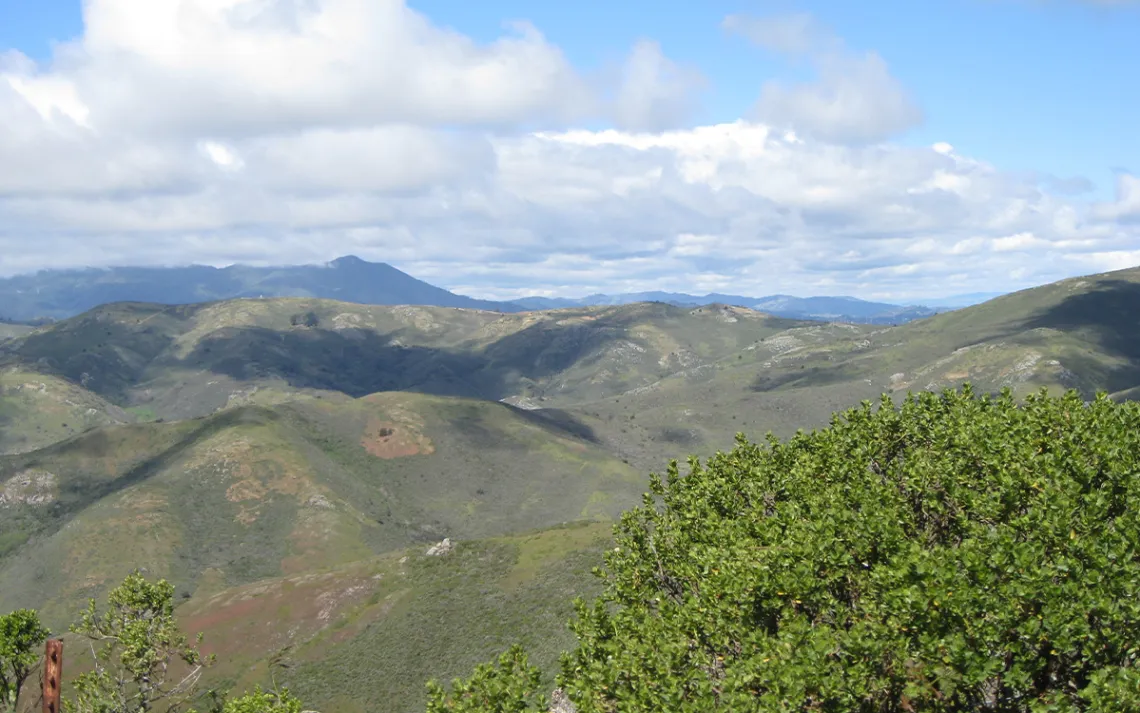
Photos courtesy of Michael Wilkinson
Awe.
I was in awe as the school bus crossed the Golden Gate Bridge on my seventh-grade overnight school trip. I stared up at the rust-colored towers disappearing into low, windblown fog, their steel trusses stretching high into the sky. I was in awe of the huge metropolis across the bay, San Francisco, and the twinkling of the sunlight as it reflected off the city’s skyscrapers. But when the bus crossed the bridge and veered right into the dim light of the Baker-Barry Tunnel, the world around me changed completely. Gone were the highways and concrete jungles, and instead, what stood before me was breathtaking. Now I was in awe of the rolling hills and rocky cliffs, the sight of fields full of wildflowers, and the countless beautiful Pacific beaches. What stood in front of me was the Marin Headlands, a piece of federally protected land within the Golden Gate National Recreation Area.
Until that moment, nature had always been somewhat distant to me, something visited briefly on short hikes or seen through car windows. But standing at the edge of the Headlands for the first time, with cold ocean wind cutting through the fog, I felt something unfamiliar settle over me: a sense of being fully present and interconnected with nature.
*
Our lodging was a large white wooden building with a weathered red-brick roof perched near the ocean’s edge. It was simple and drafty, more practical than comfortable, but none of us cared much about the building itself. We were rowdy middle schoolers, and our attention was focused outdoors, on the surrounding beach, visible through nearly every window. A narrow cove curved along the shoreline, where a long sandbar cut through the water and a wooden boardwalk stretched out over the tide below.
During orientation, a local ranger led us across the beach and pointed out the wildlife that thrived there: harbor seals resting offshore, shorebirds darting through the surf, and tiny creatures, such as small crabs, sea anemones, and starfish, living in shallow tide pools. As the ranger talked about the importance of preserving these ecosystems, I leaned over the boardwalk railing, staring into the water below. Suddenly, I saw rapid movement beneath the surface. A river otter burst upward only a few feet away, its slick body twisting through the water before it disappeared again beneath the surface. For a moment, I forgot about being away from my parents, the social pressures of being at a new school, and everything else back in my regular life. I felt completely pulled into the living, breathing landscape around me.
The next few days were a flurry of hikes and outdoor activity. We scrambled across rusted green military fortifications left behind from another era, looked out over the crashing Pacific from atop Battery Townsley, and eventually began the long climb up Hawk Hill, whose summit overlooked the entire San Francisco Bay. For experienced hikers, the trail probably would not have seemed especially difficult. It was clearly marked and was fairly popular. However, as my classmates and I stared up at the towering hike ahead of us, it looked enormous and impossibly daunting. But, with some exasperated nudging from our chaperone, we persevered. Hoisting ourselves up steep wooden steps and winding dirt trails was a grueling task, but at the top, staring across the bay at the legendary view of San Francisco, the exhaustion seemed to dissolve all at once. Below us stretched the metropolitan skyline, the blue water of the bay, and the orange arch of the Golden Gate Bridge cutting through the mist. Standing there beside my classmates, breathing hard in the ocean wind, I finally began to let the words that I’d heard from the rangers and guides sink in.
The Marin Headlands, and other protected lands like it, matter. They provide critical habitat for diverse plant and animal species, support ecological processes that have shaped the region for thousands of years, and preserve one of the few remaining stretches of relatively undisturbed coastline in the Bay Area. By protecting these environments, we can safeguard something truly alive, not just for its natural beauty but also for the biodiversity and ecological health that make them invaluable for future generations.
*
As soon as I returned home from the trip, I began exploring the story of the Marin Headlands and the challenges it faces. Invasive species, such as the aggressive iceplant that spreads across beaches and the American bullfrog, which outcompetes native wildlife, pose significant threats to local plants and animals. Additionally, Marin is not immune to rising sea levels and coastal erosion, which are reshaping the beaches and shorelines.
There are several conservation efforts in the Marin Headlands. The recent Hawk Hill Habitat Restoration project designates critical lands as breeding grounds for the endangered Mission blue butterfly. Additionally, scientists with the Golden Gate National Parks Conservancy are monitoring pollution levels and water quality for California red-legged frogs, ensuring their populations remain stable. Plans for the Bothin Marsh Adaptation project are currently being designed in collaboration with the Marin County Open Space District, aiming to adapt the marsh preserve to rising sea levels and restore natural wetland habitats. Despite the challenges the Marin Headlands faces, conservationists continue to work diligently to protect and restore this vital ecosystem.
But I wasn’t content just studying what other people were doing. I was curious about what I could do to contribute. In the years that followed, I threw myself into learning everything I could about the environment and what I could do to help conserve lands like the Marin Headlands. I joined the Boy Scouts and spent hours studying ecology and conservation while earning the Environmental Science merit badge. School projects that once felt like assignments became opportunities to explore issues of sustainability and environmental stewardship.
During the summer of ninth grade, I discovered the Sierra Club. Through my local chapter, I began writing letters to the editor and blog posts advocating for environmental protection. I joined the social media team, helping create content that encouraged others to learn about conservation and take action in their own communities. I realized that appreciating nature was only part of the equation, as protecting it required active participation as well.
For me, the Marin Headlands has become the site of a yearly pilgrimage. Every summer, my family loads into the car and begins a drive to the breathtaking Headlands. It still hasn’t lost its charm to me. And as I hike up Hawk Hill and look out across the bay from the summit, I feel that same sense of interconnectedness between me and the living landscape around me. But now, I feel something more. I think about the rangers, the scientists, the organizations, and the countless volunteers who dedicate their time to protecting these lands. Their collective efforts have allowed the Marin Headlands to remain a thriving refuge for both wildlife and people. Standing atop the hill, I am reminded not only of the beauty of nature but of what people can accomplish when they come together to protect it. And with that realization comes a familiar emotion.
Awe.
"How a School Trip to the Marin Headlands Changed the Way I See Nature" is the runner-up essay in the 2026 Sierra Seedlings Youth Essay Contest. This annual competition, a collaboration between Sierra magazine and the Sierra Club’s Outdoors for All campaign, invites young writers across the country to craft a story about public lands that matter to them and why those natural spaces should be protected. The winning essay is published in the Summer Seedlings special issue of Sierra magazine.