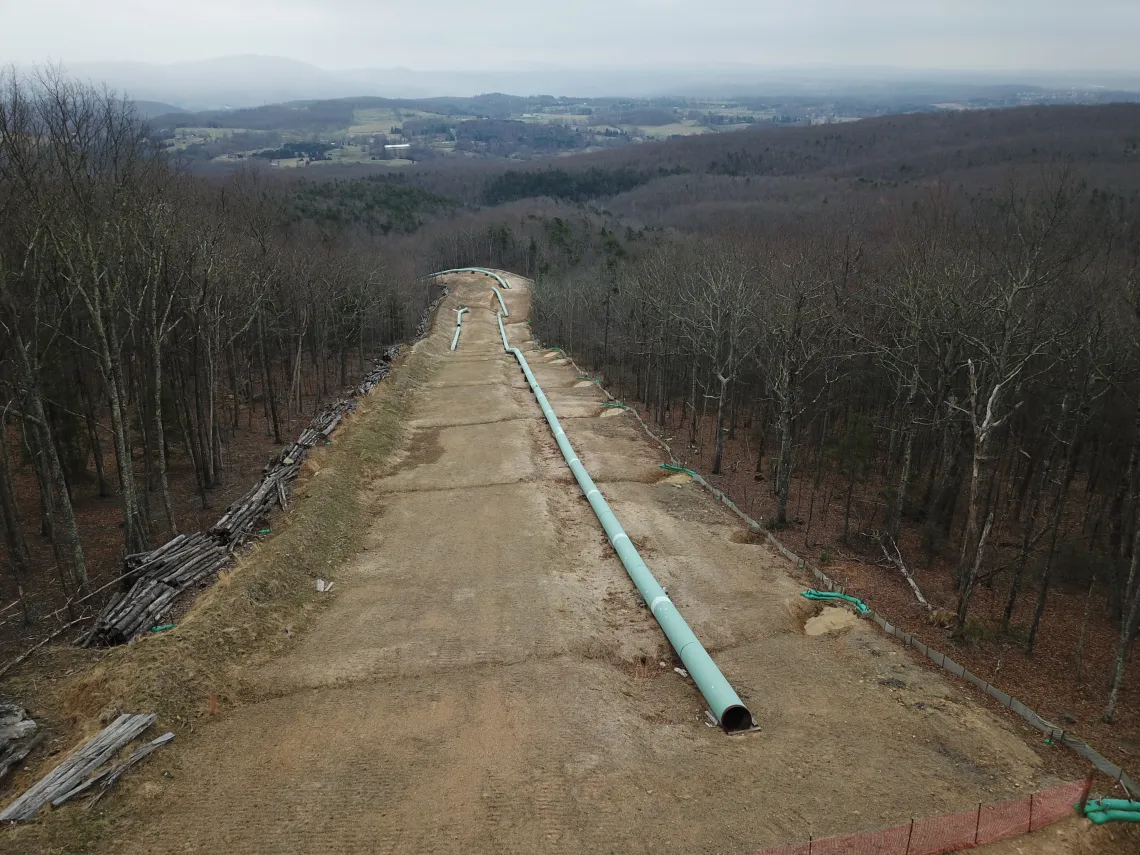
As people throughout North Carolina struggle to cope with rising energy bills, it’s shocking to see methane gas pipelines marketed as a solution, rather than the lesser of two evils. Instead of preying off of the uncertainty by promoting a dangerous and ineffective answer to our nation’s growing energy problem, we must focus on what we do know.
Yes, there is a big push to overbuild methane gas infrastructure to replace aging coal plants. However, it’s not everyday people who are pushing for more pipelines– it’s corporate executives looking to line their pockets. Ratepayers like you and me are left subsidizing huge projects that may take many years to build, if they ever get built at all.
Utilities are using the massive demand of power-hungry data centers and other emerging industries to justify delaying coal plant retirements and to propose new gas-burning power plants, resulting in more air pollution and skyrocketing electric rates. According to a new report from Harvard’s Electricity Law Initiative, energy providers are relying on outdated infrastructure and letting ratepayers foot the bill.
North Carolinians won’t just pay with our money– we’ll pay with our health, too. Although it’s often marketed as a cleaner alternative to coal, methane gas remains a major contributor to climate change, and its extraction and transportation put our communities at risk. Living near fracking wells, pipelines, compressor stations, and power plants can cause asthma, cancer, birth defects, and early death.
Transco– the company behind the Southeast Supply Enhancement Project, one of the largest East Coast pipelines proposed in a decade– admits in its own public documents that “[t]he benefits of the project are not realized by those who are impacted. Instead, the impacts are born by those whose properties are impacted and benefits are seen by those outside the project area.” When companies admit that our communities will not see the benefits of the projects they propose, we need to listen and act accordingly.
Change does bring uncertainty, so it’s time to reflect on what we know. We know that tying our communities to fossil fuels, like methane gas, locks us into an industry that doesn’t care about environmental impacts or the energy costs of everyday people. We know that according to a 2023 poll by the North Carolina League for Conservation Voters Foundation, a majority of North Carolina voters say it is important for the state to increase its use of clean and renewable energy sources and to reduce its use of fossil fuels– and two out of three voters want North Carolina to speed up the transition to clean and renewable energy.
Given that, it’s unsurprising that an industry-sponsored poll got the answers they were looking for: by wording questions confusingly, and failing to disclose the full context to the public.
If you want to know where North Carolinians stand, look at our actions – not at some biased survey. We have fought hard against Mountain Valley Pipeline Southgate, and we will fight hard against any pipeline that threatens our communities. Our coalition is calling on Guilford and Forsyth County Commissioners to take a stand and pass resolutions against Transco’s proposed Southeast Supply Enhancement Project (SSEP), like the Alamance County Commissioners to ultimately help stop the Mountain Valley Pipeline Southgate, in 2018.
Surveys can’t change the truth– the fossil fuel buildout we face is not clean, reliable or affordable, and developers need to pay their fair share. Find out more at www.nossep.org