During his first term in office, President Trump signed into law a significant conservation bill. A widely celebrated bipartisan victory, the Great American Outdoors Act ensured funding for both conservation and maintenance projects on our national parks and public lands. Now, with the release of his budget proposal, the president is walking back this singular conservation achievement.
The fiscal year 2026 budget proposal would gut our national parks and public lands, cut programs that connect kids and families with nature, and eliminate critical programs designed to protect communities overburdened by climate and environmental pollution. Dismantling the Great American Outdoors Act (GAOA) is just one example.
The GAOA funded maintenance projects at the National Park Service and on public lands at $1.9 billion annually and permanently authorized and funded the Land and Water Conservation Fund (LWCF) at $900 million per year. Since 1964, LWCF has played a critical role in supporting conservation and recreation projects in every corner of this country. LWCF not only supports national parks, national wildlife refuges, national forests, national trails and other public lands; it also provides funding for local parks and playgrounds, and preserves battlefields and other historic and cultural sites – and all with revenue from offshore oil and gas leases, not taxpayer dollars. The president’s budget request breaks his own commitment and calls for $387 million to be diverted from LWCF, nearly half the amount promised to the fund.
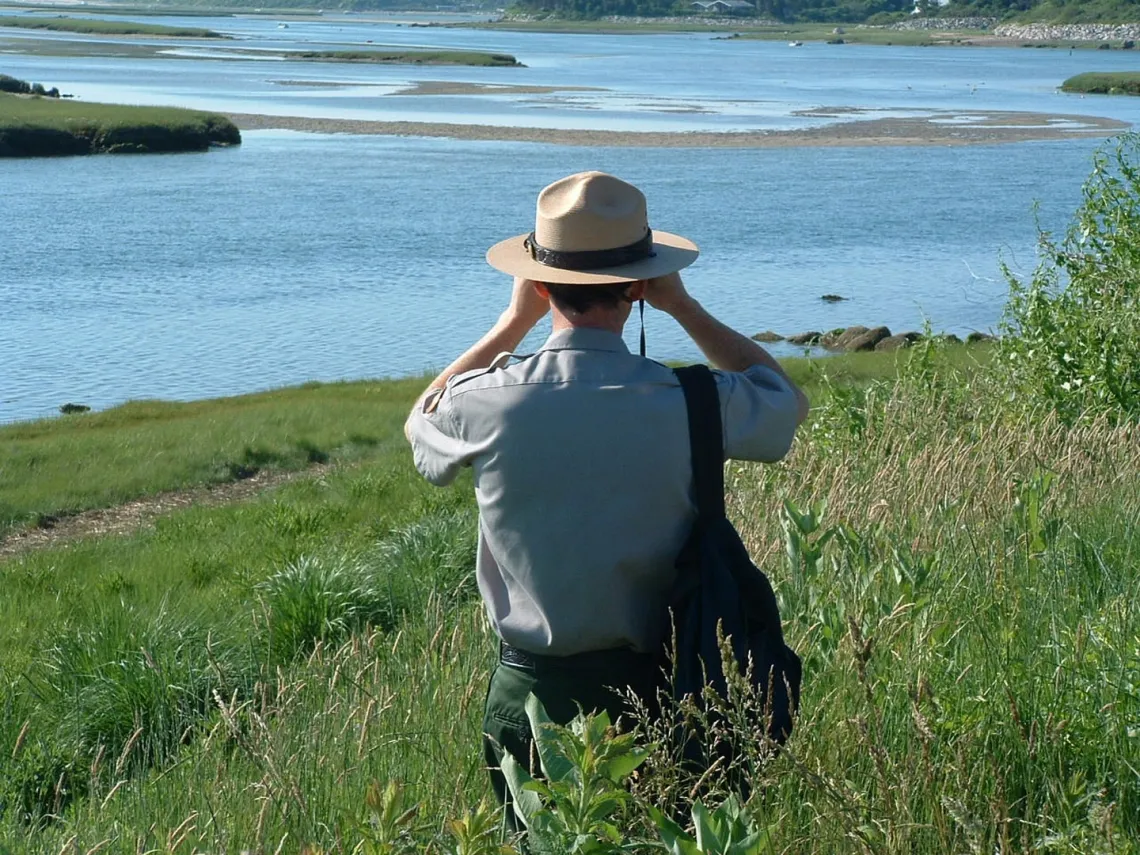
The president’s proposal would cut $1.2 billion from the National Park Service budget, including a $900 million rescission to park operations. The National Parks Conservation Association estimates that the proposal would require eliminating the budgets and staffing for close to 350 park sites, out of a total of 433 national park units across the country. This budget request comes on the heels of several highly unpopular attempts to decimate our national parks, from firings of thousands of park employees to threats to offload NPS sites to states. Sierra Club and our partners filed a lawsuit earlier this year against the Department of Government Efficiency over the unjustified mass firings of parks staff. Already the parks are seeing long lines, facilities closures, and overwhelmed staff as a result.
The budget also targets several popular and beloved programs that connect children with opportunities to learn and play in the outdoors and get to know their local parks and watersheds. The budget calls for the elimination of environmental learning programs housed at the Environmental Protection Agency, and the 21st Century Community Learning Centers program which supports before-school, after-school and summer learning programs for low-income children. It also terminates a program at the National Oceanic and Atmospheric Administration that connects children and schools with their local watersheds.
Perhaps less surprising is the president’s call to eliminate the Environmental Protection Agency’s Office of Environmental Justice (formerly the Office of Environmental Equity). Established by President George H. W. Bush, the office played a fundamental role in securing public health and ensuring healthy environments for children and communities. Staff from the OEJ were placed on administrative leave earlier this year, following through on the president’s threats to stamp out the office altogether.
These cuts are short-sighted at best. We all have the right to live in a healthy environment. Access to nature has been proven to provide critical opportunities to boost happiness, stay physically active, and lower our risks of developing chronic illnesses. At a time when excessive heat is literally cutting lives short, low-income families are being hit first and worst by the impacts of air and climate pollution, and one in five Americans experience symptoms of anxiety and depression, our parks and public lands can offer respite.
America’s extensive conservation and recreation legacy also powers a robust outdoor recreation economy. Our national parks and public lands are the envy of the world, with millions of visitors both domestic and international spending time exploring and enjoying these national treasures every year. Outdoor recreation generates $1 trillion in annual economic output and supports more than 5 million jobs across the U.S. The livelihoods of many gateway and rural communities depend on our public lands, the very lands currently under threat of defunding, pollution, and selloff.
Our network of protected lands and waters is also a promise to our children, who need places to explore and enjoy now, and to future generations, to whom we are responsible. Congress – not the president – controls the purse strings for America’s annual budget. Over the coming weeks and months, Congress will continue developing its 2026 budget. Join me in urging Congress to reject any budget proposal that harms our public lands, kids and communities.