The Current State of Offshore Wind
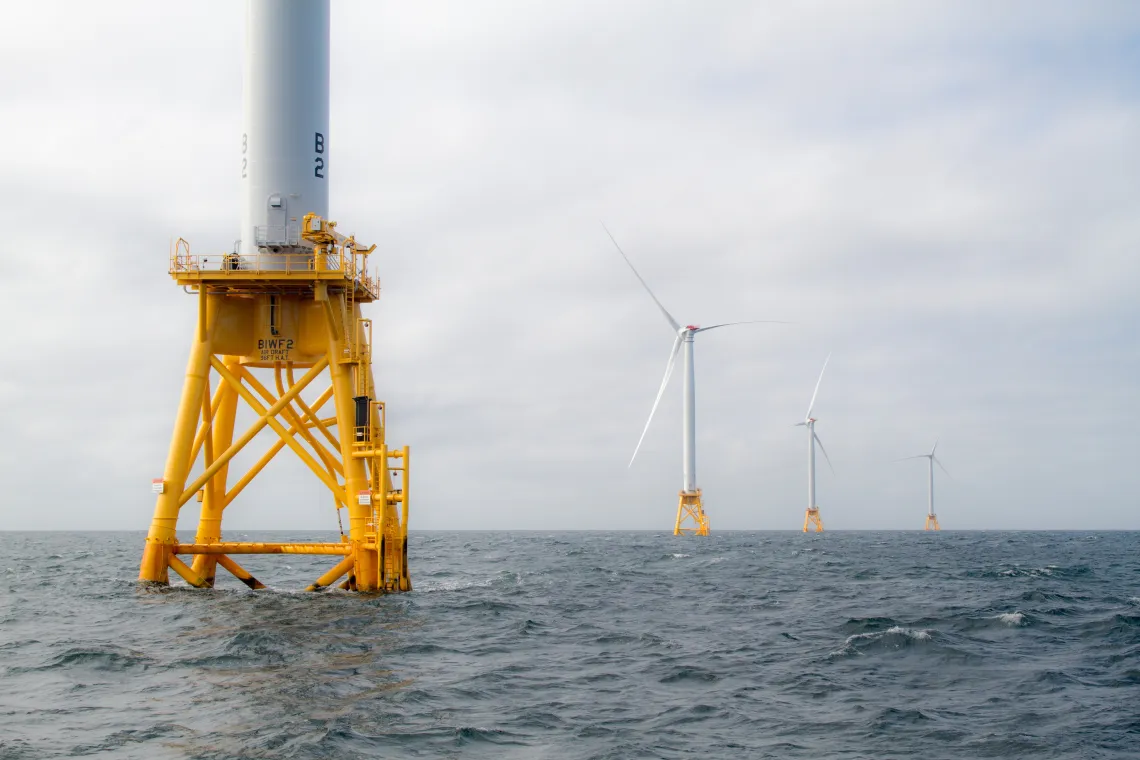
Offshore wind has been the subject of many headlines over the past few months — its future uncertain in several states. In California, however, legislators and energy agencies alike remain committed to reliable clean energy. Despite Trump’s opposition and the federal kerfuffle, offshore wind is seen as a critical piece of the puzzle for fighting climate change in California and reaching our statewide goal of 100% clean energy by 2045.
So, how is California going to stay the course on offshore wind while the Trump administration remains in vocal opposition? There is a lot that still needs to happen at the state level before offshore wind becomes a reality, and right now, that is where California is focusing its energy. This includes building out seaports to support offshore wind infrastructure – like the Pier Wind Project at the Port of Long Beach. It also includes working on transmission planning that will allow California to fully realize its offshore wind potential and deliver the energy where it is needed most.
Why California Needs Offshore Wind
At Sierra Club, we strongly support offshore wind development, as it is necessary to reach our renewable energy goals in California and nationwide. Currently, California still gets about 36% of its electricity from fossil gas, with over 160 gas power plants that burn methane gas for electricity. These gas plants emit carbon dioxide and nitrous oxides (NOx) into the atmosphere. Carbon dioxide is a pollutant that is not only bad for our health, but is a greenhouse gas contributing to climate change. NOx emissions are associated with respiratory illness, asthma, heart disease and premature death. In addition to these harmful pollutants, methane gas itself is often leaked during production and transport — a potent greenhouse gas that is 80 times more climate warming than carbon dioxide in a 20-year period.
Speaking of climate warming, our energy usage is dramatically changing. As temperatures continue to rise, especially during the summer, we are seeing increased electricity demand as folks use devices like air conditioners to cool down on hot days. The biggest irony here is that on these hot days, we burn more fossil gas to meet our electricity needs and this fossil gas is contributing to the climate crisis. In order to address this pervasive cycle, we must replace fossil gas plants with clean renewable energy sources.
Today California gets about 17% of its electricity from solar energy and about 11% from wind energy. The problem is, California uses the most electricity after the sun goes down – between about 4pm and 9pm. We call this period of maximum electricity use “peak demand”. During peak demand, since solar energy is largely unavailable, we rely heavily on gas plants to meet our electricity needs. This is often why state regulators and utility companies purport that gas plants need to stay online. But California can reduce its reliance on gas plants by building out enough renewable energy to reliably meet electricity demand. Offshore wind energy is vital in meeting this goal and retiring the state’s fossil gas plants, especially since the availability of offshore wind energy typically peaks during the times when we currently rely on gas plants.
Building out Equitable Offshore Wind in CA
Sierra Club supports responsible offshore wind development and urges state agencies to adopt critical guardrails:
- Development of offshore wind projects must be tied to retiring gas plants and decreasing greenhouse gas emissions. Gas plants in the most impacted environmental justice communities must be retired first.
- Offshore wind projects must avoid, minimize, mitigate, and monitor impacts to marine ecosystems and wildlife over the course of site assessment and project development.
- Project developers and agencies must consult early and authentically with and deliver community benefits and oversight to Tribes, workers in the fishing industry, people of color, and low-income communities.
- Offshore wind projects should maximize the creation of quality, family-sustaining, union jobs throughout the lifespan of a project.
- Projects must incorporate air quality and cost benefits from developing offshore wind with particular benefits to frontline communities.
- Projects must be required to avoid, reduce, mitigate, and monitor cumulative impacts to the environment and port communities.
When built responsibly, offshore wind has the potential to help California meet its rising energy needs with clean, domestically-produced energy. And here, at the height of the climate crisis, there’s no time to waste in developing the infrastructure vital to our clean energy transition. A transition that is key to protecting our communities, environment, and species in the long run.