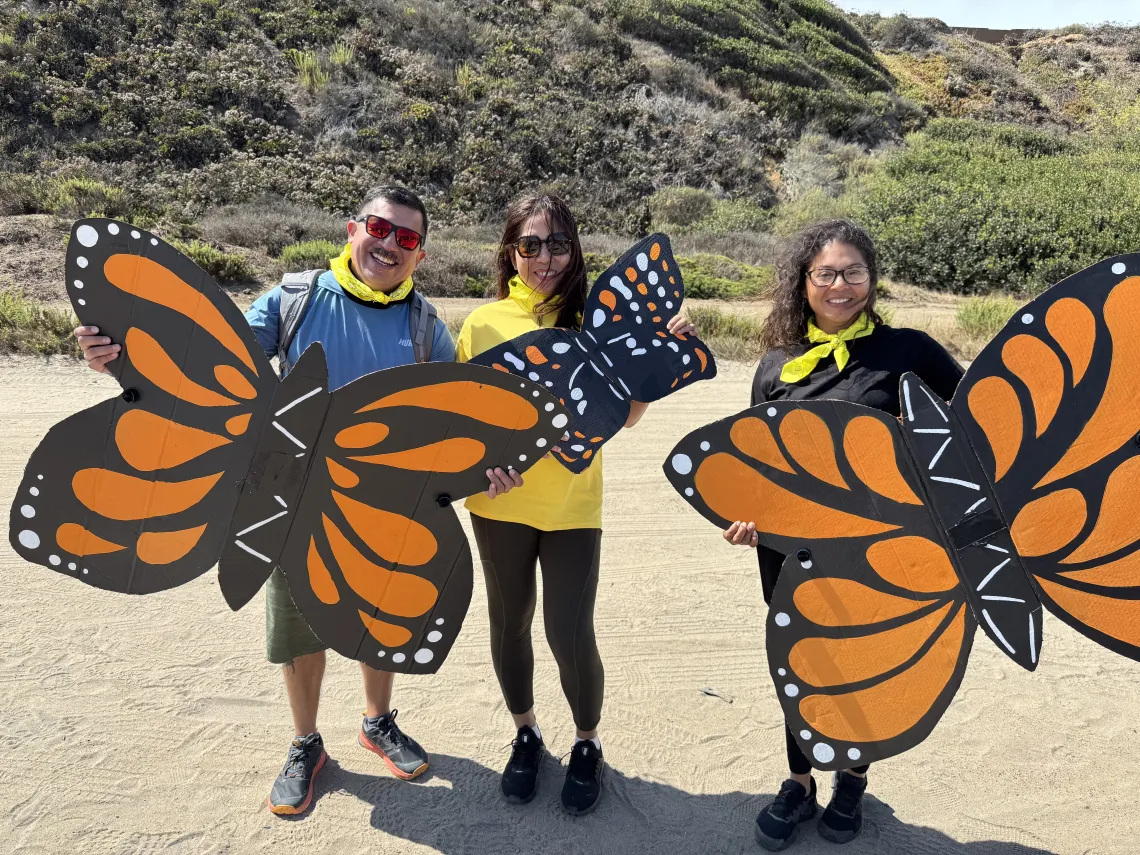
San Diego raised me all the way from kindergarten to 12th grade in its public schools. I spent my free time with family and friends, enjoying San Diego’s food scene, culture, sunshine, and public beaches and parks. When I moved to Washington D.C. for college, everyone asked me why I would ever leave San Diego. It’s true of course, we have it all in America’s Finest City. It’s troubling to see the news and policies coming out of Washington that point fingers at Mexicans as the cause of the problems we’re experiencing as a nation. But part of what makes me a proud San Diegan is my connection to Mexico and the Mexican-American community.
People in other parts of the U.S. don’t understand how truly close and connected San Diego is to Mexico. We share nearly identical coastlines with Baja, the same thirst for surf and the same hunger for family, fun, and food. Unfortunately, the harmful rhetoric against our Mexican neighbors has made its way into the minds and the ballots of many San Diegans, and all that makes me think is, “Why can’t we be friends?”
In the last week, the President has said the city was dirty and had become overtaken by bloodthirsty criminals, a city deserving of bulldozing. Since then, our nation’s capital has become a patrolled and militarized city. But hearing comments like that about a city I love is not an unfamiliar experience for me. When I touched down in San Diego after leaving the barricaded and tank-lined streets of D.C., I knew I’d be reminded why.
On August 16, 2025, Border Field State Park opened for the first time in two years after being closed during construction on the border wall, raising it from 18 feet to 30 feet. I joined a group of activists and volunteers on the beach, not only to commemorate the reopening, but to celebrate Day of International Friendship and the 54th anniversary of Friendship Park, the space that is now enclosed between the two border walls separating San Diego and Tijuana. The park has become a militarized zone, fences doubled, access restricted, and the joyful chaos of family reunions replaced by the hum of surveillance and the shadow of militarized law enforcement, who now patrol what was once public land.
Public lands bring people together. The beauty of public lands in America is that they’re available to anyone and everyone, regardless of your background or where you’re from. Public spaces, like Border Field State Park and Friendship Park, remind us that land is not just soil and sand, it’s community. They are the settings where diversity feels less like a political talking point and more of a lived reality: a family celebrating a child’s birthday with food, cake, and presents next to a family doing exactly the same thing, just in another language. These lands teach us that when walls and fences don’t get in the way, what emerges is a sense of shared belonging, a sense of community.
The Mellon Foundation’s recent $1 million investment to re-envision Friendship Park as a non-militarized zone is a hopeful step. Organizations yearn to see the day Friendship Park returns to its natural state, one where people, Mexican and American alike, can cross the line that has been drawn in the sand and enjoy true friendship and allyship. We want to see Friendship Park transform into a natural space, one where the flora and fauna that we share with Mexico can thrive and where we can connect with our community. But transformation will require sustained public will. This means remembering that friendship is not just a sentiment, it’s an obligation, and it takes hard work. It’s the choice to look across a line on a map and see a neighbor, not a threat. It’s the courage to ask, “Why can’t we be friends?”