A few months ago, I shared a cup of coffee with a woman I’d never met before, discussing how the destruction from Hurricane Helene had brought her community together.
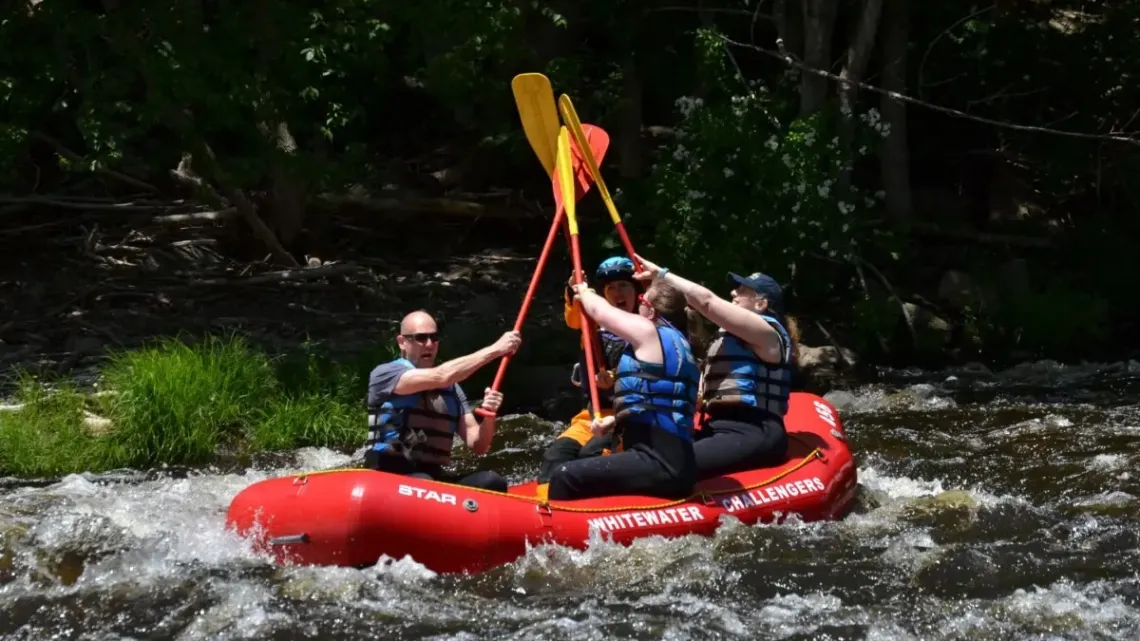
Our conversation took place in Hot Springs, North Carolina, as part of a rafting trip hosted by RAFT for America, an organization that brings together a group of adventure seekers and raft guides from across the political spectrum to discuss challenging issues while working together to navigate whitewater rapids.
The woman described how the destruction of homes, disconnection from the world, and loss of life had the unexpected outcome of renewing civic engagement at the local level, building connections with neighbors, and feeling a sense of ownership in the structures being rebuilt together.
I knew she was talking about western North Carolina, yet if I closed my eyes, I could have sworn she was describing my experiences as a Marine during deployments in the Middle East.
It is the same look you see in many veterans’ eyes as they reminisce about the bonds built on battlefields despite the personal sacrifices required of them.
Because when you strip away the uniforms, political prerogatives of others, and external media influences, the parallels between service and the healing power of nature are stunningly similar in both war and at the scenes of natural disasters.
I wish I could have stayed in that moment. I wish I could tell a story about how Team Democracy and RAFT for America set aside their primary goal of using the river to provide a safe space for political discourse to focus on supporting local businesses and uplifting local leaders.
However, in this moment, I am forced to choose between uplifting these heroes leading local recovery operations or responding to an incessant wave of policies grounded in hate and division we’re witnessing from the Trump Administration and those who enable him.
I despise having to make that decision, but I believe that America must confront who we’ve become in the year since Hurricane Helene ravaged North Carolina, Georgia, and Tennessee.
The Trump Administration has chosen to abandon communities like Hot Springs and others impacted by Hurricane Helene, which still need long-term investments in recovery and growth initiatives.
The funds redirected from FEMA to support Immigration and Customs Enforcement (ICE) are a direct reflection of administrative priorities – lining the pockets of billionaires who benefit from the prison industrial complex, rather than supporting small businesses and gateway communities that help millions of people find joy in nature.
I refuse to believe that America has the resources to construct Alligator Alcatraz, at a cost of $608 million to taxpayers, utilizing funds redirected from FEMA, while lacking the resources to restore boat launches, fully staff critical land management workers, and provide relief to communities attempting to rebuild after catastrophic storms.
I am concerned that America’s volunteer military force is faced with the impossible choice of adhering to their oath to support and defend the Constitution or engaging in acts that contradict their own beliefs within their own communities.
Imagine being a Georgia National Guardsman recently returned from a deployment to Syria, where your state faced the destruction of Hurricane Helene. And instead of being assigned to help fellow Georgians in recovery, you receive orders to deploy to Washington, D.C., and are assigned to a trash detail.
Imagine being a Tennessean from a community still reeling from Hurricane Helene damage, who signed up for the National Guard out of a desire to defend America against foreign adversaries, and suddenly facing a deployment to Memphis in support of “law enforcement operations” which you to raid residential neighborhoods and zip tie children under the cover of darkness as we’ve seen unfold in Chicago.
Unfortunately, we no longer have to imagine these scenarios. Rather than choosing to invest in the communities that enhance connections with nature by hikers traversing the Appalachian Trail and paddlers coming off the French Broad River, the Trump administration has chosen to build prisons on public lands that destroy ecosystems and endanger detainees in the path of the next climate disaster.
In times like these, we must continue to speak truth to power – climate change results in higher incidences of extreme weather – and protect the land, waters, and stories that connect us.
One year removed from the destruction of Hurricane Helene, I am reminded by nature’s ability to heal itself, and the connections I made on the river, that we can find hope and build communities in the midst of any storm.
The survival of communities and the soul of our nation depends on sustaining that hope.