"We are grateful for the people
We are grateful for the lands that we’re on
We are grateful for the water
We are for the sun which gives us energy
We are grateful for sun and thunderbeings which bring us change
We are grateful for the moon which governs our tides and our women
We are grateful for the stars at night because they remind us that light is coming and that we are never alone"
-From the Haudenosaunee Thanksgiving Address
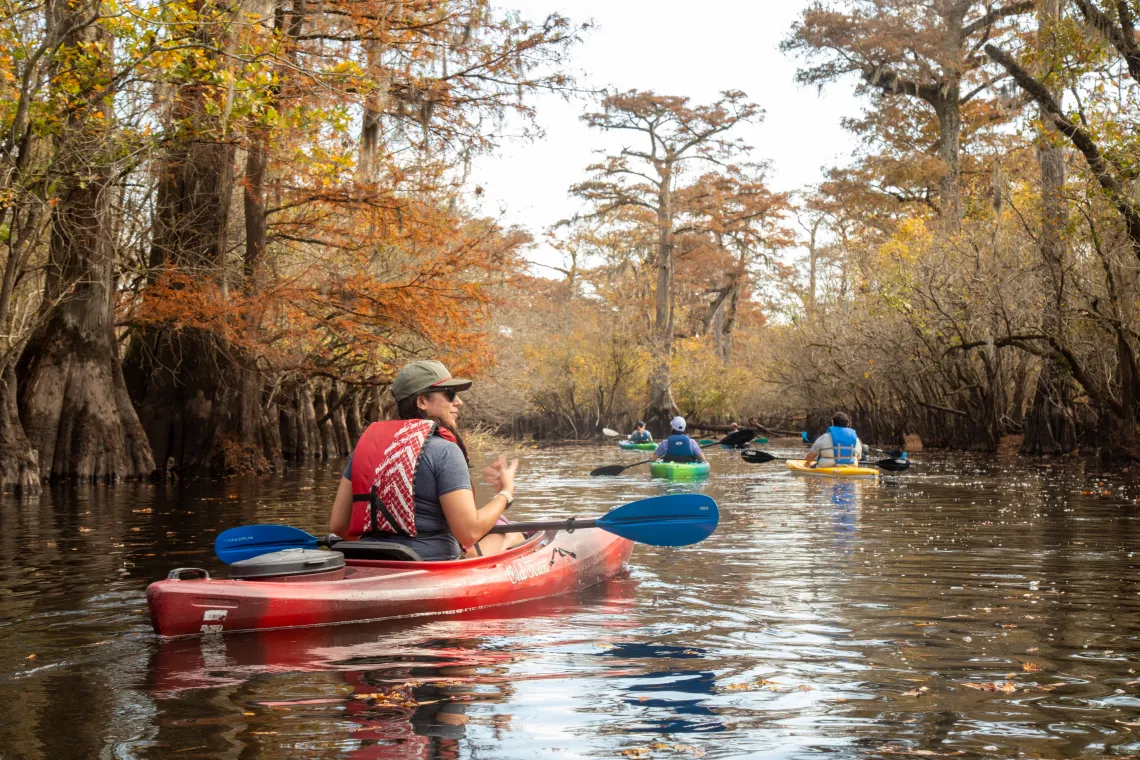
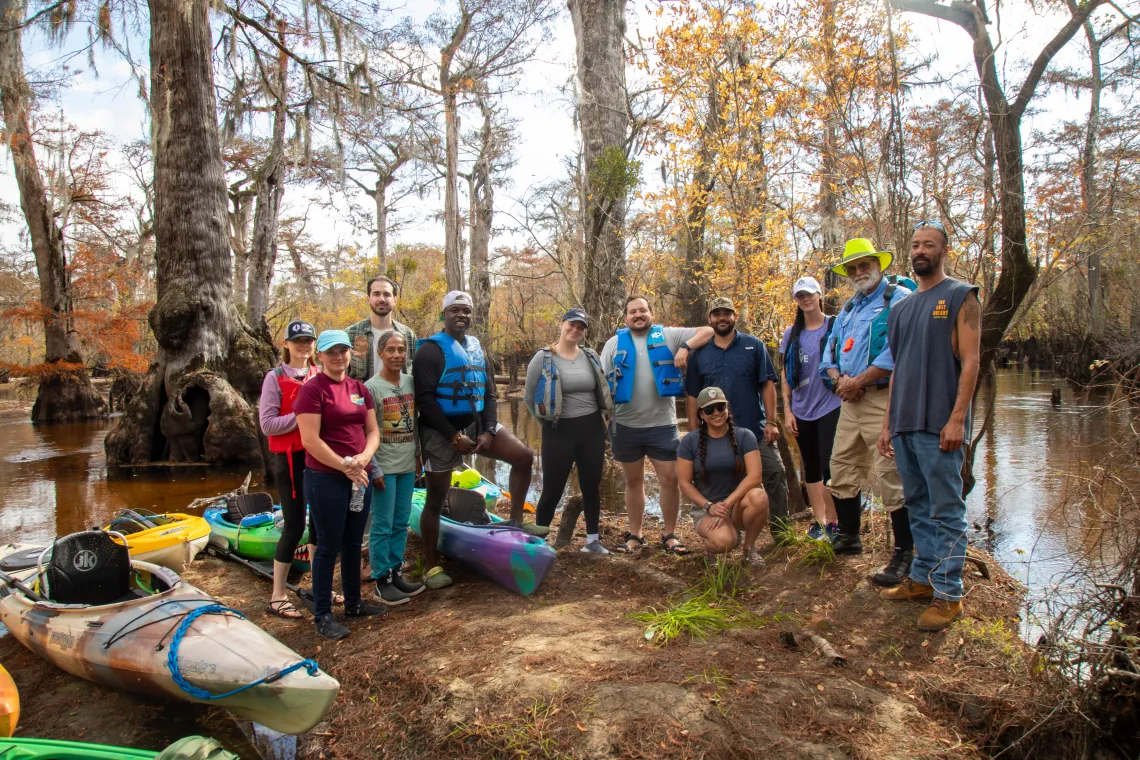
On Friday, November 7, advocates from the Sierra Club’s Military Outdoors program, the Water Conservation campaign, and the North Carolina chapter joined Indigenous veterans from the Coharie Tribe for a paddle trip down the Black River in North Carolina. Ahead of Veterans Day on November 11, attendees discussed the intersections of service as Indigenous leaders, military veterans, and environmental activists.
Veterans spend more time silent in nature than most people assume: sitting in observation posts keeping watch, lying awake in a fighting hole looking at the stars, or on conditioning hikes listening to boots shuffling on the ground and your own thoughts. The well-documented benefits of spending time in nature — and in a state of awe — apply on the battlefield in the same way veterans recreate on their own when returning from service.
On this trip, the invocation of gratitude to begin our journey down river and grounding ourselves in the land, water, and energy, and willingness to call us into a shared experience rooted in tribal traditions was powerful. While we may not recall all of the names of the people who joined us on the Black River, everyone's military affiliation, or individual roles in the fight to preserve, protect, and enjoy the plant, we are certain that we will remember our collective gratitude for the moment of silence we shared in focused mindfulness as we used our five senses to pull the essence of the land, water, and wildlife into our soul.
Reflections On The River
For participants, the trip was all about showing gratitude and respect for a planet that continues to take care of us.
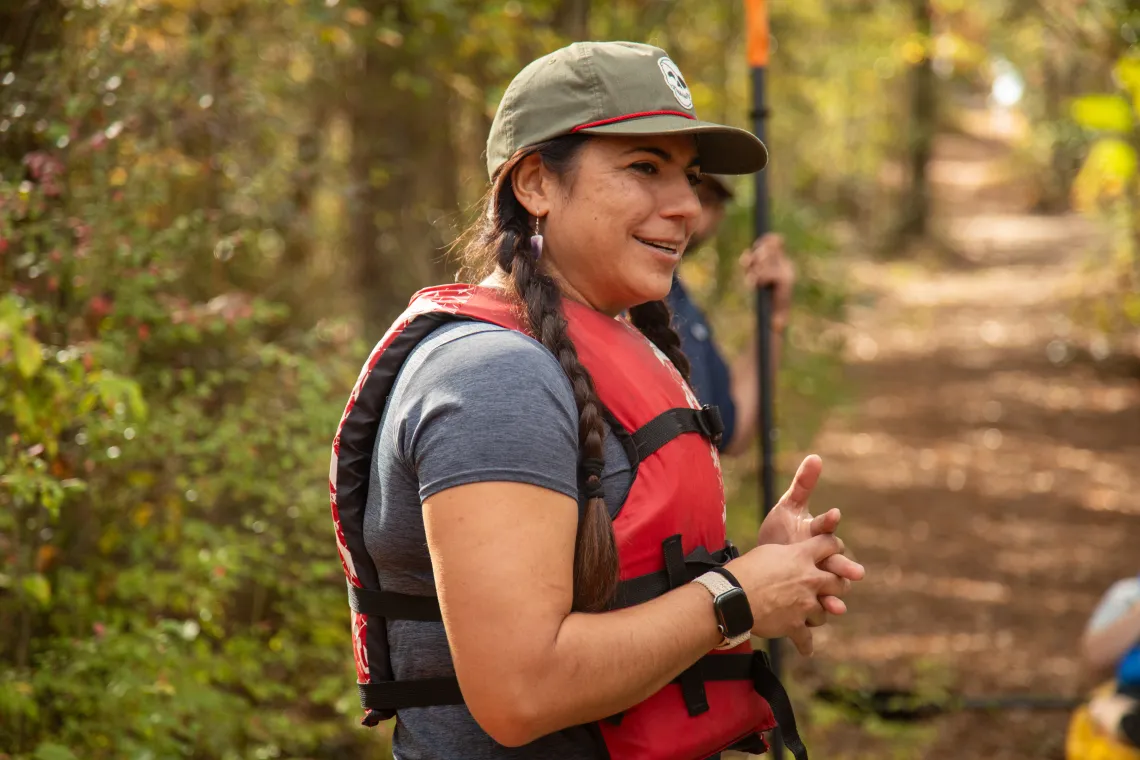
Beth Roach, Manager of the Sierra Club's Water Campaign, captured the sensations felt by all and the essence of indigenous stewardship.
“Paddling through the Three Sisters Swamp takes you back in time - 2600 years ago - before the pyramids were built in Egypt and before Jesus and Mohammad walked the earth. Cypress knees tower over us as we dip our paddles into golden amber water tinted with tannins as our Coharie and Nottoway guides share songs, words, prayers in Nottoway and Tuscarora. The Great Coharie River Initiative grew within the Coharie Indian Tribe’s river cleanup efforts. Once they began taking care of the river, they say the river began to take care of them - attracting new community projects such as language classes, food bank and community garden. If one is looking for how a community could and should be - they need to look no further than the Coharie. All who encounter them experience their deep hospitality and generosity of spirit.”
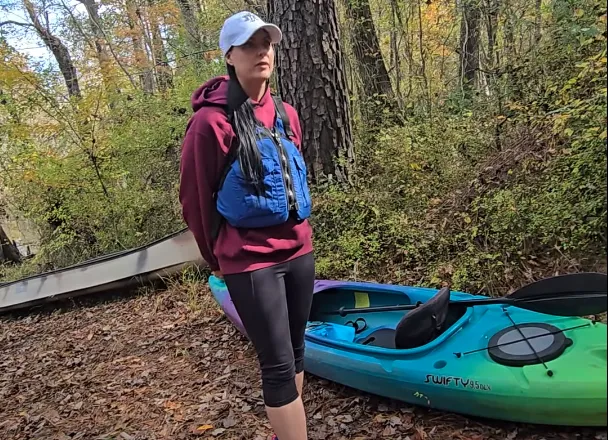
Carrie Ortega, a representative of the Native American Women Warriors Association and United States Marine Corps Veteran, described her personal reason for joining our community on the river and motivation for bringing women veterans together in the outdoors.
“We had a sorority, a sisterhood, when we were in the service, there was a few of us and and we always stuck together, and when we leave a lot of us are dislocated from our people, from our tribes, maybe we stay around base, NAWW has helped bring that sorority back, has resources for us, and a sisterhood that we can rely on.”
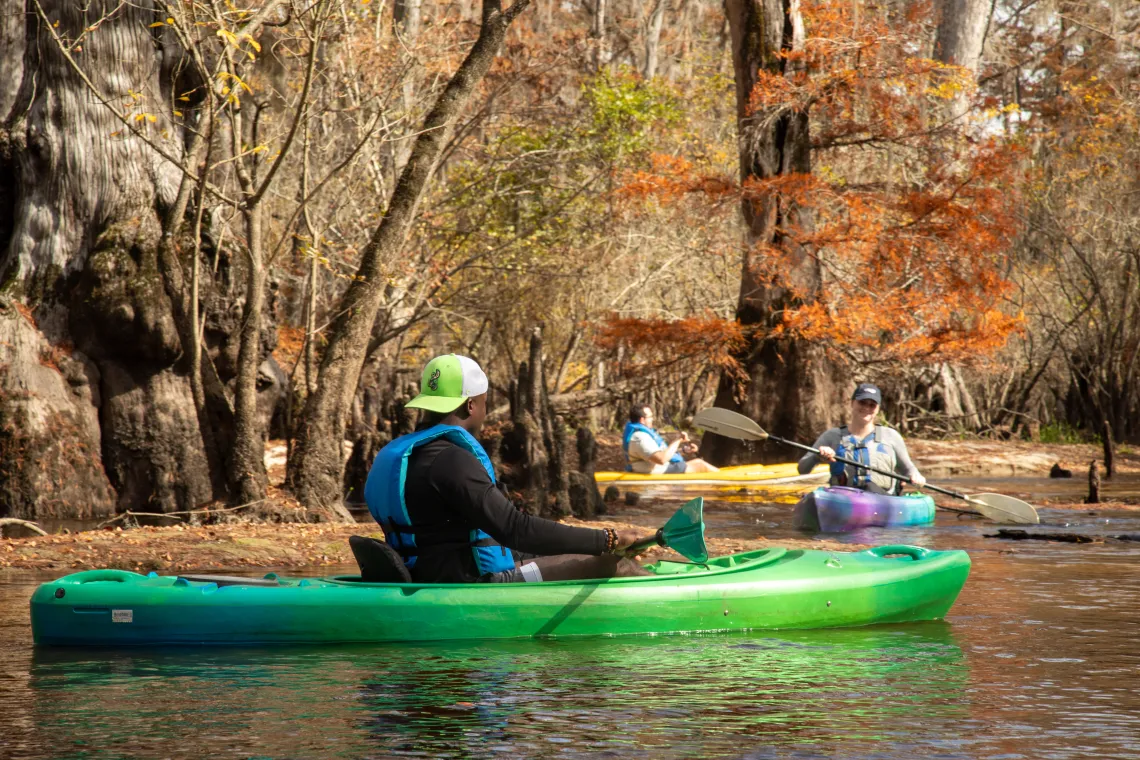
Sherman Neal II, Deputy Campaign Director of the Sierra Club's Military Outdoors program, and United States Marine Corps Veteran, elaborated on why intentional outreach to indigenous servicemembers, especially during Native American History Month, is critical during a politically challenging time for veterans and defenders of the environment:
“This trip was all about building authentic relationships and harnessing the wisdom of North Carolina’s diverse veteran community to build a strong Military Outdoors chapter. The leadership of the Coharie Tribe made this experience different from typical Sierra Club outings. Far too often in veterans’ daily lives, and especially on days like Veterans Day, we begin communications and introductions intended to differentiate each other based on immutable or chosen characteristics. Sometimes we don’t even have to speak before making judgments on who is worthy of praise, what acts of good or evil they’re associated with, and letting our initial thoughts drift to ‘what can this person do for me.’
The choice to ground ourselves in gratitude helped me better understand what inspired participants to drive to rural North Carolina on a Friday afternoon to support me as a veteran, and more importantly support an awesome tribal stewardship initiative, military families, and initiatives like the NC Conservation Network. The connections made while paddling elicit the ideas that leave us charged to 'do the work' in a way Zoom conferences could never do.”
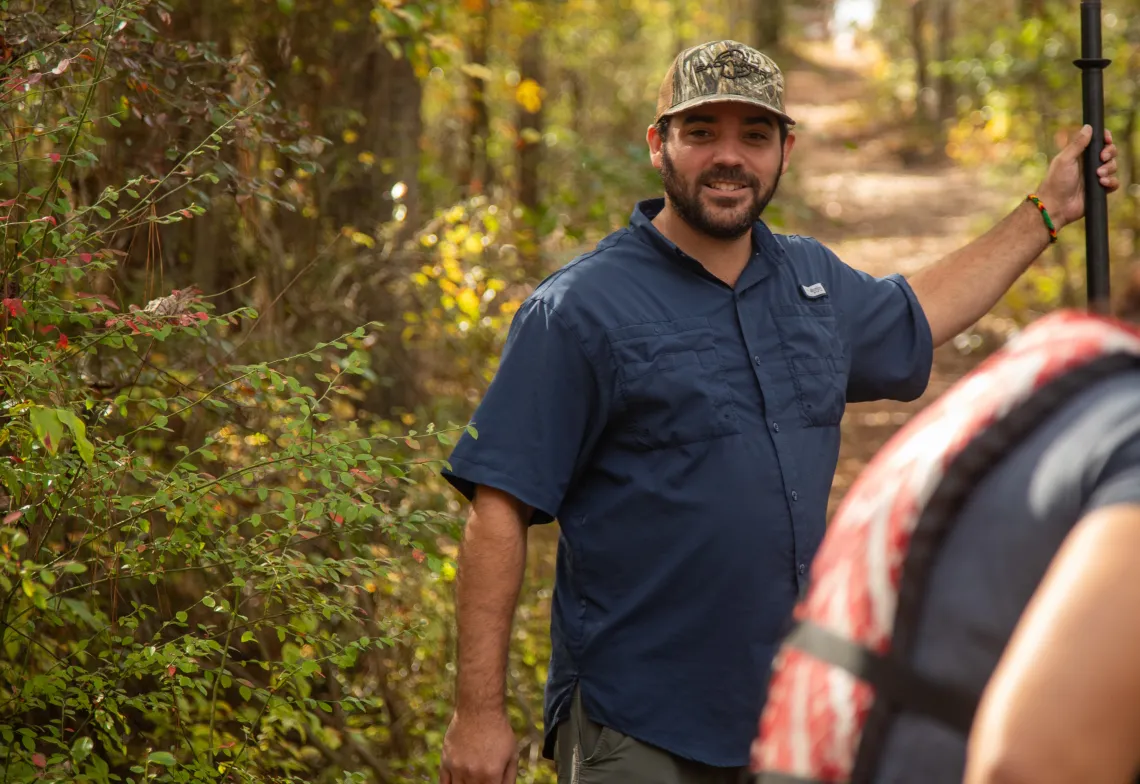
This trip was one of several organized by the Sierra Club in partnership with the Coharie Tribe under the leadership of Kullen Bell. The Coharie River initiative has graciously worked with the North Carolina chapter and national campaigns to help volunteers, conservation advocates, and now veterans understand the connection to the land through their cultural perspective on the water. Kullen provided the following insight into their mission and his personal motivation for serving as a guide on traditional Coharie land.
“Coharie-led outings are especially transformative - participants connect with each other in an incredibly beautiful and ancient ecosystem while witnessing premiere Indigenous stewardship in real time. Our group discussions weave in threats and solutions to a variety of issues and we all leave feeling more inspired than ever to keep momentum going. As our nation observes Native American Heritage Month to celebrate Native culture and history - this paddle perfectly illuminates the ways in which Indigenous peoples such as the Coharie caretake our lands and waters every day, all year round, and have done so for centuries.”
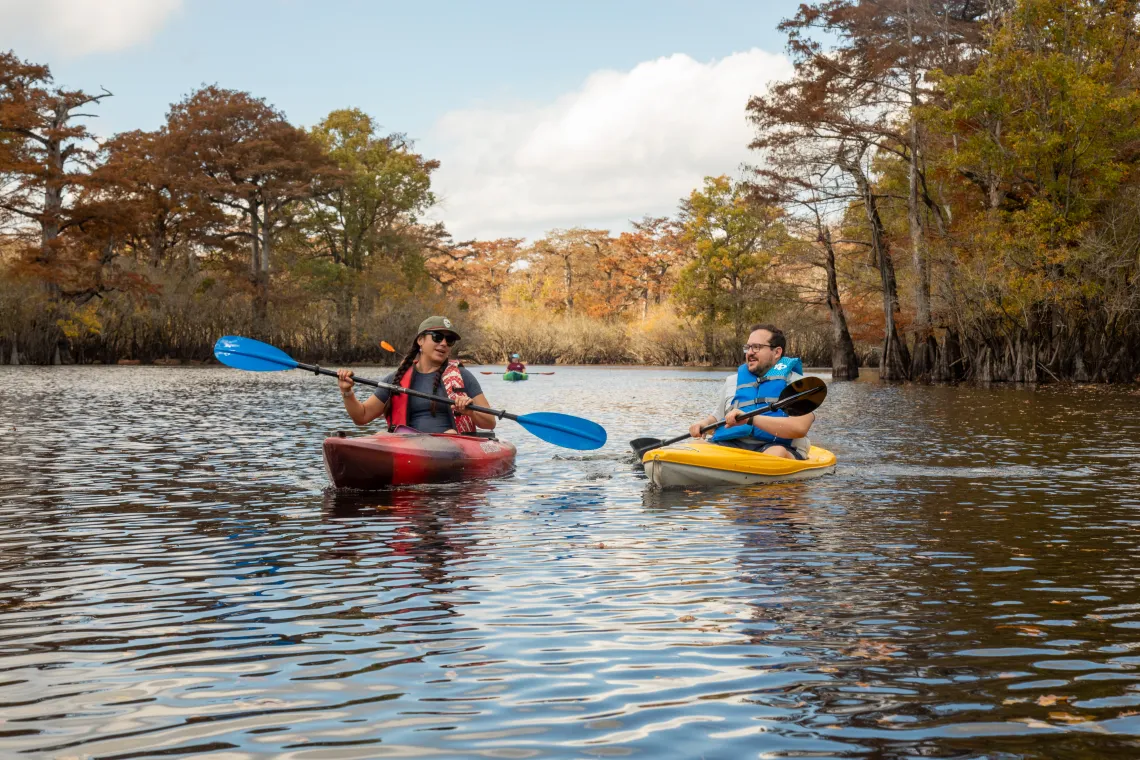
Michal Brzezicki, State Grassroots Manager with the Sierra Club's North Carolina Chapter, described the role of outings like Three Sisters in bringing together volunteers and communities to support conservation through exploration.
“We have been working hard in North Carolina to expand our Outings Program while engaging broader swathes of our community, and connecting on a deeper level with those parts of our state most critically impacted by conservation challenges. Our Chapter has been at the heart of the battle to preserve and protect our critical wetlands, which are under constant threat here in North Carolina. The Cape Fear river basin (of which the Black River is a tributary) is one of the most damaged and polluted river systems in North America. Despite the challenges, we find moments of serenity amid places of incredible beauty.
Having the opportunity to explore one of North Carolina’s hidden waterscapes, twisting and turning our kayaks through a cypress cathedral, and seeing it all through the eyes of a community that has stewarded the land for millenia brings more meaning to Sierra Club’s mission than anything else I have experienced since I began working for the Sierra Club. There are two sides to the beautiful tapestry that makes North Carolina a special place worth preserving–its incredible people, and its incredible natural environment. This experience encapsulated both, and shows us the true value of exploring, enjoying, and protecting.”
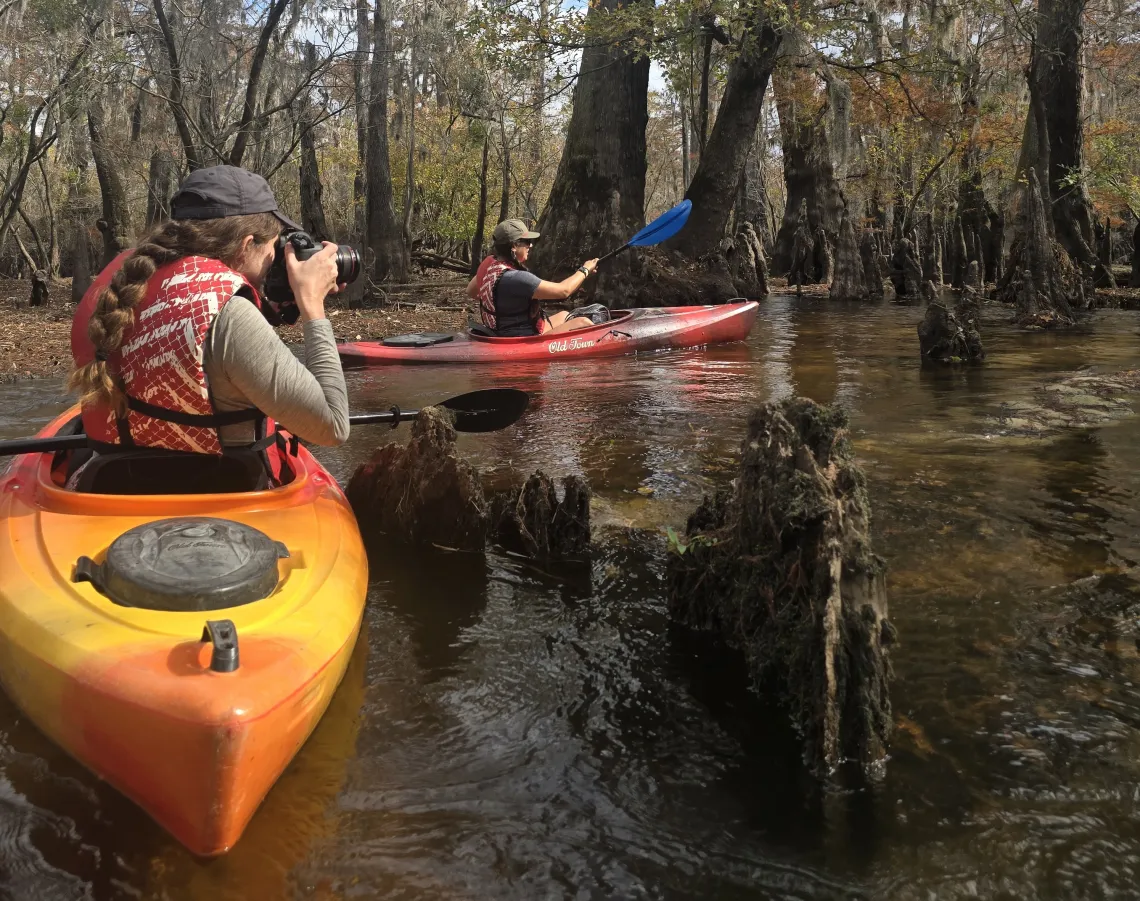
Addie Navarro, Sierra Club member and filmmaker/photojournalist, captured the sentiments of what makes trips with the Sierra Club special.
“I felt very honored to be included and invited into that space. It felt very sacred, especially after learning about the Coharie’s relationship with the river and the swamp, and the moment of silence we took. I was very touched by Kullen’s mindful approach to navigating the waterways and using all 5 of his senses. It was definitely unlike any other river trip I’ve ever been a part of, and I’ve been on quite a few!”
The river connected us. The native people of the land enlightened us. The harmony of nature intertwined with the backdrops of native songs, conversations amongst volunteers, and discussion on how the land came to be protected united us the mission to protect the people, flora, fauna, and waters that make Cape Fear River basin special.
Learn more about the Coharie Tribe, the Great Coharie River Initiative, and Coharie River Tours at coharietribe.org/programs/great-coharie-river-initiative.
Learn more about the Sierra Club’s Water campaign at sierraclub.org/water.
Learn more about the Sierra Club’s Military Outdoors program at sierraclub.org/military-outdoors.
Learn more about the Sierra Club's North Carolina Chapter at sierraclub.org/north-carolina.