We are living through trying times. This year has often felt turbulent and stressful, especially for those of us who care about people and the planet. But, as I reflect on the state of our work as part of Sierra Club’s Beyond Dirty Fuels campaign, I am struck by the power of coming together with a shared purpose. Even in the face of unprecedented odds, we are stronger together.
It is true that Donald Trump and his allies in Congress are doing the bidding of Big Oil and Gas as they push through fossil fuel projects without adequate environmental review and despite the risks they pose to public health and the fact that they would increase electricity prices. The cost is too great to all of us and the only ones who benefit are Big Oil and Gas and their cronies and shareholders.
We know that the vast majority of people support increased access to clean, affordable energy instead of propping up polluting industries that harm our health and environment. The Sierra Club is making strides in breaking down the facade and exposing the truth that oil and methane gas pollutes our air and water, harms our health, and is not good for energy security or affordability.
Every year that our campaign is successful in halting, delaying, or decommissioning our priority projects, we can prevent 1.8 billion tons of CO2 equivalent per year, that’s the annual emissions from 475 coal plants from entering the atmosphere. While some of the pipelines and LNG export terminals we work to stop did get permitted this year, we still engaged at every step to call attention to the brazen fast-tracking of permitting, and will continue to fight these projects from becoming fully operational.
Despite tall odds in 2025, we found ways to win.
In 2025, we won by organizing the power of people.
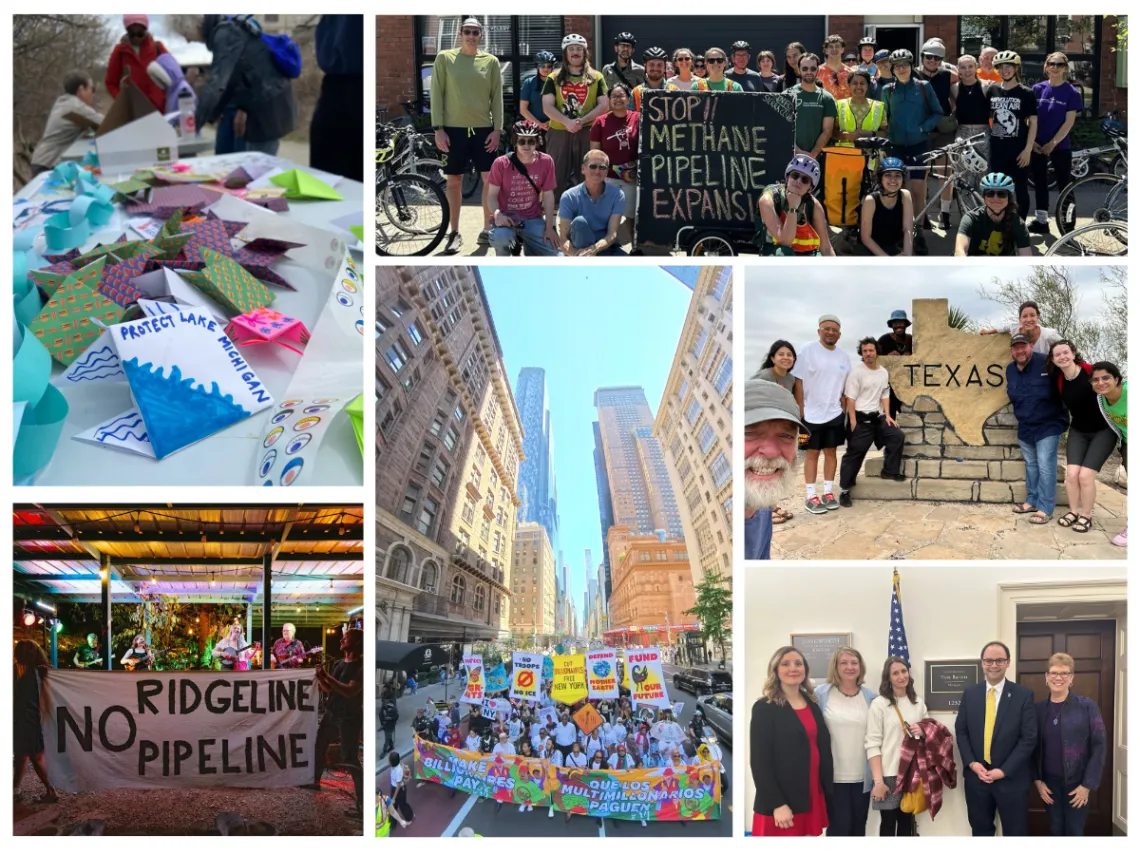
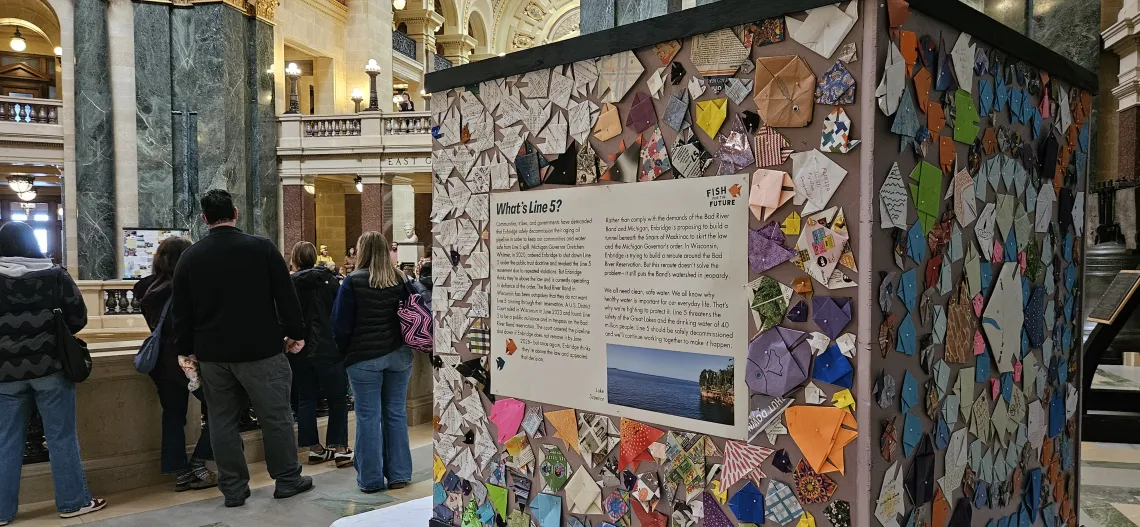
- With support from many of you, we set the world record for the largest display of origami fish -- over 86,000, more than four times the number needed to beat the existing record. Fish for the Future was a nationwide art and action campaign to raise awareness about the urgent need to shut down Enbridge’s Line 5 pipeline and protect our precious Great Lakes, which provide drinking water for over 40 million people. A flood of fish arrived in the mail, with handwritten notes of solidarity. People from all 50 states, Puerto Rico, D.C., Canada, Mexico, and even the Netherlands sent in fish.
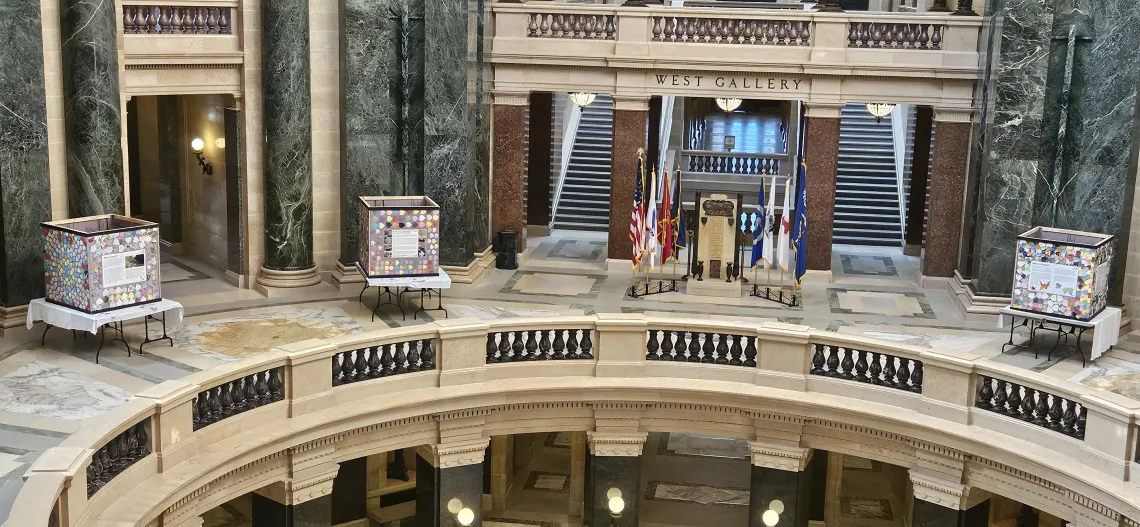
Together, the team– which included Sierra Club chapters from Wisconsin, Michigan, Minnesota, and Illinois, our Beyond Dirty Fuels campaign, and local and national partner organizations– used this art display to call on Michigan Governor Whitmer to deny the Line 5 Tunnel permit to protect our clean water, communities, and climate. The record-setting display even made its way to the Wisconsin State Capitol, highlighting the ongoing legal challenges to Line 5 in the state.
- We brought people together on numerous livestreams to educate and collaborate. Our livestreams engaged over 11,000 activists nationwide, some examples of our events include:
- Hundreds of people attended (with even more streaming afterwards) a 5-part storytelling training series for people to learn, practice their skills, and deepen their advocacy around personal storytelling and building a narrative that engages others in our work.
- We hosted a livestream to roll out “People Always Pay,” a report detailing the programs in Louisiana and Texas that give massive tax breaks to methane gas exporters, resulting in billions of dollars of lost local and state tax revenue. As a result, communities are left to suffer all the harms and none of the benefits.
- Our team hosted a webinar in March on the harms of carbon capture and storage titled, The True Cost of Carbon Capture in California. The team hosted other events and educational webinars throughout the summer for elected officials, the media, and community to raise awareness about the false promise of CCS.
- We teamed up with Public Citizen and the Revolving Door Project to share their findings from "Trump's Polluter Playground." The webinar offered a look behind the curtain at all the ways corrupt companies are getting their money's worth from buying influence. This new report details just how deeply these polluting corporations have infiltrated our federal agencies, such as the EPA, and how it's affecting all of us.
- Oil and gas pipeline fights galvanize people to take action. Across the country, our campaigns have engaged in inspiring in-person community building to fight against polluting fossil fuel infrastructure projects this year:
- In California, we organized with coalition partners to commemorate 10 years since the Refugio Beach oil spill disaster. More than 100 environmentalists, surfers, students and community members filled the beach and paddled out to the site of the 2015 spill.
- Kern county in California is the frontline of oil extraction in the state, and as a result, there is a high-level of harmful pollution. And many residents there speak Spanish. Our team convenes a coalition of local environmental justice groups and Sierra Club volunteers to do bilingual community education events about the dangerous infrastructure in people’s backyards. This team has been able to provide information to hundreds of Kern county residents throughout 2025.
- The Sierra Club co-hosted the Reclaim the Ridge Rally and Music Festival along the proposed Ridgeline Pipeline route at the Lilly Pad Hopyard Brewery and campground in Morgan County, TN. With a turnout of over 100 people each day, we held an unforgettable weekend of music, nature exploration, and action to raise awareness and funds in opposition to Enbridge's proposed Ridgeline gas pipeline.
- Beyond Dirty Fuels was in New York City for Climate Week to hold fossil fuel executives and their backers accountable. The Sierra Club joined coalition partners at the Make Billionaires Pay march, which was attended by more than 30,000 people.
- In Connecticut, our campaign and the Sierra Club chapter hosted a bike tour of fossil fuel infrastructure throughout New Haven. The ride made stops along the way to see firsthand the impact of fossil fuel expansion on Connecticut and discuss a better way forward.
- Since 2023, Sierra Club’s Beyond Dirty Fuel’s team and the Tennessee chapter worked together to support the Preserve Cheatham County movement to stop the Tennessee Valley Authority from taking people’s land through eminent domain for the Cheatham gas pipeline. Community members knocked doors, crowded TVA hearings, and organized a county-wide grassroots movement against the pipeline. After two years of sustained pressure defeated that project, TVA could still target another location in Cheatham County or Middle Tennessee, and advocates remain vigilant, insisting on energy choices that don’t burden communities with health, safety and climate harms.
In 2025, we found ways to win at the local and regional government level.
- The Sable pipeline off of the central California coast ruptured near Refugio Beach in 2015 and caused one of the worst oil spills in the state’s history. In 2025, ten years later, Exxon has sold off its aging, dangerous pipeline, and the new operators are pushing for risky offshore drilling to resume.
In June, Santa Barbara Superior Court Judge Donna Geck granted a request by Sierra Club and partners to stop the planned restart of the defective Sable pipeline on the California Coast given the outdated permits and lack of environmental review. Our Beyond Dirty Fuels team supported our partners and local chapter by collecting petition signatures, mobilizing our members and attending hearings, and spreading public awareness through flyers and social media.
As a result of robust organizing, California’s Central Coast Water Board voted unanimously to fine Sable Offshore Corp. a record $18 million for unauthorized waste discharges into state waterways and repeatedly defying orders to stop unpermitted work on the corroded pipeline. In September, another local judge filed 21 criminal charges against the company for their illegal construction work in 2025, and the pressure campaign against the pipeline continues to build.
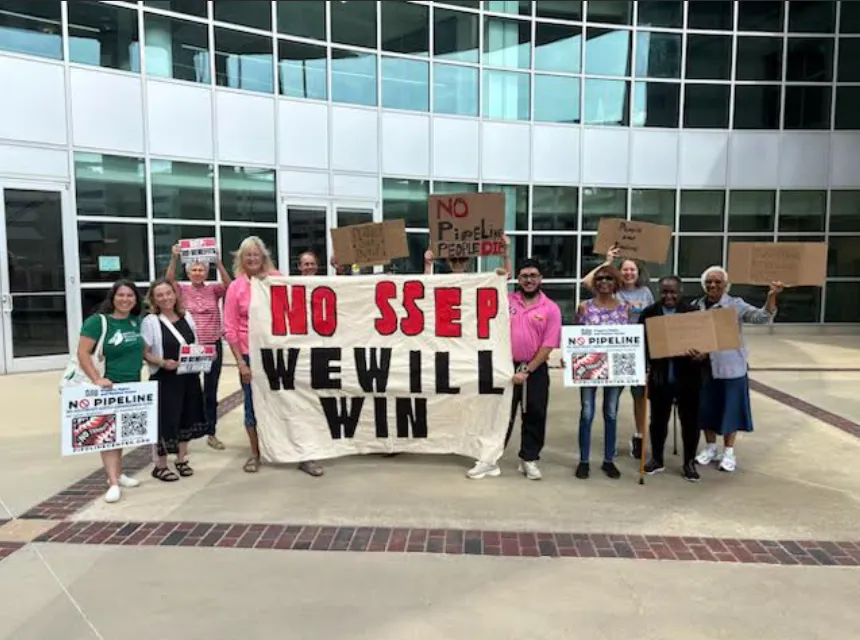
- The Southeast Supply Enhancement Project (SSEP) is an expensive new methane gas pipeline proposed by the Transcontinental Gas Pipe Line Company, LLC — a subsidiary of Williams Companies, commonly referred to as Transco. North Carolina communities along SSEP’s proposed route already suffer from some of the worst air pollution in the state. By sharing compelling data and stories on the lack of accountability and highlighting the blatant greed behind this pipeline project, our team has been able to change hearts and minds in the south to create a vibrant network of activists across the state to fight SSEP.
With support from grassroots partners, Sierra Club members and supporters have worked to win four local resolutions in four months– in Forsyth County, Guilford County, and the towns of Midway and Greensboro against new proposed pipelines, like SSEP.
As a direct result of our team’s relationship building and educational outreach on the dangers of pipelines to the governor and attorney general offices’, North Carolina Governor Josh Stein signed an Executive Order creating a new Energy Policy Task Force. The Sierra Club will have a seat on the task force to advocate for clean, affordable energy over fossil fuels in the state.
In 2025, we found ways to win in the courts.
- In March, a Wisconsin judge halted the construction of Enbridge’s Line 5 pipeline while a lawsuit filed by Sierra Club and local partners in Wisconsin worked through the courts.
- In May, following a contested hearing before the Texas Commission on Environmental Quality, we settled our legal action against the expansion of the Corpus Christi LNG export facility for its toxic air pollution. The settlement required facility-wide air toxics monitoring and a $2 million fund for environmental justice and environmental protection on the Texas Gulf coast.
- In October, a Louisiana state court judge ruled for Sierra Club and its partners and vacated Commonwealth LNG’s Coastal Use Permit, effectively preventing construction of the facility. The judge determined that the state agency failed to consider impacts on low-income and people of color and also omitted analysis of climate change. The decision doesn’t stop Commonwealth LNG forever, but it does mean the agency must redo its permit to address these impacts. Delays like this can be fatal for an LNG export project, especially as markets tighten and the world continues to transition away from fossil fuels to renewable energy sources.
- Meanwhile, our legal campaign against the LNG industry saw several new actions. In May, we filed a lawsuit in the 5th Circuit Court of Appeals in New Orleans challenging the Maritime Administration's deepwater port license for Delfin LNG. In July, we filed a lawsuit in the D.C. Circuit Court of Appeals against the massive CP2 LNG facility, challenging FERC’s reauthorization of the project, and in August we filed another case in the 5th Circuit challenging the project’s air permits. In September, we filed a request for rehearing challenging FERC's reauthorization of Rio Grande LNG and the Rio Bravo pipeline; and in November, we filed another request for rehearing of the Department of Energy's export approval to non-FTA countries for the CP2 project. We expect these to be argued and decided in 2026.
And we even found ways to earn some federal wins in 2025.
- The Dirty Fuels campaign fought back against many of the terrible provisions the GOP has attempted to include in the budget reconciliation bill, including a scheme that would have allowed fossil fuel companies to "pay to pollute." We wrote and shared a blog highlighting just how terrible this section of the bill would be and the social team produced a fantastic reel on Instagram breaking it down. Our federal policy team developed a fact sheet to share with Hill offices. In the end, thanks in part to our advocacy efforts, “pay to pollute” was stripped from the Senate version of the big, ugly bill.
- We spent much of the year calling out the hypocrisy and harm of Trump’s sham “energy emergency.” Senators Martin Heinrich and Tim Kaine brought up a resolution multiple times to rescind the executive order, and Sierra Club led a letter signed by nearly 170 other groups in support of the effort.
- The federal policy team for Beyond Dirty Fuels was on Capitol Hill all year educating members of Congress and laying the groundwork for fights to come. We led on organizational letters, collected thousands of comments and signatures, and made sure the media and general public were aware of the egregious actions of the Trump administration that will lead to dirty air and water and higher energy costs for Americans.
This past year is a demonstration of how we can be successful, even against the steepest odds. While the Administration is busy rolling out the red carpet for big polluters and doing their bidding, we are building the movement of people who know that together we are more powerful than the industry bottom line. By fighting to transition away from dirty fuels, like oil and gas, we are putting people over polluter profits and protecting energy affordability, public health, and the climate. We will continue to develop and nurture a vibrant movement to stop the expansion of oil and gas because the future we want is too important.