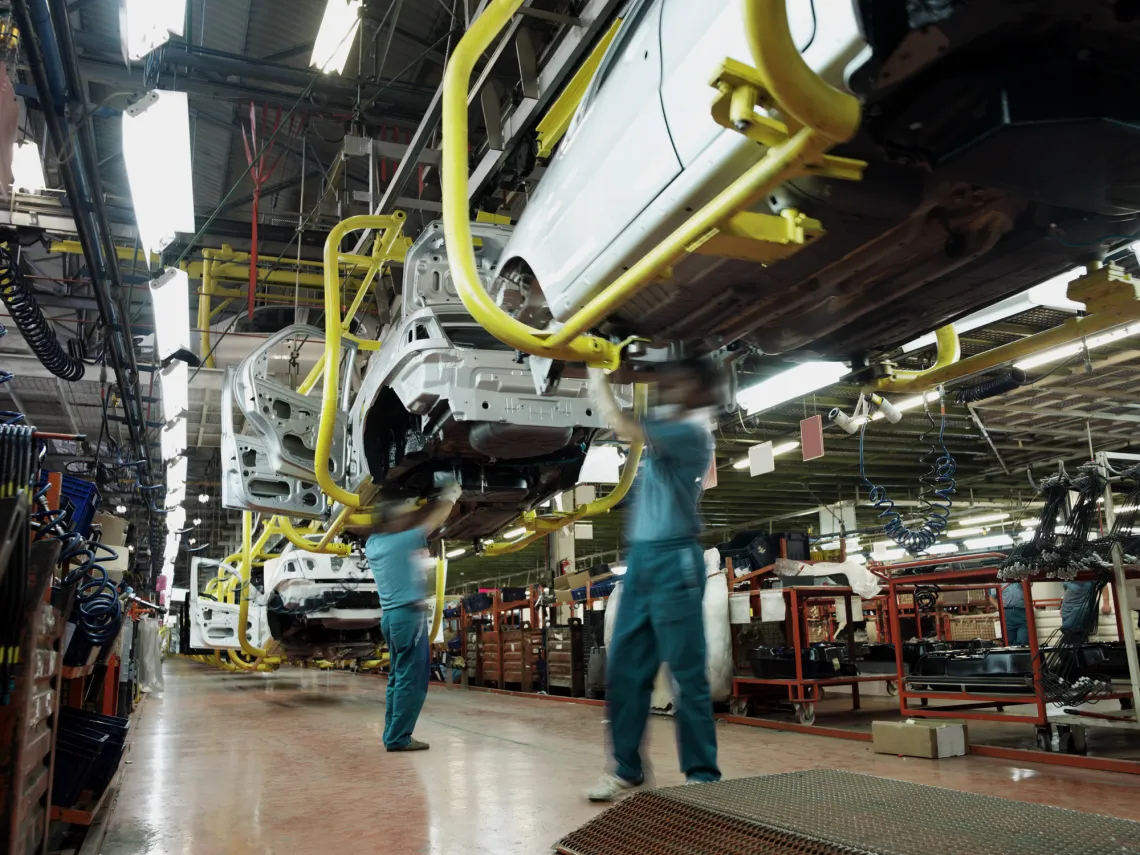
More electric vehicles on our roads means eliminating the single largest source of climate emissions—the tailpipe—and cutting the toxic air pollution that harms millions of people every day.
But cleaning up tailpipes isn’t enough. Automakers must clean up their supply chains too. As the EV transition accelerates, companies can’t claim climate leadership while their manufacturing and materials sourcing remain carbon-intensive. Steel and aluminum alone, essential materials used widely in auto manufacturing, make up about 13% of global emissions. Without urgent action to slash supply chain emissions, automakers simply won’t meet their climate goals.
And this isn’t just about carbon. From mining to refining to manufacturing, too many supply chains are still linked to human rights abuses. Workers, local communities, and Indigenous peoples are paying the price, along with fragile ecosystems already strained by the climate crisis. The shift to electric vehicles must not come at the expense of people or the planet.
The good news? A new analysis ranking 18 global automakers shows that a truly cleaner, more responsible EV is within reach. The leaders are proving it can be done, and the laggards, like the world’s largest automaker Toyota, have no excuse left.
What Is “Lead the Charge”?
Lead the Charge is a global campaign which seeks to raise awareness of the human rights, climate, and environmental impacts that occur throughout automaker supply chains, focusing in particular on steel, aluminum, and batteries. The campaign encourages automakers, as they make the transition to EVs, to also radically transform their supply chains to be equitable, sustainable, and 100 percent fossil free.
This year’s analysis is the fourth edition of the “Lead the Charge” rankings.
Lead the Charge is a diverse network of local, national, and global advocacy partners working for an equitable, sustainable, and fossil-free auto supply chain. Organizations that have contributed to its development include Cultural Survival, Earthworks, First Peoples Worldwide, Industrious Labs, Investor Advocates for Social Justice, Mighty Earth, Public Citizen, Sierra Club, Solutions for our Climate (SFOC), Transport and Environment (T&E), The Sunrise Project and others.
Highlights From the 2026 Leaderboard
|
|
|
|
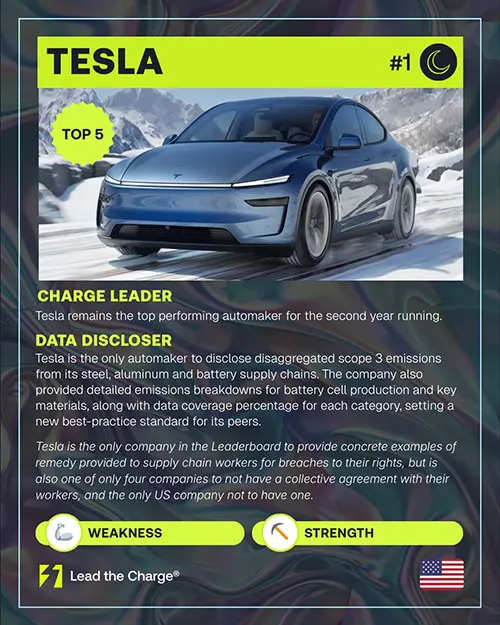
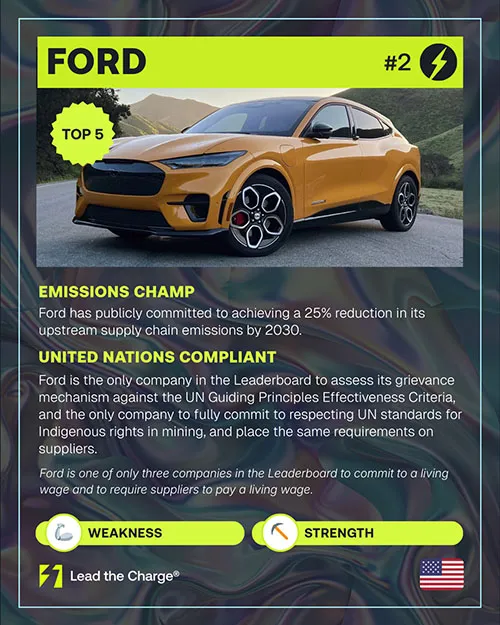
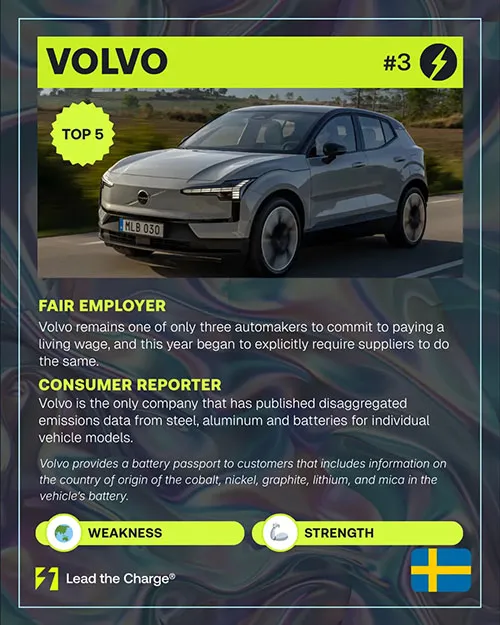
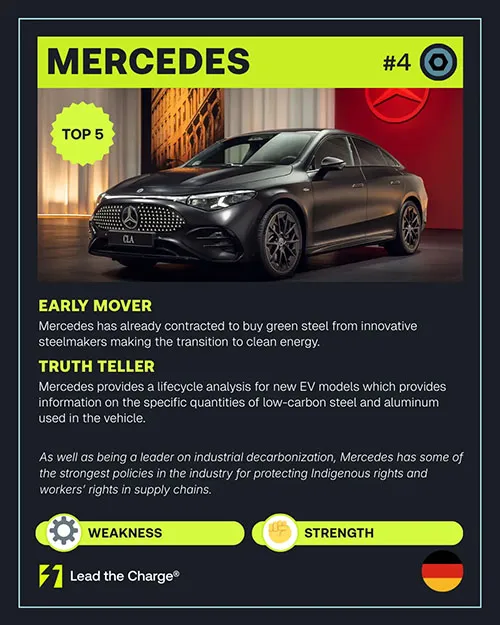
- A core group of industry leaders - Ford, Mercedes, Tesla, Volvo, and Volkswagen - are pushing further ahead. While Tesla remains number one in the overall rankings, Volvo is number one on supply chain decarbonization, and Ford on responsible sourcing. Because of Tesla and Ford’s performance, U.S. companies were the top performers overall.
- The world’s biggest car maker, Toyota, continues to be an industry laggard when it comes to cleaning up its supply chain, and is flailing at the bottom of the rankings, along with Chinese state-owned car companies such as GAC and SAIC, who have made little to no progress in areas such as steel and aluminum decarbonization or responsible mineral sourcing. Toyota and Honda tied for the fewest battery electric vehicles sold – EVs made up just 2% of their total vehicle sales in 2025.
- GM significantly fell down the Leaderboard rankings this year as the only automaker that failed to publish an annual sustainability report. GM has now been overtaken in the rankings by Geely and Hyundai Motors.
- Hyundai is building a steelmaking facility in Louisiana that is not reliant on coal, the first of its kind in the United States.
- Volvo and Mercedes have made significant investments in steel and aluminum decarbonization and are now disclosing specific quantities of low carbon steel and aluminum used in their new EV models, Mercedes’ CLA and Volvo’s ES90.
- Mercedes, Volkswagen and Tesla have published detailed raw material reports on their progress to prevent, mitigate and remedy human rights and environmental harms across a range of supply chains such as lithium, cobalt and nickel.
- Chinese companies were the biggest improvers overall this year. Geely, now the top scoring East Asian automaker, has developed some of the industry’s best practices on battery decarbonization and recycling and has continued to make significant progress on human rights. BYD, the world’s largest EV maker, has taken important first steps, such as putting in place a new code of conduct for suppliers and a supply chain grievance mechanism. While the Trump administration is eliminating billions of dollars of investment in advanced manufacturing, China is investing in technological improvements that could boost the competitiveness of Chinese companies.
You can check out the Leaderboard with full rankings and details here.