Data centers could reverse 15 years of CO2 reductions by 2030
The Sierra Club’s Artificial Intelligence, Real Pollution report finds that electricity demand for artificial intelligence data centers could reverse 15 years of climate progress in the United States. By 2030, electric sector CO2 emissions could return to 2011 levels, totalling 2.3 billion tons.
We evaluated emissions in three different categories: data centers that are connected to the electric grid and are served by a utility, the top 12 dirtiest data centers powered by on-site gas, and all other data centers powered by on-site gas. All of the gas capacity projected for data centers by 2030 is enough to power 75 percent of all the homes in the United States.
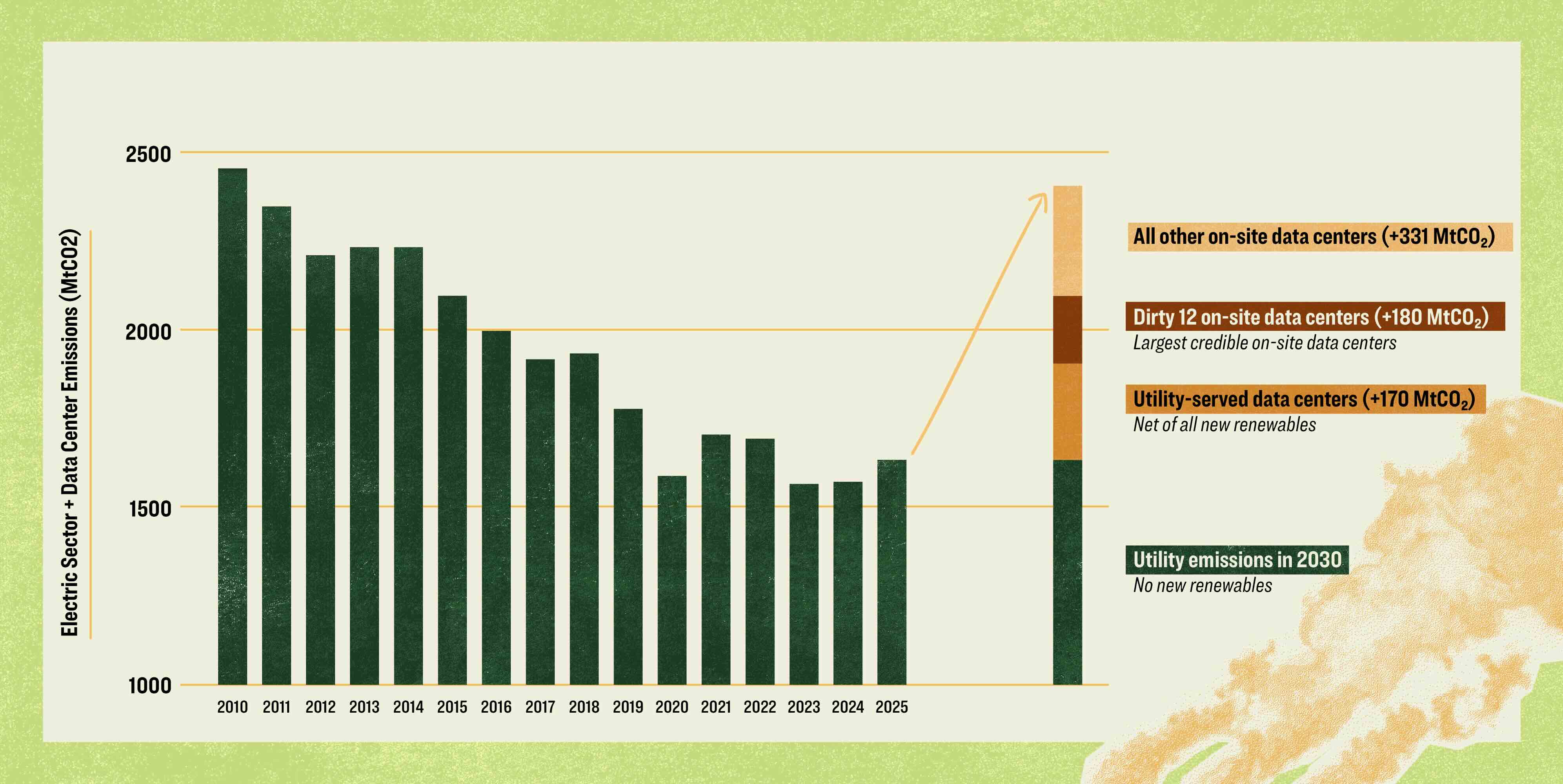
Electric sector CO2 emissions from 2010-2025 (dark green) from EPA Clean Air Markets Program Database, includes any utility-served data centers to 2025. All new zero-emissions resources online by 2030 are accounted for in utility- served data centers (orange). The Top 12 Polluting Data Centers demand and emissions are incremental from permit applications. All other on-site data centers filtered from Environmental Integrity Project database to exclude utility-served projects potentially included in the utility projections. For a complete methodology, refer to Appendix 1.
Utility-served data centers will increase electric sector emissions by 170 million tons of CO2 by 2030. Sierra Club’s gas plant tracker shows more than 550 new gas-fired power plants planned or under construction, representing 351 gigawatts (GW) of utility-served electric capacity. Our conservative estimate is that 40 percent of the power from these gas plants will power a data center. This bucket of emissions could undo roughly six years of climate progress by 2030.
The twelve highest emitting on-site gas-powered data center projects are permitted to emit up to nearly 180 million short tons of CO2 when developed. Together, these twelve projects alone represent over 45 GW of proposed gas generation, more than the capacity of all gas plants built nationwide since 2019. The remaining on-site gas-powered data centers are poised to emit 331 million tons CO2 by 2030. All on-site gas-powered data centers could undo nine years of climate progress by 2030.
The Top 12 Polluting Data Centers: Climate Emissions From On-Site Gas-Fired Data Center Proposals
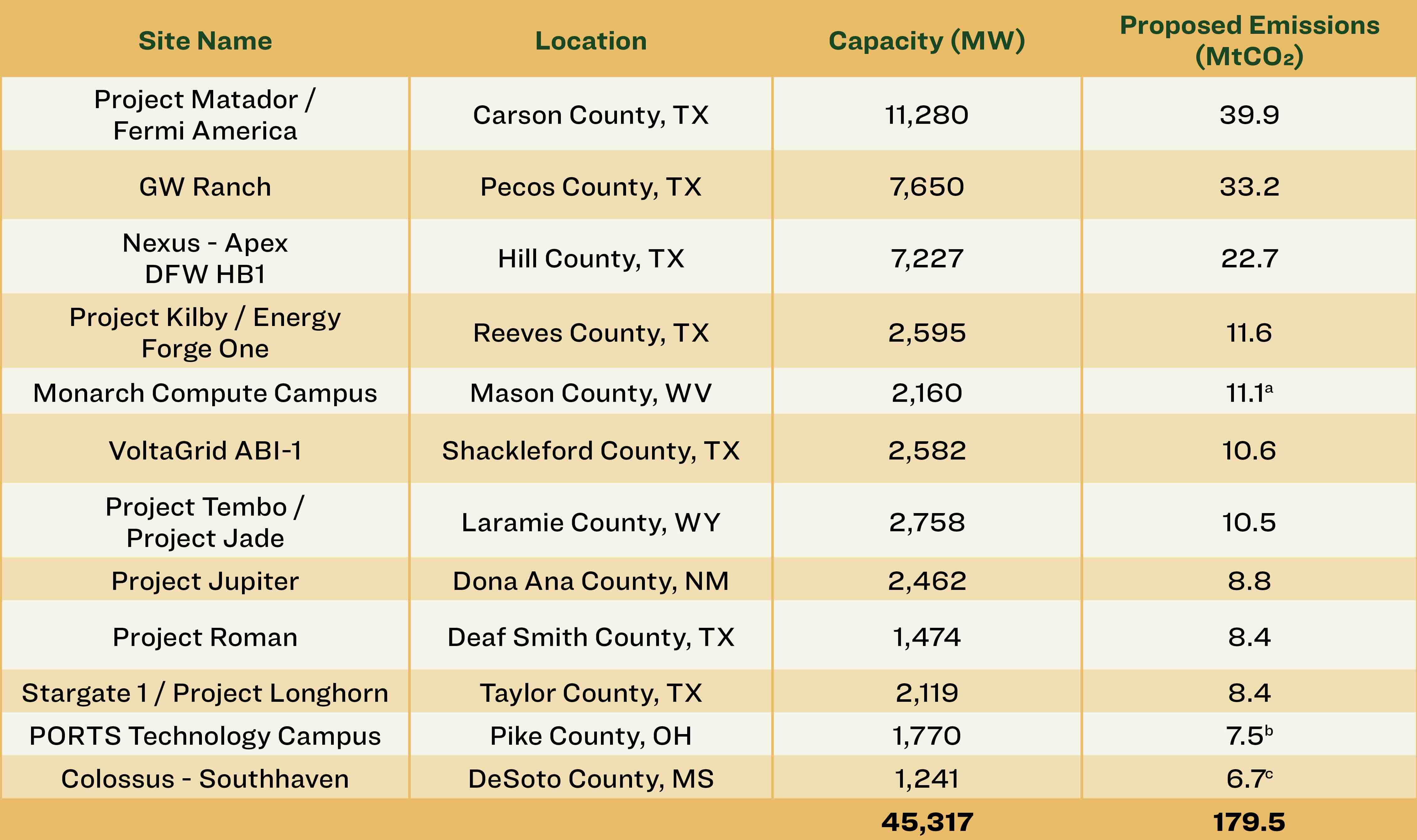
Data from Environmental Integrity Project, September 2026, with modifications.
a Monarch air permit application is for 2.1 GW only; the developer has proposed expanding to 8 GW.
b PORTS facility has not yet applied for an air permit, represents first phase application before Ohio PUC. The developer has proposed expanding to 9.2 GW.
c Southaven facility air permit only specifies emissions per unit of fuel burn. Total assumes 90% capacity factor operation.
Not only do the on-site gas-powered data center projects threaten our climate, they also threaten local air quality for nearby communities. Filed and finalized air permit applications across the twelve sites show anticipated emissions of 13,000 tons of NOx, nearly 6,400 tons of fine particulate matter, and 1,800 tons of hazardous air pollutants (HAPs). HAPS are a troubling category of pollutants that are known or suspected to cause cancer or other serious health effects. The EPA defines a major source of HAPS pollution as any facility with the potential to emit over 10 tons per year of any single HAP, or 25 tons per year combined HAPs.
The Top 12 Polluting Data Centers: Criteria and Hazardous Emissions From On-Site Gas-Fired Data Center Proposals (in tons per year)
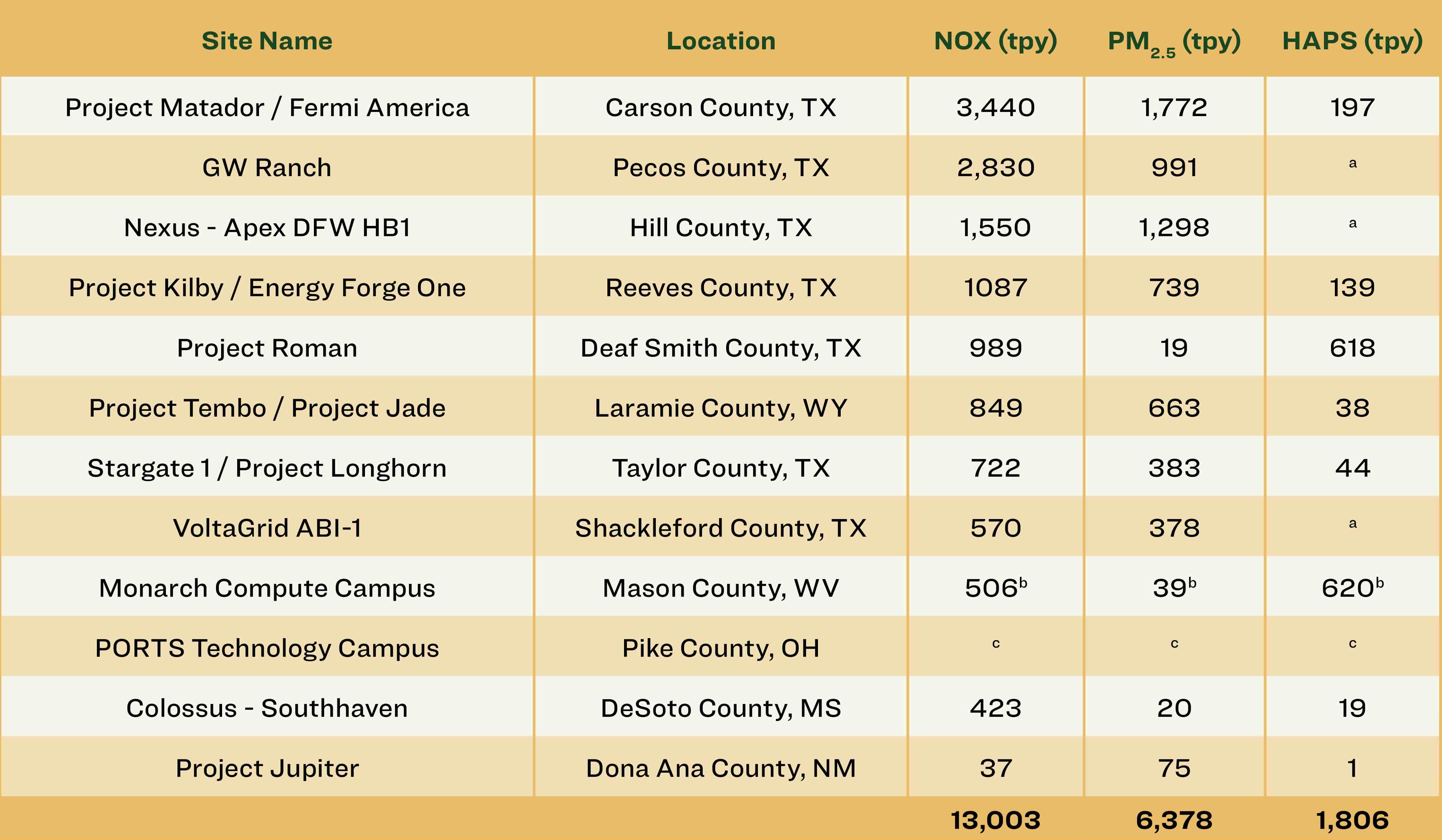
Data from Environmental Integrity Project, September 2026, with modifications.
a Air permit or air permit application does not contain limits or estimates of HAPS.
b Based on air permit application for 2.1 GW segment only. The entire facility is expected to be 8.1 GW.
cFacility has not filed for an air permit.
Tripling solar and doubling wind on the grid would meet U.S. electricity demand even with moderate data center growth, while reducing CO2 emissions 25 percent below 2025 levels and reducing average electricity costs by more than $5 billion annually relative to a scenario that locks in coal plants and limits clean energy development. The Sierra Club’s report includes guardrails that will avoid climate backsliding, protect public health, and ensure that data centers pay the full costs for their needs. To support a livable climate, data centers should be required to meet their energy needs at all times with new, additional, local renewables, storage, and demand management.
We provide no-regrets solutions for the grid regardless of whether the data center buildout ultimately materializes:
- New and additional: Data centers must drive new clean energy projects that would not otherwise exist, and not simply claim credit for previously planned or already-developed projects.
- Local: Data centers must strengthen the system where they interconnect, even where doing so is harder or more expensive, rather than claiming credit for distant projects sited where renewables are cheap.
- At all times: Data centers must invest in technologies that support meeting their requirements around the clock, like storage or clean baseload technologies.
The guardrails we detail in Artificial Intelligence, Real Pollution are paths that state legislatures, governors, and utility regulators can implement to protect communities.
