How the Trump Admin is Giving Your Money Away to Fossil Fuel Companies
Hundreds of millions are being spent to keep dirty coal plants online.
The cost keeps ticking up. It’s .
To keep SEVEN dirty, expensive power facilities from retiring, Americans have so far paid:

How did we calculate this number? Unpacking the Cost of 202C Orders: Facility-Specific Cost Estimates and Methodological Approach.
- How is the Trump administration illegally bailing out coal?
- Where is this happening?
- What is the Sierra Club doing to push back?
- What You Can Do
- Am I paying for this bailout?
- Are these facilities even running?
- What are the health risks?
- Are other facilities going to be prevented from retiring as scheduled?
- Latest news
How is the Trump administration illegally bailing out coal
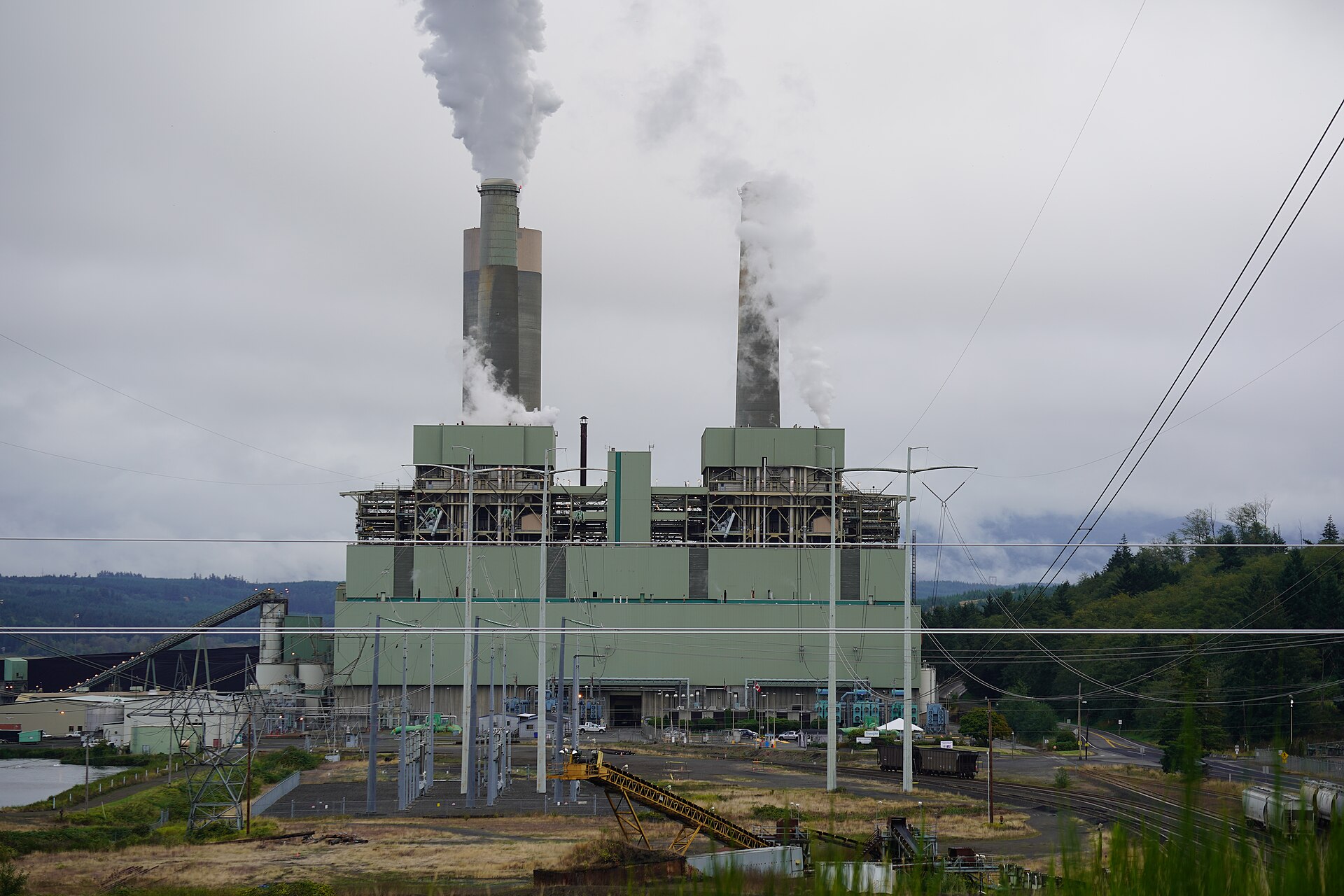
Centralia Power Plant, Centralia, Washington. Credit: Steven Baltakatei Sandoval/ Wikimedia Commons
The U.S. Department of Energy under the instruction of the Trump administration has invoked its emergency authority to force power plants (primarily coal-fired facilities) to continue operating beyond their planned retirement dates. The law they are using is intended for short-term, emergency interventions during sudden disruptions to electricity supply. Instead, it is being used to override long-planned retirements, disregard state and regional reliability findings, and transfer substantial costs and health risks to the public.
The targeted facilities are aging, expensive to run, and ill-suited to meet the reliability concern – costing everyday Americans hundreds of millions. Starting in May 2025, these orders were issued despite grid operators and state regulators having determined that the plants were not needed for reliability. While operating under one of these orders, facilities are often allowed to ignore air quality or emissions laws or limits, polluting nearby communities.
Where is this Happening?
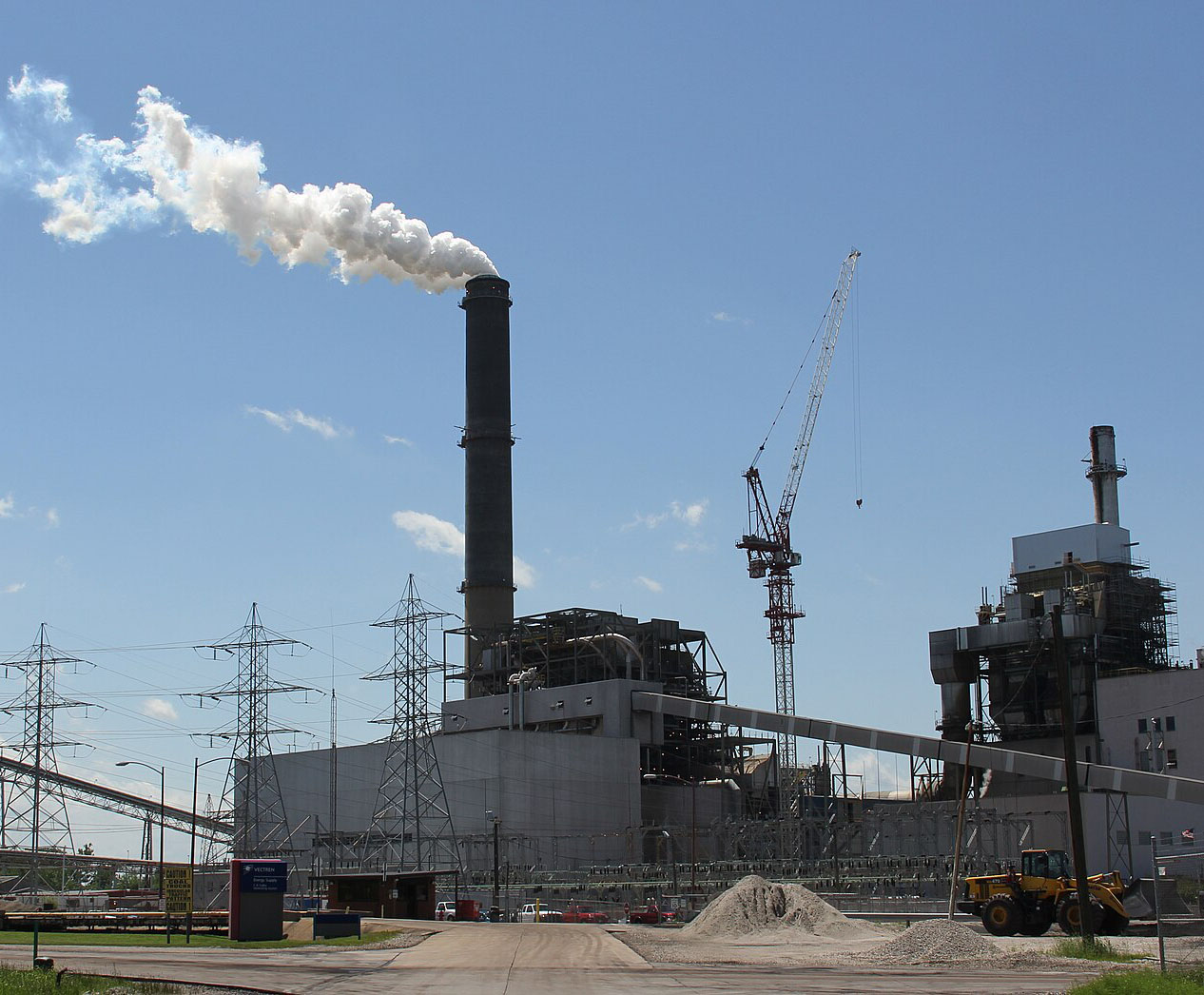
F.B. Culley Power Generating Station in Warrick County, Indiana. Credit: Peter Burzynski/ Wikimedia Commons
Currently this is happening with 7 fossil-burning power plants in six states:
-
Michigan: J.H. Campbell (West Olive, MI)
(West Olive, Michigan) The J.H. Campbell coal plant received its first unlawful emergency order on May 23rd, 2025 - one week before it was slated to retire on May 31, 2025. The coal plant had already started the process of decommissioning, in preparation for transition to a solar and battery storage project on the site. Instead, it was forced to continue operation, despite the utility's phased shut-down of the plant and years of analysis to ensure no reliability or cost issues would arise from the retirement. The plant has since received four sham orders, with the most recent forcing the facility to continue operation through May 18, 2026 – it’s been almost a year since the facility’s original retirement date.
Victory! On September 11, 2026, the D.C. District Court of Appeals struck down The Trump Administration’s illegal use of a 202c order to force Consumers Energy’s Campbell coal plant in Michigan to stay online despite the utility’s long ago developed plan to retire it in May of 2025. This ruling comes after a year of intense legal, organizing, media, and digital pressure to push back against the Trump Administration’s illegal use of 202c orders to force this plant to stay open.
Watch the recording of the live oral arguments before the D.C. circuit court on May 15th, challenging the illegal use of 202(c) to keep J. H. Campbell from retiring.
Read the D.C. District Court of Appeals ruling from September 11th which articulates how the Trump administration and DOE illegally used 202(c) to keep the coal plant online despite its planned retirement with the original May 23, 2025 order.
-
Pennsylvania: Eddystone (Chester, PA)
(Chester, Pennsylvania) The Eddystone gas- and oil-powered generation facility, specifically Units 3 and 4, are located in Chester, Pennsylvania. The plant has now received four illegal emergency orders requiring delay of the facility’s planned May 31, 2025 retirement, with the most recent forcing the facility to continue operation through November 2026; a total delay to scheduled retirement by 18 months. The costs of keeping this facility online are being directly passed on to electric ratepayers in the 13 states and D.C. within the region’s electricity grid.
-
Washington: Centralia (Centralia, WA)
(Centralia, Washington) The Centralia Generating Station, specifically Unit 2, has received four illegal orders requiring delay of the facility’s planned December 31, 2025 retirement, forcing the facility to continue operation through December 12, 2026. The costs of keeping this facility online are being directly passed on to electric ratepayers in the Centralia region, where the electricity grid is run by the Bonneville Power Administration.
-
Indiana: F.B. Culley (Newburgh, IN)
(Newburgh, IN) The F.B. Culley coal plant is located within the electricity grid in the Great Plains region. The facility, along with another in Indiana, was slated to retire on December 31, 2025, but received an made-up emergency order on December 23, 2025, only a week before scheduled retirement. The facility is now required to continue operation through December 18, 2026 per the terms of its fourth subsequent 202(c) order.
-
Indiana: R.M Schahfer (Wheatfield, IN)
(Wheatfield, IN) The R.M Schahfer coal plant is located in Wheatfield, Indiana, within the Great Plains region electricity grid. Schahfer was scheduled to retire on December 31, 2025, but received an illegal emergency order on December 23, 2025, a week before the planned retirement. The fourth subsequent, most recent order required Schahfer to maintain operation through December 18, 2026.
-
Colorado: Craig (Craig, CO)
The Craig coal plant in Craig, Colorado received an unlawful emergency order in 2025. Craig is located in the Tri-State utility territory in Colorado. Though the facility was slated to retire December 31, 2025, the administration issued a sham order on December 30, giving Tri-State a one-day notice that the facility they’d been planning to retire for years needed to extend the operation for an additional 90 days – through March 30, 2026. The facility has since received three additional orders (a total of three), requiring delay of scheduled retirement through December 25, 2026.
-
Florida: Stanton (Orlando, FL)
The Stanton coal plant in Orlando, Florida received an unlawful emergency order on June 4, 2026. Stanton is located in the Orlando Utility Commission (OUC) territory, a municipal utility in Orlando that serves the city and a handful of surrounding communities. As part of their ten-year site plan, OUC had been preparing for the May 2026 retirement of the Stanton units since 2020. Though the OUC Board had indicated that the facility was moving units into extended cold shutdown in preparation for its’ June 2026 retirement (slightly delayed from their announced May 31, 2026 retirement date), the administration issued a sham order on June 4, 2026 to extend the operational availability of the unit for an additional 90 days – through September 1, 2026. Another order was issued, further delaying scheduled retirement until November 30, 2026. Learn more about the Stanton facility and OUC’s scheduled retirement and take action to fight the illegal retirement delay!
What is the Sierra Club doing to push back?
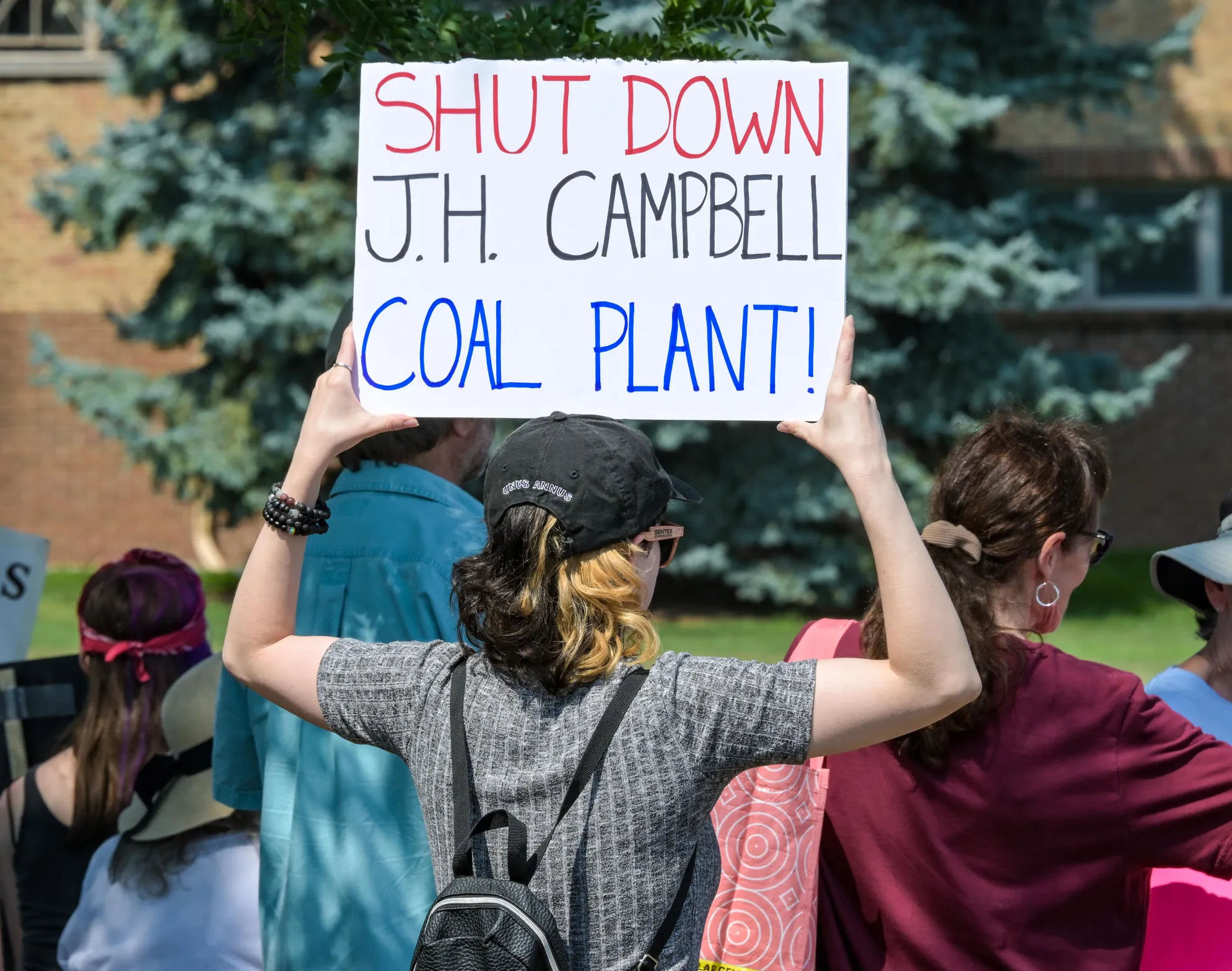
Protestors demonstrate in Holland’s Memorial Park on Friday, Aug. 15, 2025, calling on the federal government and Consumers Energy to allow the J.H. Campbell coal plant in Port Sheldon Township to close. Photo courtest ONN photo/Dirk Wierenga
- Sierra Club is fighting every single one of these illegal orders every step of the way. Every sham order is only valid for 90 days, meaning that when a successive extension is issued (and some facilities have received as many as six orders), we are re-challenging this unlawful order.
- On September 11th, 2026 we won in the D.C. District Court of Appeals, when the courts ruled in agreement with Sierra Club that the use of 202(c) to force J.H. Campbell coal plant in Michigan to delay its long-scheduled retirement was unlawful.
- We are challenging not only the orders themselves, but also fighting to protect Americans from having to foot the bill for these coal bailouts.
- We are fighting to prevent this and any future administrations from abusing their authorities and as a regional electricity grid operator.
- We are advocating for decades of planning by technical experts and are pushing to move towards a stronger, more resilient modern electric grid utilizing the lowest-cost, clean energy technology options available, including wind, solar, and battery storage.
We are flexing our people power; in communities where these facilities are located, grassroots champions are fighting on the ground against this illegal abuse of authority.
What You Can Do
Tell the Trump administration to stop bailing out dirty, polluting coal facilities on your dime.

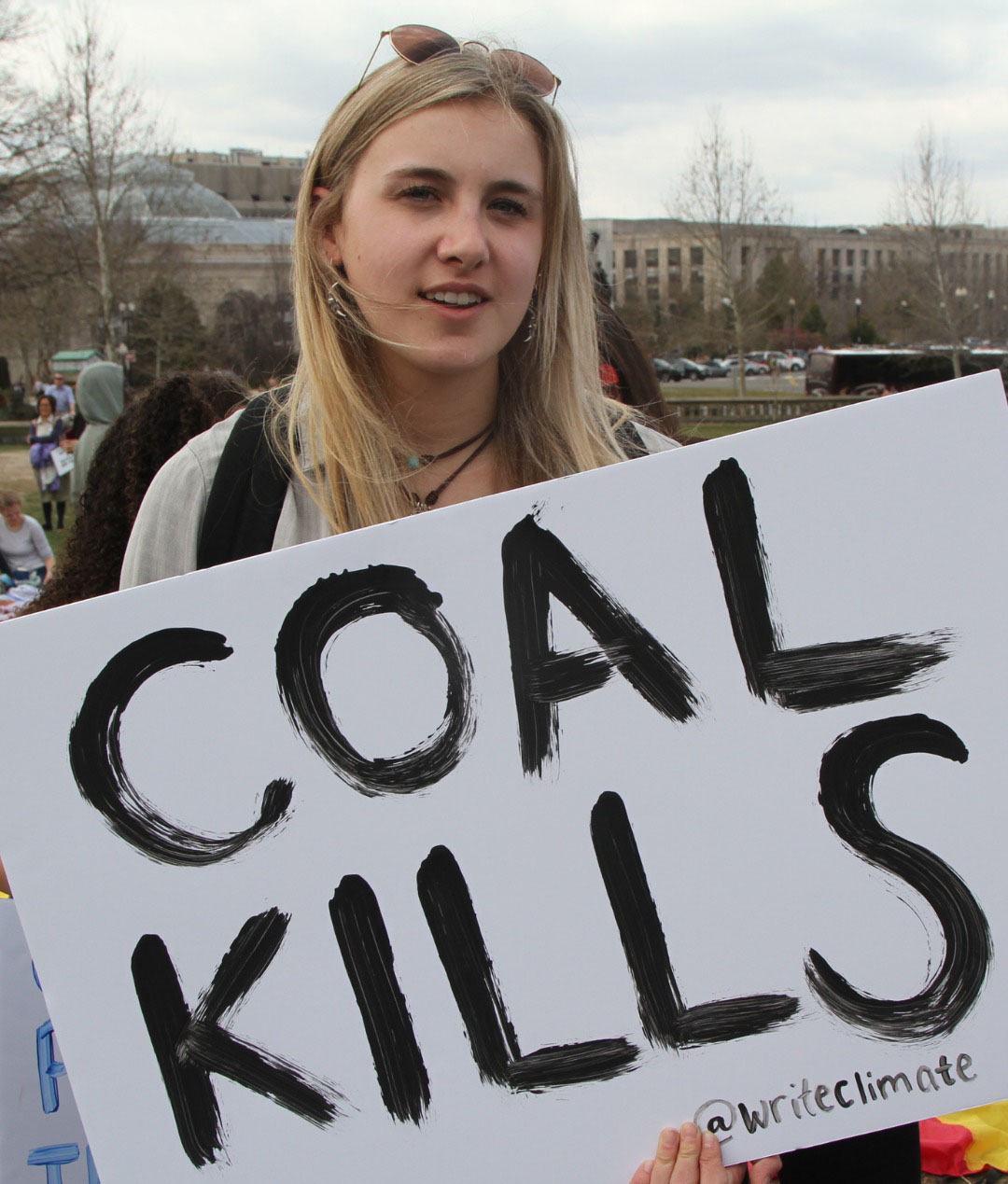
Tell Your Story: Trump’s attack on affordability is unacceptable
This is just one of the insidious tactics that the Trump administration is weaponizing to keep polluting and cost Americans. It’s no coincidence that we’ve seen electricity prices skyrocket since the administration took office in January 2025 – hardline attacks on low-cost clean energy projects, significant bail-outs for coal, including these illegal extension orders, are all contributing to utility bills increasing by as much as 40% in parts of the U.S. between 2024 and 2025.
Share your story on social media:
- New to recording a video? Reference our video tutorial guide to get started.
- Share our content on socials - and make sure to tag @SierraClub so we can share it with our broader community.
Am I paying for this bailout?

Learn more about the estimates for how much these orders cost and how the costs are being paid: Unpacking the Cost of 202C Orders: Facility-Specific Cost Estimates and Methodological Approach.
When it comes to coal pollution, we all pay. But more specifically, utility rates and fees vary based on where you live and the “who” pays will be different for each of these six facilities.
Right now, utilities that have received at least one of these illegal orders are in different stages of cost recovery. Some are actively trying to determine who is responsible for the costs of these orders, and others are actively in the process of recovering the costs of keeping these dirty plants online. Depending on the facility, the region responsible for footing the bill varies.
For example the owners of the J.H. Campbell coal plant in Michigan are trying to recover costs to run the plant under this illegal extension recovered across seven regions across the electricity grid. By contrast, in Colorado, it is still unclear who will be responsible for the costs; it’s possible that Tri-State utility customers in Colorado may be left paying to keep the Craig facility online.
The costs for each facility will therefore be spread over different geographies depending on the utility and region where the coal plant is located, and the specifics (which we are challenging in court!) are still being figured out. Despite this, some utilities are still in the process of getting paid out for keeping these dirty coal facilities online. As a result, it’s very likely that if you live in or on the edges of any part of the U.S. that’s shaded on the map, the cost of an illegal emergency order (or orders) will show up on your bill in one way or another.
More information about your utility and untangling U.S. electricity costs:
- Sierra Club’s Dirty Truth Report (September 2026)
- Electric Cost Allocation for a New Era (Regulatory Assistance Project, 2020)
Donald Trump is Making You Pay for Pricey Coal Plants
Sierra Club Senior Attorney Greg Wannier explains How Donald Trump is making you pay for pricey coal plants.
What are the health risks?
The financial burden is also only one part of the equation; continued operation of these plants perpetuates the longstanding harm coal facilities have imposed on the health of nearby communities due to air and water pollution, including emissions of sulfur dioxide, nitrogen oxides, and mercury. These pollutants have disproportionate health consequences for children, older adults, and people with pre-existing health conditions. Impacted community members experience significant health problems, including respiratory, neurological development, and cardiovascular harms from exposure to these toxins.
Updated analysis shows the outsized burden these six coal facilities have on public health in the communities they operate and the surrounding region. The soot and smog from the six coal plants alone are attributable to an estimated 189 annual premature deaths.

Explore these estimates and more with Sierra Club's full interactive health impacts tool. The tool looks not only at coal facilities with 202(c) orders, but the entire U.S. coal fleet.
Are other facilities going to be prevented from retiring as scheduled?
All over the U.S. there are dirty coal plants with scheduled retirements. If the U.S. Department of Energy (DOE) mandates that the large fossil fuel power plants scheduled to retire between now and the end of 2028 continue to operate, the cost to ratepayers could exceed $3.1 billion per year. If DOE issues similar orders for additional older fossil plants, the cost could reach nearly $6 billion per year.
- Report: The Cost of Federal Mandates to Retain Fossil-Burning Power Plants
- Map: Estimated Annual Costs of Continued Operation of Power Plants