By Denver Public Schools Director of Operations Tyler Maybee and Sierra Club Colorado Chapter Margaret Kran-Annexstein
Every kid deserves to breathe clean air. When I (Margaret) picture my toddler waiting for the school bus in Denver in just a few years, I want to know he isn’t being exposed to harmful toxins on his way to class. I also worry about the impact climate change will have on his future. I’m proud to know that our local school district and city are working hard to build a climate-resilient, zero-emissions future.
This is about more than the buses our children ride. Colorado's Front Range, home to the majority of the state’s residents, has been designated an air quality nonattainment area by the Environmental Protection Agency (EPA), meaning pollution levels exceed federal health standards. Diesel pollution from medium- and heavy-duty vehicles, including school buses, poses a direct threat to children's respiratory health and well-being. Replacing diesel school buses with electric alternatives is a concrete way to reduce children's exposure to harmful pollution while helping communities meet broader climate and clean-air goals.
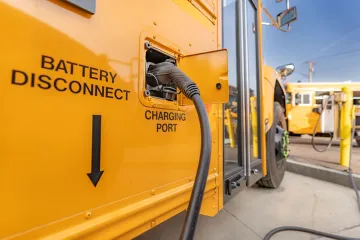
In September 2026, Trena Marsal, Denver Public Schools (DPS) Chief Operations Officer, spoke before a UN panel on healthy indoor air in schools and proudly announced many of the milestones Denver Public Schools has achieved in fulfilling its District Climate Action Plan. Among operational advancements, the DPS Transportation Department is exceptionally proud of the integration of twenty-eight electric buses into its daily fleet operations and student transportation services.
For the current school year, each of these twenty-eight electric buses is projected to log upwards of 7,000 miles, translating to approximately 196,000 route miles traveled with zero tailpipe emissions. This achievement represents nearly 15% of total route miles operated with a zero carbon footprint!
The foundation for this initiative began in 2021 when DPS students spearheaded a campaign calling for comprehensive climate action across the district. Collaborating closely with district officials, student advocates helped craft a set of ambitious sustainability goals, which were formally presented to and ratified by the school board in April 2022. Driven by this policy, DPS committed to reducing greenhouse gas emissions by 90% by 2050, alongside an interim five-year goal to transition 12% of the yellow fleet to zero-emission vehicles.
DPS Transportation has made significant strides toward their targets. To start the 2026–27 school year, twenty-five new electric school buses were deployed to complement the three electric buses previously operating in our fleet, representing the largest single electric bus acquisition in the state of Colorado. This multi-year effort was made possible through close collaboration with the district Sustainability Department and funding secured via grant awards from the 2024 EPA Clean School Bus Program and the Colorado Department of Public Health and Environment, totaling approximately $25 million. To support this zero-emission fleet, thirty Level 2 EV charging ports are now up and running at the Hilltop bus depot.
Denver's progress is part of a much larger movement across Colorado. Sierra Club Colorado has advocated for the transition to electric vehicles and specifically for electric school buses since 2019, partnering with organizations including SWEEP and Conservation Colorado, as well as public agencies, to support electrification across the transportation sector. Today, more than 4,000 Colorado students ride on 92 operating electric school buses, with another 82 buses committed for adoption by school districts. These milestones show what is possible when student advocates, school districts, community organizations, and policymakers work together to prioritize cleaner transportation.
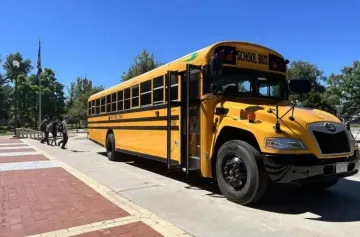
Financial analysis indicates that each electric bus yields substantial operational savings, estimated at over $30,000 in fuel costs and an additional $30,000 in maintenance expenses over the next 15 years. Beyond cost efficiencies, the core mission of DPS centers on listening to and raising up student voices and creating a healthier, cleaner environment across the city. So far we have seen a reduction of 45 metric tons of CO2 reduction from these vehicles being out on the road in place of our diesel fleet. As Director of Operations, I (Tyler) am dedicated to reaching our climate goals by right-sizing our active fleet and phasing out legacy diesel-emitting vehicles. In parallel, our department is collaborating with the sustainability team to pursue further grant, rebate, and state funding opportunities to continue growing our electric fleet and infrastructure.
These investments also make good financial sense for school districts. With diesel prices putting additional pressure on already strained public budgets, electric buses offer an opportunity to reduce exposure to volatile fuel costs and deliver significant savings over their lifetimes. Since the beginning of the school year, our analytics team has calculated savings of approximately $38,000 in fuel costs alone.
Navigating fleet electrification requires addressing key financial and logistical variables and the upfront price remains a barrier. While the total cost of owning and operating an electric school bus can be lower than that of a diesel bus, the initial purchase price can be difficult for districts to manage without outside support. A new electric bus carries an upfront cost of approximately $450,000, whereas standard low-emission alternatives, such as propane vehicles, cost around $175,000. To ensure steady progress while electric technology advances, DPS utilizes propane buses as an effective low-emission bridge strategy. Our long-term goal remains the complete elimination of all diesel buses across our 300-bus fleet. Achieving total zero-emission operations requires ongoing strategic planning around electrical infrastructure, vehicle down times, advancing vehicle range, and external funding streams.
That's why continued state and federal investment is essential. Programs like the EPA's Clean School Bus Program have helped make these investments possible, and lawmakers should continue supporting funding opportunities that help school districts overcome upfront costs. Sierra Club Colorado is also encouraging districts to formally reaffirm their interest in electrifying their fleets and supporting initiatives like the Clean School Bus Bill to keep this progress moving forward. We cannot expect school districts to meet ambitious climate and clean-air goals without giving them the resources to do so.
DPS Transportation remains steadfast in its commitment to forward-thinking leadership and industry innovation. The team continues to identify optimized routing strategies to decrease total vehicle miles traveled while scaling up clean energy adoption. Guided by the vision and partnership of our student body, Denver Public Schools is building a cleaner, greener future for our students and community.
This work cannot stop with Denver. Every electric school bus on the road means fewer children exposed to diesel pollution and another step toward healthier communities across Colorado. We have made meaningful progress, but hundreds more school buses still need to make the transition. By continuing to invest in electric school buses, supporting school districts, and listening to the students who have been leading this movement, we can make sure every Colorado child has a cleaner, healthier ride to school.