The Ottumwa Generating Station is seeking permission from the Iowa Department of Natural Resources (DNR) to give them an NPDES permit that would allow them to transport polluted water from its coal ash landfill to the sewage treatment plant which would then process the liquid and discharge it to the Des Moines River. The problem is that the sewage treatment plant does not have the technology to remove the pollutants and will be discharging them into the River. The Sierra Club and our allies are challenging this permit request.
- The DNR will be holding a public hearing on September 3 at 10:00
- video call link: https://meet.google.com/jhs-bqei-ydo
Or dial: (US) +1 585-667-0159 PIN: 322 930 241# - You will be allowed to speak for 3 minutes.
The Ottumwa Generating Station is a coal-fired power plant located north of Ottumwa, Iowa. It is co-owned by Interstate Power and Light (a subsidiary of Alliant) and MidAmerican Energy (owned by Berkshire Hathaway). Interstate Power and Light (IPL) is the operator of the plant.
When a power plant burns coal, coal ash is among the substances left behind. Coal ash contains toxic and hazardous contaminants that can pollute waterbodies, ground water, drinking water, and the air. Coal ash has several forms:
Fly ash – fine, powdery, mostly silica
Bottom ash – coarse particles that form in the bottom of the coal furnace
Boiler slag – molten bottom ash that turns into pellets
Flue gas desulfurization material – what is left over after emissions are processed to remove sulfur dioxide
Currently IPL trucks the coal ash 5.5 miles from the power plant to the Ottumwa Midland Landfill. The Midland Landfill is 24 acres in size. It is a giant pit with a clay liner. Underneath the landfill is a series of pipes called the underdrain which collect groundwater so that it does not reach the landfill.
IPL had a stormwater permit which allowed discharge into a wetland which then flowed to a creek and the Des Moines River. The mouth of the creek is near the City of Ottumwa’s drinking water intake on the Des Moines River. The stormwater permit required the underdrain liquid to be uncontaminated with pollutants.
Testing of the underdrain water confirmed the presence of cobalt, lithium, manganese, and molybdenum at levels greater than groundwater protection standards. Other pollutants were detected in the underdrain liquid, including arsenic, barium, boron, calcium, iron, magnesium, zinc. All of the pollutants detected are found in coal and coal ash.
Presence of the pollutants in the underdrain liquid is in violation of the stormwater permit as well as the water quality standards in the Clean Water Act and the Safe Drinking Water Act. In August, 2023, the Iowa Department of Natural Resources alerted IPL that they needed an additional permit and had 1 year to obtain the permit. IPL did not request a permit.
In December, 2024, IPL requested an NPDES permit to build a pipe from the landfill to the Des Moines River, without treating the water before discharging it. The discharge would include the toxic and hazardous substances.
In May, 2025, IPL presented a new plan for dealing with the underdrain liquid. IPL would collect the underdrain liquid in storage tanks at the Midland Landfill. They would then truck to the liquid to the Ottumwa Water Pollution Control Facility (the sewage treatment plant) plus the liquid would also be evaporated at the power plant as cooling water. The Iowa Department of Natural Resources wrote a draft permit to allow this. This draft permit is a concern:
The biological setting and chemical settling processes are ineffective in removing the toxins and heavy metals in the underdrain liquid.
Once the treatment processes have been completed, the liquid will be discharged into the Des Moines River. Downstream counties are Wapello, Davis, Van Buren, and Lee Counties in Iowa and the river flows along neighboring Missouri.
Trucking the underdrain liquid to the Water Pollution Control Facility is expensive. The electric customers will be paying for this trucking.
The Sierra Club and our allies are challenging this draft permit. And you can speak out about this at the DNR's public hearing on September 3 starting at 10:00
- The DNR will be holding a public hearing on September 3 at 10:00
- video call link: https://meet.google.com/jhs-bqei-ydo
Or dial: (US) +1 585-667-0159 PIN: 322 930 241# - You will be allowed to speak for 3 minutes.
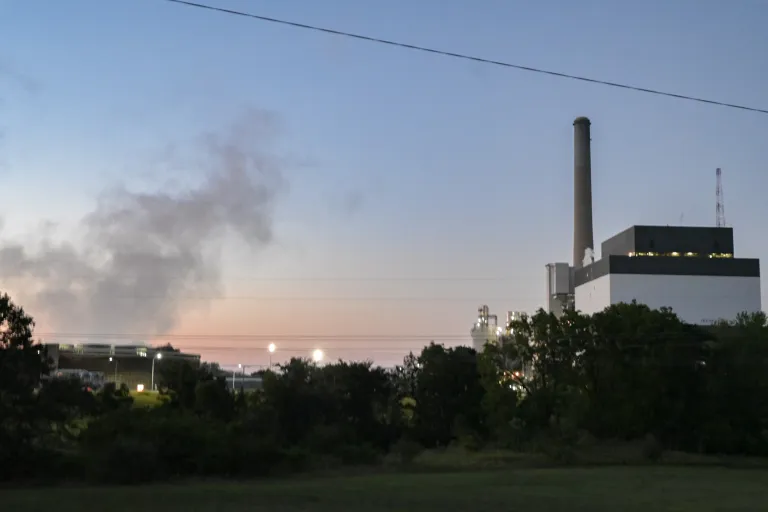
Photo: Ottumwa Generating Station by Emma Colman
///
Ottumwa coal ash polluting groundwater: environmentalists seek a permanent solution
Alliant Energy’s Iowa affiliate, Interstate Power and Light (IPL), has agreed to stop discharges of polluted groundwater under an Ottumwa coal ash landfill. The move followed a 60-day notice of intent to sue under the Clean Water Act, issued by the Iowa Environmental Council, Sierra Club, and Environmental Law & Policy Center, over unauthorized discharges. The coal ash at the landfill comes from the Ottumwa Generating Station co-owned by IPL and MidAmerican Energy.
The notice of intent to sue alleged that Alliant’s Iowa affiliate discharged polluted groundwater from the site for decades. The polluted groundwater was being discharged to a wetland that flows to a creek, then into the Des Moines River. Iowa Department of Natural Resources informed IPL in 2023 that the discharge did not qualify under the company’s stormwater permit. The utility’s own monitoring shows the water contains arsenic, cobalt, manganese, molybdenum at levels above groundwater or drinking water standards, as well as other heavy metals.
Alliant informed the environmental groups that it would temporarily truck polluted water to the City of Ottumwa Water Pollution Control Facility or for evaporation at the coal plant. Trucking polluted water to the city facility is both expensive and ineffective. City water treatment plants are not equipped to properly handle coal ash. The treatment technology (biological or chemical settling) is ineffective at removing certain toxics and heavy metals, such as mercury, from wastewater.
The change in disposal practices by IPL occurred days before expiration of the 60-day period in the notice of intent to sue from the environmental groups. The Iowa Environmental Council, Sierra Club, and Environmental Law & Policy Center believe that IPL should implement a permanent solution that treats the pollution from the coal ash landfill and stops harming public health and the environment.
See press release about the notice and temporary solution