We tend to think of Iowa as being water-rich. There is plenty of water to drink, grow crops, and supply businesses and industries. Sure, there are times of drought. But, we don't think about water as a scarce commodity.
With data centers flocking to Iowa communities and their thirst for water to cool their equipment, Iowans across the state are worried about the amount of water that the data centers are going to consume.
We have been looking at Linn County with its influx of data centers and risk to the drinking water supplies of people living and working in the area. I suspect that this situation will be playing out across the state in the next few years.
Take care and have a great summer,
Pam Mackey Taylor, Chapter Director and Newsletter Editor
What you can do to help the environment
RSVP for our Annual Meeting Sept. 26, 2026, Newton Arboretum, Newton, Iowa
Attend the REAP Assembly meetings in your area
Join us for a guided hike at Ciha Fen on Sept. 12, 10:00 AM, Lisbon, Iowa
Tune into our Lunch and Learn on Fridays at noon
Missed the live-stream lunch and learn? No problem, find them on our YouTube
Contribute to the Iowa Chapter of the Sierra Club so that we can continue our work on protecting Iowa's environment
In this issue of the Iowa Sierran
Protecting Iowa's Environment
Water Woes in Linn County
Iowa DNR Gives HyCast Foundry an Air Quality Operating Permit
What we’re listening to: Carbon Cowboys Podcast
Learn about Our Environment
Annual Meeting - September 26, 2026 - Celebrate, Connect, and Take Action!
Outdoor Experiences - see upcoming outdoor activities
Lunch and Learns Fridays at noon
Plus
Contribute to the Iowa Chapter
Volunteer for the Iowa Chapter
Calendar of events
To see the archive of previous Iowa Chapter newsletters
Water Woes in Linn County
Citizens in Linn County in eastern Iowa are grappling with the prospect that there might not be enough water to meet the needs of common ordinary residents, businesses, industries, and data centers.
Use of water by industries is expected to explode in the coming years, brought on by
10 data centers, either being built or proposed, by Google and QTS, near the Cedar Rapids airport
6 data centers proposed by Google near Palo, north of Cedar Rapids
2 gas plants, one in Cedar Rapids and one on Highway 30 at the Linn County line with Benton County
Restart of Duane Arnold nuclear plant near Palo
Jordan Aquifer is at risk
The Jordan Aquifer levels are lowering across the state.
"The Jordan aquifer is one of two aquifers identified in IDNR rules as an aquifer to monitor to prevent excessive water level declines. It has a high potential for groundwater mining, but a relatively low recharge rate. This low recharge rate results in relatively old water in this aquifer, causing the sustainability of this aquifer for the long term to be unknown. In addition, there has been a considerable shift in the demand upon the aquifer over the past 20 years as far as geographical location of pumping centers. The usage area of this aquifer covers over two-thirds of the state of Iowa and the Jordan is the most reliable aquifer for high capacity wells. Approximately 14% of Iowans drink water from this aquifer.” [1]
The Iowa Department of Natural Resources (DNR) grants permits for withdrawal from the Jordan Aquifer for 5 years, instead of the normal 10 years for withdrawing water from other sources. The DNR limits the rates that water can be withdrawn from the aquifer to 2,000 gallons per minute or less for industrial and power plant uses. Withdrawals for irrigation, recreational, or aesthetic uses are restricted to 200 gallons per minute or less.
In parts of Linn, Johnson, Webster, Des Moines, and Lee Counties, the aquifer is flagged as Protected Water Source Areas. That designation allows the DNR to restrict or deny permits to withdraw water from the Jordan Aquifer if necessary to preserve public health and welfare. [2]
Aquifer storage recovery (ASR)
Currently the City of Cedar Rapids does not utilize the Jordan Aquifer for its municipal drinking water.
“The City obtains its drinking water supplies from shallow vertical and collector wells constructed in the sand and gravel deposits along the Cedar River. Those deposits form an underground water-bearing layer called an alluvial aquifer. Because of continuous pumping of the City’s wells, most of the water in the aquifer is pulled from the river. The rest of the water is supplied as water percolates up from a deeper bedrock aquifer or down from the top of the ground.” [3]
Recently the city of Cedar Rapids opened bids for a well to store water in the Jordan Aquifer. The technical phrase for this is “Aquifer Storage & Recovery” (ASR). The plan would be to pump treated water into the Jordan Aquifer when the water usage is lower. The city would use the water stored in the Jordan Aquifer to meet peak demand or to use in blending with water withdrawn from its other wells when they have high levels of contaminants (such as nitrates). [4] Peak demand is the highest level of water usage by the users and customers of the Cedar Rapids water utility.
Aquifer storage recovery is usually done in dry areas in the United States – Arizona, California, Oregon, Florida. It is also being done in a few places in Iowa – North Liberty, Ankeny, Des Moines, Urbandale.
Data centers in Palo threaten water levels in Cedar River
After Google announced plans to construct 6 data centers near Palo, the Linn County Planning Department became concerned about water usage.
The Linn County Planning Department worked on an ordinance for data centers; the supervisors passed it in February, 2026. One of the ordinance requirements was for the data center to provide a study of the water sources and the capacity of the source to provide the water. The ordinance required the data center to enter into a water use agreement.
The negotiations between Linn County and Google included having Google pay $500,000 to fund a water withdrawal and capacity study. Google is planning to withdraw 14 million gallons of water a day from the Cedar River. By comparison, the Duane Arnold nuclear power plant is going to withdraw 14 million gallons of water a year from the Cedar River. Google will be using 365 times the amount of water that Duane Arnold uses.
Google ditches Linn County for Palo
Google did not like the requirements being placed on it by Linn County, so they approached the City of Palo to be annexed.
Palo has been writing a data center ordinance. The council passed the ordinance on its first reading by the Palo City Council in early June; two more readings are required before the ordinance is adopted.
The council did not hold the second reading after the citizens of Palo expressed outrage. It is not clear where the council is going to do with their ordinance.
The reasons the citizens were outraged is that the ordinance had:
No requirement for a water study
No requirement for a water use agreement
The ordinance depends on and expects the Iowa Department of Natural Resources to do an analysis of the water use and capacity when a permit is issued
But the DNR does not do a water study when it issues a permit to withdraw water from the Cedar River
Google also stated they are not going to pay for a water study, as contemplated by the Linn County ordinance.
DNR is not expected to step in
During the summer, the Cedar River water levels are low, exposing sandbars and channels in the river. Cedar Rapids city wells are at risk, particularly during the summer months during low river levels and sustained high withdrawals of water predicted by Google in Palo. Towns and residents downstream from Palo are at risk. That includes Northeastern Johnson County, Cedar County, Muscatine County, and Louisa County.
The Department of Natural Resources is not expected to step in during its permitting process to perform a water capacity study of the Cedar River withdrawals being planned by Google.
This year, the Iowa Legislature rejected a bill that would require the DNR to individually review each water withdrawal request for capacity of the water body to sustain the withdrawal – it passed the House 90 to 1 and was blocked by the Senate.
Huge questions
Palo residents are worried. Cedar Rapids residents are worried. Linn County residents are worried. And rightfully so.
Legislators need to step up to the plate and pass meaningful legislation that would ensure Iowa’s water resources can sustain withdrawals today and into the future
Funding aquifer studies by the Iowa Geological Survey
Placing restrictions on data center water usage
Ensuring that the Iowa Department of Natural Resources does its job in reviewing water withdrawal permits and the ability of the water source to sustain the withdrawal
Talk to the candidates about this issue.
Briana Kouma, Conservation Program Coordinator for the Iowa Chapter of the Sierra Club, has been organizing the residents of Palo in their opposition to the Palo ordinances and to the Google data centers proposed for Palo. If you have questions, contact her at briana.kouma@sierraclub.org.
Footnotes
[1] From “Management Strategy for Iowa’s Water Resources”, published by Iowa Department of Natural Resources, December, 2007
[2] Administrative Rules 567 IAC Chapter 53
[3] https://www.cedar-rapids.org/residents/utilities/our_watershed.php
[4] Grace Nieland, “Cedar Rapids to drill deep to safeguard water supply”, The Gazette, Jay 28, 2026
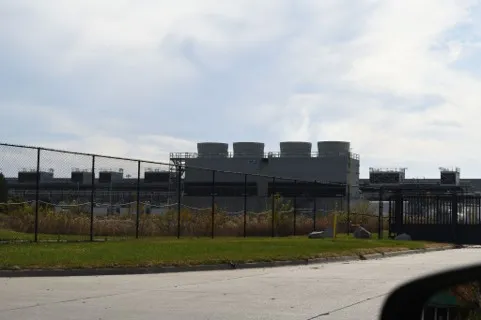
Photo of data center in Council Bluffs by Tom Reardon
Iowa DNR Gives HyCast Foundry an Air Quality Operating Permit
HyCast Foundry is located in Fairfield, Iowa. The foundry has been in existence since 1912. After a series of changes in ownership, the foundry was shut down in April of 2024 and restarted in November of 2024. The restart of the foundry requires that HyCast renew its operating permit required by Title V of the Clean Air Act. The Iowa DNR has been delegated the responsibility of administering the Clean Air Act in Iowa, including issuing Title V Permits.
The Title V Permit issued by the Iowa DNR to HyCast allows the following emissions of pollutants to the air:
| Pollutant | emitted amounts, annually |
|---|---|
| Particulate matter less than or equal to 2.5 microns | 179.73 tons |
| Particulate matter less than or equal to 10 microns | 215.98 tons |
| All particulate matter | 441.24 tons |
| Sulfur dioxide | 3.04 tons |
| Nitrogen oxides | 7.33 tons |
| Volatile organic compounds | 144.49 tons |
| Carbon monoxide | 62.30 tons |
| Lead | 0.065 tons |
| Hazardous air pollutants | 24.83 tons |
Especially concerning about these allowed emissions, is the amount of hazardous air pollutants allowed by the permit. If a facility emits 25 tons per year or more of hazardous air pollutants, it is what the Clean Air Act categorizes as a major source. A major source of hazardous air emissions is subject to much stricter requirements and restrictions.
HyCast is permitted for 24.83 tons per year of hazardous air emissions, which is just under the 25 tons per year that would make it a major source, even though it produces more than 25 tons per year. The DNR’s basis for permitting 24.83 tons per year is the claim that there will be enforceable controls on the hazardous pollutants that will keep the emissions below the 25 tons per year limit. This makes HyCast what the Clean Air Act defines as a synthetic minor source.
The concern we have is whether there are enforceable controls that will keep the hazardous emissions below 25 tons per year. The permit issued by the DNR, in our view, does not require sufficient monitoring to ensure that the emissions will actually be less than 25 tons per year.
The permit issued by the DNR is now being reviewed by the EPA. After the EPA review, if the EPA approves the permit, we will petition the EPA to challenge the permit.
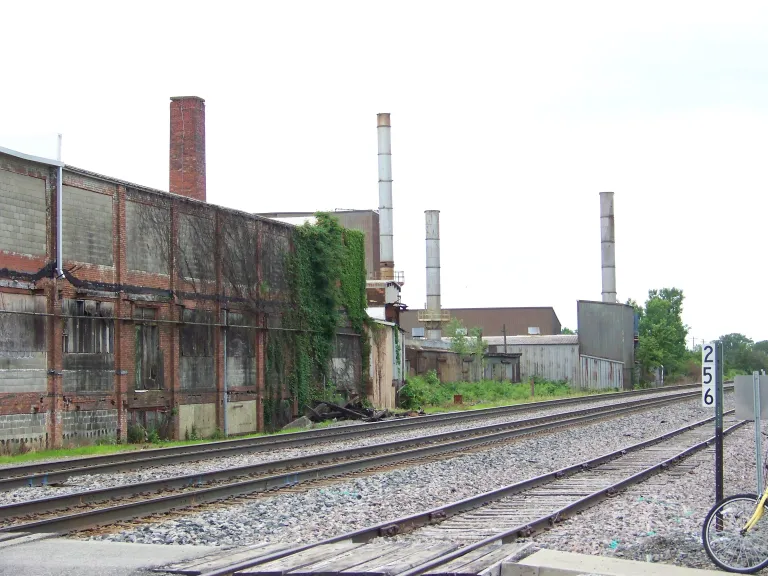
Photo of HyCast Foundry by Patrick Bosold
Summit’s Latest Legal Battle
In 2022, Summit Carbon Solutions contracted with Welspun Tubular to manufacture $182.5 million of pipe needed for the Summit Carbon Pipeline project, with production set to commence on May 8, 2023. However, Summit severely underestimated the power of Iowans who want to protect their land, water, legacies and rights. Iowans organized and put up a fierce legal battle that Summit did not expect.
Summit asked Welspun for delay after delay because the estimated project construction start date was “dramatically off-schedule”. Welspun allowed numerous extensions but eventually said they would begin manufacturing the pipe on February 5, 2024. After a lack of communication, Summit finally canceled the purchase agreement on February 19, 2024.
In an April 15, 2024 court filing, Welspun stated “The Purchase Agreement further allowed Summit Carbon to “cancel this Purchase Agreement, in whole or in part, without cause, at any time,” and that in the event of cancellation, Welspun Tubular would be entitled to recover a cancellation charge of ten percent of the price of the cancelled pipe up to a maximum cancellation charge of $15,000,000, provided the cancellation occurred after the pipe was scheduled to commence manufacture. Further, Welspun would be entitled to recover the price of materials purchased to manufacture the cancelled pipe, less the net salvage value of the materials.
Welspun claims that Summit breached the contract, and Summit owes Welspun the price of materials purchased to manufacture the pipe and the $15,000,000 cancellation fee.
This is another example of how Summit does business. Throughout this process we’ve seen Summit mislead, intimidate, and break promises. Iowa should not do business with a company with a track record like Summit’s.
The case was scheduled to be heard in front of a Delaware Judge on Monday, June 15, 2026 but we have not heard the outcome. We will keep you updated as the case proceeds. Read more about the case here.
What we’re listening to: Carbon Cowboys Podcast
Carbon Cowboys is a new podcast by Drilled Media and Intercept Brazil that exposes Bruce Rastetter and Summit’s controversial push for corn ethanol and corporate ag in one of the most fragile and important places in the world - the Brazilian Rainforest. From Iowa to Brazil, Carbon Cowboys highlights the latest in a string of projects from Midwest Republican kingmaker and corn ethanol magnate Bruce Rastetter, whose investments in Brazil might just transform him into a global carbon czar, even as his Summit pipeline carbon project faces fierce opposition from Iowa to North Dakota. The problem? It all requires loads of land and none of it does a thing about climate change.
Drilled is a true-crime climate change podcast exposing how corporate corruption and political operatives built decades of climate denial and delay.
Listen here or on your favorite podcast app.
Outdoor Experiences
Sept. 12, 10:00 AM, Ciha Fen Preserve Outing - Join us for a guided hike at Ciha Fen Preserve, Lisbon, Iowa, led by Tom Rosburg. This unique natural area features rare fen habitat, diverse plant life, and scenic landscapes that offer a great opportunity to learn more about Iowa’s native ecosystems. Tom will share insights on the preserve’s ecology, highlighting the importance of fens, the species that depend on them, and ongoing conservation efforts. Whether you’re a seasoned naturalist or just looking to enjoy a morning outdoors, this outing is a great way to connect with nature and learn something new. Participants should wear sturdy shoes and be prepared for uneven terrain. The trails should be mowed but please note there are no bathrooms on site! Bring water, weather-appropriate clothing, and your curiosity! Sign up for this event We hope you can join us.
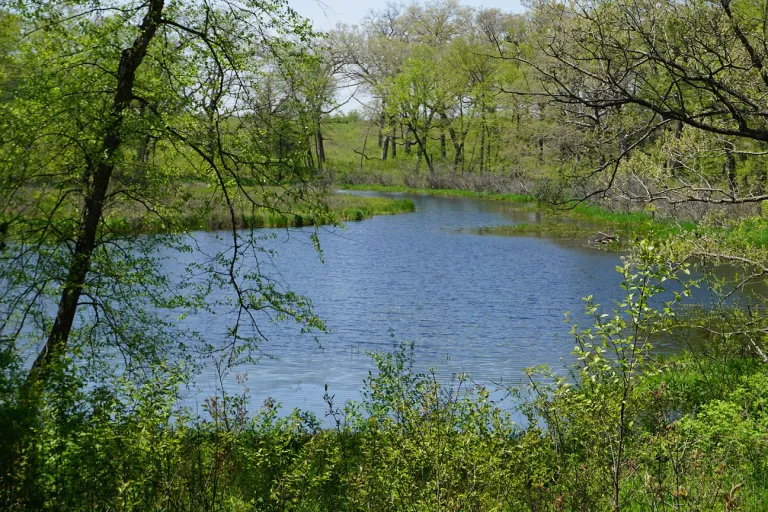
Photo of Ciha Fen by Pam Mackey Taylor
Annual Meeting Sept. 26, 2026 - Celebrate, Connect, and Take Action!
Join us for a day of community, learning, and fun at our Annual Meeting on September 26, 2026, at the Newton Arboretum in Newton, Iowa. We will have an exciting program of speakers plus a guided tour of the arboretum. We plan to have an excellent meal, prepared by a local caterer, Magg Family Catering.
Date: Saturday, Sept 26th
Time: 9:00am - 3:00pm
Location: Newton Arboretum and Botanical Gardens, Newton, Iowa
Attendance cost: Pay at the door - $25 per adult, kids under 12 are free.
RSVP by Sept 16
Featured guest speaker is David Courard-Hauri from Drake University.
We will also hear from a panel of wildlife experts, including Stephanie Shephard (butterflies and raptors), Marlene Ehrsman from the Iowa Wildlife Center, biologist Terry VanDeWalle, and moderator Tom Rosburg
This will be followed by a guided hike through the Arboretum. We also ask that you dress for a hike and to bring a water bottle or drinking container to reduce cup waste.
We can't forget a delicious catered lunch from Magg Family Catering which will include vegetarian options.
We’ll reflect on our accomplishments, share what’s ahead, and invite you to take action.
Speaker Info:
David Courard-Hauri is a professor of Environmental Science and Sustainability at Drake University, where he teaches classes on climate change, environmental modeling, sustainability, and related topics. He has a Masters of Public Affairs from Princeton University and a PhD in Physical Chemistry from Stanford, and has published four environmental science textbooks, including one out this summer on environmental modeling. Since 2011 he has helped organize and write the annual Iowa Climate Statements, co-signed by over 200 climate scientists and educators from all of Iowa’s major colleges and universities. These statements serve to communicate key ideas about how Iowans impact and are impacted by climate change every fall. In his free time, he likes to garden, proselytize about edible landscaping, and run endurance triathlons.
Stephanie Shephard - A native of Virginia, Stephanie received a BS in Biology from the University of Richmond. She landed in Iowa to study prairie reconstruction and butterfly communities as part of a Master’s degree in Ecology and Evolutionary Biology from Iowa State University. Since then, she’s worked in Missouri and Virginia before settling into a job as a wildlife diversity biologist at the Iowa DNR for the last 20 years. She is passionate about prairies and the wildlife that depend on them, especially its smaller denizens.
Terry VanDeWalle is a Senior Principal Biologist at Stantec Consulting Services Inc. with 35 years of experience specializing in animal and natural areas surveys, herpetology, threatened and endangered species surveys, Endangered Species Act Consultation, wetland delineation and permitting, wetland mitigation design and monitoring, and coordination of environmental impact statements and assessments. He has been conducting pre- and post-construction wildlife surveys and permitting at wind farms for 19 years. In addition, he currently serves on the Board of Directors of the Iowa Wildlife Center and is an Adjunct Professor at Hawkeye Community College where he teaches a course on Wildlife Ecology.
Marlene Ehresman - Since 2009, Marlene Warren Ehresman has been the Executive Director and Co-founder of the Iowa Wildlife Center, which serves Iowa through professional wildlife rehabilitation of native species, environmental education, and wildlife assistance skills training. Prior to this she was a staff member of the Iowa Natural Heritage Foundation for over 12 years. She served the National Wildlife Rehabilitators Association from 1988 through 1996 as a board member. In 1985, she co-founded the Iowa Wildlife Rehabilitators Association, which was a state-wide network of licensed wildlife rehabilitators. She is proud and honored to be the recipient of several awards for her work for conservation and the environment. Marlene has dual degrees in Fisheries and Wildlife Biology and Environmental Studies from Iowa State University. Since childhood, she has had a deep interest in wild places and wild things and melds her personal and professional life by striving to live intentionally and ethically for this good Earth.
We'll see you in Newton on Saturday, September 26, 2026! RSVP by Sept 16
REAP assembly meetings
Iowa’s premier funding program for outdoor recreation, conservation and historic preservation will be the focus of 19 meetings across the state, where Iowans can share ideas and visions for their county and communities. Since 1989, the Resource Enhancement and Protection (REAP) program has funded nearly $430 million in projects, including water quality improvements, habitat protection, roadside prairies, historical development, park and trail development, and conservation education. Check out REAP County Expenditure Data to discover projects funded by REAP.
“Every two years, Iowans gather for regional assemblies to direct the future of our state’s natural and cultural resources. This year we are re-imagining the assembly by putting local voices and proven projects that have transformed our communities and improved quality of life at the center of the conversation,” said Michelle Wilson, REAP coordinator for the Iowa Department of Natural Resources. “This is your chance to learn about REAP, connect with like-minded citizens who are interested in natural and cultural resource work, and voice how REAP can better serve your community and your region.”
The remaining 2026 Local Meetings
June 24, 2 p.m., Decorah, Vesterheim Museum, 520 W. Water Street, in Decorah, for residents of Allamakee, Clayton, Fayette, Howard and Winneshiek counties.
July 8, 3:30 p.m., Iowa City, Johnson County Historic Poor Farm, 4811 Melrose Avenue, in Iowa City, for residents of Benton, Iowa, Johnson, Jones, Linn and Washington counties.
July 8, 5:30 p.m., Dubuque, Eagle Point Park Riverfront Pavilion, Memorial Lane, in Dubuque, for residents of Cedar, Clinton, Delaware, Dubuque and Jackson counties.
July 9, 12 p.m., Fort Dodge, Matt Cosgrove River’s Edge Discovery Center, 20 N 1st Street, in Fort Dodge, for residents of Calhoun, Hamilton, Humboldt, Pocahontas, Webster and Wright counties.
July 21, 10 a.m., Red Oak, Carbaugh Farm, 2575 D. Avenue, in Red Oak, for residents of Fremont, Mills, Montgomery and Page counties.
July 22, 10 a.m., Burlington, Starr’s Cave Nature Center, 11627 Starrs Cave Park Road, in Burlington, for residents of Des Moines, Henry, Lee and Louisa counties.
July 23, 1 p.m., Okoboji, Maser Monarch Lodge, 22703 Nature Center Road, in Okoboji, for residents of Buena Vista, Clay, Dickinson, Emmet, Lyon, O’Brien, Osceola, Palo Alto and Sioux Counties.
July 24, 10 a.m., Dixon, Wapsi River EE Center, 3155 52nd Avenue, in Dixon, for residents of Muscatine and Scott counties.
July 27, 5 p.m., Winterset, Madison County Conservation Center, 2508 Pammel Park Trail, in Winterset, for residents of Adair, Adams, Clarke, Decatur, Madison, Ringgold, Taylor and Union counties.
July 28, 3 p.m., Marshalltown, Gallery Garden, 135 E. Main Street, in Marshalltown, for residents of Hardin, Marshall, Poweshiek and Tama counties.
July 30, 2 p.m., Churdan, Pudenz Farm, 351 130th Street, in Churdan, for residents of Audubon, Carroll, Crawford, Greene, Guthrie and Sac counties.
What to Expect:
The Showcase: Each region will highlight a local project, and discuss how it was realized through REAP funding, providing a blueprint for what is possible in your own backyard.
The Citizen Idea Wall: We invite you to add your ideas to a regional “Citizen Idea Wall.” What does your region need next? Your input will form the basis of your regional recommendations and inform your county’s Five-Year REAP plan.
The Civic Mandate: Per Iowa law, this is your opportunity to review REAP expenditures and recommend changes to state policy. You will elect five delegates to carry these ideas to REAP Congress, held on August 29, at the Iowa State Capitol.
Success is built. Our resources. Your voice. Endless opportunity.
“Join us to see what we’ve built together and help us decide what we will achieve next,” Michelle Wilson said.
For more information on REAP, go to www.iowareap.com.
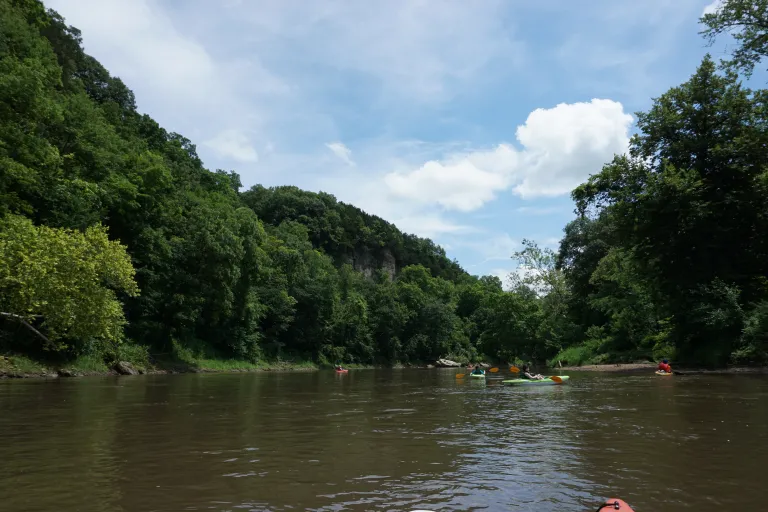
Photo of paddlers on the Maquoketa River by Pam Mackey Taylor
Lunch and Learns Fridays at noon
Fridays at noon, we do a Lunch and Learn livestream. See us on Facebook at "Sierra Club Iowa Chapter". These are recorded so you can watch them anytime. Topics will be selected based on what is happening during the week. During the legislative session, we cover issues coming before the Iowa legislature.
In case you missed our past webinars and lunch and learn sessions, you can still see them on our YouTube.
Quick Palo Data Center Update, June 12, 2026
Water Woes in Linn County, June 5, 2026
Iowa Beach Advisories, May 29, 2026
Volunteer for the Iowa Chapter
Almost everything we do is done by volunteers like you. If you would like to volunteer for the Iowa Chapter, please let us know by sending an E-mail to Iowa.chapter@sierraclub.org. Or sign up by using the online form. There are many opportunities for you to make a difference:
making phone calls
developing graphics for banners and flyers
working on legislative issues
working on elections
fundraising
organizing events
joining an issue committee
If you would like to join our legislative action team, sign up here. Keep on top of what is happening at the Iowa legislature. Be alerted when you should contact your legislators about pending legislation.
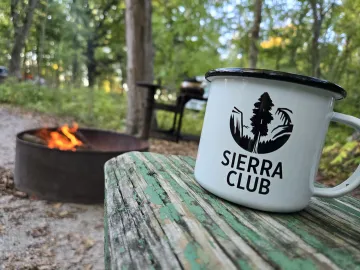
Photo: camping by Jess Mazour.
Contribute to the Iowa Chapter
Sierra Club - working every day on Iowa’s environmental problems
Sierra Club is Iowa’s oldest and largest grassroots environmental organization. Not only that, we are the best bet in the state for achieving bold solutions to Iowa’s environmental problems.
We work in the courts, before Iowa’s public agencies, and in the halls of the legislature. The Iowa Chapter's effort to protect the environment takes financial support. The Chapter receives very little financial support from the national Sierra Club. Can we count on you for a donation to ensure even more victories? Your contribution will be put to work here in Iowa on issues that affect every day Iowans – water quality, clean air, protection of Iowa's soil, parks and natural areas, and a strong democracy. The Iowa Chapter is relentless in fighting back bad legislation that affects every one of us.
Your non-deductible contributions make it possible for us to fight bad legislation and to promote good legislation. We appreciate your past and on-going support of these efforts. You can make a non-deductible donation with a credit card. A non-deductible donation supports the Chapter's effective, citizen-based advocacy and lobbying programs. If you prefer, a non-deductible check can be written to the Sierra Club Iowa Chapter and mailed to:
Treasurer
Sierra Club, Iowa Chapter
PO Box 1058
Marion, IA 52302
You can also make a tax-deductible donation with a credit card. Tax-deductible activities are limited to public interest education, research and legal actions. A deductible check can be written to the Sierra Club Foundation with “Iowa Chapter” written in the memo line.
Thank you for your support.
Donate your used vehicle
As the Sierra Club Foundation's Iowa Chapter continues to raise charitable funds to support its work in Iowa, won’t you consider participating in our vehicle donation program? Our partners over at CARS have made the process of donating your unused or unneeded car, truck, motorcycle, boat or RV easy, efficient and secure. They’ll take care of everything from picking up your vehicle to sending you a tax receipt for your generous gift. To learn more about The Sierra Club Foundation's Iowa Chapter vehicle donation program, please call 844-674-3772. Or visit our webpage to get started today!
Sierra Club Foundation promotes climate solutions, conservation, and movement building through a powerful combination of strategic philanthropy and grassroots advocacy. The Foundation is the fiscal sponsor of Sierra Club’s charitable environmental programs.
For more information
Planned giving . . . naming the Sierra Club Iowa Chapter in your will
Ensure your environmental legacy by naming the Iowa Chapter in your will or trust. These gifts cost you nothing now. You can hold onto your assets for as long as you need them.

Thank you for supporting our work!
Resources for Planning for the Future
The Iowa Chapter has three resources to assist you in planning for the future - one pagers about giving via Donor Advised Funds, IRA Qualified Charitable Distributions, and planned gifts.
The flyer Donor Advised Funds (aka DAF) covers basics of Donor Advised Funds and how an individual can designate support specifically to the Iowa Chapter.
The flyer Giving through an IRA covers how to make a Qualified Charitable Distribution (aka QCD) and how it can be directed to the Iowa Chapter.
The flyer Plan Today Protect Tomorrow covers the basics of planned giving, including bequest language to make a gift to the Iowa Chapter.
If you need assistance, contact Julia Curtis at 800-932-4270, giftplanning@sierraclub.org .
| When | Earliest: Latest: |
| What |
|
| Word or Phrase | Word or phrase to search for: |
| Leader | All or part of leader name to search for: |
No Matching Activities Found
Loading
| Date | Activity (click title for full description) | Sponsor | Category | Type | Difficulty | Links |
|---|
Loading ...
 Outing
 Team/Committee meeting
  Volunteer Event
  Activist event
  Multiple events (map only)