My favorite editorial cartoon was drawn by Jeff Koterba for the Omaha World Herald on May 13, 2014, after a contentious primary. The cartoon caption is "All clear. . . the primary is over . . ." and shows a family opening the doors of their cellar and looking at the landscape of tossed barrels, broken windows, trees stripped of leaves, and flyers strewn on the ground.
I thought of this cartoon as the legislature entered its final days of the legislative session, when a frenzy of amendments were introduced, bills that had been idle for weeks were sprung forward, and the final budgets were ironed out. As the final gavel fell, I thought to myself, "All clear. . . the legislature adjourned. . ." You can read about some of the bills that passed or stalled in this newsletter.
Take care and have a great summer,
Pam Mackey Taylor, Chapter Director and Newsletter Editor
What you can do to help the environment
RSVP for our Annual Meeting Sept. 26, 2026, Newton Arboretum, Newton, Iowa
Attend the Department of Natural Resources public meeting on June 9 from 1 to 6pm at the Garnavillo Community Center, 106 W Niagara St, Garnavillo, Iowa, to discuss the water withdrawal permit requested by Pattison Sand
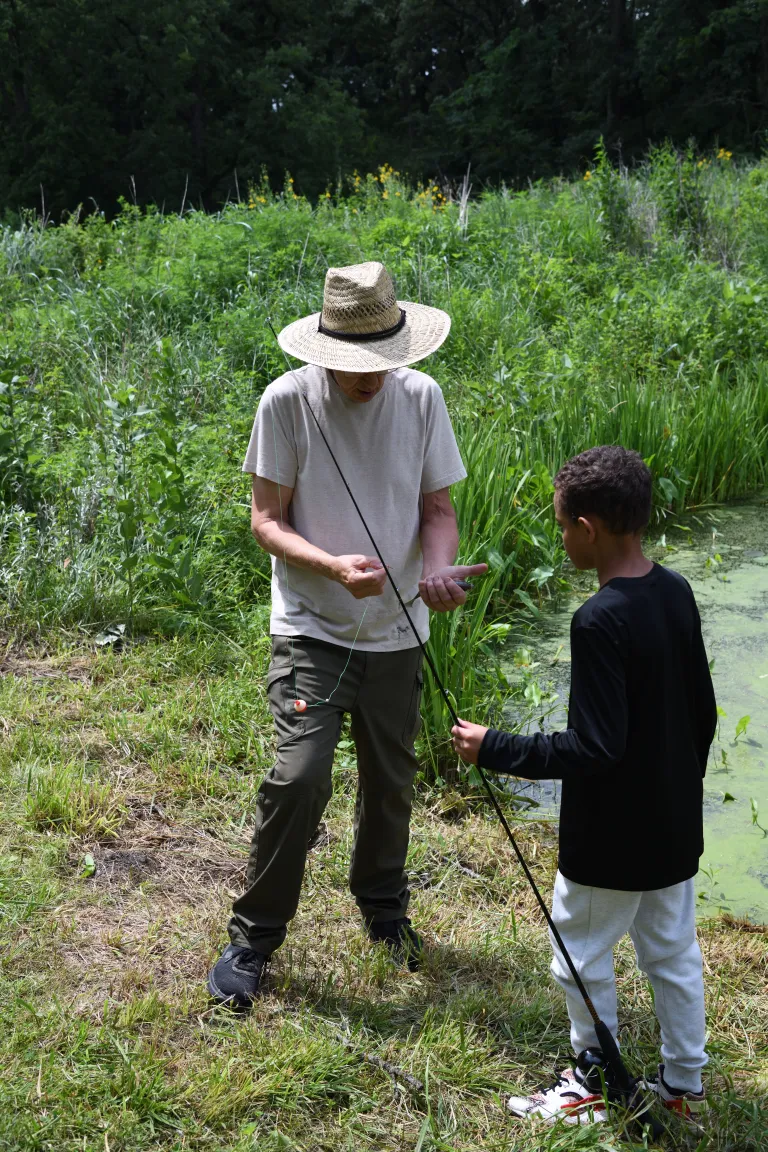
Attend the Fishing Outing and More, Stuart, Iowa, June 13, 10:00am to 2:00pm
Join us for a guided hike at Ciha Fen on Sept. 12, 10:00 AM, Lisbon, Iowa
Tune into our Lunch and Learn on Fridays at noon
Missed the live-stream lunch and learn? No problem, find them on our YouTube
Contribute to the Iowa Chapter of the Sierra Club so that we can continue our work on protecting Iowa's environment
In this issue of the Iowa Sierran
2026 Legislature Adjourned
Carbon pipeline legislation didn't advance
Passive Radon Mitigation to be included in building codes
Renewable energy siting bill not advanced
Proposed constitutional amendment handcuffs future income tax increases
Learn about Our Environment
Annual Meeting Sept. 26, 2026 - Celebrate, Connect, and Take Action!
Outdoor Experiences - see upcoming outings
Lunch and Learns Fridays at noon
Plus
Contribute to the Iowa Chapter
Volunteer for the Iowa Chapter
Calendar of events
To see the archive of previous Iowa Chapter newsletters
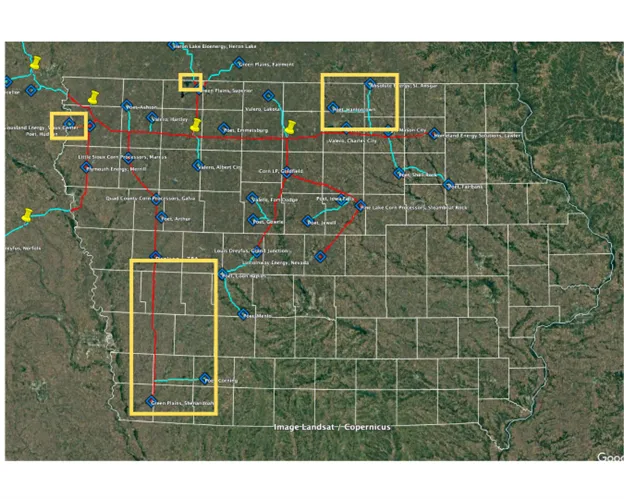
Summit Drops 200 Miles of its Pipeline Route
Summit Carbon Solutions suffered a major blow last week when it dropped 4 ethanol plants and 200 miles of route from its CO2 pipeline project. There is still a lot of work to do to make sure Summit’s project gets fully canceled but this victory would not have happened without relentless work for the last 5 years from Sierra Club members and impacted Iowans.
Summit’s changes show us that they are still a pipeline to nowhere and they have uncertainty in where their pipeline is going and what the CO2 will be used for - sequestration or Enhanced Oil Recovery (EOR).
This isn’t the only change Summit is trying to make to its pipeline route - Summit is asking the Iowa Utilities Commission (IUC) to make significant changes and decisions to fast track their carbon pipeline project.
We appealed to the District Court to overturn IUC approval of Summit’s Phase 1 route, which was approved in 2024 with conditions. One big condition is that Summit must have approval in South Dakota before beginning construction in Iowa. That created a huge problem for Summit when South Dakota rejected Summit’s proposal twice and banned eminent domain for carbon pipelines. Right before we were scheduled to head to court in our appeal of the Phase 1 route, Summit asked for major changes, including:
Amendments to the Phase 1 permit: pipe size changes, route changes and removal of the South Dakota condition
Consolidation of the Phase 1 and Phase 2 dockets
Fast tracking approval of the Phase 2 routes
Asked the District Court Judge to remand the case back to the IUC to make the above decisions
The District Court Judge remanded the case back to the IUC and we are now waiting for the IUC to make a decision on Summit’s ridiculous requests. The fact is that Summit’s initial project no longer exists. It has changed significantly from a carbon pipeline to capture CO2 and ship it up to North Dakota to be permanently sequestered to a carbon pipeline to capture CO2 to ship it to who-knows-where to do who-knows-what with the CO2. It’s time that Summit admits defeat and the IUC revokes and denies Summit’s permit and dockets.
Sierra Club Iowa Chapter weighed in with the IUC to make these points. You can read them here.
Route changes are shown on the map below.
Map Key:
Yellow rectangles: Sections of route being dropped
Red line: Phase 1 route
Blue line: Phase 2 route
Blue diamonds: ethanol plants (the ones that dropped were Green Plains Shenandoah, Poet Corning, Absolute Energy, Poet Hanlontown)
Yellow pushpins: proposed pumping stations
Pattison Sand Update
The Department of Natural Resources will be holding a public meeting on June 9 from 1 to 6pm at the Garnavillo Community Center, 106 W Niagara St, Garnavillo, Iowa, to discuss the water withdrawal permit requested by Pattison Sand. Staff from the Iowa Department of Natural Resources Water Use Program, DNR Field Office, and the Geological Survey will be present. There will be presentations at 1pm and 5pm. You can come and go at any time during the afternoon.
Pattison Sand Company mines silica sand in Clayton County. The sand is used for fracking for oil. The sand is combined with other substances as a lubricant to allow drilling between layers of rock to reach oil deposits that regular drilling equipment cannot reach. Pattison currently has a permit to withdraw 976.8 million gallons of water per year for its mining operation.
In September, 2024, Pattison applied for a permit to withdraw 3.7 billion gallons of water per year from several sources, including the Jordan Aquifer. The water will allegedly be used for Pattison’s mining operation. But the application does not explain why almost four times the amount of the current withdrawal limit is necessary for the mining operation. This is especially puzzling when Pattison’s water withdrawal records show that Pattison has not even been using as much water as allowed by its present permit.
The Iowa Department of Natural Resources (DNR) was on the verge of granting the permit, but took public input first. The public comments by Sierra Club and others showed concerns about adverse impacts to the water supply of the City of Garnavillo and private water wells in the area of the mining operation. There also was concern about the health of the Jordan Aquifer.
As a result, the DNR put the permit application on hold for a year, while it has asked the Iowa Geological Survey to undertake a comprehensive evaluation of Pattison’s request and its impacts on nearby private wells, public wells, water levels, and regional aquifers. The study has been completed.

Photo: Pattison Sand by Larry Stone
Palo Is Giving Google What It Wants
Google wants to build up to six large data centers in Linn County near Palo, Iowa. Google initially wanted to build the data centers in unincorporated Linn County. In response, the Linn County Supervisors adopted a special zoning ordinance for data centers. Among the provisions in the Linn County ordinance were a requirement that company records be public, an economic development agreement, and requiring the data center developer to fund a water use study to determine if the proposed water use by the data center is sustainable.
Google was apparently working with the county on this ordinance, but when the ordinance was finally adopted, Google did not want to comply with the provisions of the ordinance, especially the water use study requirement. Google then approached the City of Palo, asking to be annexed into the city, apparently assuming Google could avoid the requirements in the county ordinance.
Indeed, although an ordinance now being considered by the Palo City Council adopts much of the Linn County ordinance, it does not require public records, an economic development agreement, or a water use study. Regarding the water use study, it merely says that a data center developer only has to get a water use permit from the Iowa Department of Natural Resources. At first blush this may appear acceptable. But it is important to understand how this benefits Google.
The Iowa DNR issues water use permits just for the asking. The DNR does not do anything to determine if the proposed water use is justified, if the aquifer or water body from which the water will be taken can sustain the proposed use, or even how much water is available. The DNR has arbitrarily designated certain categories of entities that are entitled to water use permits. As long as a permit applicant fits in one of those categories, it gets a permit.
One of those categories is commercial and industrial facilities. Google would likely fit into that category, so it would automatically get a permit, with no attempt to determine if the use is justified or sustainable. In other words, a large water user like a data center would be treated the same as a small business that uses very little water, when the large water user obviously has a greater impact on the water resource than the small user. And Google will use as much as 14 million gallons of water a day.
The Palo ordinance should at least require a water use study, just as the Linn County ordinance does. In addition, the Palo ordinance could also follow the Linn County ordinance in requiring the data center’s records to be public and requiring the data center to enter into an economic development agreement whether or not the data center requests incentives.
In addition to the Linn County ordinance, another example of a data center ordinance that the City of Palo could use as a template is a recent ordinance adopted by Allamakee County. There are two significant provisions of the Allamakee County ordinance that bear consideration. The first provision is that a data center can only be located in an area zoned for industrial uses and data centers are a conditional use in industrial areas. That means that a data center would have to be approved by a board of adjustment. The second provision in the Allamakee ordinance is that a data center would be prohibited from using groundwater or surface water for cooling purposes. The only cooling methods allowed for data centers would be air-cooled or closed-loop, non-evaporative systems. That solves the water use issue.
The Palo ordinance will now go to the Palo City Council for a first consideration at the council meeting on June 1. There will be an opportunity for public comment at that meeting. Palo residents need to attend and speak up. That is the only thing that will stop the council from approving this ordinance. Google should not get away with this and the city council should protect its citizens.
Are Iowa’s Beaches a Health Risk?
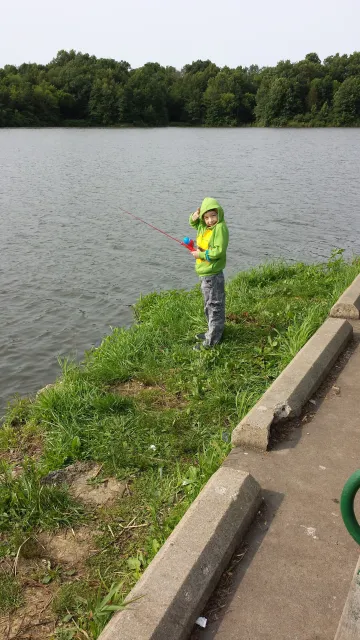
Across the state, state parks have beaches where we can swim, wade, float, and sunbathe. Iowa Department of Natural Resources (DNR) tests the water near state beaches each week from Memorial Day through Labor Day for levels of E coli and microcystin toxin. High levels of either E coli or microcystin are indications that disease-causing microorganisms might be present in the water.
High levels of E coli indicate that there is fecal matter in the water. The fecal matter can come from sewage treatment plants; septic tanks; wildlife, pet, or livestock manure; and baby diapers. It can be from run-off from farm fields, manure spills, improperly maintained septic systems, and untreated discharges from sewage treatment plants.
Cyanobacteria – also called blue-green algae – can produce toxins called microcystins. High levels of nitrogen and phosphorus, from commercial fertilizer or fecal matter, encourage the growth of blue-green algae. The algae create blooms that can then create the toxin. Microcystin can be carried in water droplets.
Unfortunately, you cannot look at the water and tell if it has high levels of E coli or microcystin toxins. Often the water is smelly, but not always. Green mats on the water indicate the presence of algae, but that alone does not indicate the presence of microcystin.
Swim advisories are issued – swimming is not recommended – when testing shows high levels of indicator bacteria or microcystin toxins. The advisory stays in effect until tests show levels below the advisory threshold. Generally, the information is updated every Friday.
People most susceptible to illnesses caused by pathogens in contaminated water are children, elderly, people with weakened immune systems. The illnesses from exposure to contaminated water include
Gastrointestinal symptoms and diarrhea. You can get diarrhea by accidentally swallowing small amounts of contaminated water
Skin infections and rashes
Ear, nose, and throat symptoms, such as runny eyes and a sore throat
Respiratory infections. Microcystin toxins can cause asthma-like symptoms
Microcystin exposure can result in liver damage
For more information
see the DNR website at https://www.iowadnr.gov/things-do/swimming
Call the Beach Monitoring Hotline, 515-725-3434
Contact the Army Corps of Engineers which monitors reservoirs
Saylorville Lake - 515-276-4656
Lake Red Rock - 641-828-7522
Coralville Lake - 319-338-3543
Rathbun Lake – 641-647-2464
Swim advisories will continue until nutrient levels are significantly reduced. In spite of voluntary efforts in reducing nutrients, a significant quantity of nitrogen and phosphorus runs off farm fields and into Iowa’s lakes, rivers, and streams. The nitrogen and phosphorus comes from factory farm manure and over-application of fertilizer - 92 % of nitrogen, 80% of phosphorus comes from non-point agricultural sources.
2026 Legislature Adjourned
The Iowa legislature adjourned on May 3. Both chambers pulled all-nighters. The House began its final weekend on Saturday, May 2, at 8:30 in the morning, and ran without breaking until Sunday, May 3 at 6:11 in the evening. The Senate began its final weekend on Saturday, May 2, at 9:00 in the morning, and ran without breaking until Sunday, May 3 at 7:07 in the evening. During those last two days, a frenzy of amendments were introduced, bills that had been idle for weeks were sprung forward, and the final budgets were ironed out.
Funding for water sensors stalled
Unfortunately, the Iowa legislature did not fund the water sensor network operated by IIHR-Hydroscience & Engineering at the University of Iowa. The 60 sensors measure nitrate and nitrite pollution in Iowa's waterbodies.
The legislature funded the network prior to 2023. A private foundation provided funds through July 1, 2026. Without the legislature restoring funding, the network was expected to go silent. Luckily, IIHR has been able to piece together funding for an additional year.
Iowans want to see improvements in Iowa's water quality - fewer beaches contaminated with E coli and microcystin toxins, fewer waters impaired with pollutants, and fewer incidents of large releases of manure and other pollutants into our water bodies. We cannot address water quality problems if we don't measure the pollution in the water; plus we won't know if we are making progress in improving water quality if we don't measure the changes in pollution levels. The sensor network is important in real-time continuous monitoring of pollution levels.
Carbon pipeline legislation didn't advance
The Sierra Club is disappointed that legislation that would prohibit the use of eminent domain for carbon pipelines failed to advance to the governor's desk. For five years, Iowans in an unlikely coalition joined together to fight for Iowans property rights, a shining example of bipartisanship for the betterment of Iowa.
Last year, the governor said she would sign a clean bill if one were sent to her, yet she wasn’t even sent a bill this year. The House passed a clean bill in January. But the senate leaders didn’t even advance that clean bill.
Sierra Club Iowa Chapter, landowners and everyday Iowans are not done fighting to preserve Iowa’s land, legacy and future. We’ll take it to the polls in November so we can build a legislature that will pass a clean bill like HF2104 and listen to the needs and wants of Iowans.

Passive Radon Mitigation to be included in building codes
The governor signed a bill - HF2297- that would update the building codes to require passive radon mitigation in single-family and two-family homes.
Radon is the leading cause of environmental lung cancer in Iowa. Radon gas is released when uranium breaks down. Uranium is a natural chemical found in Iowa’s soils and rocks. Outdoor levels of radon are low. However, radon levels can build up inside a building. Radon is an odorless, tasteless, and colorless gas. The only way you know if you have high levels of radon is to test for it.
71.6% of Iowa homes are above the Environmental Protection Agency recommended action level. Iowa has the largest percentage of homes in the United States that are above the EPA threshold for taking action to remediate radon levels. For more information, see "Radon Resources". Given the high levels of radon found within the state, it is sensible to require new residences to have radon mitigation systems already built in. The best way to do that is to modify the building codes to require installing passive radon mitigation.
Proposed constitutional amendment handcuffs future income tax increases
The legislature passed a proposed constitutional amendment that would enshrine in the state constitution limitations on raising income taxes. That amendment will be on the ballot this November.
The constitutional amendment would require a two-thirds majority to pass any income tax increases. This is a high hurdle to jump in the event that the state needs to increase revenue. A simple majority should be adequate to pass an income tax increase. Interestingly, the legislation would not require a similar super-majority to reduce income taxes. This would allow a minority of legislators to control the tax policy of the state, instead of the majority of legislators.
This amendment is unnecessary and could have major implications on enshrining an unfair regressive tax system onto the shoulders of everyday Iowans. Income tax is the fairest tax since it can be set up to have the higher taxes applied to incomes that are most able to pay the taxes.
Future legislatures may want to make the income tax more fair for all tax payers. Over the years, there have been numerous successful efforts to shift taxes onto sales tax and away from income tax and to lower the top tax brackets, which has a greater adverse impact on lower income families and working families.
If we have underestimated the amount of tax money that the state's economic activity generates, we may want to increase the income tax rates in order to pay for the services Iowans need, expect, and want from state government. It makes no sense to have a super-majority requirement for increasing those taxes.
If the revenues are not adequate to pay for the existing programs, then the state will be required to gut the programs that are being funded and may even lay off staff.
There may be a time when increased revenues are needed - taking care of a disaster or a need for some special program. And more significantly, if the tax cutting that has been happening and is contemplated results in far less revenue than is predicted, the citizens of the state may clamor for tax increases.
The net result from this constitutional amendment will be shifting tax collection to sales tax, property tax, fines, and fees. This constitutional amendment is not needed. It does not fix things that are broken. It does not move our state forward.
In November, voters will decide if they want to enshrine in the state constitution limitations on raising income taxes.
Outdoor Experiences
We have several outdoor events planned for this spring. We hope you can join us.
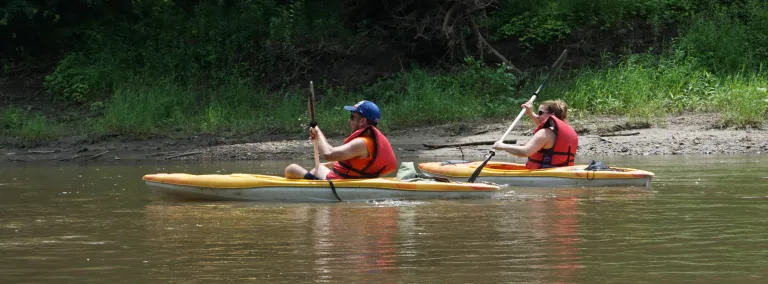
June 13, 10:00am to 2:00pm, Fishing Outing and More, Stuart, Iowa - Ready for an easy‑going outdoor adventure the whole family will love? Join Sierra Club Iowa Chapter for a fun‑filled afternoon of nature activities! Check out the details and sign up
June 20, 9:00 am, Indian Creek Nature Center, Cedar Rapids, Iowa - Start your morning outdoors with a relaxed, naturalist-led hike through the trails at Indian Creek Nature Center, where you’ll discover local plants and wildlife and learn how the ecosystem changes with the seasons. This welcoming, all-ages walk takes place Saturday, June 20 at 9:00 AM (5300 Otis Rd SE, Cedar Rapids) and costs $5 per person, payable at the door or online. Sign up for this event
Sept. 12, 10:00 AM, Ciha Fen Preserve Outing - Join us for a guided hike at Ciha Fen Preserve, Lisbon, Iowa, led by Tom Rosburg. This unique natural area features rare fen habitat, diverse plant life, and scenic landscapes that offer a great opportunity to learn more about Iowa’s native ecosystems. Tom will share insights on the preserve’s ecology, highlighting the importance of fens, the species that depend on them, and ongoing conservation efforts. Whether you’re a seasoned naturalist or just looking to enjoy a morning outdoors, this outing is a great way to connect with nature and learn something new. Participants should wear sturdy shoes and be prepared for uneven terrain. The trails should be mowed but please note there are no bathrooms on site! Bring water, weather-appropriate clothing, and your curiosity! Sign up for this event
Annual Meeting Sept. 26, 2026 - Celebrate, Connect, and Take Action!
Join us for a day of community, learning, and fun at our Annual Meeting on September 26, 2026, at the Newton Arboretum in Newton, Iowa. We will have an exciting program of speakers plus a guided tour of the arboretum. We plan to have an excellent meal, prepared by a local caterer, Magg Family Catering.
Date: Saturday, Sept 26th
Time: 9:00am - 3:00pm
Location: Newton Arboretum and Botanical Gardens, Newton, Iowa
Attendance cost: Pay at the door - $25 per adult, kids under 12 are free.
RSVP by Sept 16
Featured guest speaker is David Courard-Hauri from Drake University.
We will also hear from a panel of wildlife experts, including Stephanie Shephard (butterflies and raptors), Marlene Ehrsman from the Iowa Wildlife Center, biologist Terry VanDeWalle, and moderator Tom Rosburg
This will be followed by a guided hike through the Arboretum. We also ask that you dress for a hike and to bring a water bottle or drinking container to reduce cup waste.
We can't forget a delicious catered lunch from Magg Family Catering which will include vegetarian options.
We’ll reflect on our accomplishments, share what’s ahead, and invite you to take action.
Speaker Info:
David Courard-Hauri is a professor of Environmental Science and Sustainability at Drake University, where he teaches classes on climate change, environmental modeling, sustainability, and related topics. He has a Masters of Public Affairs from Princeton University and a PhD in Physical Chemistry from Stanford, and has published four environmental science textbooks, including one out this summer on environmental modeling. Since 2011 he has helped organize and write the annual Iowa Climate Statements, co-signed by over 200 climate scientists and educators from all of Iowa’s major colleges and universities. These statements serve to communicate key ideas about how Iowans impact and are impacted by climate change every fall. In his free time, he likes to garden, proselytize about edible landscaping, and run endurance triathlons.
Stephanie Shephard - A native of Virginia, Stephanie received a BS in Biology from the University of Richmond. She landed in Iowa to study prairie reconstruction and butterfly communities as part of a Master’s degree in Ecology and Evolutionary Biology from Iowa State University. Since then, she’s worked in Missouri and Virginia before settling into a job as a wildlife diversity biologist at the Iowa DNR for the last 20 years. She is passionate about prairies and the wildlife that depend on them, especially its smaller denizens.
Terry VanDeWalle is a Senior Principal Biologist at Stantec Consulting Services Inc. with 35 years of experience specializing in animal and natural areas surveys, herpetology, threatened and endangered species surveys, Endangered Species Act Consultation, wetland delineation and permitting, wetland mitigation design and monitoring, and coordination of environmental impact statements and assessments. He has been conducting pre- and post-construction wildlife surveys and permitting at wind farms for 19 years. In addition, he currently serves on the Board of Directors of the Iowa Wildlife Center and is an Adjunct Professor at Hawkeye Community College where he teaches a course on Wildlife Ecology.
Marlene Ehresman - Since 2009, Marlene Warren Ehresman has been the Executive Director and Co-founder of the Iowa Wildlife Center, which serves Iowa through professional wildlife rehabilitation of native species, environmental education, and wildlife assistance skills training. Prior to this she was a staff member of the Iowa Natural Heritage Foundation for over 12 years. She served the National Wildlife Rehabilitators Association from 1988 through 1996 as a board member. In 1985, she co-founded the Iowa Wildlife Rehabilitators Association, which was a state-wide network of licensed wildlife rehabilitators. She is proud and honored to be the recipient of several awards for her work for conservation and the environment. Marlene has dual degrees in Fisheries and Wildlife Biology and Environmental Studies from Iowa State University. Since childhood, she has had a deep interest in wild places and wild things and melds her personal and professional life by striving to live intentionally and ethically for this good Earth.
We'll see you in Newton on Saturday, September 26, 2026! RSVP by Sept 16
Lunch and Learns Fridays at noon
Fridays at noon, we do a Lunch and Learn livestream. See us on Facebook at "Sierra Club Iowa Chapter". These are recorded so you can watch them anytime. Topics will be selected based on what is happening during the week. During the legislative session, we cover issues coming before the Iowa legislature.
In case you missed our past webinars and lunch and learn sessions, you can still see them on our YouTube.
Palo Data Center Proposal, May 22, 2026
Summit's on shaky ground - drops 200 miles of route!, May 15, 2026
Results from the 2026 legislature, May 8, 2026
Constitutional Amendment setting hurdle on income tax increases: SJR11, May 1, 2026
Volunteer for the Iowa Chapter
Almost everything we do is done by volunteers like you. If you would like to volunteer for the Iowa Chapter, please let us know by sending an E-mail to Iowa.chapter@sierraclub.org. Or sign up by using the online form. There are many opportunities for you to make a difference:
making phone calls
developing graphics for banners and flyers
working on legislative issues
working on elections
fundraising
organizing events
joining an issue committee
If you would like to join our legislative action team, sign up here. Keep on top of what is happening at the Iowa legislature. Be alerted when you should contact your legislators about pending legislation.
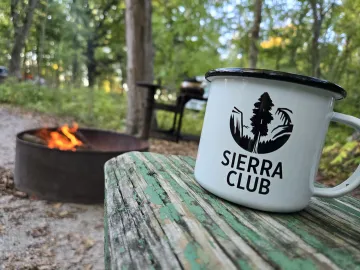
Photo: camping by Jess Mazour.
Contribute to the Iowa Chapter
Sierra Club - working every day on Iowa’s environmental problems
Sierra Club is Iowa’s oldest and largest grassroots environmental organization. Not only that, we are the best bet in the state for achieving bold solutions to Iowa’s environmental problems.
We work in the courts, before Iowa’s public agencies, and in the halls of the legislature. The Iowa Chapter's effort to protect the environment takes financial support. The Chapter receives very little financial support from the national Sierra Club. Can we count on you for a donation to ensure even more victories? Your contribution will be put to work here in Iowa on issues that affect every day Iowans – water quality, clean air, protection of Iowa's soil, parks and natural areas, and a strong democracy. The Iowa Chapter is relentless in fighting back bad legislation that affects every one of us.
Your non-deductible contributions make it possible for us to fight bad legislation and to promote good legislation. We appreciate your past and on-going support of these efforts. You can make a non-deductible donation with a credit card. A non-deductible donation supports the Chapter's effective, citizen-based advocacy and lobbying programs. If you prefer, a non-deductible check can be written to the Sierra Club Iowa Chapter and mailed to:
Treasurer
Sierra Club, Iowa Chapter
PO Box 1058
Marion, IA 52302
You can also make a tax-deductible donation with a credit card. Tax-deductible activities are limited to public interest education, research and legal actions. A deductible check can be written to the Sierra Club Foundation with “Iowa Chapter” written in the memo line.
Thank you for your support.
Donate your used vehicle
As the Sierra Club Foundation's Iowa Chapter continues to raise charitable funds to support its work in Iowa, won’t you consider participating in our vehicle donation program? Our partners over at CARS have made the process of donating your unused or unneeded car, truck, motorcycle, boat or RV easy, efficient and secure. They’ll take care of everything from picking up your vehicle to sending you a tax receipt for your generous gift. To learn more about The Sierra Club Foundation's Iowa Chapter vehicle donation program, please call 844-674-3772. Or visit our webpage to get started today!
Sierra Club Foundation promotes climate solutions, conservation, and movement building through a powerful combination of strategic philanthropy and grassroots advocacy. The Foundation is the fiscal sponsor of Sierra Club’s charitable environmental programs.
For more information
Planned giving . . . naming the Sierra Club Iowa Chapter in your will
Ensure your environmental legacy by naming the Iowa Chapter in your will or trust. These gifts cost you nothing now. You can hold onto your assets for as long as you need them.

Thank you for supporting our work!
Resources for Planning for the Future
The Iowa Chapter has three resources to assist you in planning for the future - one pagers about giving via Donor Advised Funds, IRA Qualified Charitable Distributions, and planned gifts.
The flyer Donor Advised Funds (aka DAF) covers basics of Donor Advised Funds and how an individual can designate support specifically to the Iowa Chapter.
The flyer Giving through an IRA covers how to make a Qualified Charitable Distribution (aka QCD) and how it can be directed to the Iowa Chapter.
The flyer Plan Today Protect Tomorrow covers the basics of planned giving, including bequest language to make a gift to the Iowa Chapter.
If you need assistance, contact Julia Curtis at 800-932-4270, giftplanning@sierraclub.org .
| When | Earliest: Latest: |
| What |
|
| Word or Phrase | Word or phrase to search for: |
| Leader | All or part of leader name to search for: |
No Matching Activities Found
Loading
| Date | Activity (click title for full description) | Sponsor | Category | Type | Difficulty | Links |
|---|
Loading ...
 Outing
 Team/Committee
meeting
Team/Committee
meeting
 Volunteer Event
 Activist event
 Multiple events
(map only)
Multiple events
(map only)