Minerals |
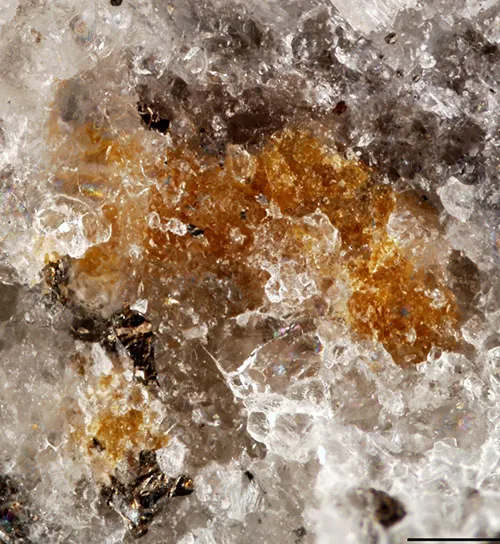
Muirite
A barium mineral from Fresno County, CaliforniaMuirite is an orange-colored mineral, with a vitreous luster, in the silicate family. Muirite crystallizes in the tetragonal crystal system as tetragonal crystal or as grains. It is found in metamorphic rock in Fresno County, California. The type locality is: Big Creek / Rush Creek sanbornite deposit near Trimmer, Fresno County, Calif. Its chemical composition is: Ba10Ca2MnTiSi10O30(OH,Cl,F)10 Read more. |
|
Plants |
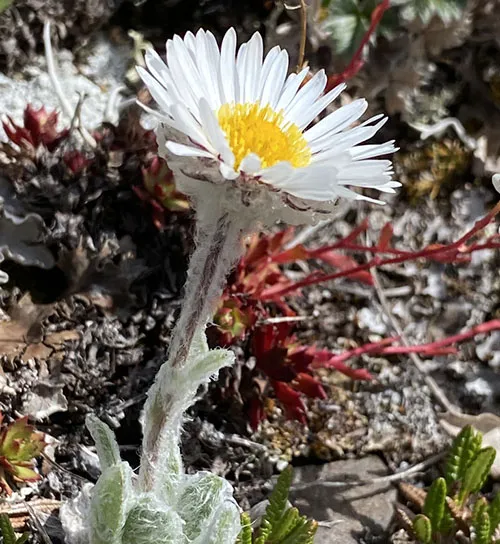
Erigeron muirii
Muir's fleabaneErigeron muirii, or Muir's fleabane, is a rare Arctic species of flowering plant in the family Asteraceae. It has been found only in northern Alaska and the northern Yukon Territory, including Herschel Island in the Arctic Ocean. It grows in tundra, dry slopes, and rock outcrops. Erigeron muirii was discovered by noted conservationist John Muir near Cape Thompson, Alaska during his travels there in 1881. Muir sent the plants he collected to his friend and botanist Asa Gray, who determined that the Erigeron was a new species, which he named in honor of Muir. Read more. |
|
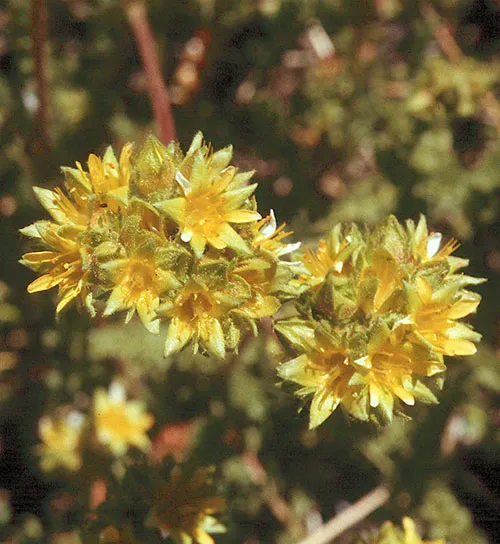
Ivesia muirii
Granite mousetailThis member of the Rose family is found in the Sierra Nevada mountains of California. John Muir sent the type specimen of this flower from Yosemite to Asa Gray on February 22nd, 1873, writing, "Here are a few plants which I wish you would name for me." In reply, Gray wrote, "If you will keep botanizing in the High Sierra," he wrote, "you will find curious and new things, no doubt. One such, at least, is in your present collection in letter - the wee mouse-tail Ivesia ... Ivesia Muirii [sic] is the first fruit--'the day of small things.'
|
Photo Copyright © 1987 Gary A. Monroe |
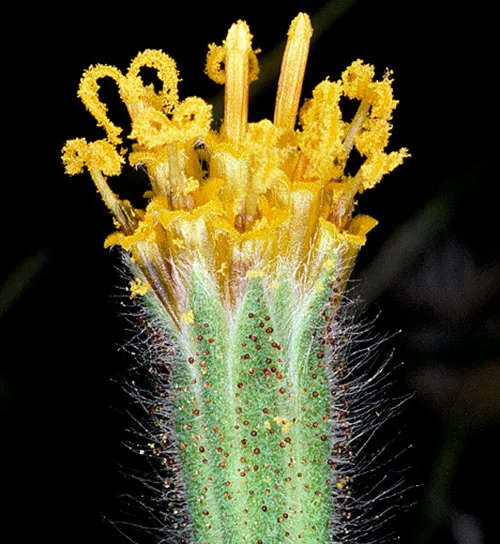
Raillardiopsis muiri
Muir's TarweedAccording to Bruce G. Baldwin, Curator of the Jepson Herbarium, the genus name Raillardiopsis has been abandoned and this species has been re-named Carlquistia muirii. See Review of Name Changes in California Tarweeds. This member of the Asteraceae family is found in Sequoia-Kings Canyon National Parks. For more photos and species background, see Carlquisitia muirii page at University of Hawaii. |
Photo Copyright © by Gerald D. Carr. |
Animals |
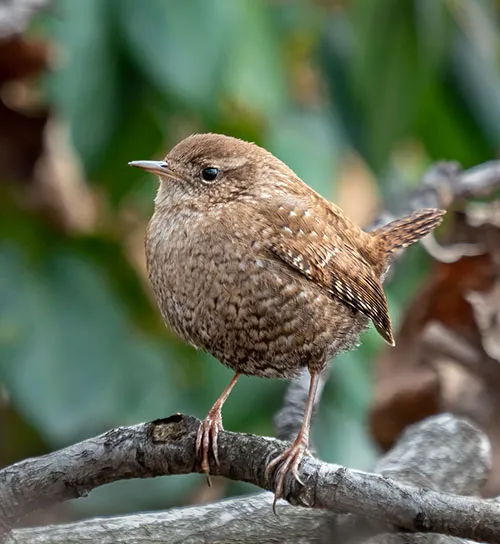
Troglodytes troglodytes muiri
A sub-species of Winter wrenMuir's Winter Wren is a sub-species of Winter Wren that ranges coastally from southwest Oregon through Marin County, California. "The first bird named in honor of John Muir, whose life's work of conservation has helped protect the redwood habitat of this wren." Read more. |
|
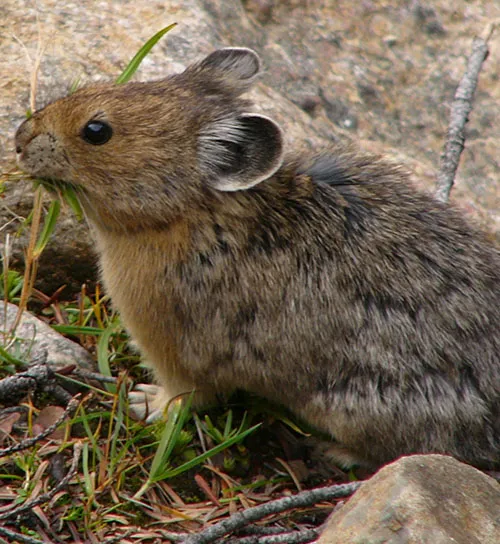
Ochotona princeps muiriiA pika sub-species found in Yosemite National Park, sometimes known as the Yosemite cony. This sub-species was originally identified and named by Joseph Grinnell and Tracy Storer in the early Twentieth Century. The type locality is Ten Lakes, Yosemite National Park. |
|
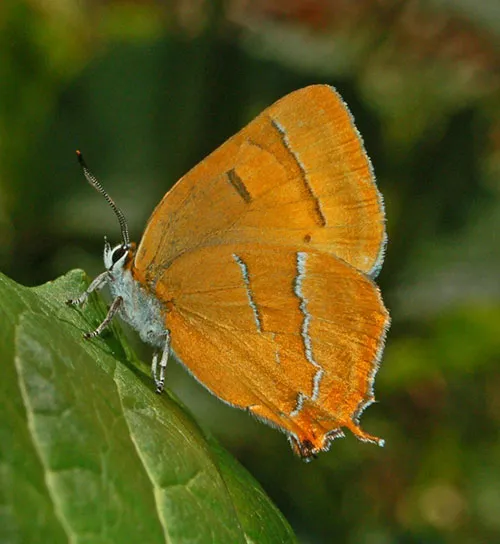
Thecla muiriiA butterfly found in the Sierra Nevada, one of several new species of butterflies collected by Muir. The species was named by actor-entomologist Henry Edwards, who wrote, "I have named this exquisite little species after my friend John Muir, so well known for his researches into the geology of the Sierra Nevada, who has frequently added rare and interesting species to my collection." - Papilio , vol., 1, p. 54 (1881). An extended excerpt of the Papilio description of how the species was collected by Muir and named after him, as well as a letter to Muir by Henry Edwards thanking Muir for the butterfly specimens is contained in Chapter 8 of The Life and Letters of John Muir, Volume 1. |
|
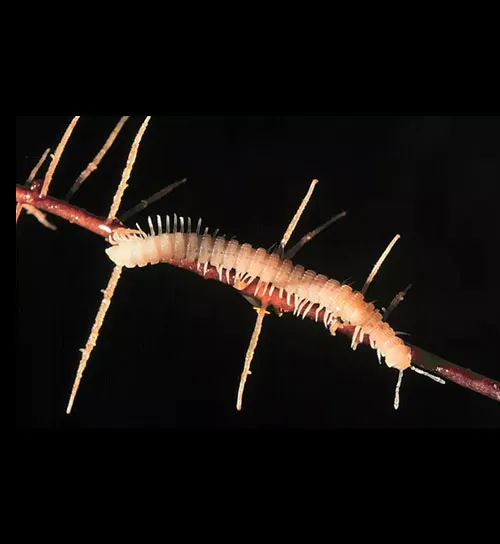
Amplaria muiriAn arthropod, a milliped, one of several new species found in caves in Sequoia and Kings Canyon National Parks, California. The new species was described by Dr. Shear and Dr. Krejca, who noted that it was named: "After John Muir, famous naturalist of the late nineteenth and early twentieth century, whose name is forever connected with the Sierra Nevada, which he called the 'Range of Light'."
Read more. |
|