By Sam Lambert
As winter break approached, I knew that I had one major chore that needed to be tackled… My vehicle lease was coming to its end and I had to make a decision. I wanted to explore my options, but monthly payment was my biggest consideration. The automotive market has changed significantly since I last shopped for a vehicle, with inflation and interest driving costs far beyond what I expected nearly four years ago. I was originally leaning towards a hybrid vehicle, but that came at a significant premium. As a renter, I hadn’t really considered an all electric vehicle (EV), until I heard the price and recalled a fellow Sierra Club colleague talking about their experience as a renter and longtime EV owner. With some preliminary knowledge and research about real world driving, I felt comfortable signing for a 2024 Honda Prologue.
In Massachusetts, leased and purchased vehicles are both eligible to combine State and Federal incentives that make the switch to all electric driving a little more palatable financially. Manufacturers are also offering a variety of charging incentives with their vehicle, whether charging credits or complimentary physical home chargers (or some combination). My recent move to a home with a driveway that provided convenient and suitable power, in addition to my proximity to a number of different public charging options, made the decision possible.
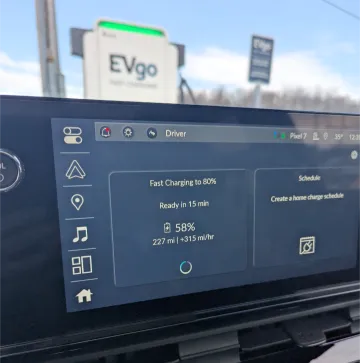
When weighing the decision to go electric, an important consideration has to be the cost of charging. There are a number of low or no cost options for charger installations for homeowners, or even renters that have access and permission from the homeowner, especially if you are in an Environmental Justice (EJ) community. There are some hyper-local community programs that can offset the cost provided through grant funding, so taking some time to investigate those options are well worth your time. An additional consideration should be your electricity provider’s rates. Some utilities offer off-peak rates that will reduce the increase on your monthly bill, though this is dependent on the type of vehicle and not all EVs are currently eligible, and not all Massachusetts utilities offer this. It’s worth taking some time beforehand to consider how increased energy costs will impact you.
I could not help but think about how impossible making the switch to an EV would have been just a few short months ago. My former apartment had sparsely available on-street parking and though I am aware of some fast public chargers, they are in high-traffic areas and are expensive. Public charging can be costly in terms of price and time. While you can still find some subsidized lower cost or free charging options, these are often well-known slow chargers with very limited availability. While the vehicle price would have been a strong incentive for me, making the switch based on just that factor would have been costly and frustrating
Overall, I'm thrilled with my decision to transition to all electric driving and feel confident due to my research and my driving needs. I am also acutely aware of the barriers that many, many Massachusetts residents face in making the switch away from gas powered vehicles. We must continue to invest in public infrastructure as well as advocate strongly for energy rate reform in Massachusetts if we are to meet the Commonwealth’s clean energy and climate goals.