The Renewable Fuel Standard (RFS) is the program that has led to phrases like "May contain up to 10% ethanol" you probably have noticed at the gas station when fueling up your vehicle (that is, if you haven't yet started driving electric!).
The RFS is a federal program started in the early 2000's (and dramatically scaled up in 2007) with the hopes of spurring an industry of sustainable vehicle fuels through encouraging development of advanced cellulosic biofuels. While initially well-intentioned, this program has in fact aided in causing massive ecological disruptions and human health concerns.
The RFS mandates the production of food-based biofuels, mostly in the form of corn ethanol and soy biodiesel, and the integration of them into U.S. fuels. These food-based biofuels were meant to be a "bridge" to the development of advanced cellulosic biofuels, made from things like municipal waste, grasses, and the inedible parts of food crops, from which it is more of a technological challenge to produce fuel.
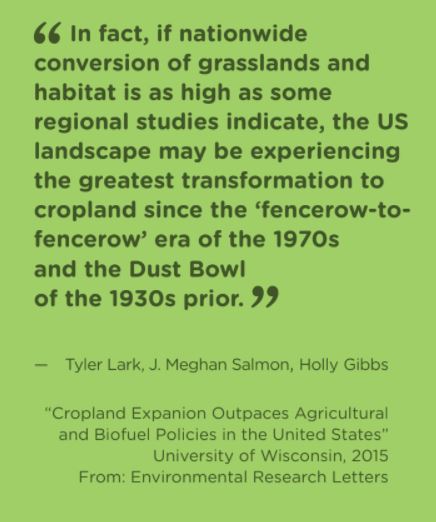 Unfortunately, that bridge to cellulosics has yet to be fully built, and the production mandates of food-based biofuels are simply propping up an industry that is not providing any real climate or human health benefits. Instead, this large-scale food-based biofuel production is causing serious harm to ecosystems and communities in the U.S. and abroad. 40% of the corn grown in the United States is grown to meet the mandates of the RFS. In total, at least 37 million acres of corn and soybeans - an area the size of West Virginia - are required to produce enough corn ethanol and soy biodiesel each year to meet RFS biofuel mandates.
In order to meet this massive demand, large agricultural businesses in the U.S. and abroad have continued converting native ecosystems (grasslands, wetlands, prairies, forests, etc) into agricultural production. This level of land conversion, often accompanied by retrograde agricultural practices like full fertilizer application, artificial pesticides, and a lack of cover crops, is having serious impacts:
-
Greater water pollution and costs to treat drinking water as fertilizer and pesticides run off fields into nearby waterways. In some states such as Louisiana, 50% or more rivers are impaired due to excessive nutrients from agricultural pollution.
-
Record-setting dead zones are recorded when pollution runs down the Mississippi River into the Gulf of Mexico, where an area the size of New Jersey was devoid of aquatic life in 2017.
-
Annual algal blooms occur in Lake Erie due to excessive agricultural pollution. Toledo, Ohio is a prime example, with residents banned from drinking their tap water for several days in 2014 because of a toxic algal bloom.
-
Wildlife populations of pheasants, grouse, prairie chickens, monarch butterflies, bees, and other species have plummeted as corn and soybeans encroach on their habitat.
Abroad both Argentina and Indonesia suffer from high rates of deforestation for soy and palm, respectively. The clearance of forests and native ecosystems, often through controlled burns, released large stores of carbon into the atmosphere while removing carbon-sequestering organic material. The disappearance of native ecosystems and the increased use of pesticides also affects local populations, some of whome experience serious health risks, and lose access to clean drinking water, land and livelihoods.
When factoring in the carbon emissions from land conversions, the climate impacts of food-based biofuels are argued to be even worse than that of fossil fuels. While we aren't a corn- or soy-producing state in Massachusetts, we absolutely drive cars and run engines. This means we're importing these destructive food-based fuels hundreds (and in some cases thousands) of miles to be able to drive our cars and run our engines here in the Bay State.
The Environmental Protection Agency is supposed to be carefully monitoring the impacts of such programs, however has failed to do so. In February 2018, the Sierra Club and the Gulf Restoration Network filed a lawsuit in D.C. Circuit Court challenging the Environmental Protection Agency for failing to consult with wildlife agencies to ensure that its 2018 renewable fuel volume standards do not jeopardize federally listed species.
For further guidance on biofuels, visit the Sierra Club Grassroots Network biofuels page.
~~~~~~~~~~~~~~~~~~~~~~~
Sierra Club Policy on Corn Ethanol: "The Club opposes further deployment of corn-based ethanol based on its extremely dubious net carbon benefits and its unresolved direct and indirect environmental impacts."