What Really Makes You Feel Hot?
When San Antonio talks about extreme heat, we usually hear about just one number: the air temperature. But, human heat stress actually depends largely on how much radiant heat the body absorbs.
Studies consistently show that mean radiant temperature (MRT) is the most important number. Mean radiant temperature measures the heat your body absorbs from surrounding surfaces and the sun, not just from the air. It includes radiation coming from: direct sunlight, reflected sunlight from pavement and buildings, heat emitted by asphalt, concrete, and walls, and nearby vehicles and infrastructure. A thermal photograph can indicate the sources of the radiant heat.
MRT accounts for 50–70% of outdoor thermal stress. Tree canopy, shade structures, and cool corridors primarily work by reducing MRT, not air temperature.
On a 100°F summer day in San Antonio:
- Air temperature may be 100°F
- Mean radiant temperature in full sun can exceed 140–160°F
That difference explains why shade can feel dramatically cooler even when the thermometer barely changes.
This is why “cool pavement” alone often fails to cool pedestrians. While lighter pavement may reduce surface temperature slightly, it can increase reflected radiation, raising MRT for pedestrians and making conditions more dangerous. Planning based solely on air temperature overlooks where people are actually exposed: on sidewalks, at transit stops, in parking lots, and along trails.
If we want streets that are walkable, transit that is usable, as well as parks and trails that are safe, MRT must be part of the planning conversation.
So, how do we measure mean radiant temperature? Unlike air temperature, MRT cannot be captured with a basic thermometer. Measuring it usually requires a globe thermometer which is a black, hollow sphere with a temperature sensor inside. The radiant temperature measured by the globe thermometer is often combined with air temperature, humidity, and wind speed to calculate Wet Bulb Globe Temperature (WBGT) which is the heat index used by the U.S. military, OSHA, and athletic organizations.
For a city, like San Antonio, facing record heat and growing vulnerability, understanding MRT is key to making decisions to protect public health and to build a cooler, more livable San Antonio.
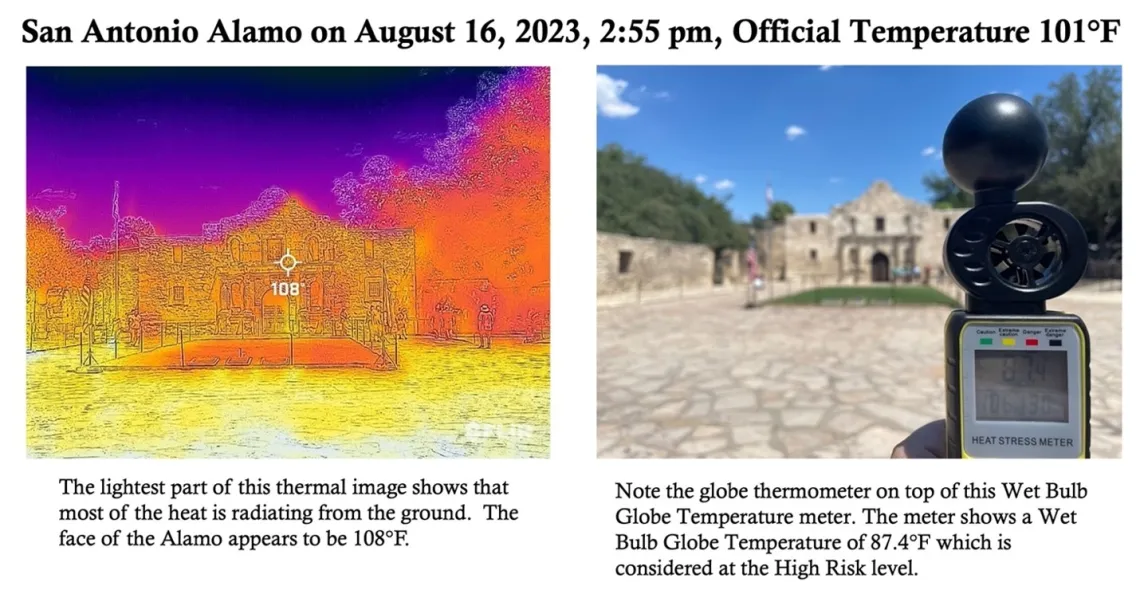
by Bill Barker, Alamo Group executive committee member
Approaching Carbon Neutrality in a Mid-Century San Antonio Home
Our February 17th meeting features Alan Montemayor of San Antonio. He will discuss how he and his wife achieved their goal of an all-electric home with energy consumption largely offset by renewable solar energy.
Tuesday, February 17th
6:00 pm
Meeting schedule
| Informal get-to-know-you | 6:00 pm to 6:15 pm |
| Announcements | 6:15 pm to 6:30 pm |
| Featured program | 6:30 pm to 8:00 pm |
| Discussion | 7:30 to 8:00 pm |
Venue
This is an in-person only meeting at:
William R. Sinkin Eco Centro, 1802 North Main Avenue
Map
Program topic
Alan Montemayor and Cheryl Hamilton have prioritized energy efficiency over aesthetic changes to their mid-century home during the past thirty years. While retaining the original kitchen, bathrooms and flooring, they have substantially reduced their carbon footprint. In the mid-1990’s they added attic insulation, double-paned external windows/doors, native plant landscaping and energy efficient appliances. Between 2000 and 2020, they added a standing seam metal roof, wide gutters, two 1600-gallon rainwater tanks, a raised bed garden, ten solar panels and two battery electric vehicles.
For the past five years, Alan and Cheryl have generated as much solar energy as they consumed from CPS Energy. This includes charging two electric vehicles for free in that time frame. They have recently added five more solar panels and replaced aging natural gas appliances and their furnace with a high efficiency heat pump air conditioning system, heat pump water heater, and heat pump clothes dryer.
In December CPS Energy removed the natural gas meter as they reached their goal of an all-electric home powered by renewable solar energy.
About our presenter
Alan is a lifelong San Antonio native and has been active with the Sierra Club since 1983. He has a Bachelor of Science in mechanical engineering from Texas A&M University and worked at Southwest Research Institute for 25 years, designing alternative fuel vehicles. He is an environmentalist, hiker and do-it-yourselfer.
Before COVID, Alan and his wife loved to travel the world. He’s passionate about conservation of natural resources, clean energy, local agriculture, sustainability and improving the quality of life for not just San Antonio and Bexar County but the whole world. His efforts are directed towards local actions that will lead to sustainable energy, water, air quality and food policies for our region. Climate justice is a large part of that local work, and there’s plenty to be done.
Alan is chairman of the Alamo Group of the Sierra Club and sits on the board of the Greater Edwards Aquifer Alliance. He says, “I thought retirement would allow me to sleep late and enjoy life, but I’m up every morning at 6am, ready to save the world.”
Our general meetings are held the 3rd Tuesday of most months. They're always free and open to the public.
About Marshes - Examples in Moosehorn National Wildlife Refuge, Downeast Maine
This article resulted from the little hikes with pictures below. After the hikes I read the Wikipedia Marsh page and realized didn't understand much about this topic but now know a bit more. There are key sections: Values and Ecosystem Services and Types of Marshes, of which there are there are three categories including freshwater marshes. Then listed are six more specific marsh types. Then there is the Freshwater Marsh page with four types. The ecosystem webpages linked here are all Wikipedia.
There was an article in this newsletter about Moosehorn, which is in far eastern Maine just southwest of the Canadian border, in the January 2024 issue with background info. Here's the NWR webpage with maps; below two pictures each in the Baring and Edmunds divisions. And another November 2025 about the amazing number of preserves in this area.
One hike in Moosehorn, Baring Division
The next two pictures below are on the west side of a three mile triangular loop route southwest from the headquarters. Looking at a detailed map (not clear on the NWR map) we can see these marshes drain to Moosehorn Brook, then in succession southwards via Pennamaquan Lake, Pennamaquan River, Orange River, Cobscook Bay and finally the Bay of Fundy.
I tried to classify these two per the webpages; best I can tell they are normally wet meadows, one of the types of freshwater marshes. I think I saw water control structures (mentioned next section, last paragraph), without which they would likely be dry in summers, characteristic of wet meadows. These are probably every few years allowed to drain, so are partly artificial habitats but with great benefits for biodiversity.
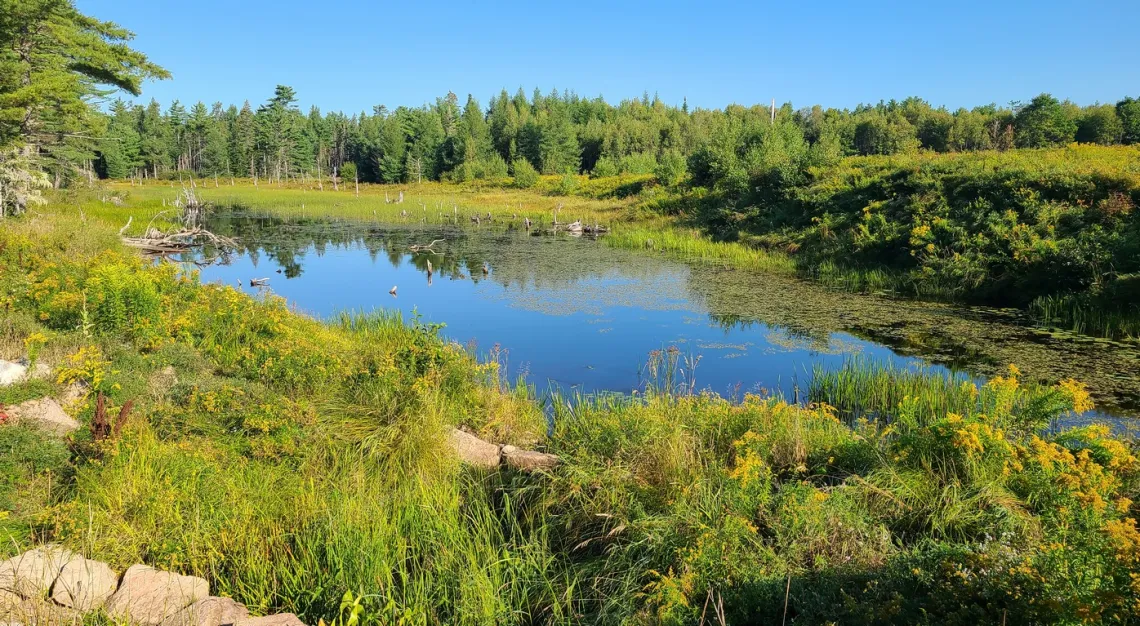
Wetlands – nature's balance threatened
The heading above is on a nature info sign. The text below is from the sign, which also has photo examples and text about key species.
“Wetlands rival tropical rainforests in biological productivity. They serve many important functions in an ecosystem such as filtering polluted water and helping to control floods and droughts.
Wetlands are home to a diverse array of ducks, wading birds, fish and other wildlife. However, since European settlement more than half of the wetland habitat in the United States has been lost to draining for farmland and filling to allow for construction of homes, businesses and roads.
Marshes and swamps are examples of wetland environments. Though these words are often used interchangeably, each is a unique type of environment with it's own distinct characteristics. Wetlands bring balance to their surrounding environments. Their stored water helps replenish the underground water supply during drought, they help capture excessive runoff during floods, and their plants act as natural filters for polluted water.
In addition to the wetlands created by beavers, at Moosehorn wetland habitats are provided by using water control structures that allow us to regulate water levels. Water control structures also allow us to drain a wetland every few years, which can revitalize an old marsh or swamp.”
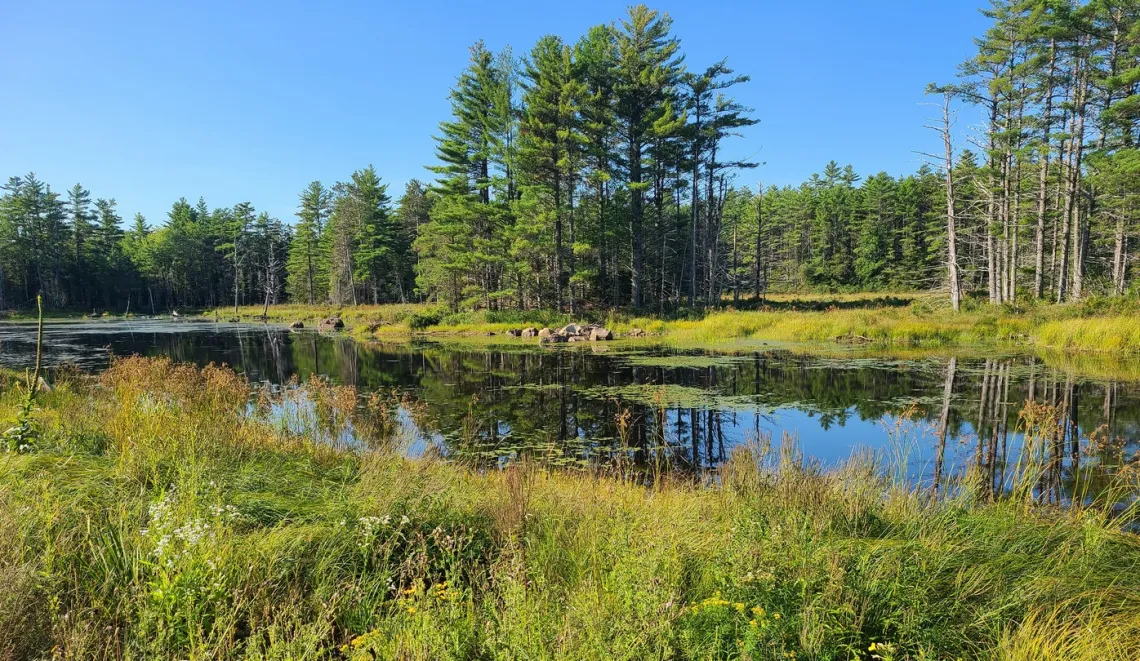
Another hike in Moosehorn, Edmunds Division
The next two pictures are off South Trail, a maintained road mostly though woods. About 28 miles south of the prior pictures.
The first is of a little vernal pool. Got this picture on a short handicap accessible trail off the road. Appears to be an access spot maybe created by large mammals upper left. Vernal pools are listed as a category on the Marsh page linked above, under Fresh Water Marshes.
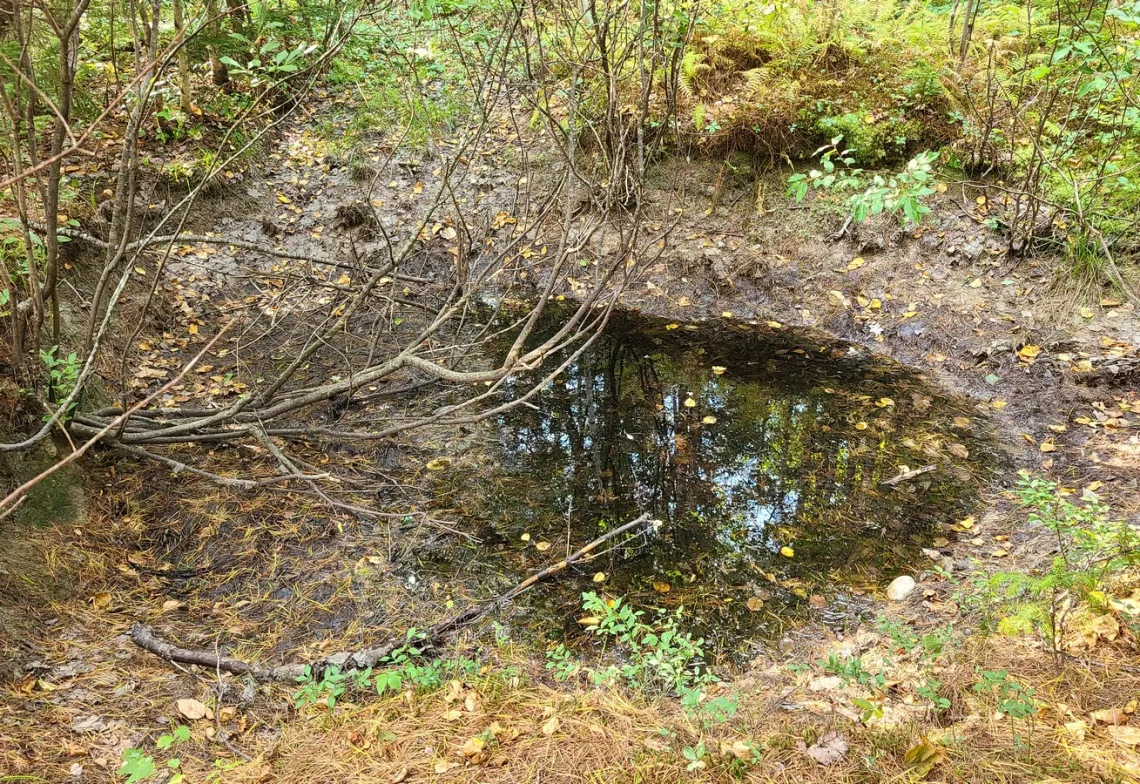
Vernal pools – puddles of life
At above picture spot there was another educational sign with the above title, text below.
“Vernal Pools are small water bodies that fill with spring rains and snowmelt and are generally dry by mid-summer. This drying means that fish cannot survive in the pools, which creates a unique environment for salamander and frog young to grow without the threat of predators.
Vernal pools in eastern forests provide islands of wetland habitat amoungst the wooded landscape. From the moment they fill with spring rain and snowmelt, it is a race against time for the wildlife species that lay their eggs in them for their young to mature before summer dry-up. Some begin breeding while pools are still partially frozen.
For a temporary water body to be considered a vernal pool in Maine at least one of four indicator species must be present [pictures of the four: spotted salamander, fairy shrimp, blue-spotted salamander and wood frog].”
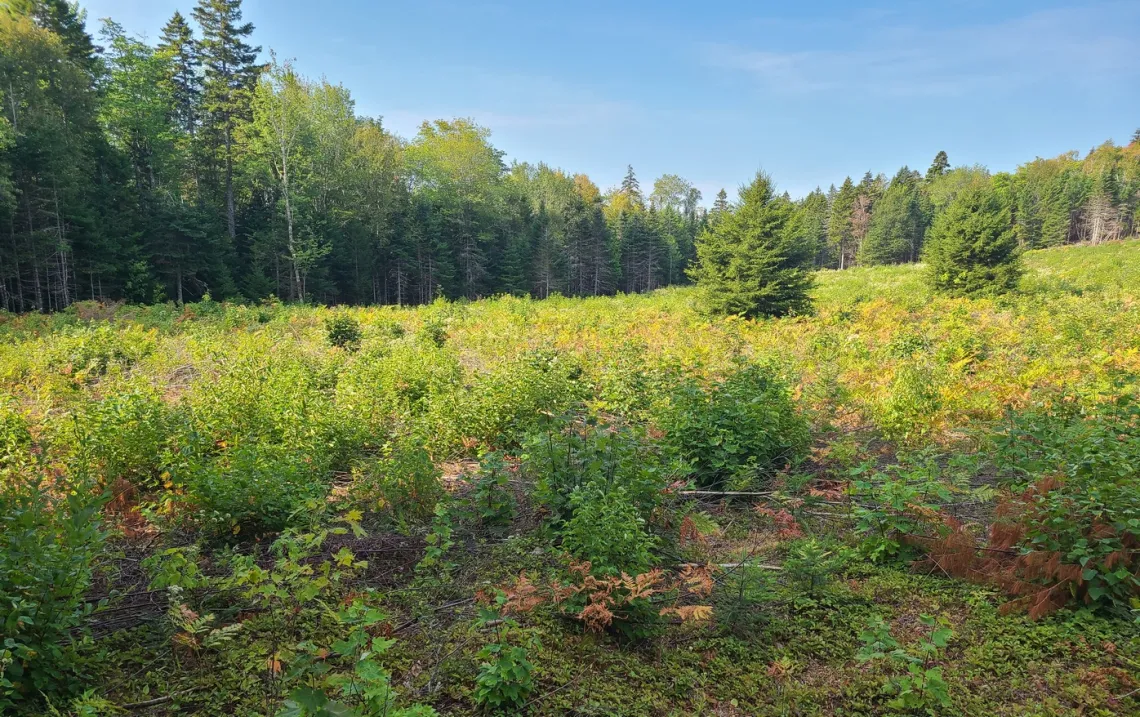
The picture below is from the end of the accessible trail, at a wetland apparently dry at this time, likely not fed by a stream. On the Freshwater Marsh webpage the description that seems to fit is that of a wet meadow.
by Kevin Hartley, Sierra Club Life Member
Citizen Science Database on iNaturalist
The arrival of Spring will provide fresh opportunities for outings to observe the beauty of nature. Some of the Alamo Group outings will concentrate on documenting the biodiversity of the region by adding to the Citizen Science database being built on iNaturalist. These daylight walks and in-situ blacklight observations in the evening will provide the opportunity to take images of plants and animals with cellphones or digital cameras. The free app iNaturalist can be added to cellphones to facilitate the upload of taken images to the iNaturalist database.
The use of iNaturalist is being promoted by Alamo Area Chapter of Texas Master Naturalists in their training classes. However this group is also involved in engaging the public in this Citizen Science effort.
The most important event on iNaturalist occurs on the last weekend in April: City Nature Challenge. About 700 Metro Areas around the world participate in a friendly competition to identify the species present in their area. The effort in the San Antonio Metro Area has been very organized and productive in the past few years.
If you are interested in becoming a Citizen Scientist using iNaturalist and participating in the event, go to the City Nature Challenge website. Information on training events, observation events and friendly local competitions is provided. The Alamo Group is involved in one of the competitions. If you are interested in participating on our team send an email message to Jerry Morrisey at jlmorrisey@aol.com with "CNC Participant" in the subject line or text at 210-382-2614.
The iNaturalist app on a cellphone will suggest several identifications for images in the order of likelihood. Once added to the database, they can be viewed on PCs or iPads for confirmation by anyone who has established an account on iNaturalist. Most suggested identifications are correct but they need to be verified to become research grade by other knowledgeable observers. The most knowledgeable are designated as Curators. Alamo Group members and friends who join and participate in iNaturalist will be provided help in tough identifications.
by Jerry Morrisey, Alamo Group member, (210) 382-2614
Book: wild by nature – From Siberia to Australia, Three Years Alone in the Wilderness on Foot by sarah marquis
The author only capitalized the book sub-title on the cover. Her Wikipedia page, which includes her background and summarizes the journey comprising the sub-title and others. And provides her website, sarahmarquis.com, with bio page and a link to a full bio. She did the US Pacific Crest Trail in 2000, in 2003-2004 walked across Australia, the Andes in South America in 2006 along with other adventures providing experience for the adventure per the title. A copy is available at the SA library; found on-line other books by her apparently only published in French.
After reading this book Alamo Group outings leaders might plan a similar trip. How about from the Nunavut/Manitoba Canadian provincial line to the Panama canal, including the CDT? Or just do the Bibbulmun Track, last bit below.
The book begins at the northern border of Mongolia with Russia in 2010. Then she travels into China, through Laos, Thailand and then to Australia. She has her backpack and a 120 lb cart loaded with supplies. She has a remote support team (sometimes showing up, lead by her brother and financed by donations) to help with critical gear/supplies issues and evac/return for a serious tooth infection. She learned foreign language basics and had a notebook to help.
Through Mongolia she tries to maintain solitude, traveling though large desert areas with zero shelter and water options, particularly the Gobi Desert. Enduring some heavy storms and severe heat and cold in different seasons. Resupply of water/food/stove fuel were essential. She passes through tiny villages comprised of a few yurts, usually one selling food, stove fuel and lodging. In many villages some people were a big help and friendly, providing water and a few spoke a bit of English. There were some exceptions.
In China she has more challenges; at one spot she is stopped by men wearing black clothing circling in black vehicles. One grabs her sat phone but she had a spare, and her passport but she grabbed that back. Then retreated to the prior village and began planning evacuation back to Mongolia with aid of her support team. She barely made it out via plane by a deadline. She found out later that a monk had just prior self-immolated in protest about treatment by the government, a number of them had done this. So this confrontation was about trying to suppress such news.
The depth of stories in the book is very good. Wish we could understand: did she record notes on a device daily? Must have had solar panels and battery packs for recharging headlamps, sat phones, GPS, etc.
The last section of the book is about the end of the trip at her favorite tree on Nullarbor Plain, southwestern coast of Australia. Just west of that is the eastern end of the Bibbulmun Track; that's a link to the overview page. Description: “The Track takes walkers through towering karri and tingle forests, down mist-shrouded valleys, over giant granite boulders and along breathtaking coastal heathlands. It passes through many of the most beautiful national parks of the southwest forests and coastline”. The sections page, with a button lower right for an area map. 620 miles for hikers only, from Perth to Albany.
by Kevin Hartley, Sierra Club Life Member
Outings: The Call of the Wild
Visit the Alamo Sierra Club Outings page on Meetup for detailed information about all of our upcoming Sierra Club Outings.
The Alamo Sierran Newsletter
Richard Alles, Editor
Published by the Alamo Group of the Sierra Club, P.O. Box 6443, San Antonio, TX 78209, Website.
The Alamo Group is one of 13 regional groups within the Lone Star Chapter of the Sierra Club.
Changed your contact information?
If you're not sure whether the Sierra Club has your current email address, send an email to Member Services with your name and address and/or member ID (see Locating Your Member ID) so they can add your email address to your member record.
Have you moved? Let us know by sending your old address, your new address and your member ID to: address.changes@sierraclub.org.
Go online for the latest news and events
 |  |