CPS Energy Successfully Blocked the Citizens' Charter Amendment, but Reform Efforts Continue
In the fall of 2020, many local activists and members of public interest organizations, including Public Citizen, Sierra Club, and Southwest Workers Union, circulated a petition to change the Home Rule Charter of the City of San Antonio. Despite the limitations imposed by the Covid epidemic, by mid-November 2020 the citizens were able to gather 14,000 of the 20,000 signatures needed to put the charter amendment proposal on the ballot for the May 2021 city election.
Surreptitious suit
At that point, with 6,000 signatures still to be obtained by the citizens, the City of San Antonio and CPS Energy (CPSE) quietly filed suit in Austin and obtained a judgment declaring the proposed charter amendment to be invalid. The judgment also prohibited any action to challenge its findings.
Prior to the December 2020 Judgment, no notice of the suit was provided to the known promoters of the charter amendment. The citizens had to appeal the Judgment to the Court of Appeals within 20 days of its issuance, or it would become unchallengeable. However, CPSE did not announce that they had obtained the Judgment until 30 days after the Judgment’s entry. By the time the petitioners learned of this unusual Judgment, it was too late to appeal.
In two separate lawsuits over a six-year period, the citizens attempted to overturn the Judgment based on the fact that it violated the Constitutional rights of the citizens. The citizens argued that the City’s suit challenging the validity of the petition should have been denied, according to 100 years of Texas legal precedent, unless and until the voters had approved the charter amendment. However, because of the special procedure misused by CPSE (the Texas bond validation statute), the Texas appellate courts and the Supreme Court of Texas twice rejected the citizens’ attempts to raise such issues, and affirmed the judgment without considering the merits of the case.
The premise of the City’s suit was false; the proposed amendment did not challenge the validity of CPSE bonds. This was a slick maneuver by CPSE to shut down the charter amendment, and thus prevent a public debate and vote on reform.
Public control of CPS Energy
The primary intent of the proposed charter amendment was to change the Board of Trustees of CPSE to San Antonio City Council (like Austin’s utility), rather than the self-perpetuating board in effect since CPSE was first acquired by the City in the 1940’s. If the elected City Council became the board of CPSE, there would be more direct public control over the actions of this utility. CPSE has become “the tail that wags the dog,” in that it supplies 30% of the City’s budget, last year $500 million, from the utility bills of its customers. (The City receives 14% of the gross utility bill of every customer, as profit or dividend for its ownership of the utility).
The proposed charter amendment also would have mandated the City Council to establish an Advisory Commission to review all policies of CPSE; and would have mandated “equity in rate setting” and a rate structure which would incentivize CPSE to promote energy efficiency and renewable energy.
CPSE is a publicly-owned utility which is obligated to follow the City’s stated public policy to expeditiously eliminate greenhouse gas emissions and hazardous air pollution caused by burning fossil fuels.
The proposed charter amendment was based on the perception that the public needs much more control over the actions of CPSE. For example, in the last two years, CPSE, with virtually no public input, bought six natural gas power plants at a cost to the citizens of $2.3 billion. This has committed our city to 30 to 50 years more of burning harmful fossil fuels, in the face of a global boom in much cheaper and cleaner solar and battery storage. This decision was apparently made by the utility’s CEO Rudy Garza and the staff of CPSE. The CPSE Board has no apparent expertise in energy or utility management, and is not accountable to the public.
San Antonians own CPS Energy
The Express-News (01/10/2021) commented that CPSE’s evasion of the citizens’ charter amendment process was “abhorrent… San Antonians own CPS. Efforts to reshape [its] management constitute a political issue that demands public debate … To argue that we can’t change how [CPS] is run because of Wall Street is repugnant.” Since 2020, CPSE and the City have spent at least several hundred thousand dollars in public money to defend its repugnant action. (In response to open records requests, the City and CPSE both claim to have no records of the attorney fees paid).
The City Council has the power under its bond ordinances to change the board structure of CPSE, and to assert its policy-making and rate-setting power over its energy utility. The major policy decisions on energy which have to be made over the next decade and over the next century should not be dominated by unelected people whose motivation is primarily to generate profits. The City has a clear conflict of the public interest, in that the City is motivated to increase the profits of the utility by selling fossil fuels to pay for city services, while at the same time, it has by ordinance recognized and adopted the obligations to reduce fossil fuel emissions and San Antonio’s dangerous air pollution. The City also has the duty to provide affordable energy to all its citizens.
Climate change caused by ever-rising fossil fuel emissions is a global emergency. Look at the disastrous heat waves in Europe. Look at the record-shattering floods, droughts, wildfires, windstorms, hurricanes, and heat waves occurring all over the world every day. These trends have been worsening every year. And San Antonio is not immune, as we know all too well.
Policy decisions should be made by Council
It is time for City Council to step up and take responsibility for the policy decisions on energy that need to be made. Such policy decisions and rate approvals are expressly reserved to the City Council in the bond ordinances. Globally, solar power and battery storage have become much less expensive in the last few years. China is showing the vast potential of unlimited solar power. To require the citizens to pay not only for the additional gas-fired power plants but for the increasing cost of natural gas over the next 20-50 years is very bad management.
Similarly, the problem of AI data centers, which use massive amounts of energy, requires that the City Council take the lead in regulating the centers rather than relegating it to CPSE’s staff and Board. As the monopoly utility for this region, the City can make short-term profits from the sale of natural gas power to AI data centers. But as the City’s governing body, City Council must act for the long term to protect neighborhoods, our water, and our air quality, prevent energy crises, and participate in the global transition to clean renewable energy.
Reform work is continuing
The good thing about the citizens’ failed attempt to amend the city’s home-rule charter is that the courts invalidated the proposed amendment only on procedural grounds, not based on the merits of the amendment. The charter amendment election process can still be used to reform CPSE, as can the process to elect our city council representatives.
Many active citizens continue to work to reform CPSE, on such issues as:
- Reform of rate and disconnection policy to protect San Antonio’s lower income citizens. Air conditioning is a necessity in our climate-changed summers, even if one can’t pay $300 a month to the City’s utility. City Council can prevent heat-caused fatalities and injuries by requiring reforms of these policies.
- Promote and streamline distributed solar energy by renewing rebates for residential and commercial solar panels and by other policies.
- Increase energy conservation with promotion of insulation, encouragement of setting the thermostat at higher temperatures, and by other policies.
- As soon as possible, phase out expensive natural gas and replace it with the free fuel of renewables coupled with battery storage. China, now building two-thirds of the world’s wind and solar projects, is demonstrating how the world can rapidly complete the urgent global green energy transition.
- The City is dependent on income from its energy utility. It can maintain a reasonable income by developing a rate structure, like that used by Los Angeles Power and Water, called “decoupling,” which rewards the utility for burning less, not more, fossil fuels and for increasing efficiency, renewables, and battery storage.
by Darby Riley, Alamo Group Executive Committee member
Abbott Moves to Dismantle CPS Energy
Greg Abbott intends to dismantle taxpayer-owned CPS Energy and bring for-profit electricity providers into San Antonio. This would benefit Abbott's campaign donors and deprive San Antonians of millions of dollars in funding for essential public services. CPS Energy charges some of the lowest rates in Texas.
Take Action to Protect CPS Energy
Abbott's proposal would end control of CPS Energy by our elected representatives. Instead of reinvesting in our community, profits would go to corporate executives and shareholders. There's more in the Express-News story Gov. Abbott wants to break up CPS Energy monopoly in San Antonio.
Cyrus Reed, Legislative & Conservation Director of the Sierra Club Lone Star Chapter, said the following:
The Sierra Club opposes this scheme, which - if approved by the Legislature - would undermine public power without the consent of local communities, reduce revenue for city budgets, and potentially pad the coffers of two of the largest private electricity companies in Texas.
Communities that want retail competition already have a process for making that transition through local action. Abbott’s plan would force it on them, threatening electricity service, local democracy, and investments in our communities.
The Sierra Club is ready to work with legislative leaders, other elected officials and whichever candidate wins the governorship in November on real solutions, like energy efficiency and bill payment assistance, to lower Texans’ electric bills. But this proposal is a corporate power play that could weaken reliability and public services while delivering profits to wealthy companies. It will not benefit the vast majority of Texans.
Read more about Sierra Club's perspective in Abbott’s Public Power Scheme Would Reward Campaign Contributors, Undermine Local Democracy, and Leave Texans Paying the Price.
Take Action to Protect CPS Energy
In its story Abbott wants to break up CPS Energy. San Antonio business leaders are rattled, the Express-News is reporting that San Antonio's auto manufacturing industry would not exist without CPS, and notes opposition to Abbott's plan by local business leaders. Futhermore, the Express-News editorial board came out strongly against the proposal in Abbott’s move against CPS is about subverting local control, not affordability saying "it’s ... clear that what he (Abbott) has in mind is not in San Antonians’ best interests".
In the same edition it published another op-ed opposing Abbott's plan, by CPS board chair Dr. Francine Romero, titled CPS Energy's not-for-profit business model benefits ratepayers and our community. Romero notes that "if San Antonio were opened to retail competition, the dollars paid through the general fund transfer would likely go to private investors outside of our community and provide no return benefit."
by Richard Alles, newsletter editor
Tuesday August 18th, 2026
Climate Change Challenges in the 13-County Alamo Area: Flooding, Drought, Heat Waves, and Wildfire Risks
Venue
This is an in-person only meeting at:
William R. Sinkin Eco Centro, 1802 North Main Avenue
Map
Meeting schedule
| Informal get-to-know-you | 6:00 pm to 6:15 pm |
| Announcements | 6:15 pm to 6:30 pm |
| Featured program | 6:30 pm to 8:00 pm |
| Discussion | 7:30 to 8:00 pm |
Program topic
The 13-county Alamo Region faces intensifying climate-related hazards that demand coordinated adaptation planning across all levels of government. These hazards are not abstract future risks; they are already reshaping infrastructure vulnerability, water availability, ecosystems, military readiness, and public safety. The region’s greatest climate threats are four interrelated hazards: flooding, drought, extreme heat, and wildfires.
While reducing greenhouse gas (GHG) emissions remains a moral and global responsibility, local resilience in our region will depend far more on adaptation investments than on local emissions reductions alone, since even immediate worldwide elimination of GHG emissions would not reverse accumulated atmospheric warming possibly for centuries.
About our presenter
Bill Barker (BA in physics and MA in urban affairs) is passionate about helping San Antonio prepare for the challenging realities that changing climate is already bringing to our area. Having moved here in 1997 to be Planning Director for VIA Metropolitan Transit, he is currently an advisor to the Great Springs Project, and has served as Executive Director of Solar San Antonio, as a Project Manager in the City’s Office of Sustainability, and as Adjunct Associate Professor in the UTSA graduate urban and regional planning program. He is also on the Executive Committee of the Sierra Club Alamo Group.
Bill’s career started in mission simulation at NASA (Houston) for the Apollo lunar mission, and then took a terrestrial turn with the US Department of Transportation and North Central Texas Council of Governments. Bill has served as a consultant for public and private clients in seven states, Canada, and Mexico as well as the US DOE, DOT and USAID, and many other organizations. Bill is a Fellow of the Institute of Transportation Engineers and the American Institute of Certified Planners.
Read stories by Bill in the San Antonio Report.
The Alamo Group of the Sierra Club holds its general meetings the 3rd Tuesday of most months. They're always free and open to the public.
2035 Climate Action Plan Survey
SA Climate Ready is the City's long-term plan to reduce San Antonio’s contribution to climate change and to adapt to and build resilience to climate change impacts. Since its adoption in 2019, the plan has led to impactful initiatives like Climate Ready Neighborhoods, Cool Neighborhoods, EVSA, and Municipal Solar and Energy Efficiency, which help residents prepare for extreme weather, reduce urban heat, expand access to electric transportation, and lower energy costs through solar installations. EcoSA enthusiastically supports the City of San Antonio’s commitment to advancing resiliency and sustainability in our communities.
This vital work can only advance with input and support of our neighbors, here’s how you can get involved. Community input is essential to help shape future climate solutions and ensure investments reflect the needs and priorities of San Antonio neighborhoods. As a supporter of this initiative, we kindly ask that you take the survey below to provide your input on how you feel the plan should progress forward. Visit SAClimateReady.org to learn more about the SA Climate Ready Plan.
Key Call to Action NOW
- Help shape the 2035 Climate Action Plan.
- Help build a more resilient San Antonio—share your feedback today.
- https://www.surveymonkey.com/r/sacr2035
As the city develops this plan, they need community input on what matters most. EcoSA members can make an impact in this process! This survey will take less than 7 minutes to complete and remains open until August 14, You can take the survey today by clicking here.
by The Advisory Committee of EcoSA
Bulldozers in Big Bend National Park
This week, bulldozers are busy in Big Bend National Park destroying vegetation and landscapes for border walls and patrol roads. The Department of Homeland Security waived dozens of environmental and historic preservation laws to allow barriers, roads and surveillance infrastructure to be built inside Big Bend, including proposed construction within recommended wilderness areas and critical wildlife habitat.
Dave Cortez, director of the Sierra Club Lone Star Chapter, released the following statement:
When you see the photos and videos of bulldozers in Big Bend, of masked federal contractors moving to clear land with the majestic cliffs of the sacred Santa Elena Canyon behind them, and families of wildlife running away from construction areas, ask yourself: What can I do? What can I do to challenge the unnecessary, purely political, profit-driven destruction of Big Bend National Park? Members of Congress across the country have begun to speak out against this multi-billion dollar boondoggle, but it is not enough. We need everyone who cares about this sacred place to tell a friend what is happening in Big Bend, tell their family, and mobilize calls and emails into every congressperson’s office. The people of West Texas are not standing down, and they need our support more than ever.
Read Sierra Club Slams Trump Over First-Ever Waiver-Backed Border Construction Inside a National Park for more about this unprecedented disregard of environmental laws and desecration of a national park.
by Richard Alles, newsletter editor
The Environmental Benefits of Pervious Pavement
Pervious pavement allows rainwater to pass through the surface rather than puddle and start a flow of stormwater. The original engineering motivation for most modern pervious pavement systems was stormwater management, but the concept has evolved substantially. Today, pervious pavement is increasingly viewed as green infrastructure that provides multiple environmental, public health, and climate resilience benefits. It is no longer just a drainage technology.
The Minnesota Pollution Control Agency has listed a number of benefits of permeable pavement including:
- Water quality through filtration
- Water quantity and hydrology by recharging local groundwater supply and reducing flow from rainfall events
- Energy savings considering life cycle cost
- Climate resiliency by alleviating flood impacts
- Habitat improvement helping vegetative systems and reducing stormwater temperature
A recent comprehensive study lead by Dr. Tom Papagiannakis at UT San Antonio for the San Antonio River Authority looking at the thermal performance and other measures of pavement alternatives at a parking lot, found that pervious concrete temperatures averaged 6.7°F lower than that of conventional asphalt pavement.
There are several types of pervious pavement. Pervious concrete contains little or no fine aggregate, leaving interconnected pores that allow water to pass through. Porous asphalt looks similar to conventional asphalt but has larger air spaces that promote infiltration. Permeable interlocking concrete pavers use small gaps filled with stone between individual pavers, making them attractive for sidewalks, plazas, parking lots, and low-speed streets. The Minnesota Department of Transportation evaluated the whole network of pervious concrete roads in the Woodbridge neighborhood built by the City of Shoreview to reduce the amount of stormwater draining into nearby Owasso Lake.
The Texas Department of Transportation (TxDOT) has used permeable friction course (porous asphalt) on many San Antonio-area highways, including sections of Interstates 10, 35, and 37. Although designed primarily to improve safety by reducing hydroplaning, splash, spray, and traffic noise, these pavements also improve the quality of stormwater runoff which exits from the edge of the pavement.
Because water stored beneath the pavement evaporates after storms, these surfaces often remain cooler than conventional pavement during hot weather, helping moderate surface temperatures. Additional benefits include reduced glare, improved pedestrian safety, less standing water, and quieter roadways. The USGBC will give LEED credit to certain pervious pavement as a non-roof heat island reduction technique.
As San Antonio plans for a hotter, wetter, and more unpredictable climate, pervious pavement offers a practical solution that improves water quality, reduces flood risk, enhances public safety, reduces heat, and creates more livable neighborhoods.
All photos by Bill Barker.
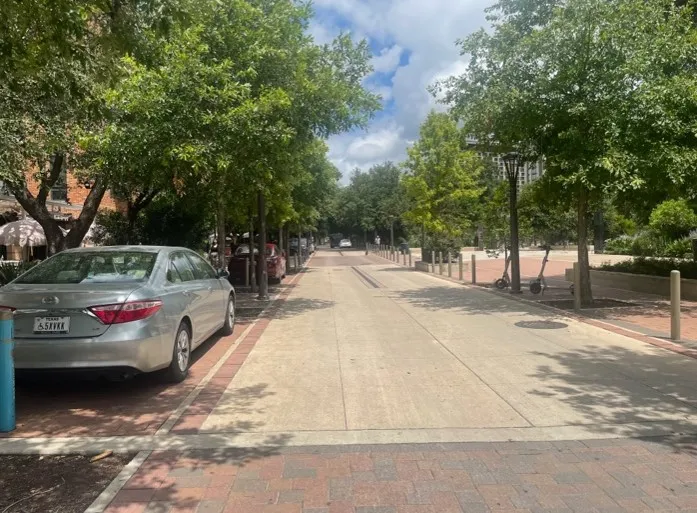
Use of pavers at Hemisfair | 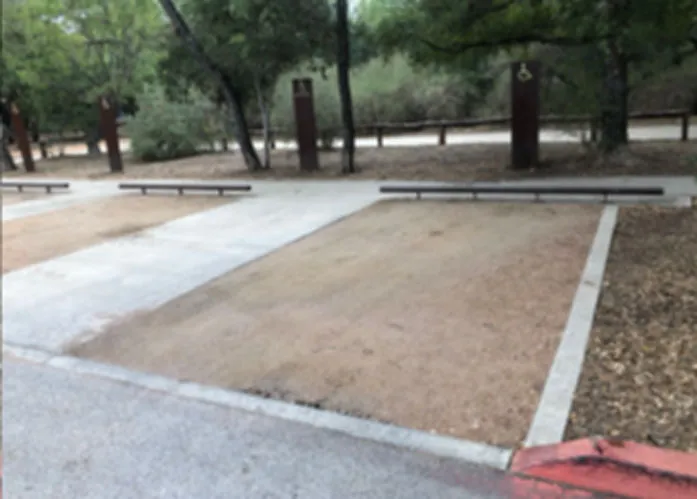
Pervious parking spaces at Phil Hardberger Park. |

Plastic Grid Paver at Classen-Steubing Ranch Park. | 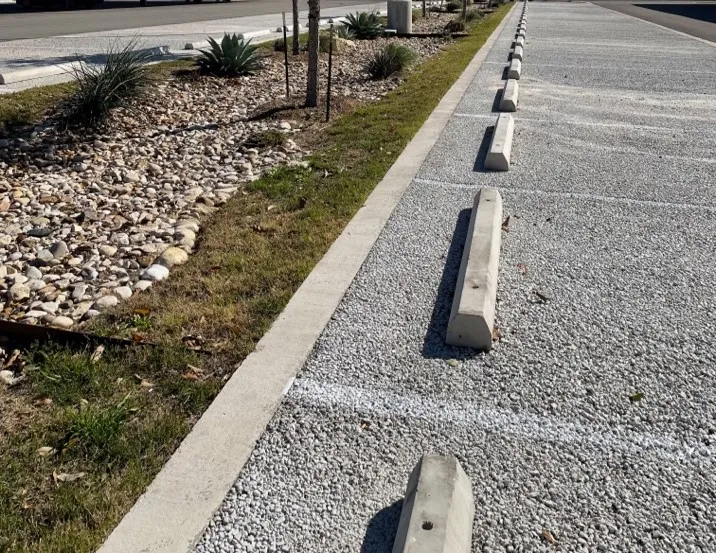
Pervious concrete parking at Cuisine Solutions San Antonio plant at Brooks City-Base. |
by Bill Barker, Alamo Group executive committee member
Organ Mountains-Desert Peaks National Monument: Aguirre Springs Recreation Area
This recreation area is at the northeast corner of the Organ Mountains. The monument is mostly just east of Las Cruces, New Mexico, not far north of El Paso. There was another article about spots on the west side of the mountain range in the July 2026 issue of this newsletter. And one in June 2024 set in another area of the monument, the Dona Ana mountains.
Here's the BLM website, with links below for the PDFs of the brochure page, the campground area map (the compass icon shows that map is upside down!) and the Pine Tree and Baylor Canyon trails. The pictures below were taken April 15th 2026 except the last one. Took bunch of rock pictures on the trails hoping to identify the types of granite; geology section in the July article.
Visiting
We get here by driving south 5 miles from US 70 on Aguirre Springs road. US 70 runs east from the north side of Las Cruces between the Organ mountains to the south and San Andres mountains to the north, past White Sands National Monument. If we want to do fires in the fire circles or grills can collect firewood along the road going south, lots of stuff cut for fence work, particularly big sotol stalks. Collecting is not allowed at the campground but there is very little anyway.
Driving into the recreation area we pass the headquarters; there beside the road there is a standpipe with valve for potable water. There is none at the campground. Didn't see any staff while I was there, likely due to the substantial staff and funding cuts by the current administration, but everything was in good shape. The entrance gate is open 8 am-6 pm November-March, different April-October.
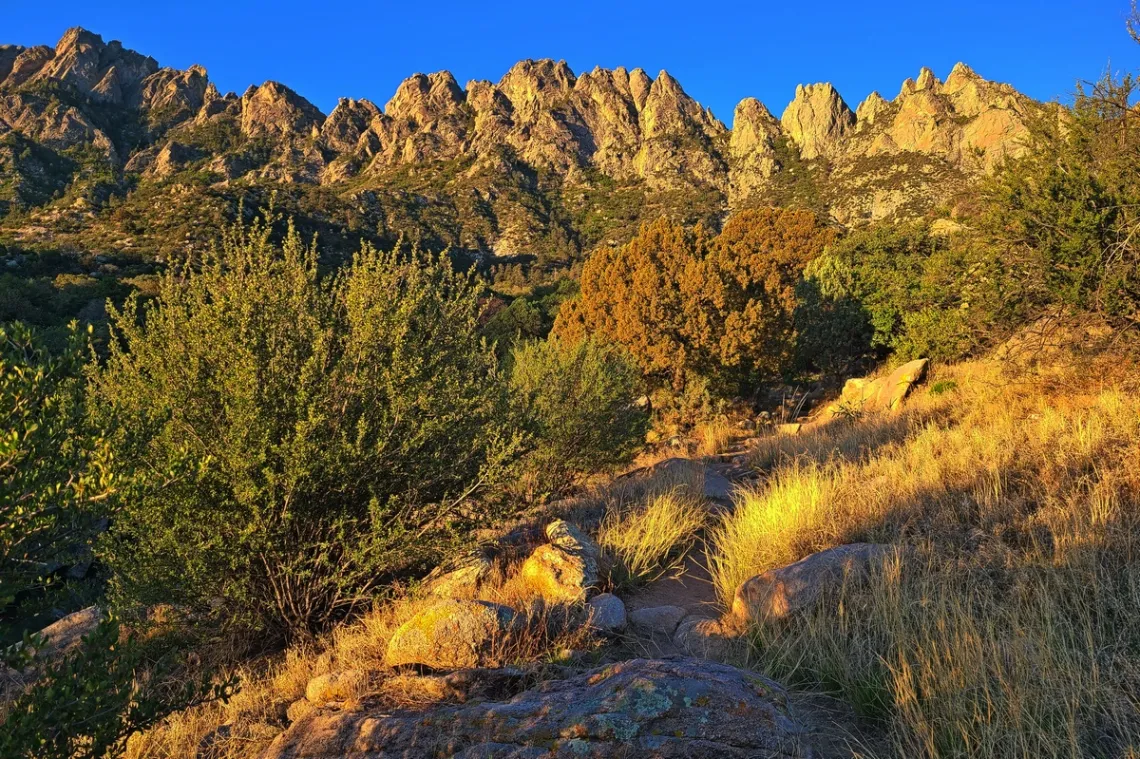
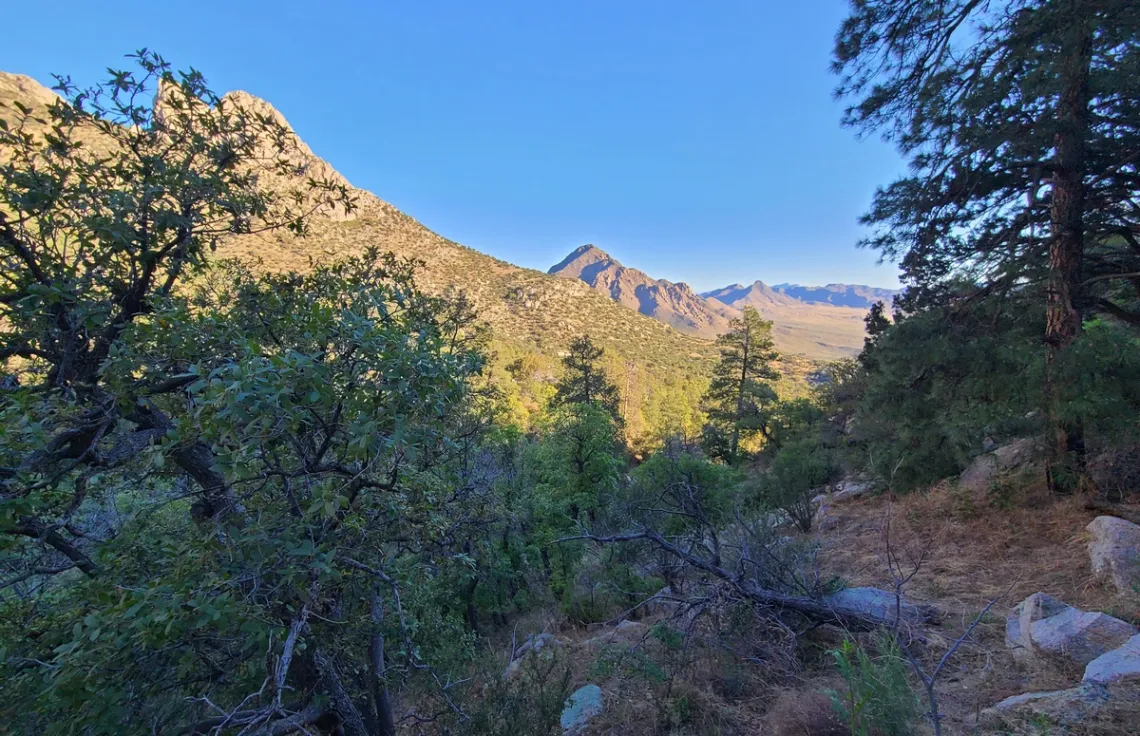
We drive to the campground on the one-way loop road. The first campground loop has sites 1-32, and this loop has the two trailheads short walks along the road. The second loop has sites 33-55, but is an extra 1/3 mile to the trailheads along the one-way road, would have to drive around the recreation area loop if want to park at the trailheads.
Pine Tree trail loop is 4 miles, elevation difference 1040', from the trailhead next to the campground. We wonder why it is called that, can't see any from below. But after climbing the ridge on the west side a ways (first picture) we see some tall dead trees that could be pines. Getting up the ridge further there appear to be many ponderosa pine, tall with long straight needles. Lots of appealing vistas.
These trees may have arrived from the north during an ice age, and survived here due to shelter by the Organ Needles, the western ridge in the first picture, from the hot summer sun afternoons. And shelter likewise by the ridge the trail climbs to the southwest also in that picture, from some of the summer sun being to the north. The Wikipedia page for Pinus ponderosa has a distribution map for the four subspecies, with a little dot right where this area is. Couldn't find an actual mention of the species here.
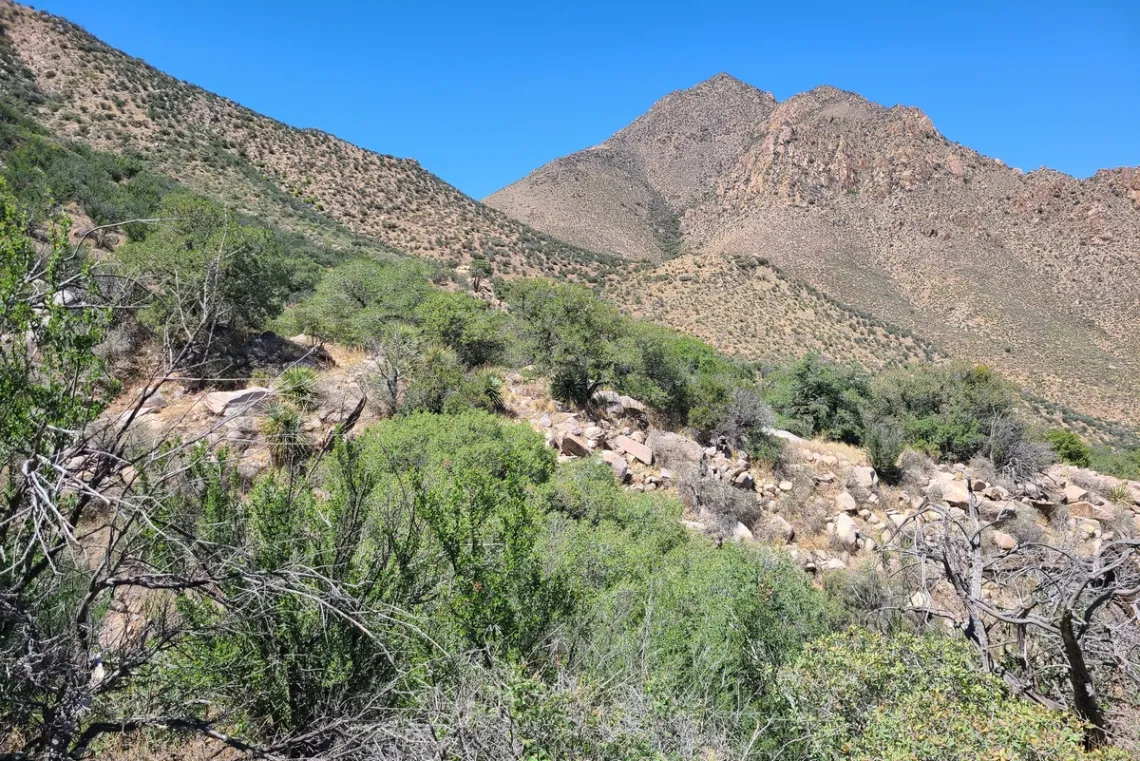
Baylor Canyon trail is also 4 miles up/back to Baylor Pass, elevation difference 890', from the trailhead at the paved road by the campground. Much of the trail winds only moderately inclined around the side of a mountain; next picture.
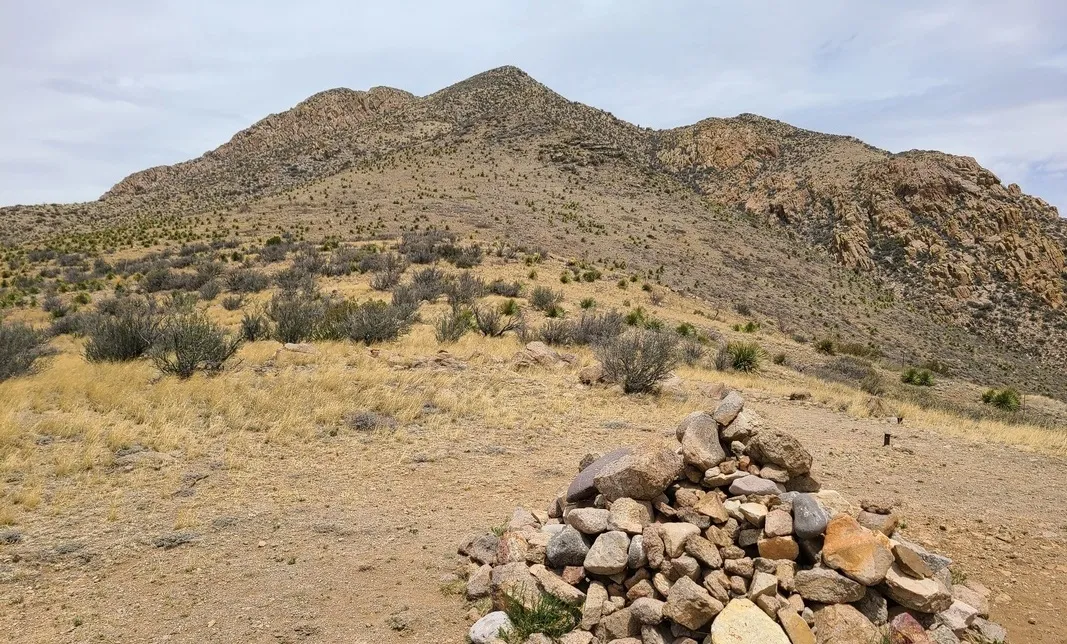
In April 2024 did Baylor Pass from the west, trailhead at Baylor Canyon road. That is 6 miles up/back, 1460' elevation gain. Therefore the 4th picture.
by Kevin Hartley, Sierra Club Life Member
Trump Moves to Nearly Eliminate Bears Ears and Grand Staircase-Escalante
The Trump administration is moving forward with another attempt to slash Bears Ears and Grand Staircase-Escalante National Monuments by nearly three million acres, putting sacred Tribal lands, critical wildlife habitats, and iconic public landscapes at risk. These lands are irreplaceable. Congress must step in and act to stop this dangerous land grab.
We defended these sacred lands before, and we can do it again. Take action now!
Also, read A New Fight Over National Monuments Emerges in Utah for more information about Trump's action. And enjoy these pictures by Kevin Hartley to inspire you to take action.
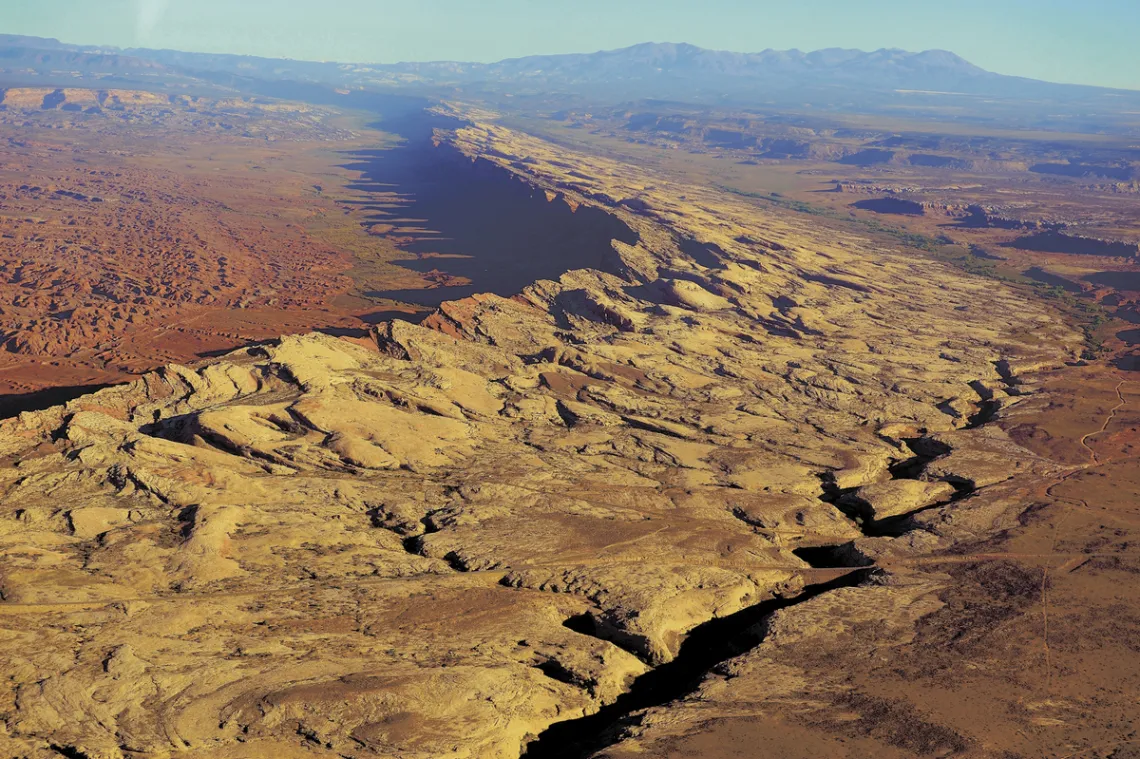
Photo credit: San Juan Record, Karen Shumway. Also used in the April 2019 issue.

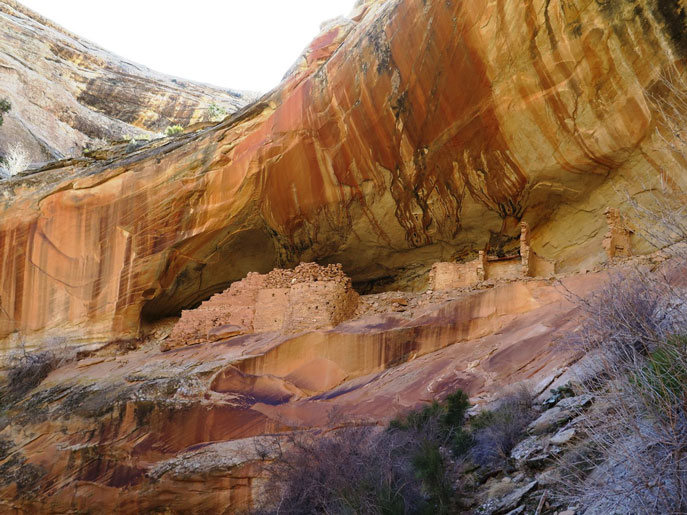
by Kevin Hartley, Sierra Club Life Member
Outings: The Call of the Wild
Visit the Alamo Sierra Club Outings page on Meetup for detailed information about all of our upcoming Sierra Club Outings.
The Alamo Sierran Newsletter
Richard Alles, Editor
Published by the Alamo Group of the Sierra Club.
The Alamo Group is one of 13 regional groups within the Lone Star Chapter of the Sierra Club.
Changed your contact information?
If you're not sure whether the Sierra Club has your current email address, send an email to Member Services with your name and address and/or member ID (see Locating Your Member ID) so they can add your email address to your member record.
Have you moved? Let us know by sending your old address, your new address and your member ID to: address.changes@sierraclub.org.
Go online for the latest news and events
 |  |