A New Fight Over National Monuments Emerges in Utah
Bears Ears and Grand Staircase–Escalante National Monuments are once again threatened by a major downsizing
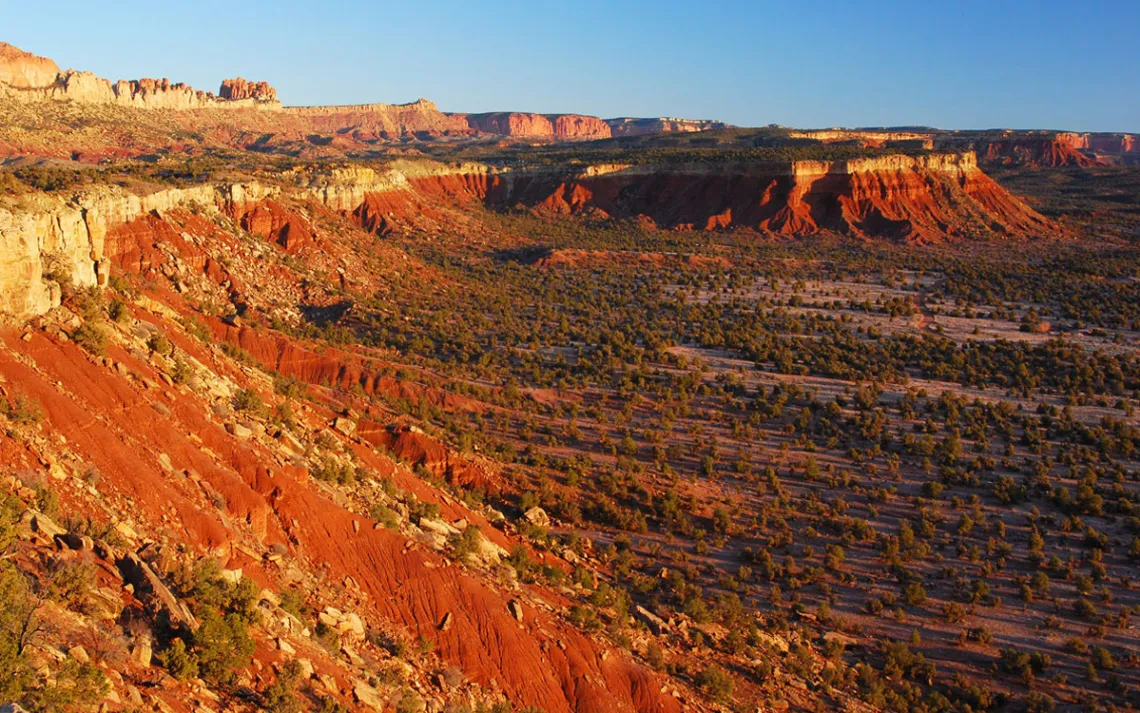
North Escalante Canyons in the Grand Staircase–Escalante National Monument. | Photo by Ray Bloxham
Bears Ears and Grand Staircase–Escalante National Monuments protect more than 3.2 million acres in Utah. Combined, the two monuments form one of the largest undeveloped areas in the continental United States, protecting over 100,000 archaeological sites and geological formations. Last week, the Trump administration moved to shrink both monuments by more than 90 percent, reviving a fight over how public land is protected and managed.
While signing the two proclamations to reduce the national monuments, the president falsely claimed that the public was prohibited from using the protected areas for recreational purposes. “You can’t go hunting. You can’t go fishing. You can’t do anything,” President Trump said. “You can virtually not even walk on it.”
According to the Bureau of Land Management, hunting, fishing, camping, hiking, birdwatching, and other activities are permitted in Bears Ears National Monument, and "a wide range of recreational activities are encouraged in Grand Staircase–Escalante, including camping, hiking, canyoneering, off-roading, and more." Both pages have since been removed from the BLM's website.
Conservationists say the plan would weaken protections for at-risk species and open sensitive lands to mining and drilling. And tribal allies and groups argue it could also expose areas long considered sacred to local Indigenous communities.
“Every time the monument is cut apart and put back together, proper land management gets delayed, public resources are wasted, and tribes are asked to start over after years of consultation,” said Erik Stanfield, an anthropologist with the Navajo Nation Historic Preservation Department. “We need stewardship and consistency, not reactionary politics.”
President Bill Clinton designated Grand Staircase–Escalante National Monument in 1996, initially setting aside 1.7 million acres for protection through a presidential proclamation under the Antiquities Act, which every president since Theodore Roosevelt has used to designate national monuments. In 2016, President Barack Obama established Bears Ears at the request of local tribal nations, also via the Antiquities Act. When he established Bears Ears National Monument, he also established the Bears Ears Commission, a first-of-its-kind partnership among five local tribal nations and the federal government, to help guide the monument's management in coordination with the BLM and the US Forest Service.
A key clause in the Antiquities Act states that the president is authorized to set aside national monuments of historic or scientific interest, "the limits of which in all cases shall be confined to the smallest area compatible with the proper care and management of the objects to be protected." Claiming that both Clinton and Obama had exceeded the limits of the "smallest area" during their respective designations, Trump moved to reduce the boundaries of both Bears Ears and Grand Staircase–Escalante in 2017. (While designating Grand Staircase–Escalante in 1996, Clinton specifically referred to the size of the monument as essential to preserving both the hundreds of recorded sites and said, "(M)any more undocumented sites that exist within the monument are of significant scientific and historic value worthy of preservation for future study.")
Trump specifically referred to this clause while signing the most recent reduction proclamations.
Following Trump's reduction designations in 2017, environmental organizations (including the Sierra Club), tribal nations, historical societies, and cultural organizations filed lawsuits challenging the reductions. The cases remained unresolved when President Biden restored the monuments’ original boundaries in 2021. Consequently, a core question surrounding this lawsuit was never settled—whether the Antiquities Act, which allows a president to create a national monument, also permits a president to reduce or eliminate a national monument after it has been established.
Conservation groups argue that it does not—there is no language in the statute that authorized such action. Still, this key question is almost certain to arise again as environmental groups prepare their next lawsuit. The Southern Utah Wilderness Alliance, Earthjustice, and other organizations have publicly stated that they will challenge these reductions in court.
"Congress did not give the president the authority to undo national monuments," Steve Bloch, the legal director for the Southern Utah Wilderness Alliance, told Sierra. "It was the power to create, not destroy."
Nearly all US presidents have designated national monuments using the Antiquities Act. Most notably, Theodore Roosevelt was the first and most prolific Republican user, designating 17 national monuments, including Devils Tower (the first under the act), Grand Canyon (now a national park), Petrified Forest, Muir Woods, and Mount Olympus (now Olympic National Park).
Some conservation groups and advocates expect that the imbroglio unfolding could set the stage for a Supreme Court case. Shortly after President Biden restored the boundaries for Bears Ears and Grand Staircase–Escalante, Chief Justice John Roberts questioned whether presidents have been misusing the powers afforded under the act and signaled that the court would be open to review.
"I think that the size of these reductions is shocking. They go so far beyond the previous cuts. It really begs the question, Why were the cuts so much bigger this time?" Kate Groetzinger, communications director for the Center for Western Priorities, told Sierra. "One really concerning aspect of the cuts is that it really helps tee up a Supreme Court case."
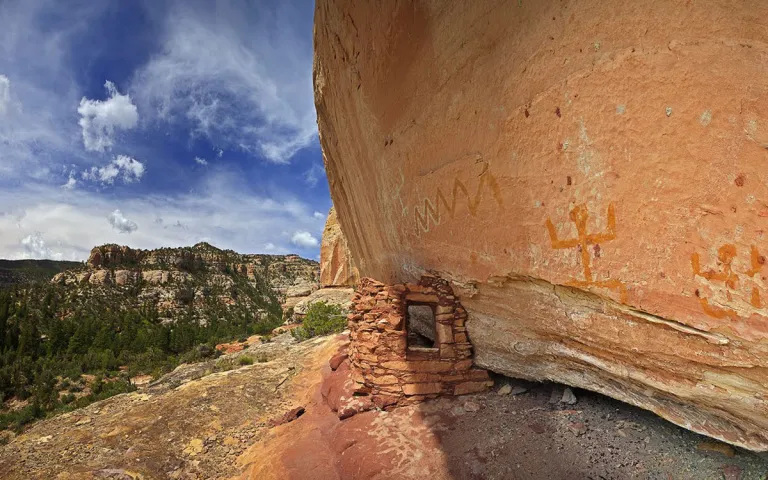
A cultural site inside Bears Ears National Monument. | Photo by Tim Peterson
In the meantime, tribal groups are caught in a legal limbo as the status of a boundary many local nations fought for toggles between secured and unprotected. Although President Trump’s order disbanded the Bears Ears Commission, the same five tribal nations that formed it continue to work together through the Bears Ears Inter-Tribal Coalition—the pre‑existing, pre‑designation advocacy group they created to secure monument status and which remains active in protecting the landscape.
“The Bears Ears region is our homeland," Gwen Cantsee, vice chairwoman for the Ute Mountain Ute Tribe and Bears Ears Commissioner, said in a statement. "We are deeply disappointed by the decision to dramatically reduce Bears Ears National Monument. No matter what actions the US government takes, we will continue to carry our history forward, build community, and protect this landscape through our traditions and teachings.”
The Grand Staircase–Escalante Inter-Tribal Coalition, comprising six tribal nations, is also continuing its fight.
The administration’s broader approach to public lands overseen by the Bureau of Land Management extends beyond Utah. Just after President Trump issued his proclamations on Bears Ears and Grand Staircase–Escalante, the BLM said it is considering reopening lands surrounding Chaco Culture National Historical Park in New Mexico to potential oil and gas leasing. The move follows an April proposal from the Interior Department to revoke a public land order, called PLO 7923, which withdrew thousands of acres surrounding the park from new mining and drilling activities to protect cultural resources and the surrounding landscape. A public comment period is open through July 29.
Conservation groups fear the changes at Chaco Culture National Historical Park and the reductions at Bears Ears and Grand Staircase–Escalante reflect a broader shift in how the administration is approaching federally protected landscapes. Whether these changes stand will depend on future legal challenges—how courts define the limits of presidential authority over public lands.
"There's been [an] open discussion about whether there are other monuments in the crosshairs. We've seen [President Trump] attack marine monuments already. Bears Ears and Grand Staircase are the first two land monuments to be attacked," Bloch told Sierra. "We're going to do our best to make sure that we succeed in our challenges here, so we don't see this happening in other places."