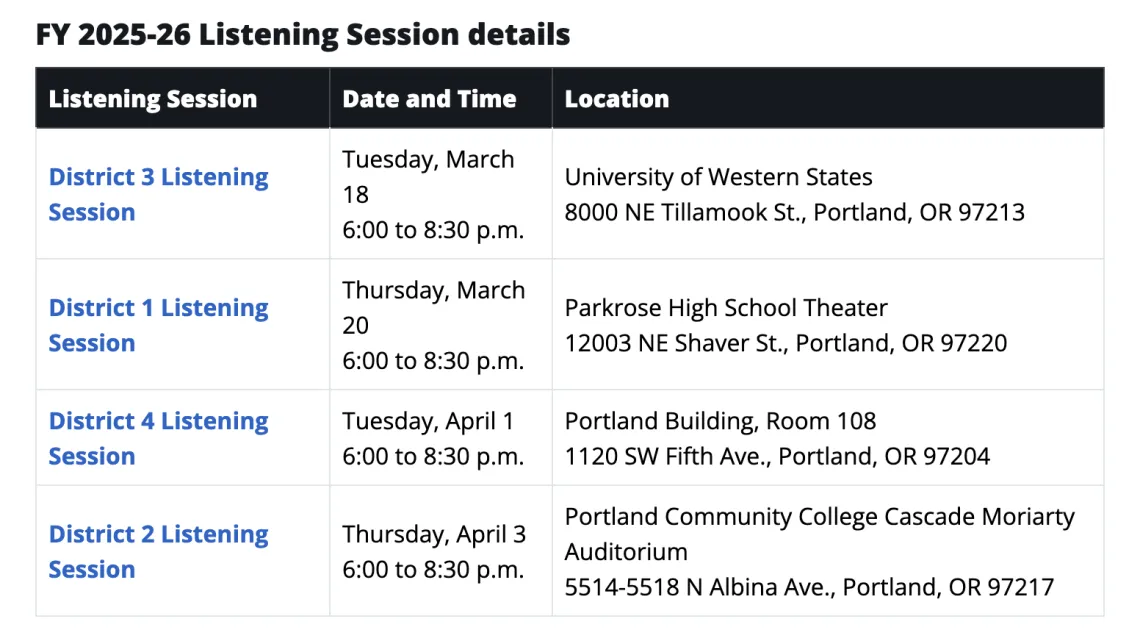
We need your support to defend the Portland Clean Energy Fund (PCEF) by speaking up at the April 1 City of Portland budget listening session. Councilors are seeking feedback on how to balance the budget and need to hear that our clean energy dollars are for climate justice only.
RSVP TO JOIN US APRIL 1
6:00-8:30pm
Portland Building, 1120 SW 5th Ave, Portland
Overview:
It is well-known that the City of Portland is facing a serious local budget crisis this year. Some City leaders have floated the idea of using Portland Clean Energy Fund money to plug the gaps and bail out basic city services and infrastructure. But the Portland Clean Energy Community Benefits Fund (PCEF for short) has a very clear purpose defined by a 2018 voter-approved grassroots ballot measure that created the nation’s first municipal climate justice fund. The Sierra Club made it a priority to advocate for creating PCEF, offering our Portland office as the initiative headquarters for a campaign that ended up earning national leadership acclaim.
Portland’s Clean Energy Fund is needed now more than ever: climate change is already here, meaning that extreme weather happens more frequently with increasing devastation and suffering among our communities. Meanwhile, the Trump Administration is gutting the Environmental Protection Agency, firing forest service and public lands staff, and trying to roll back clean energy funding and incentives passed by Congress. We need your help to tell Portland City Council to only allow Portland Clean Energy Fund money to be spent on climate justice and community benefits.
Can't Make It on April 1?
There are 2 remaining sessions (see below) and you can submit your written comments anytime using the link below. Find the forum that works best for you and add your voice while it matters most.
To craft the most effective testimony and learn more, keep reading for background and talking points.
Talking points:
- The purpose of PCEF is clear: “To invest in climate action projects that support environmental justice and social, economic, and environmental benefits for all Portlanders.”
- To name just a few examples of the enormous good PCEF does, there are projects that build affordable housing, provide relief to students and seniors from extreme heat, and sequester carbon while helping new Portlanders connect with each other and nature.
- PCEF was passed by voter initiative in 2018 with 65% support.
- PCEF is funded by just 1% from the wealthiest 1%: it’s a 1% surcharge on billion-dollar retailers with over a half million in annual Portland sales.
- Portlanders do NOT pay the PCEF surcharge. Only a handful of Portland retailers are large enough to qualify and legal cases have blocked companies from passing on the surcharge to customers like you and me.
- As extreme weather gets worse with climate change, we need every dollar we can get for transitioning to clean energy and building climate resilience - like free efficient heating & cooling installations and shade trees that help with surviving extreme heat.
- City bureaus like Parks & Recreation and Transportation already receive direct funding from PCEF for programs with climate and community benefits.
- PCEF held a collaborative, community process to create a 5-year Climate Investment Plan that lays out how to invest in climate projects by and for Portland communities. It was approved by Portland City Council in September 2023, who then approved a revision in December 2024.
- The bottom line: all PCEF dollars are already spoken for. They are not available for other uses and cannot be diverted for non-climate projects.
- So, what does PCEF already go towards? Here are some examples:
- Community center upgrades to respond effectively as severe weather shelters during heat waves and cold snaps.
- Installation of over 10,000 efficient cooling units to elderly and low-income Portlanders to help them survive increasingly hot summers.
- The Equitable Tree Canopy project to create dozens of jobs and plant thousands of trees in low-canopy neighborhoods to cool local heat islands.
- Vital improvements in ventilation systems in our children’s schools.
- Healthier environments for workers and greater energy efficiency in small commercial buildings.
- A community garden for Indigenous Portlanders in partnership with NAYA Family Center.
- Significant upgrades to homes of Portlanders of color and low-income Portlanders through rooftop solar, energy efficiency upgrades, heat pumps that provide low-cost heating and cooling, and more.
- New community-driven programs that create equitable access to e-bikes and other clean transportation options.
- Workforce development and the creation of jobs that pay family wages for Portlanders in the green energy sector — especially workers who are from low-income underrepresented populations.
These and other success stories are available on the PCEF website, and staff are currently developing a dynamic dashboard to show data and results.
Background/Additional Context & Talking Points:
PCEF must stay focused on funding programs that reduce carbon emissions, increase clean energy generation and energy efficiency, create green union jobs and job training opportunities, and grow green infrastructure like shade trees, urban forests, community gardens, and bioswales. The community-based organizations and everyday Portlanders who gathered signatures to put PCEF on the ballot knew that our city lacked enough funds for urgent local climate action projects. Communities of color were being disproportionately underserved by green spaces and left behind by opportunities in the clean energy economy. PCEF’s specific focus areas are meant to help close the racial and environmental wealth gaps, increase diversity and inclusion in the trades, and do our part to slow and adapt to climate change.
Portland City Councilor Eric Zimmerman (one of three representing Portland’s westside and Sellwood) has recently begun pushing to raid the Portland Clean Energy Fund to plug budget gaps for floundering city services, infrastructure, and public safety programs. Rather than search for durable, responsible solutions to long-running city revenue problems, Councilors like Zimmerman want voters to think that PCEF is an ATM just sitting around waiting to be cashed out. That could not be further from the truth: Portland’s climate funds are already bound for innovative and large-scale, multi-year projects that will drastically reduce city carbon emissions and energy bills while growing green spaces and diversity in the green economy.
Portland went through a long and collaborative process to create a plan for making the best use of higher-than-expected PCEF revenue. As a result of the global COVID-19 pandemic and record inflation, PCEF now raises about seven times more money each year ($200 million) than the City of Portland revenue office estimated it would in 2018 ($30 million). The windfall was a rare bright spot in an era largely defined by widespread climate inaction and denialism. In September 2023, Portland leaders affirmed a Climate Investment Plan that charted a course for using the increased PCEF revenue to massively expand the impact of city climate justice efforts. Portland City Council approved an update to the Climate Investment Plan in December 2024.
Big-business lobbyists and their allies have been fighting to stop or roll back PCEF since 2018 without pause. The climate, our environment, and underserved Portlanders need PCEF to stay on track and transform our city. We cannot afford to lose momentum now, with PCEF projects on the chopping block only because city leaders have not found structural solutions to faltering general fund revenue. PCEF programs are helping us build housing, reduce household bills, get people into family-wage jobs, and improve neighborhood livability (just look at safe routes to schools and street trees for example). We can do better. Tell Portland City Council to leave PCEF alone.