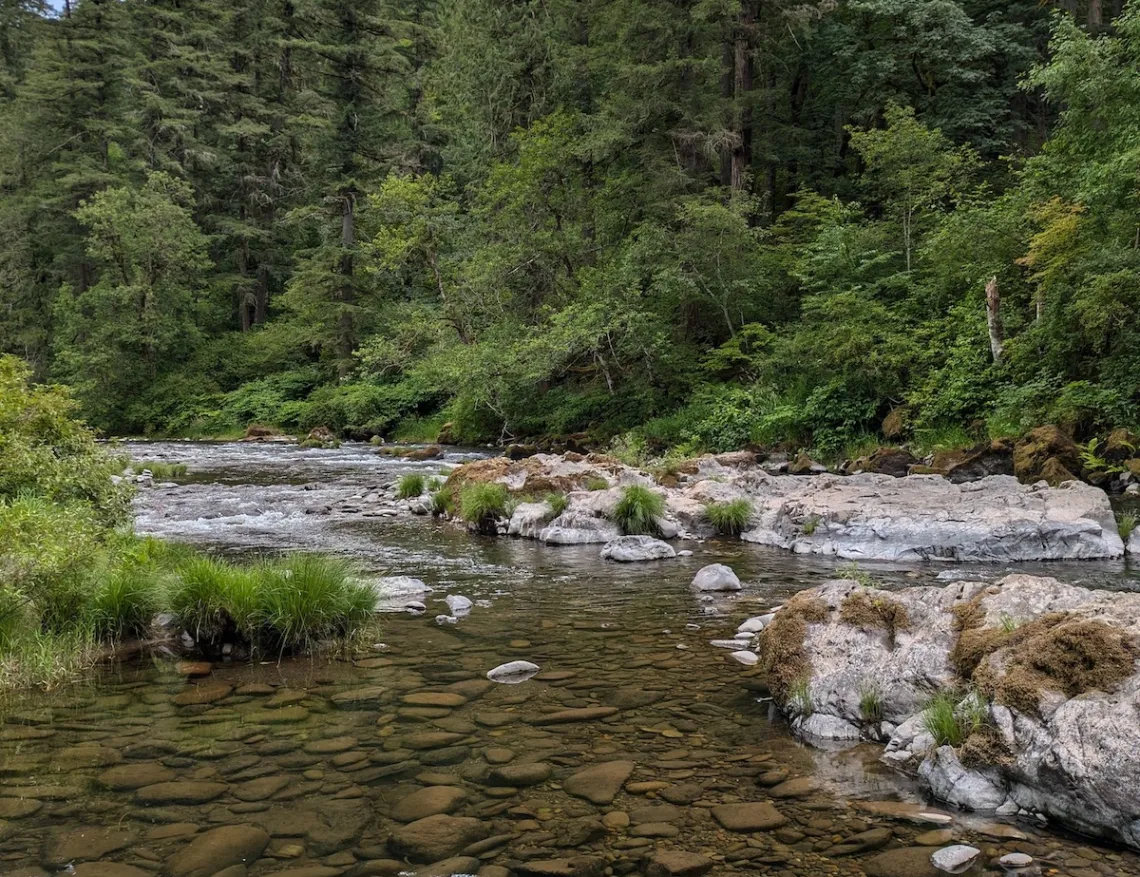
Photo by Kai McMurtry
Our federal forests provide a multitude of services for all Americans, and unchecked expansion of logging on these lands threatens our access to clean air, clean water, and the iconic recreational spaces that millions of Americans visit every year. President Trump’s Executive Order (E.O.) 14225 calls for increased logging on our federal lands. It is a directive to BLM and the USFS to log an annual target of 3.3 billion board feet. His E.O. ignores the legal mandate from Congress to manage our public forests for multiple uses. To make it happen, he is undermining the National Environmental Policy Act (NEPA) and Endangered Species Act (ESA). NEPA, for example, guarantees that concerned citizens and environmental organizations work with the U.S. Forest Service and Bureau of Land Management to achieve desired conditions in our forests.
Trump’s push to expand timber production targets older trees and the few old-growth forests left in the United States. Mature and old-growth forests provide habitat for endangered species, mitigate climate change through the absorption and long-term storage of carbon, and protect vital watersheds. Furthermore, Trumps E.O. 14225 wants to bypass essential protections for endangered species, but in so doing it will worsen the ongoing biodiversity crises.
We have seen a dangerous narrative that erroneously says our forests are unnaturally dense because of lack of forest management and that logging is climate neutral. Big Timber would like us to believe that, but the economic process of logging and wood products manufacturing emits major amounts of carbon dioxide and other greenhouse gases. Trump’s E.O. 14255 pushes the myth that euphemistic terms like "fuel reduction, thinning, and restoration" will lessen severe forest fires, but science shows that such severe fires are only exacerbated through such unsound means.
Greg Jacob, Ph.D.