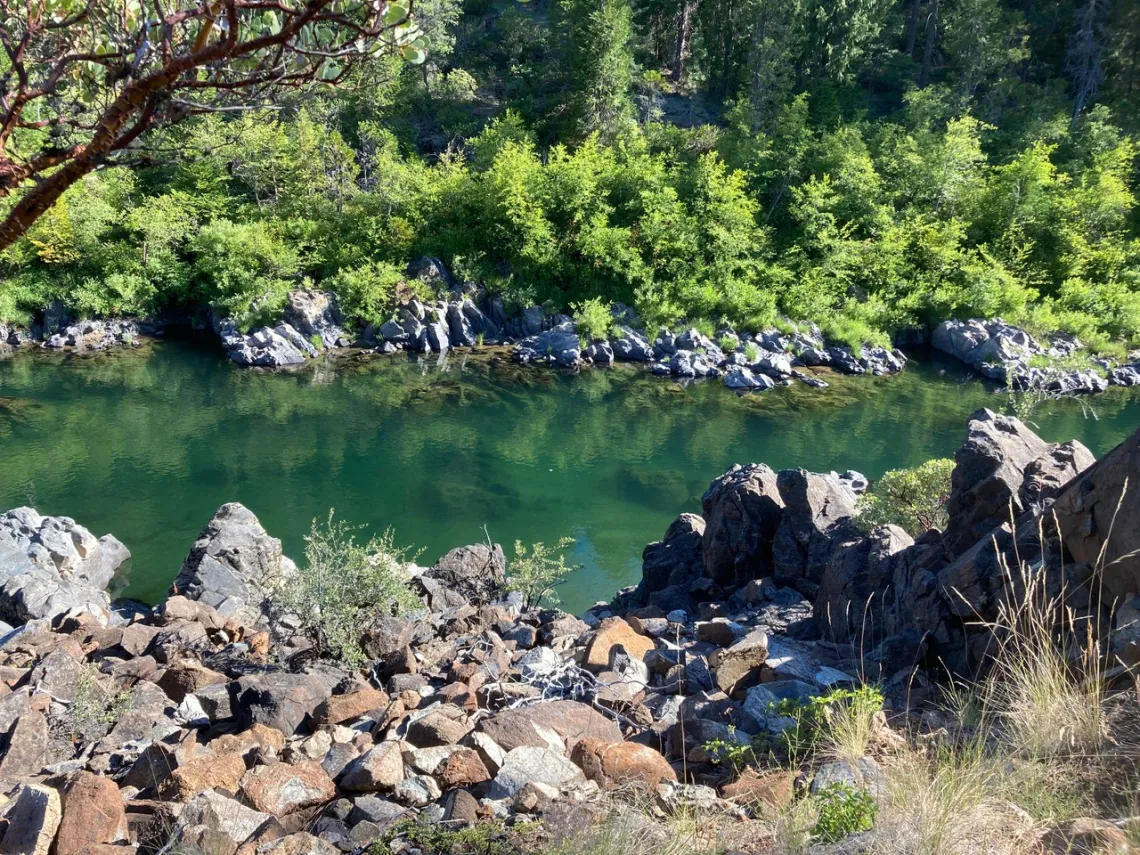
Illinois River courtesy Carol Valentine
By Carol Valentine
Illinois Valley resident and Sierra Club Oregon Forest Team Lead
“Worth More Than a Nickel Mine” was the slogan below a drawing of insect-eating Darlingtonia plants on the t-shirt I purchased in front of the Cave Junction post office as a relatively new resident of Oregon’s Illinois Valley in the mid-1990’s. Our community has been fending off destructive mining for a long time. But now southwest Oregon’s wild Rogue, Illinois, and Smith Rivers and the coastal and inland communities that depend on them face a perfect storm of political, economic, and regulatory factors that raise the threat to the quality of life and local economies to a level that cannot be overstated. The landscapes, waterways, wildlife and salmon habitats, and surrounding ecosystems of southwest Oregon’s treasured wild rivers are seriously endangered.
In order to glean profits from the low-grade nickel laterite soils in the region, Canadian-based Homeland Nickel (HN) would have to mine everything they can get their hands on in order to reach “economy of scale,” converting incredible rare ecosystems containing some of the purest waters in the world into a major nickel mining district.
Last year, while busily locating new claims, HN and their corporate partners were less public. Now they're coming out: to date, they've acquired nearly 17,000 acres of mining claims spread across at least 9 sites, mostly on Siskiyou National Forest and some adjacent Bureau of Land Management lands.
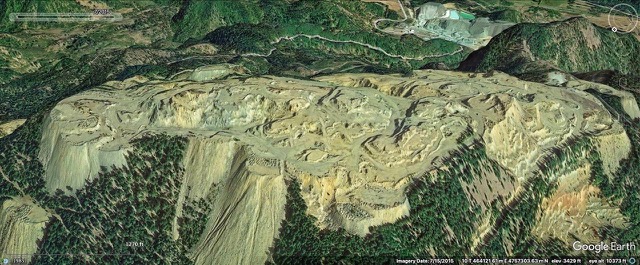
Nickel Mountain Mine in Riddle, Oregon
Mining operations would strip, scrape, and process thousands of acres of rock and soil at each site. Because the percentage of contained nickel is low—in most cases less than 1 percent, according to the USGS—just a small amount of nickel can be obtained from a massive area, leaving behind a huge amount of mine waste. Soil erosion and chemical pollution would contaminate both ground and surface water. HN has not yet disclosed whether they plan to process nickel with smelting or heap leaching operations, but either way, hazardous air pollution would result. The aerial photo above of the the now defunct Nickel Mountain Mine in Riddle, Oregon, gives a sense of the scar that nickel mining leaves behind. That site is 600 acres. Now imagine that kind of damage on more than 2,400 acres up on Eight Dollar Mountain in Selma, where federal agencies have designated a BLM Area of Critical Environmental Concern (ACEC) and a USFS Botanical Area due to the presence of rare and endemic plant species. These claims sit directly above the National Wild and Scenic Illinois River and Deer Creek. Just below these claims is Little Falls, where salmon leap up the Illinois River during spawning season, and incredible swimming holes provide relief from summer heat.
Also at risk in the Illinois Valley is Rough and Ready Creek, which also boasts both a Forest Service Botanical Area and a BLM ACEC. The creek flows out of the Kalmiopsis Wilderness and is home to the highest concentration of rare plants in Oregon. The Forest Service has described it thusly: “The waters of Rough and Ready Creek are exceptionally clear and remain clear during winter storms that turn other creeks muddy,” and have described the watershed as, “an area of incredible natural values” [with] “extremely high scientific, social and ecological values.”
What We're Doing
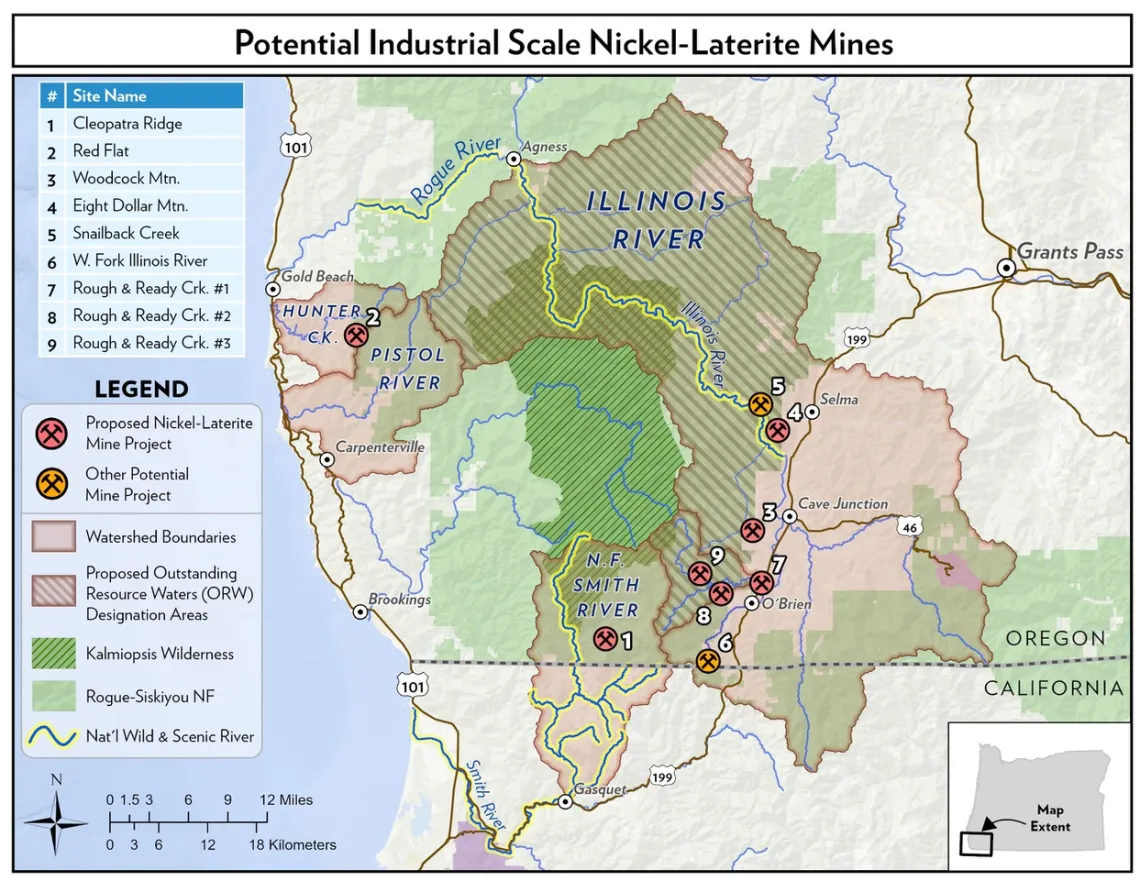
Other areas in southwest Oregon are also at risk (see map above), and communities nearby will need our voices championing them. This Fall, we’ll be calling on advocates to speak up in big numbers in support of the state of Oregon designating the Wild and Scenic portion of the Illinois River, along with Rough & Ready Creek, as Oregon Outstanding Resource Waters under the Clean Water Act. Please stay tuned—your comments on both will be critically important!
Industrial scale nickel mining would be devastating for these public lands. It would be an environmental injustice for nearby small communities as well. Constant heavy truck traffic, noise and dust, and contaminated water sources could forever alter the character of life here.
And with less than 1% of surface fresh water anywhere on Earth as clean and clear as what runs though the creeks and rivers of the Kalmiopsis WIld Rivers region, any degradation to these world-class pristine waterways would be a moral offense, if not a criminal one.