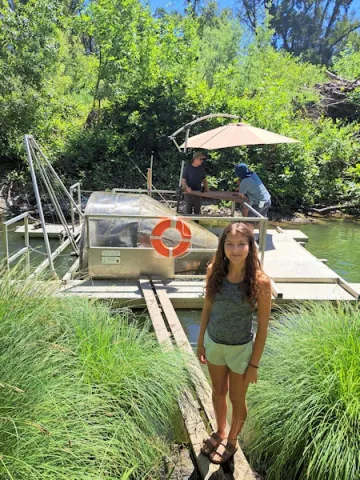
On May 10th, I had the opportunity to join the Napa Resource Conservation District (RCD), along with Nick Cheranich, for a hands-on demonstration in fish monitoring along Napa County’s vital Napa River. Led by field researcher Martin Perales, the experience provided powerful insight into how local scientists are protecting aquatic life, and why this work matters more than ever in the face of climate change.
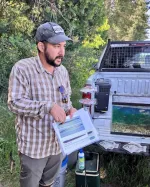
The river is home to key species like Steelhead trout and Chinook salmon, both of which are sensitive indicators of ecosystem health. Martin and his team spend three months each year collecting data that helps monitor not just the fish population, but the overall condition of the river itself.
Data collection is no easy feat. Martin literally goes underwater to count how many fish are present, identifying them by species and size. Fish are tagged, weighed, and measured, allowing researchers to track their movement, growth, and survival over time.
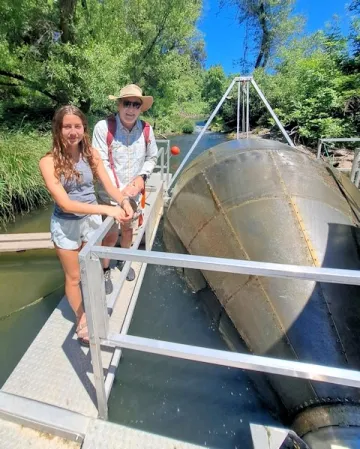
In the photo shown below, behind me is a rotary screw trap, which is a type of fish trap used by the Napa RDC to monitor fish populations in rivers and streams. It works by using the current to turn a rotating drum that gently captures fish as they swim downstream. The fish are then collected safely in a holding area so scientists can tag them, measure their length and weight, and study their health before releasing them back into the water. This helps track migration patterns and monitor the overall health of fish species, especially the endangered ones like salmon or steelhead.
Standing on the rotary screw trap, I felt really excited and curious. It was amazing to see how the trap worked up close and to realize how important it is for protecting fish and learning about river ecosystems. I also felt a little nervous walking on the narrow plank to get to the trap, but once I was there, I felt proud to be part of something that helps scientists take care of the environment.
One major theme of the day was adaptation. As Napa County faces increasing land-use changes and climate related pressures, fish are being forced to adjust. These studies help conservationists understand how aquatic ecosystems respond, and how we can better protect them.
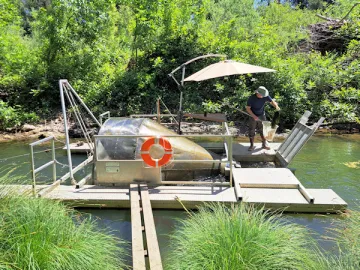
Another researcher, Paul Blank, also contributes to the effort, showing that this work is a collaborative effort across disciplines. Their goal is not only to study fish, but to safeguard the entire freshwater environment on which these species and our communities depend.
This kind of community led, science backed conservation is exactly the type of action we need more of. By supporting local monitoring efforts, we not only protect species like steelhead and salmon, we also protect the rivers that nourish our landscapes, culture, and future.