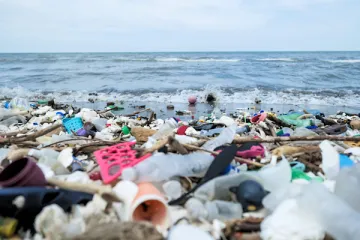
Did you know that there are millions of tons of plastic floating in the Pacific Ocean forming what's known as the Great Pacific Garbage Patch? I first learned about this in the fourth grade, while developing a report on the Great Pacific Garbage Patch for our school’s weekly bulletin. After finding out that over 100,000 marine mammals are killed by anthropogenic impact annually, environmental policy has remained at the forefront of my mind. I was inspired to make a difference, and I wanted to help others make that same difference.
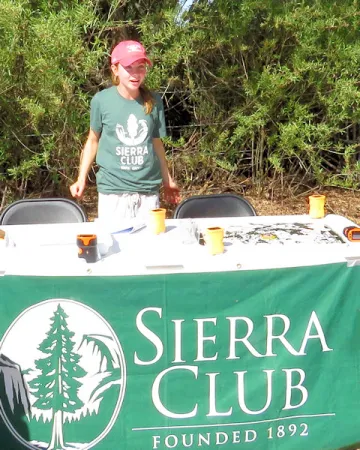
Since it is no longer a debate whether action is needed for the preservation of the environment, it is crucial that we, as a nation, stop placing climate literacy aside, and start treating it like the urgent issue it is. I joined the California Youth Data Initiative, sponsored by Ten Strands, to aid my school in inspiring others to take climate action, through incorporating climate literacy in the classrooms and eco-friendly practices around school.
Ten Strands approaches the urgent issue of climate literacy by weaving people together and advocating for increased environmental literacy in public schools. Through collaborative work with local education agencies, environmental education providers, and funders, the Ten Strands team works diligently, creating a state-wide environmentally literate public education system. They believe that youth have the power to foster change, and during these crucial developmental years, it’s important to introduce the dangers of ignorance, and provide the tools to combat that ignorance.
Ten Strands expects their participants to conduct district-wide research on the sustainability practices and curriculum involvement of a chosen school. Through bi-weekly workshops, climate mentors guide us interns through complex data sets, teaching us how to extract actionable insights from observations and curriculum audits. So far, us students have made detailed observations and visual reports on practices throughout the school campus. Furthermore, within the next month we will be conducting interviews with district officials and admins to discover more about the sustainability practices of our school.
During the bi-weekly workshops, myself and dozens of other students collaborate side-by-side to compare data across the four C’s: campus, curriculum, culture, and community. The ten-strands mentors separate the zoom meeting into multiple breakout rooms, where us students can have meaningful conversations on the problems facing our schools. Just last week, we compared our schools' sustainability practices. I learned that Vintage High School is great regarding sustainable energy usage, but lacking in single-use plastics and compost availability. Recognizing these gaps shows that there is always room for institutional growth. Moreover, it fuels my drive for making necessary improvements.
Ultimately, this program has sharpened my understanding of local ecological threats while cultivating the collaborative problem-solving skills that are quintessential for high level advocacy. It is these skills that will take change to the next level. Once the report is finished, we will present our findings to district officials, to implement environmental policy. Through working with kids my own age, teachers, policy-makers, and you, change is possible. Programs like Ten Strands don’t just show students the problem, they provide them with resources to be a part of the solution. Now, the challenge is ensuring every student has the same opportunity.