It’s been about seven years since I bought an electric bike (e-bike), and I still love the thing. It’s become my go-to way of getting around—to the point where my fossil-fuel vehicle mostly stays parked in the garage. I thought I’d lay out some of the benefits and drawbacks, in case you’ve been thinking about getting one yourself.
At its simplest, an e-bike is just a regular bike with a small electric motor that gives you a boost when you want it—what’s called “pedal assist.” You still pedal as usual, but when you need a little extra power—on a hill, into a headwind, or getting started from a stop—you can turn it on. The motor is run by a rechargeable battery that affixes to the bike. It’s basically a Tesla on two wheels (well sort of).
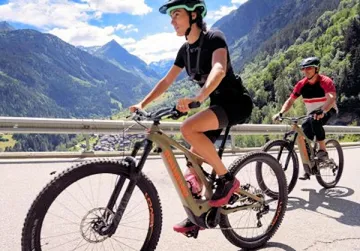
Most bikes have a few levels of assist. I tend to use the lowest level if I’m feeling a little tired or sore, or if there’s a decent uphill stretch. It’s also useful at intersections, just to get moving again. Otherwise, I usually ride it like a regular bike, with no assist, using the 9-speed shifter. The higher assist levels come in handy on steeper roads—Dry Creek or Soda Canyon, for example. And yes, even up the impenetrable Oakville Grade!
The feeling of that assist kicking in is hard to describe. It’s like having Kate Courtney, the cross-country mountain bike champion, suddenly riding right behind you—and then, without a word, she starts pedaling with you. You can almost hear her: “Come on, let’s GO!” And just like that, the ride gets a little easier, a little faster. It still makes me smile every time.
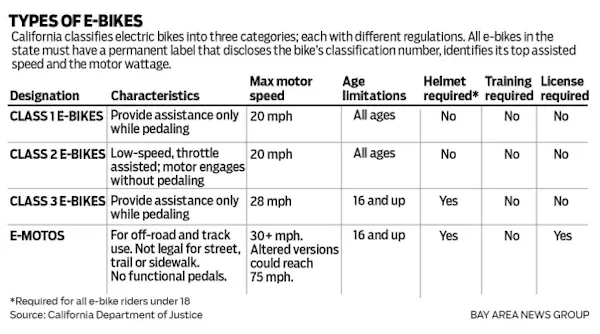
You may have seen some negative press about e-bikes lately. But if you look closely, most of those stories are about heavily modified, high-powered bikes—basically electric motorcycles—sometimes pushed to 50 or 60 miles per hour. That’s not what we’re talking about here.
As for range, it depends on how much you use the assist. If I rely on it a lot, I’ll get around 40–45 miles on a charge. Newer bikes often do better. Since I like the exercise and don’t use it all that much, I can stretch that to 120 miles or more. When the battery runs low, you just plug it in—4 to 6 hours and you’re ready to go again.
Here are a few ways I’ve found an e-bike fits into everyday life:
For the environment
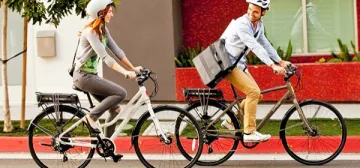
This is the big one for me. Since switching to the e-bike for most of my local travel, I filled my gas tank just four times last year (not counting a longish road trip). That’s a real reduction in emissions, with essentially no downside.
For work
Pedal assist can get you where you’re going faster and with less sweat. If I’d had one before retiring, I’m pretty sure I would have biked to work more often—it was only about six miles round trip.
The downside? You’re riding during commute hours, alongside drivers who may not be looking for you. Choosing a quieter, less busy route makes a big difference. Kudos for Napa City Council, Napa Bicycle Association, and the Vine Trail for making more roads safer for pedestrians and bicyclists.
For errands and shopping
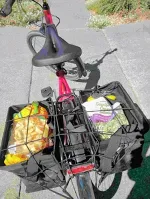
With panniers (aka, saddlebags), an e-bike becomes surprisingly practical. I hook mine onto the shopping cart, fill them up, and have the cashier pack everything back in. I can carry about 40 pounds—enough for a week’s groceries—and skip the parking hassle.
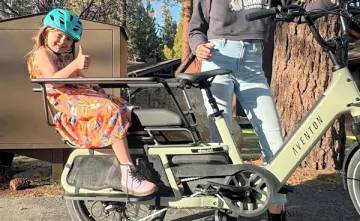
The limitation, of course, is how much you can carry. A cargo bike is another option.
For pleasure
This might be the most unexpected benefit. A lot of people who had stopped biking altogether are riding again because the assist takes away the fear of hills or getting too tired. It makes riding feel doable—and fun again. And if you’re riding with stronger cyclists, you won’t feel like you’re holding them back.
One drawback: e-bikes are heavy. Getting one up stairs, on a bike rack, or into storage can be a challenge.
For longer rides or hillier terrain
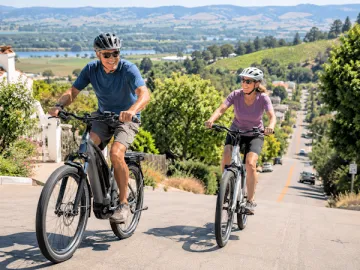
This is where e-bikes really shine. Before I bought mine, I did a 26-mile loop around Carneros on my “regular” bike and came back completely wiped out. Same ride on the e-bike—about half the time, and I was only slightly winded. It opens up more of Napa County – and the Bay Area - especially the hillier areas. As of the writing, I just finished a 72-mile ride from Napa to San Francisco in celebration of my 70th birthday. I had energy (both mine and the battery’s) to spare. Here’s the route that I used.
The tradeoff is battery range. You’re always aware of how far you can go. A second battery helps, but it’s not cheap.
For fitness
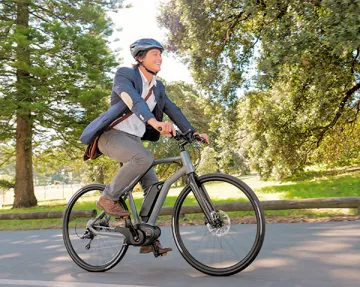
It sounds counterintuitive, but many riders actually get more exercise overall. Studies like this one have shown that riding an e-bike gives the rider an overall better physical exertion than regular bike riding. Even if the effort per mile is lower, you tend to ride farther and more often. And since the bike itself is heavier, you’re still putting in real work—especially if you keep the assist low.
So, do you need an e-bike? If you’re riding short distances on flat ground, a regular bike may be all you need. But if you want to go farther, ride more often, and take on hills without dreading them, an e-bike is definitely worth considering.
If you’re curious, I’d suggest trying one out. Local bike shops in Napa usually offer test rides, and that’s the best way to get a feel for it. There are also plenty of online options, often at lower prices—but I chose to buy from a local shop for the service and support, and I’ve been glad I did.
I also used this website as a source for what types of e-bikes exist, and what to look for in good quality parts. It’s important not to skimp when it comes to good quality parts, which will cost more. And keep in mind – just like your car - you’ll have to maintain your bike, possibly taking it in for an annual tuneup, buying new parts to replace the older worn-out parts, etc.
Hopefully I’ll see you out there. If I do, I’ll be the one smiling—getting a little help on the hills, and enjoying every minute of it. Please feel free to ask me any questions by emailing me at napavalleysierraclub@gmail.com.
Happy trails!