Fish Populations Were Declining in Alabama. This Boy Scout Did Something About It.
A disappointing fishing trip inspired him to start the Eagle Reef project
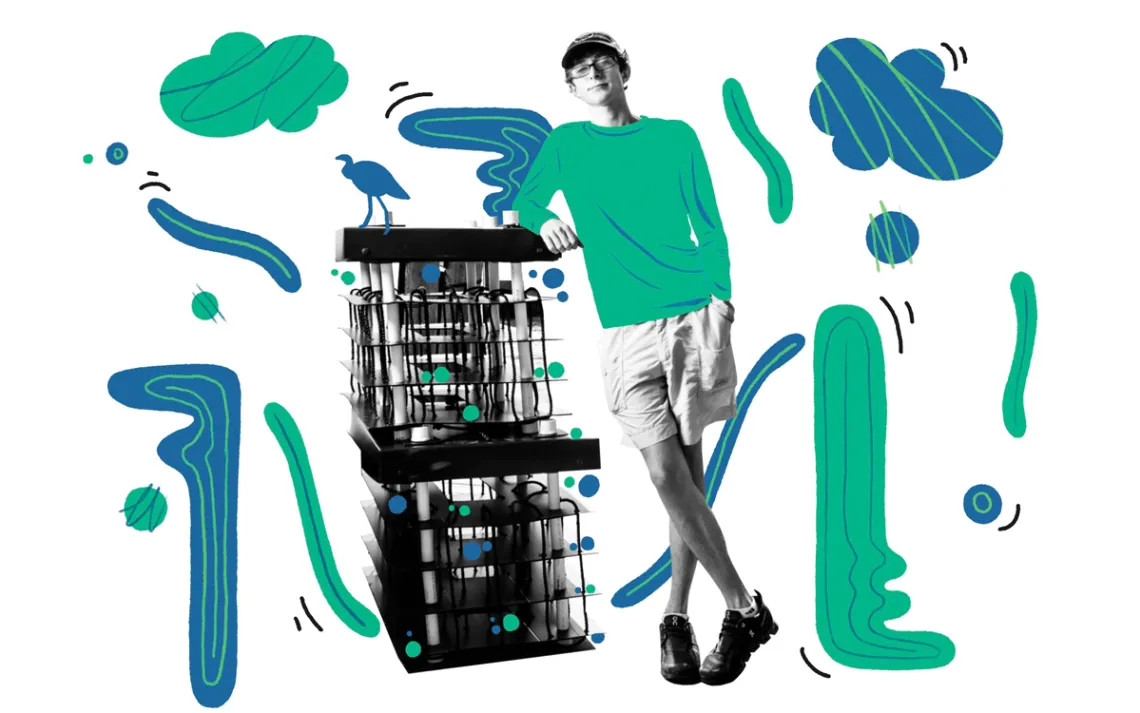
Photo illustration by Oscar Duarte. Photo by Chad Riley.
“There are no fish here,” one of the Boy Scouts in our group said, looking disappointed. I glanced out at the water. He was right.
We were in Orange Beach, Alabama, for a January campout. Nine Scouts from Troop 147 and their parents had come here because it was supposed to be good for fishing. I was 16 at the time and was one of the oldest kids in the group. In the end, all the equipment we had bought, all the research we had done looking for places to fish—none of it panned out.
I was lucky enough to grow up with a dad who knew where great fishing spots were, and I am grateful every day for those experiences. But for these kids and their parents, the best spots no longer held the amount of fish they used to. I wanted to do something about it.
So I did. In April 2022, I founded the Eagle Reef project, hoping to increase fish populations so that everyone can enjoy the water like I did as a kid.
I felt the room light up at the notion that a group of teenagers with a small budget could help change the world.
It started with research—lots of research. I learned that oysters were dying off in the area because of predators and overfishing. Oyster beds help create habitats for fish to grow, so fewer oysters means fewer fish. Then I learned about a biologist who made artificial oyster reefs and used them to clean up canals and rivers in Florida. The floating reefs sit under docks and give oysters a place to grow, along with barnacles. Each reef can act as a nursery for up to 200 baby fish and 300 baby crabs a year.
I’d found it: a solution to help boost fish populations in our area. “Why don’t we have this in Alabama?” I wondered.
I did the math. I would need $30,000 to buy about 100 floating reefs and then a team of volunteers to install them across the Alabama coastline. It would be hard, but I knew I could pull it off. I organized a group of friends and others to help.
Together we launched TheEagleReef.com so people could find out more about our project, donate money to support it, and learn how to put the reefs under their own docks. We raised enough money to buy a bunch of reefs, and we started installing them along the coast.
A group of us helped place the first two under the Dauphin Island Sea Lab’s dock that June. To my surprise, the mayor of Dauphin Island came to watch. I felt important. I shook the hand of a mayor, and he was excited to see me.
Word spread fast. More and more people donated money and volunteered to put reefs under their docks. News outlets covered the project. By the end of my sophomore year, we’d raised more than $50,000 and about 175 reefs were floating across coastal Alabama and Florida. People with influence supported the project, and multiple nonprofits and big companies donated. I did not expect this level of excitement from almost everyone in the community.
Kids and their families helped build the reefs, including my high school friend Claire Powers. “The project inspired me and others to change our outlook on how we can make a difference, especially in our own backyards,” she said.
After I graduated and went to college, I handed off the Eagle Reef project to Partners for Environmental Progress, an organization that helps protect the Gulf Coast, and the University of South Alabama’s School of Marine and Environmental Sciences.
On October 25, 2023, kids, parents, local businesspeople, elected officials, and other supporters came to a ceremony to celebrate the project’s success. “If I can raise $52,000 and put out more than 175 reefs as a sophomore in high school, imagine what you can do,” I told them. Because after all, we had inspired hundreds of people to step up and do something special. We had inspired people to act.
I felt the room light up at the notion that a group of teenagers with a small budget could help change the world. I also challenged them to keep going and get to 1,000 reefs.
To this day, the Eagle Reef team is working to make that vision a reality.
Find out how you can support the Eagle Reef project at theeaglereef.com.