 The Magazine of The Sierra Club
Going for Broke
Copper giant Asarco's bankruptcy means you get to pay for its mess
"The scandal is not what's illegal. The scandal is what's legal."
--Michael Kinsley
At 75, Joe Piñón still wears a crisp white lab coat and fills prescriptions at the pharmacy he's owned in El Paso, Texas, since 1960. His oversize glasses, helpful in deciphering a doctor's chicken scratch, lend him an owlish appearance; his soft voice only hints that he's also a Spanish speaker. In a crowded room, Piñón wouldn't stand out. Yet his mild manner has not kept him from becoming a leader in his community and a threat to polluters.
Over the decades, Piñón has taken on the American Smelting and Refining Company (Asarco), a massive copper conglomerate that has a presence in more than 20 states, environmental liabilities estimated between $500 million and $1 billion, and its name attached to 19 Superfund sites around the country. Concerned that an Asarco smelter in El Paso seemed to be making people sick, Piñón set up a grassroots organization, spoke out when it was unpopular to do so, and fought the company in court. At times, he says, he felt like Don Quixote tilting at windmills in his lonely battle to get the metals giant to clean up a century-old toxic mess.
Today Piñón has plenty of allies. Scientists, environmental groups, city and state officials, and federal regulators all share his fears about the company's pernicious legacy, and public opinion has completely turned around. Yet Asarco holds the trump card: It declared bankruptcy in the summer of 2005. Now, as Piñón says with a slight tinge of disgust, "the company can just walk away without cleaning up."
More precisely, it can walk away and then come back. Reorganization under the Bankruptcy Code's Chapter 11 helps companies wipe the slate clean of environmental liabilities, giving them a fresh start. In the United States--a country that has based its keystone environmental laws on the principle that polluters, not taxpayers, should pay to clean up the poisons they spew--Asarco is just one example of how corporations use Chapter 11 to slough off massive environmental liabilities, reorganize, and then emerge leaner and meaner to operate another day.
Asarco's parent company, Grupo México, is benefiting too. A few months after Asarco filed for bankruptcy, Grupo México announced that net profits had doubled--largely because Asarco's environmental liabilities had been removed from its books. Of course, the liabilities remain, but now they are borne by U.S. taxpayers.
Last year, Congress cracked down on personal bankruptcy, making it harder for consumers to erase their debts. But legislators have done nothing to get tougher with the approximately 38,500 businesses that declare bankruptcy each year. A 2005 report to Congress spelled out steps the EPA could take to ensure such companies fulfill their environmental obligations. But as that study sits on a shelf, Asarco and an untold number of other polluting enterprises are getting a free pass.
PIÑÓN HAS A LOT INVESTED in this fight. Growing up poor in El Barrio del Diablo--"the devil's neighborhood"--near the Asarco smelter, he noticed that neighbors who were employees at the company had developed nerve and respiratory conditions that seemed strange in people so young.
In his pharmacology studies, Piñón pursued the relationship between health and environment. He had a special interest in lead, arsenic, and cadmium--poisons Asarco emitted by the ton into the air above his town. Lead has long been known to be a neurotoxin; children's exposure to it, even at low doses, can damage the central nervous system, cause behavioral problems, and reduce intelligence. Arsenic has been linked to skin and lung cancer, and cadmium has been shown to cause kidney disease and increase the risk of lung cancer.
In 1992, Piñón and his lawyer son, Perry, fought Asarco in court, spending their own time and money to try to stop the company's smelter from expanding. The Piñóns were the only ones to contest the expansion permit: Even the local Sierra Club chapter and the city of El Paso signed letters endorsing it because the company promised to install "state-of-the-art" pollution-control technology. The El Paso Times called Piñón a "gadfly" and complained that his efforts had cost Asarco $250,000 in legal fees. The permit sailed through, but the company did not install the best equipment available at the time. (See "Arsenic in the Attic.")
ASARCO, CREATED IN 1899 to consolidate ownership of smelters, refineries, and mines, was among the nation's first large corporations. When Meyer Guggenheim and his sons took it over in 1901, it helped buttress the Guggenheims' vast family fortune. Yet as the company enriched a few and employed several thousand, it was imperiling millions more. The first of many legal actions against Asarco for threatening human and environmental health was brought in 1910, when farmers in Solano County, California, sued the company for allowing its smelter on San Francisco Bay to destroy crops with its sulfur dioxide emissions. The court granted an injunction, shutting down the smelter; the decision was upheld by the California Supreme Court.
Dissatisfied, one of Asarco's lawyers convinced a judge to appoint a three-member committee, which included a chemist chosen by the company, to reexamine the matter. A settlement was reached within a year in which Asarco agreed to limit its release of sulfur dioxide to 30 tons every 24 hours. No limit was put on lead, even then a known poison. In the decades following the agreement, scores of horses in the area died of chronic lead exposure.
Over the years, Asarco's lawyers have questioned scientific findings and contested cleanup orders. Instead of admitting responsibility and paying for the necessary remediation, the company has gone to court, where civil judgments against it read like a rap sheet: There are United States v. Asarco rulings unfavorable to the company in Arizona, Colorado, Idaho, Kansas, Montana, Texas, Utah, and Washington. When Asarco filed for bankruptcy, more than 100 civil environmental cases were pending against it.
One of the more striking examples is from the 1970s in El Paso, after a study by the Centers for Disease Control found that Asarco was responsible for abnormally high lead levels in children who lived near its smelter. The company denied responsibility, but the city sued and prevailed. Without admitting guilt, "but for humanitarian purposes only," Asarco agreed to implement strict monitoring for lead, zinc, cadmium, and arsenic releases and provide medical examinations and blood therapy to children with lead poisoning.
When Asarco's then-president, Daniel Tellechea, filed for Chapter 11 last August, he named "numerous environmental-related lawsuits brought by governmental authorities and private parties" as one of the main reasons for the bankruptcy. The filing puts such suits and efforts to collect environmental damages on hold. When this happens, creditors--in this case, the EPA and states like Arizona, Texas, and Washington, where the company has operated--line up for payment. They're unlikely to see much money: Asarco's most valuable assets were sold to a shell company--set up by its parent, Grupo México, which purchased Asarco in 1999--well in advance.
In 2002, Senator Maria Cantwell (D-Wash.) was concerned enough about corporate shell games and other legal evasions to ask the Government Accountability Office (GAO) to see if corporate polluters were avoiding their responsibility under existing laws. She was particularly interested in Asarco, which had operated a copper smelter near Tacoma, Washington, for nearly 100 years and was responsible for cleanups of $75 million for the smelter and up to $30 million for arsenic and lead contamination in the neighborhoods of north Tacoma.
Once, Tacoma could have depended on the federal Superfund program to force the parties responsible to bear the cost of cleaning up contaminated sites. Most of the costs of restoring "orphaned" properties--many created through bankruptcy--were paid by a tax on crude oil and certain chemicals and an environmental tax on corporations. Not anymore. When authority to collect these taxes expired in 1995, Congress did not renew it, and now the program's "polluter pays" fund is depleted. Cleanup dollars have to be pulled from general funds, meaning out of the public's pockets.
Just one week after Asarco declared bankruptcy, Cantwell unveiled the results of the two-year GAO study, which bore out her fears that the burden of cleanup was being carried by taxpayers. "Corporate polluters are using bankruptcy and other corporate gimmicks to get out of their environmental-cleanup obligations," she explained. "There's more this administration could be doing to hold Asarco and other companies like it responsible for the harm they've done. They should not be allowed to get away with this now, and they most definitely should never be able to do it in the future."
No one knows just how widespread the problem is. According to the GAO report, "While more than 231,000 businesses operating in the United States filed for bankruptcy in fiscal years 1998 through 2003, the extent to which these businesses had environmental liabilities is not known because neither the federal government nor other sources collect this information." But a wander through BankruptcyData.com's listing of bankruptcy filings still active in 2004, in which "environmental and/or asbestos liability has played a significant role," reveals some familiar names: Kaiser Aluminum; energy giants Mirant Corporation, NorthWestern Energy, and Pacific Gas and Electric Company; Owens Corning; Monsanto spinoff Solutia; and chemical titan W. R. Grace.
Andrea Madigan is the chair of the EPA's national bankruptcy work group and an enforcement attorney based in Denver's Region 8 office. When called a month after Asarco filed for Chapter 11, she volunteers with a weary voice that she has a pile of documents more than a foot high relating to the case and that more are on the way. Asarco has been on the EPA's radar for some time (its liabilities were obvious), and its bankruptcy did not appear to catch Madigan and her colleagues by surprise. "It has [cleanup] sites in every [EPA] region," she says, and has been on shaky financial ground for years. The agency will try to recover whatever cleanup costs it can.
Yet other companies that owe the EPA money for environmental cleanup--no one knows whether there are tens, hundreds, or thousands of them--may slip through the cracks because the agency is never informed. "The bankruptcy laws specify that companies have to give notice to their creditors, and if we are a creditor, we should be identified," says Madigan. But is the EPA notified so it can collect? "Debtors can sometimes be pretty sloppy."
Ideally, ironclad and enforceable financial assurances would be in place before the earthmover breaks ground or the air, water, or operating permit is granted. Yet the GAO found the EPA has failed in this task, noting that the agency has yet to implement a 1980 Superfund mandate requiring businesses handling hazardous substances to prove that they can clean up potential spills or other environmental contamination. "By its inaction on this mandate, EPA has continued to expose the Superfund program, and ultimately the U.S. taxpayers, to potentially enormous cleanup costs," the GAO report says. Leaving aside all the small-scale toxic sites around the nation that need cleanup, it's estimated that it will cost, on average, $140 million to remediate each of the 142 largest Superfund sites, for a total of almost $20 billion, according to the GAO. That's nearly three times the EPA's entire 2006 budget. The report further notes that the EPA could not even locate relevant financial-assurance documents to evaluate compliance in more than one in five of its cases.
"Believe me, the GAO's report on the weaknesses in the agency's approach to financial assurances has everybody's attention," says Madigan. Even so, the agency has yet to draft regulations to improve the situation. Given the pro-industry climate in the Bush administration, that's unlikely to happen. George W. Bush's choice to head the Council on Environmental Quality, attorney James Connaughton, once represented Asarco in a fight with the EPA over environmental liabilities. According to the Denver Post, when former Interior secretary Gale Norton was Colorado's attorney general, residents of a neighborhood polluted by heavy-metal emissions from an Asarco smelter had to hire their own lawyers to improve a cleanup deal approved by Norton's office. And when Bush's nominee to replace Norton, Dirk Kempthorne, was a U.S. senator, he cosponsored legislation that would have limited Asarco's extensive financial liability for cleaning up Idaho's Coeur d'Alene River Basin.
Cleanup should be a cost of doing business, but without bonds and other rock-solid forms of financial assurance, it's easy for corporations to walk away from their obligations. Montana learned this lesson the hard way. (When toxic sites do not receive federal Superfund status, individual states must go after the polluters and pay for cleanup themselves if they are unsuccessful.) In 1998, after Pegasus Gold filed for Chapter 11, the state was stuck with a $40 million cleanup bill for three of the company's six hardrock mines, then watched helplessly as Pegasus paid out more than $5 million in bonuses to its executives. The state made sure this sort of thing wouldn't happen again by increasing financial assurances in the form of bonds at nearly every remaining mine site from 50 percent to more than 10,000 percent.
Arizona has not been so prudent. With 2003 estimates of hardrock-mine-reclamation liabilities at nearly $4 billion, the state still allows corporate "self-guarantees," essentially a CEO's pledge that a company will pay rather than proof that there's real money behind the promise. Asarco's word wasn't worth much to the communities near its Arizona Ray and Mission mines or its Hayden smelter when the company went belly-up. (Reclamation-liability estimates for the Ray and Mission mines alone run close to $870 million, and it is unclear whether Asarco will bear any of these future cleanup costs. If not, the costs will fall to the state rather than the federal EPA because they are not Superfund sites.)
"Ultimately, you've got to make everybody play by the same set of rules," says David Chambers, executive director of Montana's Center for Science in Public Participation. If the EPA enforced financial assurances, and disallowed empty promises like Arizona's corporate IOUs, it wouldn't be so easy for businesses to skip out on cleanup. "We all know that companies have incentives to minimize their liabilities, and it's the duty of our regulators to act as a check against that," says Chambers.
In addition to being lax on demanding financial assurances, the EPA often settles environmental claims for less than the total cleanup costs, the GAO says, "if the agency believes making the business pay the full cost would be inequitable." One might fairly ask: Inequitable to whom?
"We try to work with companies that are financially struggling," says the EPA's Madigan. "We try to find this very precarious balance with those that want to work with us to do a cleanup or pay for their environmental liabilities. We don't want to be the ones to put them over the edge."
Asarco was a beneficiary of this type of governmental largesse in 2003, when it shifted its most valuable asset, the Southern Peru Copper Corporation, to a subsidiary set up by Asarco's parent. The sale was initially blocked by the Department of Justice. The agency was concerned that Asarco was shielding its moneymakers from the environmental cops at the EPA. But when Asarco agreed to set up a $100 million trust fund for the cleanup of its U.S. operations--for which, even then, estimates ran as high as $1 billion--the EPA and Justice Department signed off, essentially accepting ten cents on the dollar from a company that had poisoned huge swaths of air, water, and land. At the time the deal was signed, Asarco owed in excess of $100 million in fines alone, for noncompliance with state and federal cleanup orders. Sweeter still, the deal capped Asarco's cleanup responsibilities for three years.
Agency representatives called it an "exceptional settlement" and "fair to all concerned." Though the trust is guaranteed by Grupo México, it is unclear how bankruptcy affects the fund: There's no $100 million sitting in a bank account somewhere. The promise was to pay out the money at $12.5 million per year, plus interest, over eight years. With Asarco in bankruptcy court, a debate has begun about whether the environmental-trust-fund money is secure from other creditors. Additionally, a battle over who gets which piece of the contested pie is looming. According to Kevin Rochlin, the EPA's Region 10 project manager for Asarco cases, trust-fund dollars will be assigned based on "human health risks, status of cleanup, and extent of cleanup that can be accomplished for a certain amount, pressing needs, eco risk, etc." The situation pits homeowners in Ruston, Washington, whose Superfund-sited yards contain toxic amounts of lead, against families in El Paso whose yards are every bit as contaminated. EPA lawyers say they were talking about going after Asarco for additional funds when the three-year agreement ended in February. The company's bankruptcy basically throws a brick wall in front of those good intentions.
CHANGE IS POSSIBLE. In her work and writing, Baltimore environmental lawyer Karyn Bergmann has focused on the inherent tension between bankruptcy and environmental laws--what she calls "the clash of titans." In Bergmann's view, it's critical to redefine the key players: "Congress needs to revise and clarify the definitions of 'owner' and 'operator' in environmental statutes to include parent companies." If this occurred, it wouldn't have mattered that Asarco was stripped of its assets, since all roads (and profits) lead to Grupo México. Solvent parent corporations would no longer be able to reap the profits of polluting subsidiaries while avoiding environmental liabilities.
Additionally, says Bergmann, environmental statutes must be harmonized with the Bankruptcy Code so that responsible parties aren't so painlessly released from their environmental debts. As it stands, the code allows a company to abandon property when it "is burdensome ... or ... is of inconsequential value and benefit." This pretty much sums up the thousands of acres corporations have contaminated.
It's not just the environment that suffers when a polluting company gets a second chance. In theory, Chapter 11 and the eventual rehabilitation of a business are preferable to people losing jobs, plants being shuttered, and contents of value being sold for scrap. Companies are far more useful to employees and shareholders if they are going concerns, after all. But in the eight years since the last bankruptcy-reform act was adopted by Congress, according to House members who opposed the bankruptcy bill passed in 2005, "workers have sustained unprecedented job loss, endured the termination of pension plans, and faced wage cuts and the elimination of health care and other benefits"--all under the guise of Chapter 11. The 2005 act did little to change this.
Solidifying financial assurances, going after parent companies for cleanup costs, and getting tougher with environmental enforcement before a company's finances crumble would make corporate misbehavior less likely and bankruptcy less attractive as an out. It's really a question of priorities. Senator Cantwell is currently working on legislation that would close bankruptcy loopholes for polluters. "I think everyone agrees that there's a problem," says Amit Ronen, her deputy legislative director. "Asarco is just the microcosm of what's going on all over the country."
AFTER YEARS OF SETBACKS, El Paso activists recently enjoyed one satisfying, though possibly temporary, victory. Prior to its 2005 bankruptcy filing, Asarco applied to renew its permit, perhaps to make the smelter's sale more attractive to potential buyers. Unlike in 1992, at this hearing the opposition's bench was deep and well organized and included the Sierra Club and the city of El Paso. Pinon's daughter, Yvonne, who has become the unofficial historian of Asarco's environmental misdeeds in El Paso, attended every day of the two-week hearing, since her father was needed at the pharmacy. "I had to take notes and rush home and report to Dad, let him know exactly what happened," says Yvonne, 46.
Years of effort paid off when Texas administrative judges recommended that the permit be denied. A final decision by the Texas Commission on Environmental Quality is not expected before August. But none of the El Paso folks are fooling themselves. After decades of work, they still don't have the cleanup they are after, and bankruptcy only makes matters worse.
The Piñóns and their neighbors have been paying pollution's price for decades. Now taxpayers' wallets will be tapped. When will corporations like Asarco be made to pay their fair share? Says Piñón, "My wife says I'm too old now. 'Just let someone else handle it,' she tells me. But you've got to take a stand."
Arsenic in the Attic
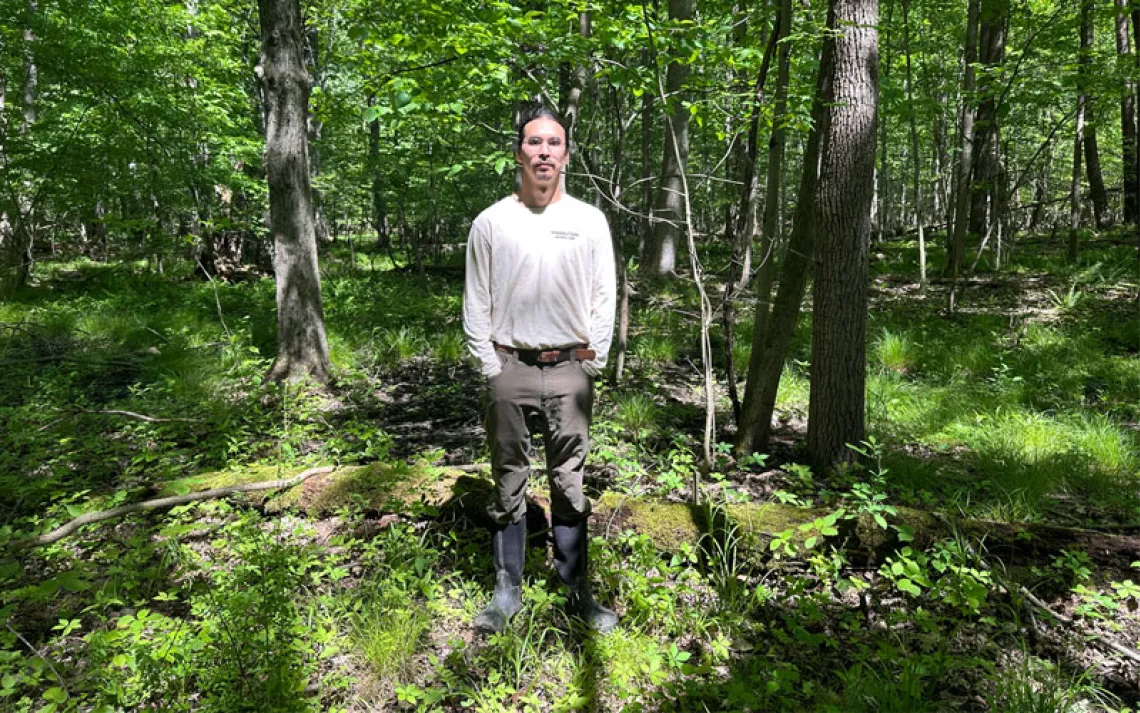
Juan Garza: "When I got the results, I was really concerned."
El Paso, Texas, resident Juan Garza hasn't always cared about the environment. In fact, when the metals giant Asarco applied for a permit in 1992 to expand its copper smelter, he supported the company. Garza, 41, owned a home less than two miles from the smelter and had for years been bothered by the smell of its emissions. He believed the company's promise that it was going to install top-drawer pollution-control technology, which he saw as a boon to his property value.
That did not happen. The company paid for upgrades but didn't bother with state-of-the-art technology. Proof of this came at the time of Asarco's permit bid, when a similar permit was being sought by a different smelter operator near Galveston. Though the Galveston smelter would have had twice the production output of Asarco's "new and improved" one, it would have produced a hundredth the amount of cadmium, half the arsenic, a fifth the lead, and a third the sulfur dioxide. Even so, Asarco's permit sailed through.
When Asarco failed to keep its promise, Garza began paying closer attention to what was coming out of its smokestacks. In 2001, he heard from neighbors that the EPA was testing local soil for lead contamination. He'd been doing some remodeling work in his 100-year-old house and noticed thick dust in the attic, so he wrote a letter to the EPA, requesting that it test the dust. The agency said it would sample the soil in his front and side yards but declined to cross the threshold into his home, saying it was beyond the scope of its inquiry. Garza collected his own attic-dust sample and sent it to a lab in St. Louis. The results: 118.4 ounces of arsenic per 1,000 square feet--nearly 30 times higher than the safe limit; another test revealed that lead levels were 700 parts per million. (All yards in his area with lead readings above 500 ppm are supposed to be decontaminated by the EPA.) His education as an activist came as he tried to get Asarco, the EPA, local and state health departments--anybody--to help him with the problem upstairs.
The EPA found elevated arsenic and lead levels in Garza's yard, replaced the soil, then sent him a letter, saying in part: "Potential exposure to lead and/or arsenic has been eliminated by the removal action performed on your property, and therefore no further remedial action ... is required." Internal memos at the EPA indicate that the agency felt there wasn't enough money to decontaminate affected yards, much less inside homes. Staffers also worried that pushing Asarco to pay for more cleanups would get them "tied up in court and then the resources shift ... away from cleanup actions."
To date, Garza's attic dust remains. He and his family now live in another home farther away from the smelter. But he can't rent or sell the first one: He'd be liable for heath effects since he had the dust tested and knows what it contains. He went to the county tax appraiser's office, gave it the lab results, and asked for a new valuation of his property. His historic home, which used to be worth just over $43,000, had lost nearly $25,000 in value. A cleanup company gave him a $7,000 estimate for the attic. "I'm tired and broke, and I just don't have the resources to clean up myself," he says.
The experience made an activist of Garza. With his wife's blessing, he quit his job several years ago to focus solely on environmental issues associated with lead exposure in the El Paso area. Garza dove into research--on Asarco, the health effects of lead, and community organizing. In 2003, he helped found the Get the Lead Out Coalition to protect other homeowners from his fate.
"I didn't think about what companies can get away with and how people can suffer," he says, "until it hit home, literally."
Picking up Asarco's Tab
In 2003, Asarco and the U.S. EPA agreed to set up a trust fund of $100 million to help pay the company's environmental cleanup costs. Then, as now, Asarco's liabilities far exceeded that amount. It is named as either the sole responsible party or one of a group of companies responsible for the following federal Superfund sites around the nation. Asarco's portion of the cleanup costs below, which total nearly $3 billion, is estimated to be between $500 million and $1 billion.
Alabama:
Interstate Lead Company facility: $29,099,000
Colorado:
Vasquez Boulevard and I-70: $31,000,000
Lowry Landfill: $13,032,480
California Gulch mine and river systems: $174,086,270
Summitville Mine: $198,000,000
Globe Plant: $3,045,000
Idaho:
Bunker Hill Mining (Coeur d'Alene River Basin): $666,330,000
Illinois:
Circle Smelting Corporation: $2,500,000
NL Industries/Taracorp lead smelter: $60,000,000
Kansas:
Cherokee County lead and zinc mine and surrounding area: $139,119,074
Missouri:
Oronogo-Duenweg mining belt: $7,800,000
Montana:
East Helena smelter and surrounding residences: $80,000,000
New Jersey:
Kin-Buc Landfill: $39,600,000
Oklahoma:
Tar Creek (Ottawa County) iron and zinc operations and surrounding residences: unavailable
Pennsylvania:
Tonolli Corporation smelter: $22,945,000
Tennessee:
Ross Metals smelter and surface water: $14,790,687
Utah:
Murray smelter: $52,000,000
Richardson Flat tailings: $4,200,000
Washington:
Commencement Bay, Near Shore/Tide Flats smelter, groundwater, and residences: $1,327,500,005
SOURCES: The EPA's Comprehensive Environmental Response, Compensation, and Liability Information System and regional EPA coordinators
Sierra Club's CSI: El Paso
Located five minutes from downtown El Paso, and a stone's throw from heavily populated neighborhoods in Juárez, Mexico, the Asarco smelter has been a binational polluter for a century. In 2005, the Sierra Club hired El Paso resident and environmental engineer Mariana Chew as an organizer. She and other Club members participated in Asarco's permit-renewal hearing last year and have organized workshops and marches, trying to hold the company accountable for its environmental and public-health abuses. In January, a Club-commissioned study found high levels of lead and arsenic in the soil around the smelter and linked the toxic substances' molecular "fingerprint" to Asarco.