 The Magazine of The Sierra Club
The Future of Garbage
Your trash can is the latest front in the fight against global warming
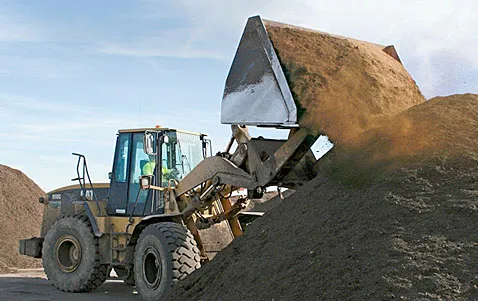
Instead of producing methane in landfills, these former table scraps and yard trimmings will nurture California farms and vineyards.
Three days a week, M. Lee Meinicke, cofounder of Philly Compost, takes her truck on a circuit of Philadelphia restaurants, caterers, and markets, filling 20-gallon bins with plate scrapings, aging produce, chicken bones, food-stained napkins, and other discarded organic matter. The waste will be served up as dinner to Meinicke's stable of red wigglers and night crawlers, emerging on the other end as compost that she will sell for $15 per four-gallon bin. She turns straw into gold, and participating businesses help fight climate change: "What hooks them is the global-warming issue," she says.
In the oxygen-deprived environment of a landfill, rotting food produces methane, a gas with 72 times the global- warming potential of carbon dioxide. Landfills are the largest human-made source of methane emissions in the United States, with a greenhouse-gas impact equal to one-fifth of that produced by the nation's coal-fired power plants.
"While we're working on getting cars off the road and shutting down coal plants, composting is the fastest, easiest, cheapest way to deal with greenhouse-gas emissions right now," says Linda Christopher, executive director of the Grassroots Recycling Network.
Compost programs don't lack for raw material: A fourth of the nation's trash is made up of "putrescibles"--food scraps, yard waste, and other biodegradable rubbish. Leaves and yard waste have been banned from landfills in 22 states, but only a handful of communities nationwide compost food scraps. Last year San Francisco supplied residences with compost bins and made it illegal to put food and yard waste in the garbage.
Recycling advocates would like to see the 3,800 U.S. facilities that compost leaves and yard debris begin to take food waste as well, but it will require costly measures to cope with odors and screen out plastic detritus like sandwich bags, latex gloves, and sporks. Once that's done, however, the worms and microorganisms can do their work, resulting in a black, nutrient-rich compost prized by farmers and gardeners. Given the demand, Christopher argues, we should start thinking of food scraps as a resource, not refuse. "When they're tossed into the landfill," she says, "they're lost to us forever."