 The Magazine of The Sierra Club
The Joys of the Path Most Traveled
One writer rediscovers awe thanks to an old forest friend
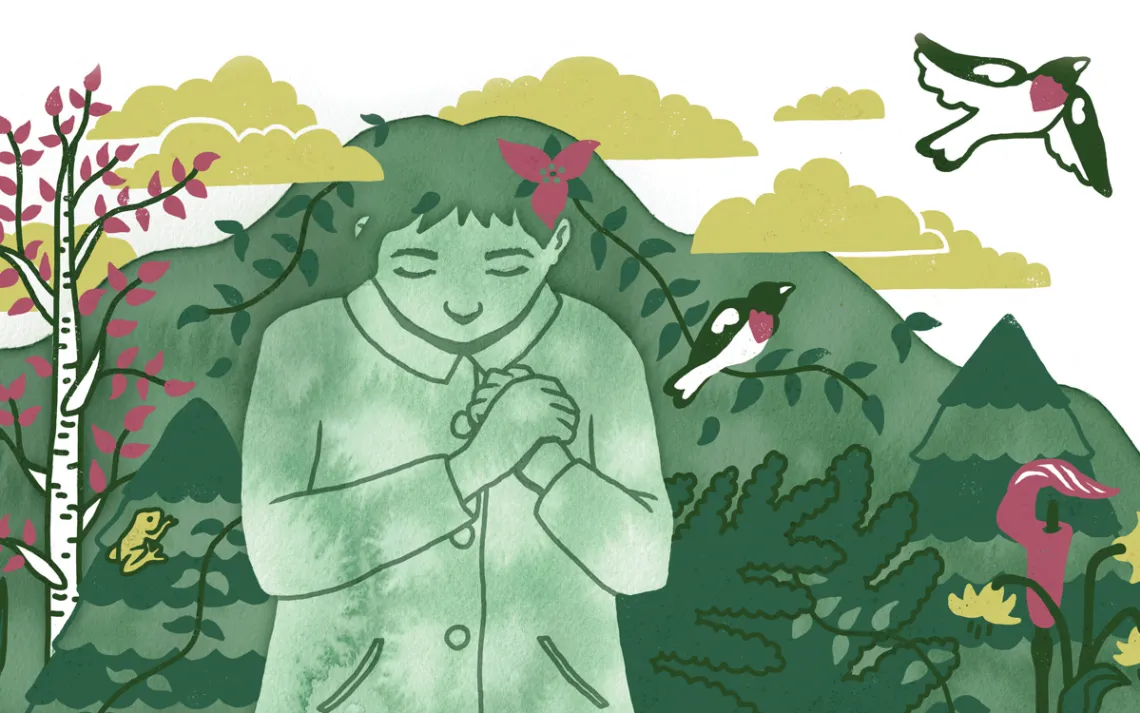
A leafy white birch stands as a welcoming presence at the entrance to the woods. I like to say hello as I pass, making my way up the trail to a favorite stony ledge in the Berkshires. It’s a steep path, which I enjoy, and my elevated heart rate and oxygen level foster a determined focus on the understory as I huff upward. I actively scan for spring ephemerals—red trillium, Jack-in-the-pulpit, trout lilies—all living up to their names in color, shape, and brief existence.
I know to look for them here, where I’ve trekked so many times I can only guess at the number. Sometimes it seems silly that I take this path so frequently, as there’s an embarrassment of options where I live in the rocky, forested Northeast. While seeking the new can be the jam of outdoor enthusiasts, myself included, developing a relationship with a place through repeat visits nourishes my spirit in a way that the thrill of adventure and the excitement of bagging a peak doesn’t.
So I return, again and again, as an act of comfort. I breathe a sigh of relief turning onto the familiar dirt road to reach the trailhead. Then I hit the path and I am truly home. My feet know their way across the field where snowdrops pop out of the ground in early spring and clover sprawls as summer wears on. It can be scorching hot here, or ghastly windy and freezing. The forest beckons at all times of the year.
Summer brings maidenhair ferns. Winter snow reveals animal tracks, and there’s scat in the middle of the trail in every season. I have a keen sense of where everything’s apt to be, but what a delight to be surprised. Look! A patch of wild leeks has sprouted where there were none last year. And suddenly I’m thrust into contemplating the interconnected activities of the flora and fauna that could have engendered this growth instead of watching them blur into the background.
I’ve become attuned to the lyric return of rose-breasted grosbeaks in the hardwoods. The barred owls’ who-cooks-for-you in the hemlocks upslope. The dark-eyed juncos foraging on the ground under the spruce near the top. And having run into black bears multiple times—once a mama with cubs!—I see their shapes in stumps and fallen-over logs. Anything big and dark could be them. I’m not afraid, per se, but alert. This is a great lesson for me. Despite knowing a place, I cannot take it for granted. I must push past the tendency to limit the world to a projection of my making. There’s always more to learn if I’m open.
One year, as I reached a saddle between two humps of the hill, I heard something I’d never known at that particular juncture in all my time in this forest. It sounded like the riotous clamor of mating wood frogs in what had to be a vernal pool off-trail. I followed the racket up over a ridge, and there they were: a veritable aquatic orgy securing species survival. Wood frogs, like spring ephemerals, appear in brief windows, and it’s easy to miss the party in a rush to ever-greater heights.
I say I care about the earth, but what does that entail? I believe love begins with an act of attention. Because I know these slopes so intimately, I can better tend to them. I brush-in the trail with downed limbs to guide errant footfalls until bare spots regrow. I dig up Japanese barberry, an invasive that would eradicate native growth if left to its own devices. I am committed to the well-being of this forest, surely as if these woods were a friend. That’s because they’ve become one.