How Recognizing Nature as an Artist Is Helping Protect It
Musicians are utilizing natural soundscapes to advocate for the conservation of fragile ecosystems
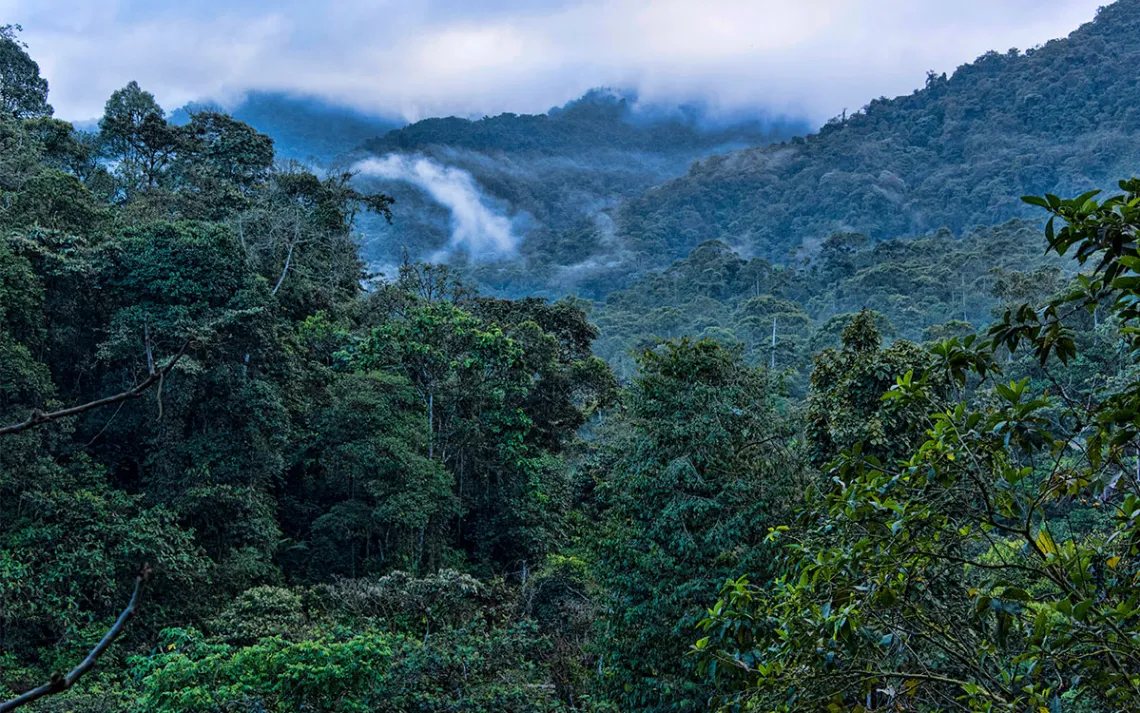
Tropical cloud forest in Ecuador. | Photo by Mark Newman/Getty Images
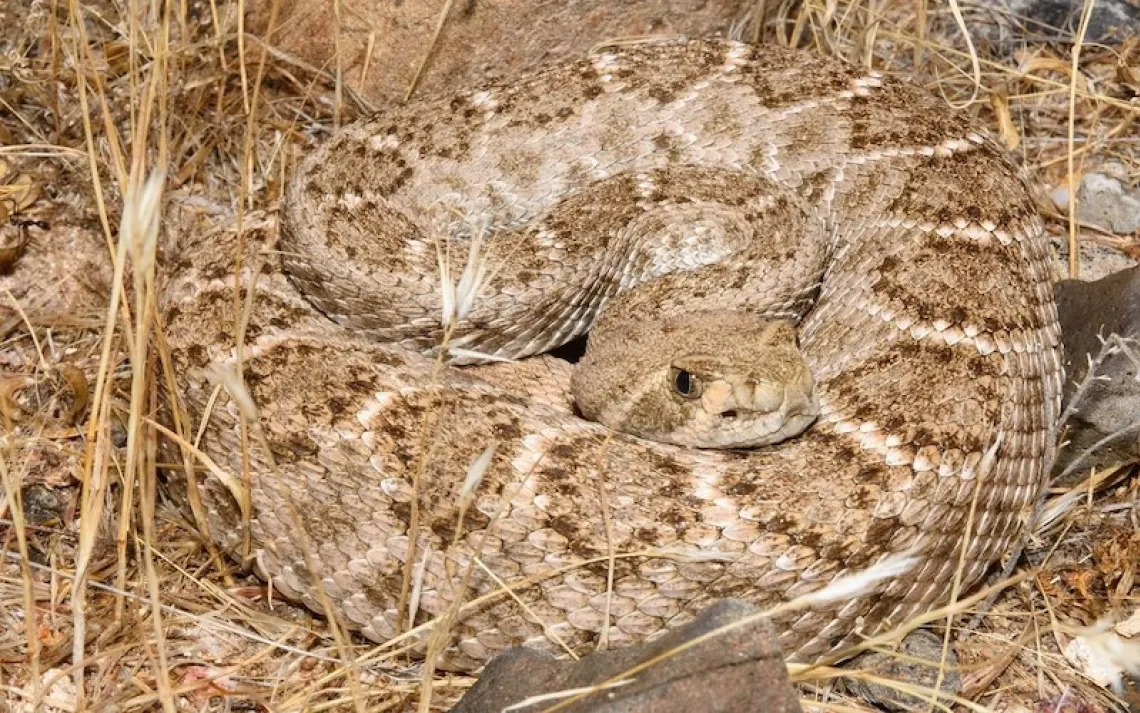
The refrain of whinnying horses, the maraca-like shake of a rattlesnake, and the melancholy call of a loon have been woven into myriad 21st-century pop songs. While the integration of these animal sounds hasn’t had much benefit beyond accolades and album sales, that’s changing. A new generation of artists is collaborating with nature to create a unique sound that blends the call of the wild with traditional instruments, and they’re using this natural symphony to elevate nature to the role of musical artist. In addition to satiating one's desire for harmony, these tracks are raising awareness for fragile species and ecosystems and even generating funding to protect them.
One way this is happening is through intellectual property rights. Artists frequently have an exclusive right, also called a moral right, to be recognized as the creator of their work. Last year, in a world first, songwriter Cosmo Sheldrake released “Song of the Cedars,” which incorporates sounds from the Los Cedros cloud forest in Ecuador. He partnered with attorneys at New York University’s School of Law, who run an initiative called the More Than Human Life Project (MOTH), to propose that the forest be recognized as the legal co-creator of the song. Within the lyrical track, the forest buzzes with the sound of fluttering bats, chirping crickets, and whistling toucans. Lyrics swell like an incantation: “Trees speak in your leaves please. And streams tell me your dreams. Birds sing me your rhymes please. And stones teach me your times.”
Sheldrake recorded the song on a trip to the cloud forest with mycologist Giuliana Furci and writer Robert Macfarlane, who was researching his forthcoming tome, Is a River Alive?. The forest was granted legal personhood in 2021 by Ecuador’s Constitutional Court, a theme in Macfarlane’s book. Granting forests, rivers, and mountains legal personhood aims to recognize these natural entities as living beings and provide concrete protections by granting them the same rights people would benefit from in a court of law. How personhood translates into the real world varies widely but includes a natural entity’s right to key functions, such as maintaining biodiversity, remaining free from pollution, and the ability to sue if these rights are infringed upon. (Human guardians or representatives act on the ecosystem’s behalf in court.) Recognizing moral authorship would keep the forest—which was threatened by mining—in the spotlight while putting its legal personhood status to the test.
“Song of the Cedars” echoes rights of nature activism but takes it further by championing nature’s inherent creative power. This is essential to the work undertaken by MOTH. “We’re trying to contribute to the reconnection with, and reanimation of, the more-than-human world,” César Rodríguez-Garavito, the founding director of MOTH, said. “We’re bringing together people from different fields who are promoting ways of thinking and being that instill a more empathetic connection between humans and non-humans,” Rodríguez-Garavito, who also accompanied Sheldrake, Furci, and Macfarlane on their trip, added.
Cultivating empathy strikes at the heart of what makes music a particularly powerful way to forge a new relationship with nature at a time when biodiversity loss has never been more pressing. Much like any work of fiction, whether it be a novel or a film, music is emotive and helps us imagine a different world. In this case, it’s one that’s more compassionate toward all living things.
The power of music in reimagining our relationship to nature
Music, of course, has a long history of driving revolution and resistance. Over the last century, popular music has galvanized social justice activism, from the civil rights anthems of 1960s folk to hip hop’s championing of the Black Lives Matter movement. It makes sense that as the sixth mass extinction looms, nature will be given its own voice of protest. “Law relies on cultural shifts, and those shifts happen through languages and frameworks that appeal to a large public,” Rodríguez-Garavito, who is also the director at the Earth Rights Advocacy Program at NYU, said.
This notion is at the core of another project, Sounds Right, which is a Museum for the United Nations, or UN Live, initiative that launched in April 2024. The initiative released songs on Spotify by the likes of David Bowie and Ellie Goulding that incorporate natural soundscapes and credit nature as co-creator. Up to 70 percent of royalties from total monthly streams pay for rights-based biodiversity conservation and restoration.
“Key to the Sounds Right philosophy is that we fail at addressing the most significant social and environmental problems if we only preach to the converted,” Gabriel Smales, program director for Sounds Right at UN Live, said. “Instead, we should be trying to engage the movable middle, everyday people, on these issues and build a sense of agency in our collective efforts to make progress, whether that's the biodiversity crisis or the climate crisis—and everyone has a relationship with music.”
On Sounds Right’s playlist, feat. NATURE, the percussive drip and rush of melting Antarctica glaciers infiltrates “In Purpose” by Madame Gandhi, and a coral reef in the Gulf of Mexico crackles and pops in an upcoming release by Donna Grantas, Prince’s former guitarist. Fires in a Borneo jungle hiss throughout “Orange Skies” by Louis VI. There are also soundscape playlists dedicated to entire regions and ecosystems, such as Scandinavia and coastal Colombia, where the idea for Sounds Right was conceived in 2019 with sound artist collective VozTerra, which began creating dance music punctuated with nature sounds.
A five-member panel that sits within EarthPercent, a nonprofit made up of conservationists and Indigenous rights activists, governs the royalty fund and selects projects in key biodiversity areas. Ambient musicians such as Brian Eno, who created the organization and credited the earth on his 2023 song “A Thought,” and genre pioneer John Cage both draw on the complex randomness of the environment to decenter the role of the composer and encourage attentive listening to the natural world.
In Sounds Right’s first six months, the playlist has clocked 68.1 million streams on Spotify, generating over $225,000 in royalties, which was donated to four Indigenous-led projects in the biodiversity-rich Colombian Tropical Andes. These include reforestation efforts in critical wildlife corridors, environmental education for youths, and supporting the development of nonextractive industries such as ecotourism and agro-biodiversity initiatives. The organization is currently working on its first impact report and has released new music for Earth Month.
An accessible form of environmental protest
Nature as a fount of musical inspiration for humans is ancient, from the creation of instruments from natural materials to harnessing the sounds of wind, water, and animal calls in songs and oral histories. Making music with nature is a primal instinct.
Music lovers can pay tribute to elements of these ancient traditions in the shadowy springtime woods of East Sussex, England, where folk singer Sam Lee established Singing With Nightingales in 2015. The immersive live music experience guides visitors through the lantern-lit forest as acoustic musicians, including Lee, play in harmony with the song of the nightingale. Gathering around a fire in the dark to share stories and song harkens back to a bygone era, drawing on centuries-old British folk music, when life was more intimately tied to the land.
“There was a calling, something being spoken in the nightingale’s song that connects to all the things that we have lost and long for,” Lee said. “I felt the song as a wake-up and a reminder.” The concerts support the ecological restoration work Lee and his small team lead in nightingale habitat while raising awareness about their plight. Five thousand pairs of them fly to southern England from sub-Saharan Africa every April and May, but numbers have plummeted, and the species is on the UK Birds of Conservation Concern’s Red List.
“Music and storytelling bring people into that place of knowing and of loving, steering humans away from the terrible path we’ve been led down of believing that we are somehow more important and more powerful,” Lee said. “I've always been of the mind that I don't call people out; I call them in. The role of the artist is to make things irresistible, and I want to make nature irresistible.”