In Hard Times, Remember to Take It One Step at a Time
Getting out onto the trail helps this hiker be a better climate activist
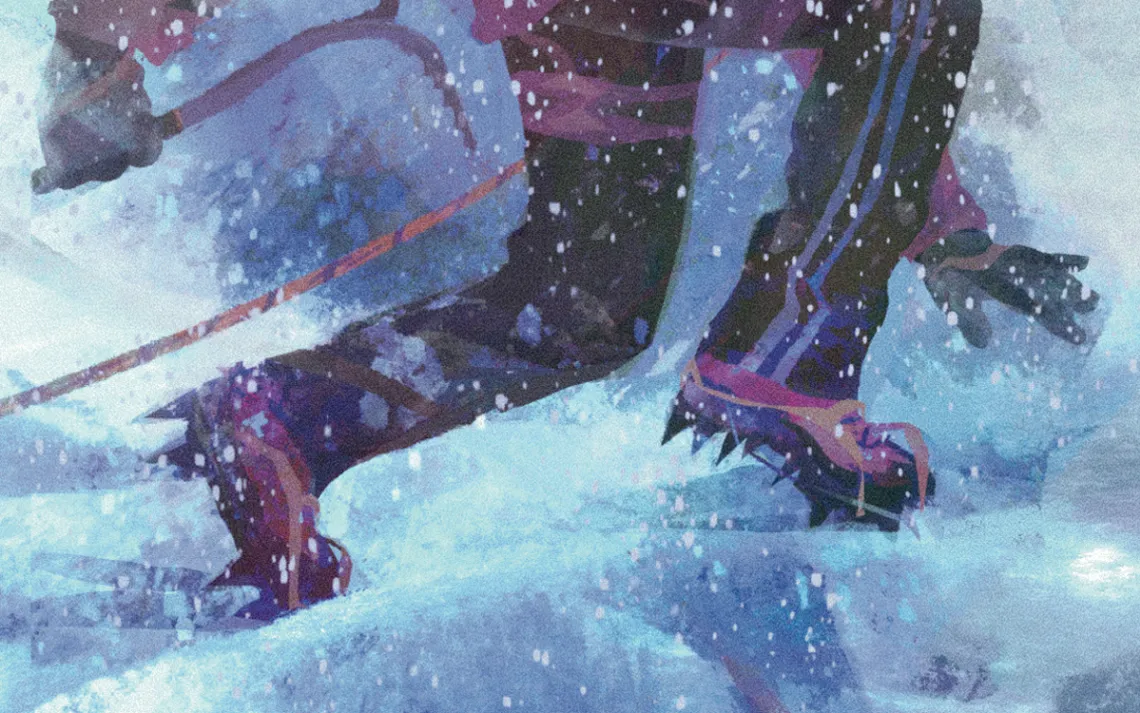
Illustration by Carolyn Arcabascio
Wind ripped the words out of my mouth before they reached my partner’s ears. We were more than 14,000 feet high, in a whiteout, trudging up one of the upper glaciers of Mt. Rainier in Washington state. I was dressed more like the Michelin Man than a hiker—bloated in expedition clothing, now coated completely with ice—and panting at altitude. Every step hurt. I wanted to give up, to be back home under warm covers snuggling my cats, never to come out.
That feeling of defeat was not dissimilar to how I often feel about the climate and environmental crises our planet faces. Arctic ice melt. Mass extinction. Deforestation. Garbage patches in our oceans. Microplastics everywhere. It’s enough to make me want to retreat into a cocoon of denial.
I didn’t give up on my climb of Rainier. And I am not going to give up fighting for a livable planet. In fact, the very strategies that helped me successfully summit that mountain have helped me stay strong as a climate activist.
I reached the top of Rainier by taking one step at a time. Whenever I looked ahead at the expanse of glacier between me and my objective, I brought myself back to my feet. Could I go one more step? I could. And then another. These steps accumulated until I reached the summit crater.
When I’m demoralized by an onslaught of challenging climate news, I take just one action. I call a representative. I sign a petition. I spread the word on my networks about a particular issue. Doing something almost always feels better than doing nothing, and these smaller actions add up.
To climb Rainier, I roped up with an encouraging partner. At the moment when I most wanted to turn around, my friend cheered me on. He shouted over the wind: “You can do it!” That was the boost I needed for the final push, when I couldn’t find it in myself to carry on. I rely on this same kind of support for dealing with climate change. Connecting with others who are also doing the work is critical for my mental health, not to mention that collective action is always far more effective than going it alone. I’m active with my local food co-op and my county land trust—organizations that have made a tremendous difference in my community.
More than anything, I have learned to take multiple breaths for every footfall. It’s the mountaineer’s version of the slow, deliberate rhythm of a bride walking down the aisle. Step, pause. Step, pause. This altered pace felt life-giving when my body was desperate for oxygen. Rest is fundamental to serving a higher purpose, and pacing is key. We didn’t get to the climate crisis overnight, and though the cause is urgent, it is not going to be solved overnight either. It’s OK to take a break.
Joy in this life—in being a part of this world—is also part of the solution. That’s why I climb. When I am completely overwhelmed, I hit the trails. Connecting with the beauty of the earth not only reminds me that the fight is worth the effort but also makes me a happier camper overall. To paraphrase the early 20th-century activist and writer Emma Goldman, if I can’t hike, then count me out of the revolution.