Even Bugs Need a Little Love
The tiny invertebrates that creep many of us out are the foundation of biodiversity
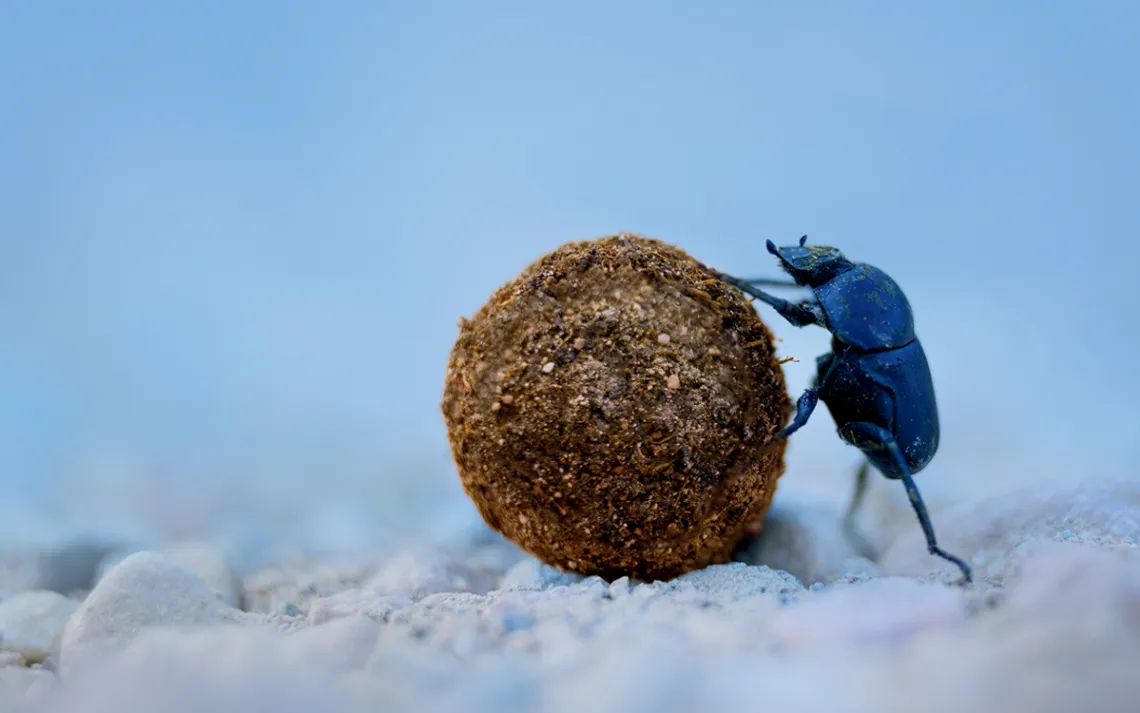
DID YOU KNOW? A group of dung beetles is called a ball. | Photo by Josef Cink/iStock
Last summer, my daughter, Beryl, and I lay on our bellies near the vegetable garden and watched the world come alive. It was early evening, and fireflies were just starting to emerge from their daytime hiding spots, climbing up blades of grass. She reached a hand toward one crawling nearby, and it scuttled across her open palm before lifting its wings and taking flight.
As the last bit of sun slipped away, their blinking began. It grew into a symphony of flashes. This was mating season, and the fireflies were signaling one another using their glowing abdomens. As they flew off into the cooling air, we flipped onto our backs to watch the show.
Just before bedtime, we realized one of the fireflies had accidentally made its way inside the house. It was on the kitchen window, communicating with other bugs from the wrong side of the glass. Beryl cradled it tenderly in her hands and hurried to let it out into the night.
At four years old, my daughter is fascinated by bugs. She loves discovering new things about them, like how insects make up about 80 percent of animal life on Earth. There are more than a million documented species, and millions more that scientists don’t know about yet.
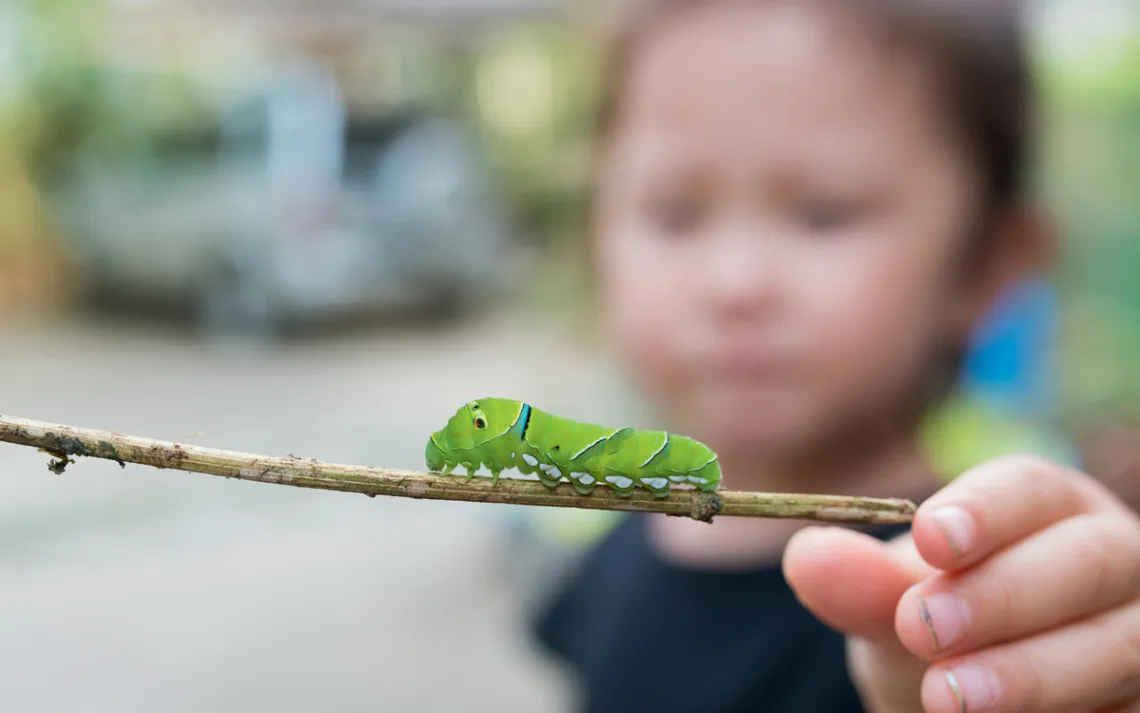
Photo by Hakase/iStock
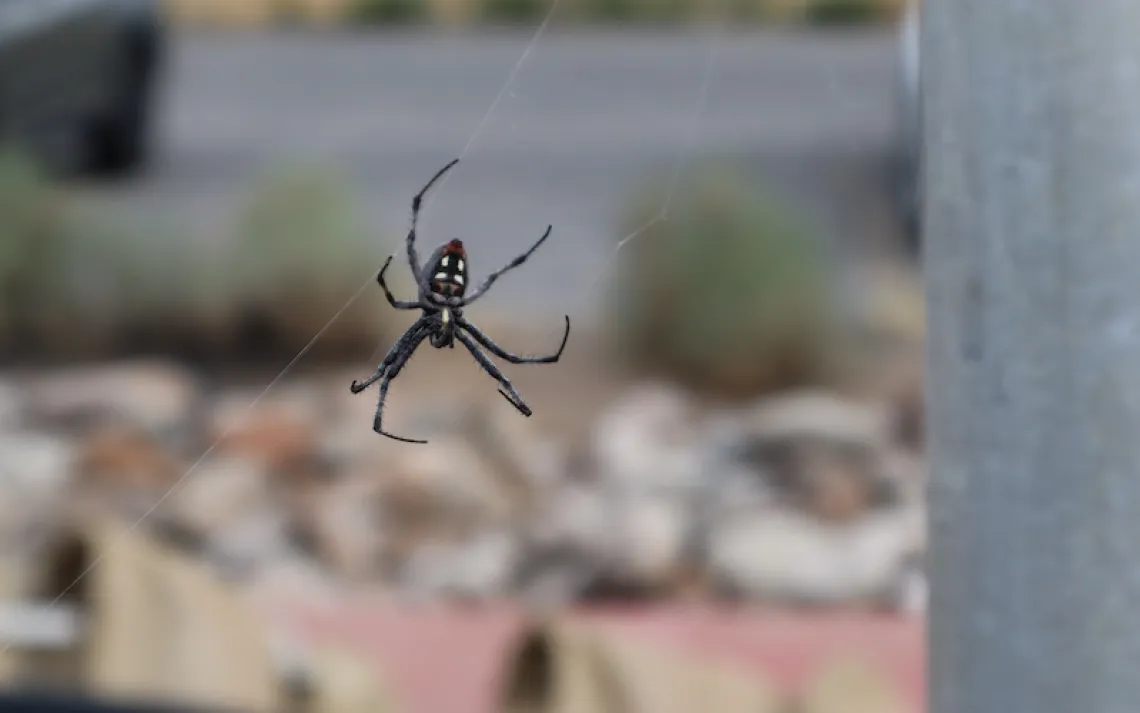
When we find insects in our home, we try to be gentle. Tiny spiders—technically not insects but rather a group of eight-legged critters called arachnids—are gathered up and taken outside. The same goes for the stink bugs and the leggy house centipedes. Thanks to Beryl, our home is a safe place to be a bug.
But across the planet, insects are in real trouble. For a century or more, their numbers have been decreasing, and now it’s happening faster. Scientists estimate that today there are roughly half the number of insects in the world than there were 40 years ago.
“Some of the longer-term studies we have suggest pretty terrifying rates of decline,” said Dave Goulson, a biology teacher at the University of Sussex in England. Insects, he said, “are gradually disappearing bit by bit, and we need to do something about it urgently.”
Where have all the bugs gone?
Around the world, bugs are disappearing for one main reason: human activities. Doug Tallamy, a scientist at the University of Delaware, said that light pollution—caused by too many artificial lights like streetlights—confuses nighttime insects like moths and beetles. It throws off how they mate and find food as well as their navigation. Some insects fly in circles around lights, using up all their energy and exhausting themselves to death.
Meanwhile, chemicals cause a lot of harm. Since the early 1990s, the use of pesticides—poisons that kill insects to keep them from eating crops—has nearly doubled. Many of these chemicals stay in the soil and water for a long time after they’re sprayed, and whether people use them on a cornfield or on a lawn, their impact is huge. According to some reports, pesticides kill more than a quadrillion insects every year.
Kids who touched and interacted with bugs went from thinking they were “gross” and “scary” to finding them “cute” and “fun.”
And even without toxic spray killing them, bugs are being forced out of their homes. Their natural environments are destroyed when grasslands, wetlands, and forests are turned into farm fields and housing developments. In fact, habitat loss is the number one cause of extinctions. Between 2001 and 2017, the United States lost a patch of natural habitat the size of a football field every 30 seconds. The American burying beetle is one species getting squeezed out. It was once common in 35 US states but is now found in only nine.
Insects are declining even in places with almost no human activity. For 20 years, researchers studied bug populations in a Colorado meadow—“a relatively pristine ecosystem,” as they called it—that should have been consistently buzzing with activity because people weren’t around. But by 2024, the number of flying insects there had dropped by over two-thirds.
Tallamy said that climate change is another big factor in insect loss. When people burn fossil fuels like oil, coal, and natural gas, it releases harmful gases like carbon dioxide into the atmosphere. These gases trap heat from the sun, warming the planet and leading to more extreme weather. Insects are sensitive to these changes, which can interrupt their cycles of feeding, migrating, and reproducing.
For example, monarch butterflies were once abundant across the country, but their numbers have dropped by as much as 80 percent in the past 30 years. Climate change is disrupting their migration. And hotter temperatures, along with the increased use of weed-killing chemicals, have greatly reduced milkweed—the primary food source for monarch caterpillars.
“We’re changing precipitation patterns,” Tallamy explained. “It’s warmer than it should be in the winter, and then we have cold snaps. The highly variable weather is very hard on insects.” Floods and wildfires are also hard on bugs. “And these things are happening every day, all over the place,” he said.
Insects are nature’s essential workers
Perhaps you’re wondering what the big deal is. Wouldn’t life be better if there were no mosquitoes to make you itch, no fleas to bother your dog, no termites to chew on your house? The truth is, we depend on bugs more than we think.
Thousands of animal species—including bats, most reptiles, amphibians, and freshwater fish—prey on insects. These animals would go extinct without the bugs they feed on. We’d lose many small mammals, such as shrews and hedgehogs, and even bigger creatures, including the aardwolf, an African hyena that eats only termites.
And think about how quiet it would be without the chirps of crickets, the hum of cicadas, and all the buzzing, rattling, clicking, and hissing that insects do. It would also stink. Insects are a major part of the planet’s cleanup crew. Along with bacteria and other organisms, they eat dead animals and break down decaying materials. Without them, poop would really pile up.
“There are more species of dung beetle than there are mammals in the world,” said Nicole Gunter, an Australian expert on the bugs. A beetle can clean up many times its own body weight in poo each day.
The awful odor that would follow would be harder to hide, since many perfumes are made from flowering plants, and many of those need pollinating bugs to grow. Spring in an insect-less world would be much less colorful. Many of the plants we see in gardens and parks are called annuals—they need to be replanted each year. Without pollination, there would be no seeds to grow new plants. Some perennial plants, which regrow from roots, might sprout for a year or two, but eventually, without pollinators, they’d disappear too.
The main reason we need bugs? They are very near the base of our food web. Pollinators are important to most of the crops we depend on for food. Without them, people around the world would soon be forced to rethink their entire food system.
Honeybees pollinate the plants of more than 130 kinds of fruits and vegetables, collecting and distributing pollen as they fly from bloom to bloom. Because of them, we have apples, blueberries, squash, watermelon, and many other types of fresh produce in the grocery store. And though they’re important pollinators, bees don’t do the job alone. Mangoes and cashews are more often pollinated by flies. The agave plant, which blooms at night, depends on several species, including moths. Tiny chocolate midges pollinate cacao plants, which produce cocoa beans. Without these bugs, the world would run out of chocolate.
“Think of the earth as an airplane, and each species on the planet is a different component of that plane,” Gunter said. One aircraft can have millions of individual parts, all held together with strong fasteners called rivets. “Each insect species is a rivet,” she explained. “If you lose a rivet, the plane still flies. But at some point, if you lose enough of those rivets . . .” She left her sentence unfinished, but her message was clear: The plane, like our food systems, would eventually fail.
It’s not too late
Here’s the good news: There’s still time to help insects thrive. No matter where you live, you can make a difference. Bug experts like Tallamy, Goulson, and Gunter encourage people to talk to their friends and family about turning off outdoor lights at night, or swapping in yellow bulbs, which are more bug friendly. You can also place a wooden bug house in your yard or on a balcony.
“Even a small patch of land can support thousands of species of insects,” Goulson said. “And it’s really easy to make your garden insect friendly. Grow some native plants. Don’t spray pesticides. Don’t be too tidy. Don’t mow all the time. Make a little pond, and within a day, there’ll be insects colonizing it. Plant a wildflower, and bees and butterflies will sniff it out within minutes.”
According to Brenna Maloney, who wrote the book Buzzkill: A Wild Wander Through the Weird and Threatened World of Bugs, the first real step to saving the insects is to overcome our fears. People are sometimes afraid of things we don’t understand, and when we’re afraid of something, we’re not all that motivated to protect it. Just learning about bugs can help people appreciate “how strong, how resilient, how useful, how beautiful they are,” she said. “It starts to change your perspective about our planet, your place in it, and their place in it.”
Luckily, a fear of bugs isn’t something we’re born with. As my daughter has shown, kids’ natural curiosity can bring them to appreciate bugs before creeping thoughts set in. One education program in Virginia reported that kids who touched and interacted with bugs went from thinking they were “gross” and “scary” to finding them “cute” and “fun.”
That twist in how to view bugs could help save millions of species—for their sake and for ours.