Art Can Help Us Form a Deeper Connection to the Planet
Environmental art exhibits and installations to visit during Earth Month and beyond

Earthseed Dome. | Photo bv Nicholas Lea Bruno, Courtesy of ICA SF
Earth Day celebrations typically revolve around getting outside so we can connect to and appreciate the natural world. Hiking a local trail or picking up trash in your neighborhood are great ways to do that.
But art installations can also move us to get outside of our own perspectives, as it were, and resonate with something deeper or more profound about the wild all around us. A creative expression, whether through painting, sculpture, found material, or sound, can be transformational in helping us better attune to the planet that is our home.
Here are just a few examples of exhibits and installations that ask us to think and feel about the environment from a multiplicity of perspectives—whether that be through a manicured garden, an assemblage of consumer waste, or an “underwater” museum.
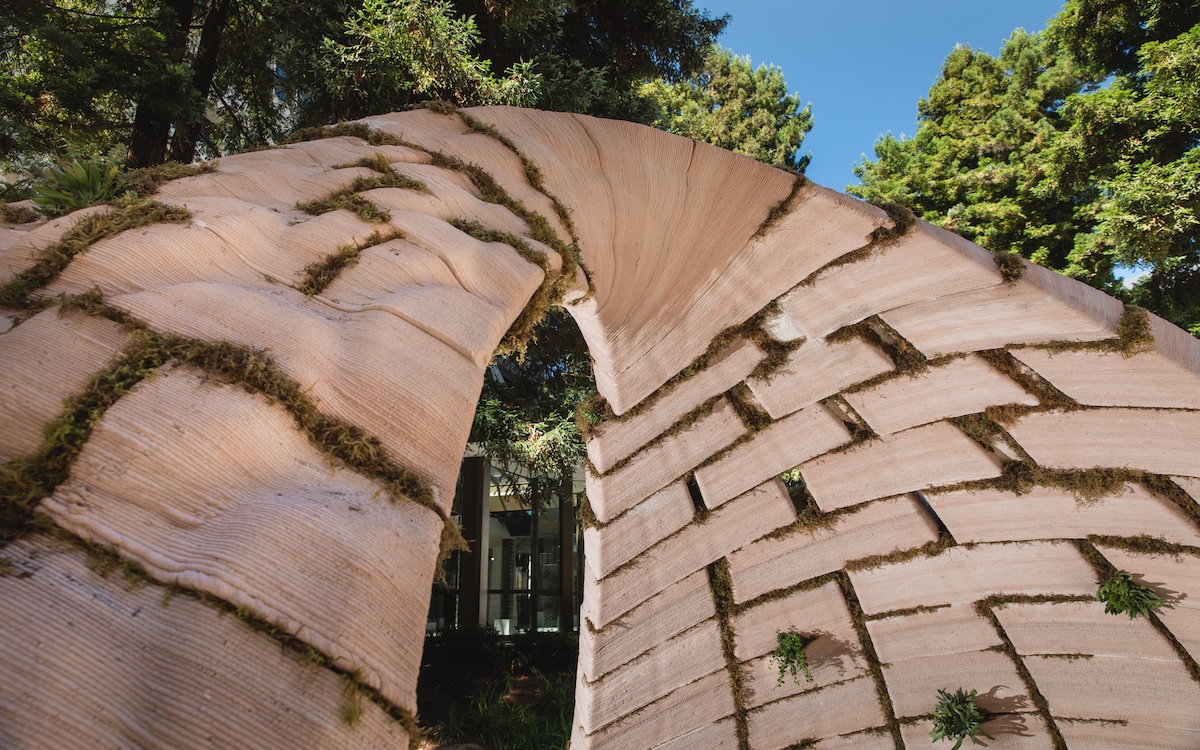
Earthseed Dome. | Photo bv Nicholas Lea Bruno, Courtesy of ICA SF.
Earthseed Dome
Lily Kwong
San Francisco, California
In San Francisco’s Transamerica Redwood Park, a twisted archway sprouts from the concrete, alive with ferns and moss. Lily Kwong’s “site-responsive project,” Earthseed Dome, combines both ancestral building practices and new technologies. The outer structure and the seeded soil inside were both created by 3D printers. The dome came to life over several weeks as it was printed on site at the Transamerica Pyramid Center. The structure will continue to grow and change as the seeds germinate, grow, and bloom.
The significance of the project, according to the Institute of Contemporary Art San Francisco, “lies in the convergence of technological innovation and Kwong’s deeply held commitment to ecological and human-centered methodologies.” The work itself combines the digital and the organic.
Kwong and her team were integral to the printing process, from coding each printed block to mixing the earthen materials they’re made of. “You can't set it and forget it,” Kwong said of the 3D-printing process in a video of Earthseed Dome’s creation. “It’s like tending a fire.”
The artwork is meant to be participatory and help connect urban residents to their ecological community as pollinators themselves. The Altadena Seed Library has provided packets of native annual wildflower seeds, which visitors are invited to take and spread on their own. The park is open daily from sunrise to sunset, and Earthseed Dome will be on display until July 31.
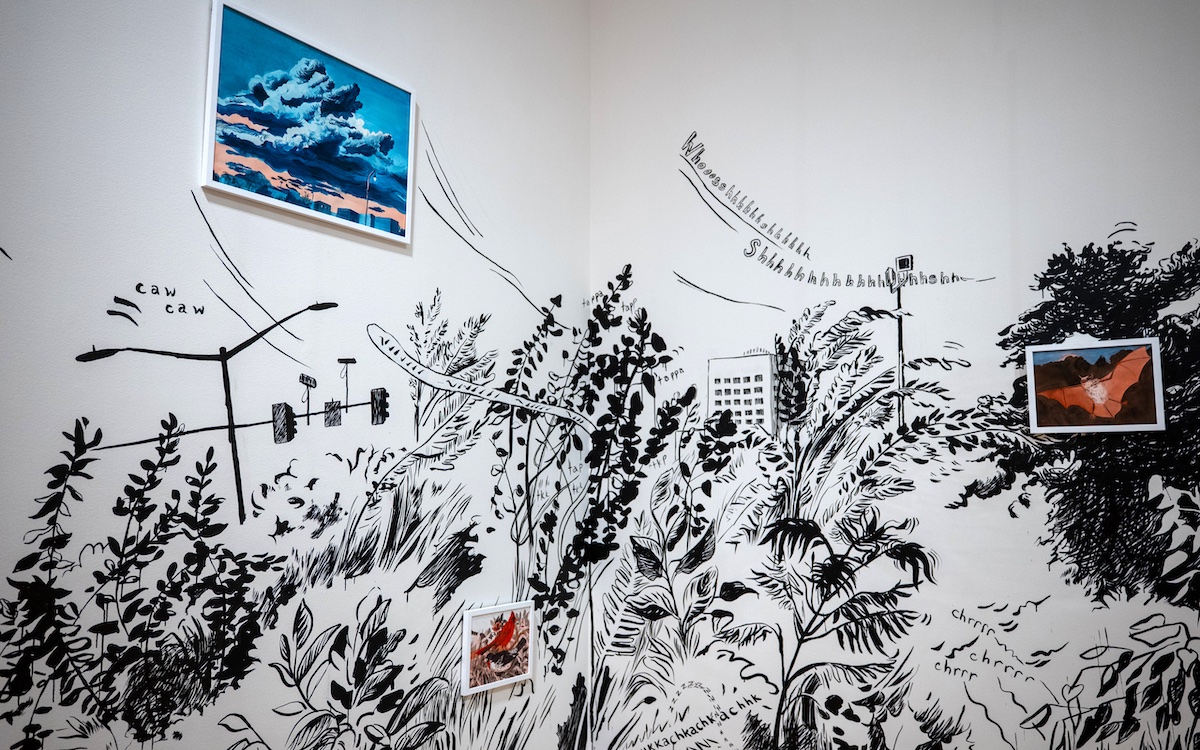
Christa Donner, Future Forest, detail, 2026, ink on wall with framed pigmented ink on paper, approximately 20 x 10 feet. | Photo by Zachary Critchley.
Fever Dreams of a Cool-Breathed Earth
Christa Donner and Andrew S. Yang
Worcester, Massachusetts
Fever Dreams of a Cool-Breathed Earth, on display at the Worcester Art Museum until August 16, invites visitors to consider the impacts of climate change with all of their senses. Urban areas like Worcester face new challenges from extreme urban heat, exacerbated by climate change. The adaptation of human bodies to the changing planet is a focus of the exhibit, both of which “have a fever in need of cooling,” as the museum describes.
“What we really loved about the phrase ‘cool-breathed Earth’ is it helps personify the idea that the planet itself has a breath; that it’s a breathing, living entity as much as any other thing that is living on it,” says Andrew S. Yang about this collaborative exhibit of immersive artworks co-created with Christa Donner. The title was inspired by a Walt Whitman poem that describes the connectedness of body and planet.
This “multi-sensory experience” features video, audio, collage, drawing, photography, interactive sculpture, and more, much of it informed by the Massachusetts-based artists’ conversations with nearby communities. Some of these conversations appear in an audio collage called Let’s Talk About the Weather (Voices of Worcester). Visitors are immediately immersed in the sounds and video of the artwork Breezeway, and can walk beneath the large mobile titled Earthy Equipoise, and learn about Worcester’s green spaces with Donner’s site-specific wall drawing Future Forest.
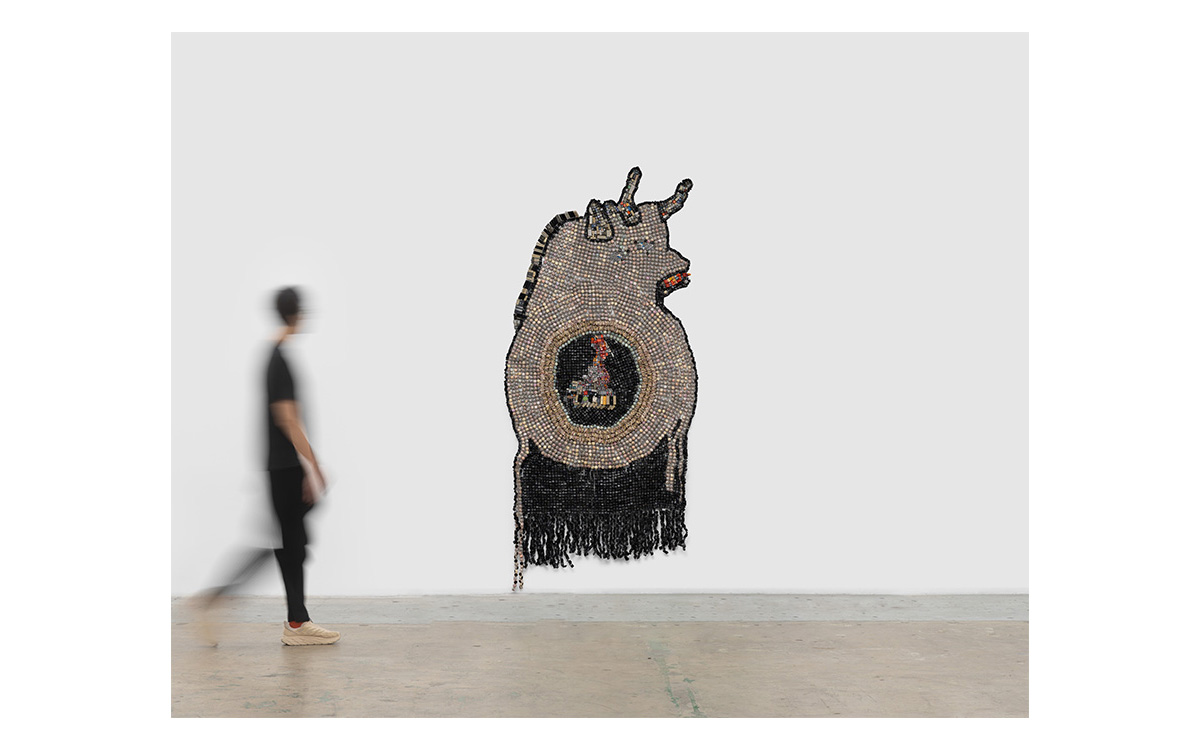
Pregnant Picasso Bull, 2024, Moffat Takadiwa. Zimbabwean bank notes encased in bottle caps, calculator, and computer keys. 107 1/8 x 50 x 2 3/8. | Image courtesy of Nicodim Gallery.
Moffat Takadiwa: Recoded Memories
Moffat Takadiwa
Lexington, Virginia
In Washington & Lee’s Watson Galleries, Zimbabwean artist Moffat Takadiwa’s sculptures surround a floor-to-ceiling photograph of mountainous trash under a bright-blue sky.
Asking his audiences to consider “waste colonization”—the export of waste from wealthy to lower-income countries—Takadiwa creates art from those same discarded materials.
Moffat Takadiwa: Recoded Memories features works made with post-consumer waste like computer keys, plastic bottles, buttons, nail clippers, toothbrushes, VHS tapes, and other “trash,” transforming them into sculptures and sprawling tapestries. As the title suggests, Takadiwa’s works alter the meaning of these reconfigured objects: Computer keys are used to speak about displaced peoples’ difficulty with new languages; toothpaste tubes, plastic bottle caps, and golf tees make up the series “Objects of Influence," which comments on Western consumerism’s infiltration into the life of Zimbabweans.
“Recoded Memories urges us to reconsider the environmental and cultural imprints of everyday life,” says the gallery on its website, “inviting us to reflect on the life cycle of materials and the global systems that shape what is used, valued, and ultimately discarded.”
The exhibit is on display through May 31 at Washington & Lee’s Watson Galleries in Lexington, Virginia.
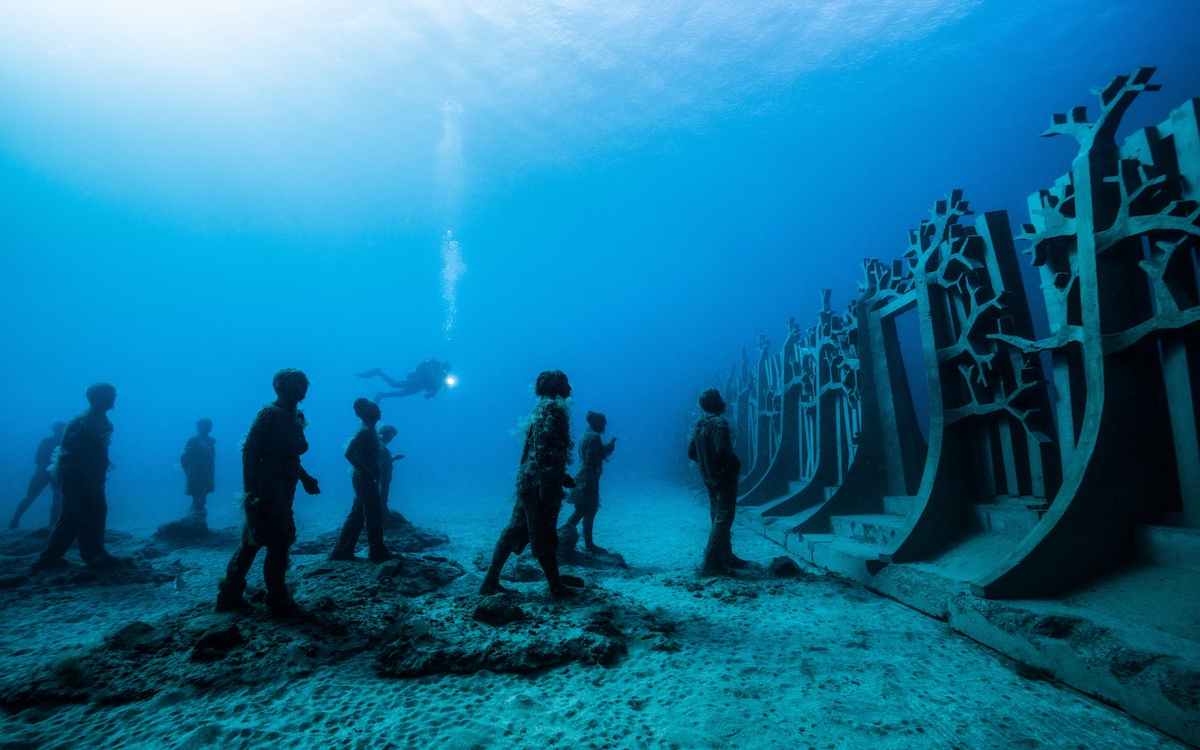
Museo Atlántico wall. | Photo by Jason deCaires Taylor.
Museo Atlántico
Jason deCaires Taylor
Playa Blanca, Las Palmas, Spain
Museo Atlántico isn’t just for Earth Month. Installed in 2016, this underwater “museum” is designed to last for hundreds of years. Jason deCaires Taylor’s collection of sculptures is situated at a depth of 12 meters in Lanzarote’s UNESCO World Biosphere Reserve in the Atlantic Ocean.
More than 300 life-size sculptures are spread across 2,500 square meters of seafloor. Divers and snorkelers can see their reflections in The Portal—a mirror reflecting the underside of the ocean’s surface—or swim through the 35 human figures that make up Crossing the Rubicon, walking distracted and dream-like toward a wall rising from the ocean floor. Hundreds more are stacked and twisted into a circle to form The Human Gyre, which exposes the fragility of humans in the face of the ocean’s power. The pH-neutral, concrete structures are not static figures but rather “living sculptures,” overgrown with coral and algae and attracting marine life from angel sharks to octopuses to sardines.
Taylor describes the sculptures as creating a “visual dialogue between art and nature,” calling the “commodification and delineation of the world’s natural resources” into question and bringing attention to the threats that oceans face.
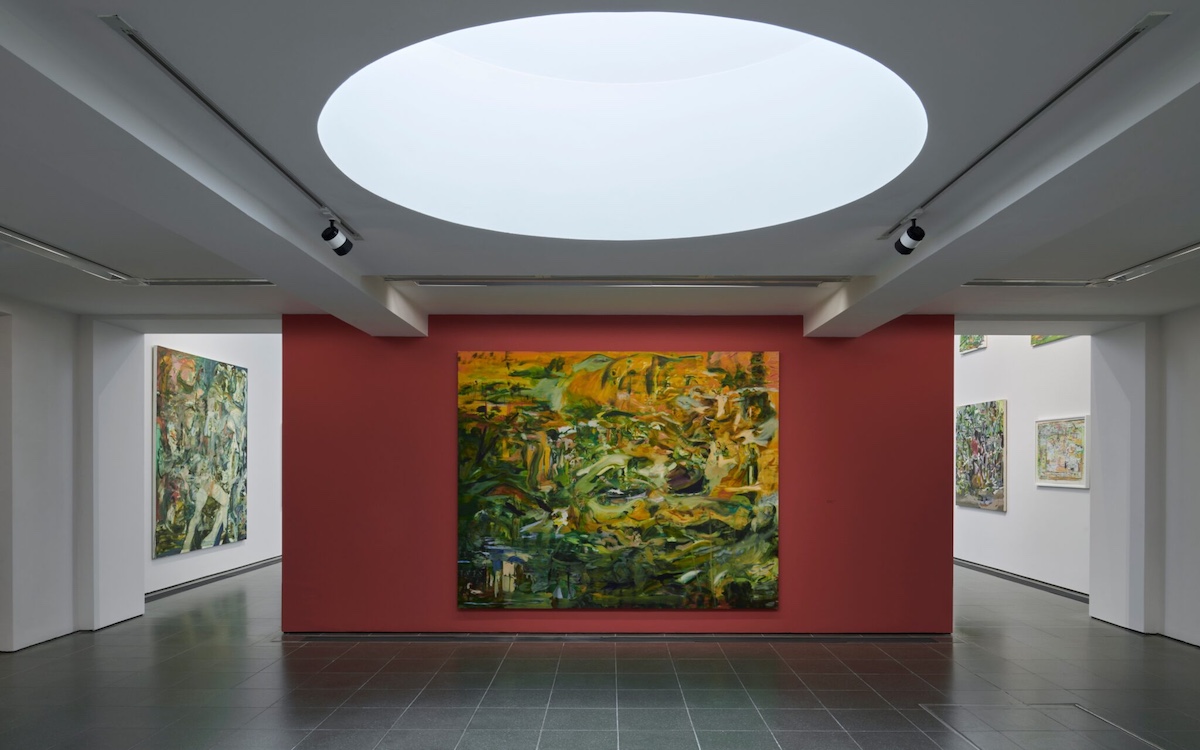
Cecily Brown: Picture Making, installation view, Serpentine South, 2026. | Photo by Jo Underhill.
Picture Making
Cecily Brown
Kensington Gardens, London, United Kingdom
Nestled within London’s Kensington Gardens, Serpentine South Gallery is the perfect place for Cecily Brown’s exhibition of paintings that honor the surrounding environment, and a perfect destination for an Earth Month outing. Picture Making features works from more than 20 years of Brown’s career, inspired by the Kensington Gardens and the landscapes of children’s books.
Brown is known for vibrant, vivid colors and bold brushstrokes, which are on full display in this collection of paintings featuring swirling depictions of trees, rivers, woodland creatures, shipwrecks, and fallen logs. Monotypes and drawings also show the evolution of Brown’s decades-long artistic practice. In some of these drawings, animal characters “explore the darker side of human nature,” the exhibition guide explains, like those from Beatrix Potter’s cautionary stories for children.
Now based in New York City, Picture Making is the British artist’s first solo exhibition in the UK since 2005. Prebooked and walk-in tickets are available through September 6.