Autumn’s Last Score
An ode to the season’s symphony, section by section
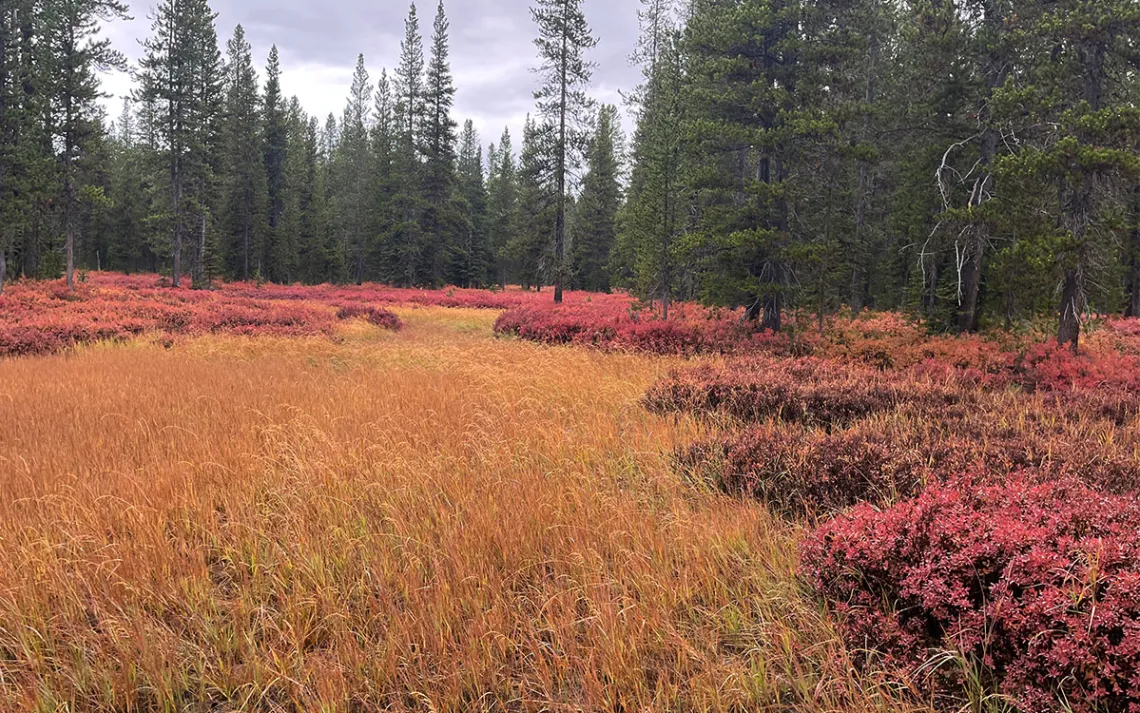
Photo by Benjamin Alva Polley
Each year, when the autumnal equinox arrives in the Northern Rockies, something in me loosens like a leaf from a tree. The first cold nights come down out of the mountains and press against the last warm afternoons of summer. Huckleberry leaves redden in the understory. The grasses bleach bone-dry. Creeks run thinner and clearer. The air sharpens until each breath feels newly edged. It is beautiful, and it is a kind of letting go and dying.
My seasonal lifestyle taught me to read subtle cues as guidelines for a life well lived. Summer meant movement; trail work; peak bagging; alpine lake and mountain stream dipping; long, hot days; biting insects; and a tired body that knows hard physical labor. Autumn meant slowing down, reflection, and investment in the future. It meant the close of a field season and that snow would soon hide summer’s labor. It meant asking what could sustain me through winter’s long nights.
After the first hard frost, the forest gradually begins its annual performance. Autumn conducts her symphony section by section, asking each plant, animal, and human body to enter when called.
The first notes are almost too faint to hear. A mountain maple leaf turns orange-red in the green forest, as subtle as a xylophone struck softly at the back of an orchestra. I notice it while crouched in a huckleberry patch, fingers stained dark and sticky, thumbs stiff from the morning cold. My breath hangs above the basket in a pale cloud. Each berry drops into the metal pail with a small, tin sound. Fruit, frost, and hunger. That is one of autumn’s earliest songs.
Then the woodwind section chimes in as mountain ash flares scarlet. Huckleberry leaves flush toward burgundy. Thimbleberry leaves turn the color of chardonnay beneath Engelmann spruce and Douglas fir. Grouseberry, low to the ground, bruises merlot. The colors seem to arrive as music; layered, fugitive, impossible to hold for long. One hillside still carries the green memory of August while another has already crossed into October. September is somewhere in between.
Kneeling on the ground and gathering berries is a form of prayer. It is a chance to reflect that everything has a season. A person who wants winter breakfasts to taste faintly of August must humble themselves when something is given and thanks should be offered in return. Later, in the cabin, jars will line the shelves and catch the soft light. On dark mornings, when frost feathers the windows, a spoonful of berries brings the summer sun to the breakfast bowl.
Autumn’s second movement arrives with the aspens. Trumpets announce their yellow from afar. A whole grove can turn in a few days, each leaf quivering on its flattened stem, the entire stand trembling as if sound itself has entered the trunks. The low, hoarse bugle rising out of a draw. The heart answering in its own percussion beneath wool and synthetics.
Like a conductor reading a musical score, I interpret wildlife signs—tracks, scat, rubbed bark, the sharp musk of rut in the crisp air. The forest seems quiet but can also amplify. Ravens and chickadees flit in the trees as a pine squirrel scolds.
By then the tamaracks have begun to burn gold. Western larch march across ridges and down river valleys, conifers behaving for a brief season like deciduous trees, because they lie somewhere in between, surrendering their needles in a blaze of butter-yellow. Larch light whole hillsides like lanterns. In a breeze, their needles fall in soft, glittering showers and gather on the ground like tinsel. This is autumn at its most extravagant, spending everything before snow.
By November, ice forms in the shallows along creeks and river edges. The choir and ensemble move toward their closing cadence. Leaves fall in pianissimo. Sunlight filters through new openings. The animal trails reveal themselves. The smell of woodsmoke threads through the valley, mingling with sap and mud. What was green has gone gold, then brown, then bare. What was gathered is now stored.
Inside, autumn and late summer are captured in berry jars and wood sits by the stove. The first match of the season strikes with a high, bright note against the old iron stove. Flame flares. Outside, the last leaves let go. Inside, the wood catches and answers with a crackle.
I always feel a loss in the Fall, as if a part of me is dying and perhaps it is; the year is fading, and soon will be gone, but it is also a musical arrangement that gathers the living and the dead into relationship—leaf, berry, elk, wood, hunger, and gratitude. Autumn teaches that beauty and grief are not separate from provision. To fully inhabit a place is to hear those notes entangled.
Soon enough, winter will quiet the score. Snow will cover the trails, soften the stumps, erase the blood-dark places in the grass, and lay its hush over the land. But in the cabin, the work of autumn will remain—the memory of yellow leaves trembling in cold light.
And somewhere beneath the snow, the score will wait to turn green again.