 The Magazine of The Sierra Club
Calls for Indigenous Sovereignty Grow in the Arctic as Region Warms
Inuit in Greenland and Canada rally around ecological hot spot as climate change and geopolitics threaten the region
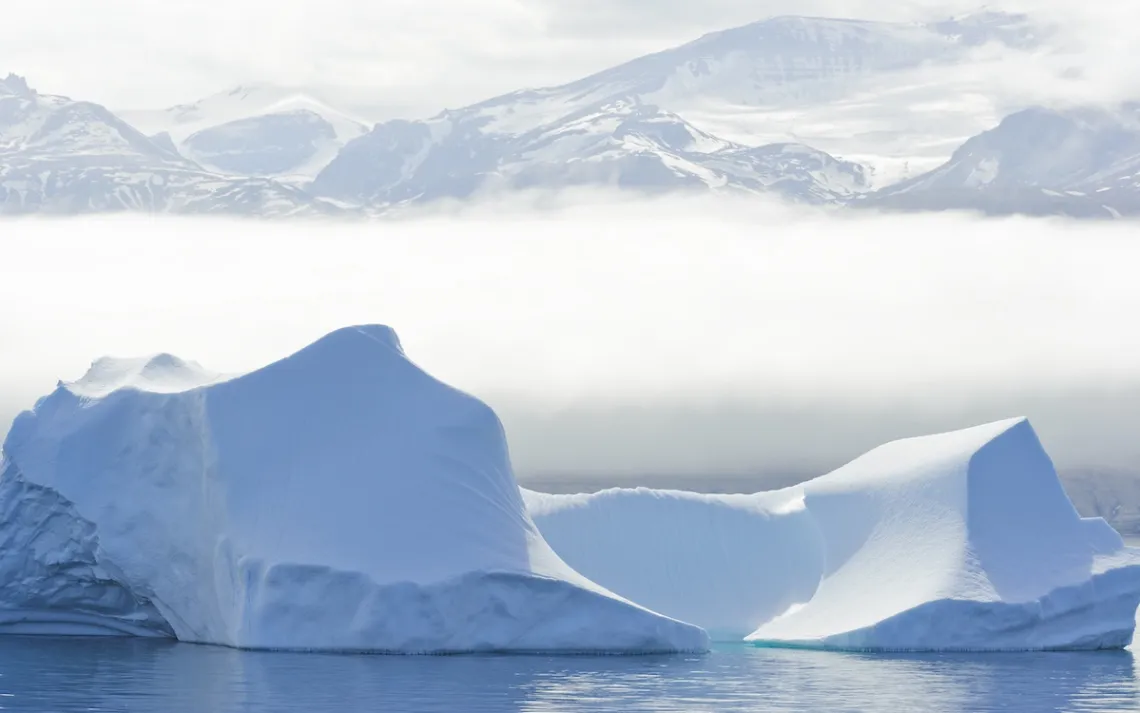
A large iceberg floats just offshore in Baffin Bay, Greenland. | Photo by befa/iStockphoto
Within North America’s Baffin Bay, one of the Arctic’s rarest natural phenomena forms: an expanse of open water that never freezes, even in the depths of winter. Known as the North Water Polynya, roughly the size of Lake Superior, it sits between Greenland and Canada and is the mainstay of life for the wildlife and Inuit who live in the region.
How this marvel of nature emerges depends on an intricate combination of shifting ocean currents to the south and a giant ice arch to the north. Together, these two forces hold back sea ice from entering the area. As the ocean currents merge, they block further sea ice from entering the polynya and create an upwelling of nutrient-rich water. With the Arctic warming four times faster than the rest of the world, sometimes this natural barrier fails to form.
Less ice also means more shipping in the region, which has spiked by nearly 40 percent in the last decade. This includes oil tankers, commercial fishing vessels, cruise ships, and bulk carriers. Meanwhile, since taking office, President Trump has repeatedly voiced a desire to overtake both Greenland and Canada, exacerbating the fears that shipping (and resource extraction) could increase.
For the Inuit community, the aggressive rhetoric has stoked concern of ecological catastrophe and bolstered calls for respecting Indigenous sovereignty. Recently, those calls have been supported by the United Nations, which late last year granted the Inuit communities permanent consultation status in the region for international shipping rules. And the communities are also reviving years-long talks with the Canadian and Greenland governments to create a marine protected area near the polynya.
“We want the Arctic to remain peaceful and a place of cooperation,” Herb Nakimayak, the interim president of the Inuit Circumpolar Council Canada, told Eye on the Arctic last month. “That means respecting international rules—and respecting Inuit.”
Known to Canadian Inuit as Sarvarjuaq and to Greenlanders as Pikialasorsuaq, the North Water Polynya and the land surrounding it have traditionally been stewarded by those who live there. It provides food, clothing, and materials for shelter, sustaining a way of life that has been practiced for millennia and is deeply tied to the sea.
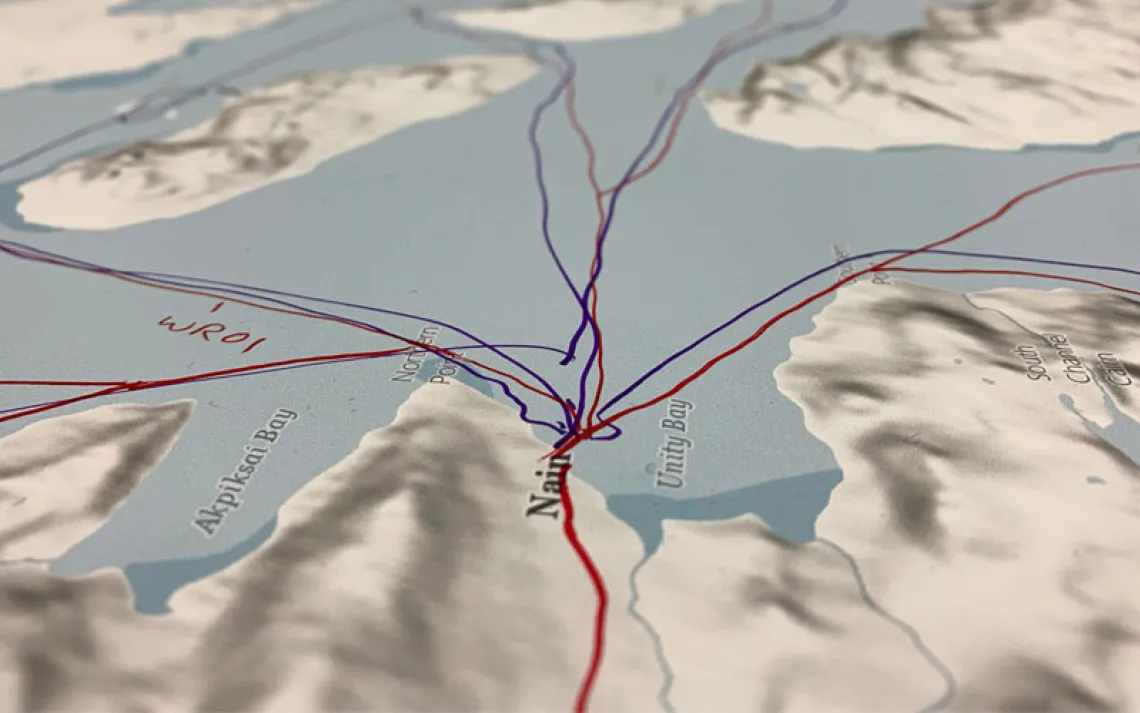
Recognizing this connection and the dangers of a warming planet, in 2016 the Inuit Circumpolar Council (ICC), which advocates for the rights and priorities of the Inuit, convened the Pikialasorsuaq Commission. Traveling to Inuit communities in both Canada and Greenland, the commissioners interviewed elders, hunters, youths, and Inuit knowledge keepers to gain perspective on the region’s ecological and cultural importance. One of those interviews was with Inukitsoq Sadorana, an Inuit hunter from Greenland.
He was clear that the Inuit are not happy about oil exploration in the area and what that could mean to wildlife. Suited to cold climates, they cannot simply relocate to warmer waters, he warned.
“A huge number of Arctic char come by our coasts, big ones, and they are still growing,” he said in a public statement. “If only a small amount of oil is leaked, those are the species that we would lose forever, and all the other species like narwhals and other whales that are up here amongst different animals.”
In November 2017, the commission published its final report. Titled People of the Ice Bridge: The Future of Pikialasorsuaq, the document’s findings were clear—the Pikialasorsuaq (the polynya and its surrounding lands) is integral to the livelihoods and well-being of the Inuit in both Greenland and Canada. Any action taken to protect the area, commissioners said, must place the interests of the Inuit first.
That same year, Nikolaj Heilmann, from Upernavik, Greenland, told the commission how the wild animals, birds, and fish that live here are the healthiest foods and the main source of sustenance for these remote communities. Due to their role in providing for local communities, he said, these species need protection. “These vast areas of sea no longer seem to be that great anymore,” he told the commission after the report came out. “Now that giant ships will pass through the waters, the area of sea will be too small for both wildlife and the huge ships.”
In 2023, building on the advocacy of the ICC, Greenlandic and Canadian politicians signed a Letter of Intent outlining an agreement to create the world’s first bilateral Inuit marine protected area. The proposed area would stretch across more than 20 million acres and be managed by Inuit in Canada and Greenland.
According to Christopher Debicki, the vice president of policy development and counsel for Oceans North Canada, since the Letter of Intent was signed, there have been meetings between the two countries, the ICC, and the Inuit to solidify a final deal. “Geopolitics and the pressure from great power machinations around the Arctic have also translated into greater interest in which countries, like Greenland and Canada, more closely cooperate.”
However, any changes to geopolitical borders, Debicki feels, could be problematic for the polynya, its conservation, and the Inuit who depend upon it. “The current American regime seems to pay very little credence to climate change,” he said. “At least in its outward behavior, it doesn’t seem to care much for the protection of sensitive ecosystems.”
Since last year, the current US administration has dismantled climate policy and ignored the ramifications of emissions caused by natural resource extraction. Funding, for example, of National Science Foundation grants, which included money previously designated to the Arctic Research Consortium, has been cut. This has forced the consortium to close down, stopping valuable research into marine systems in the eastern Arctic, where the polynya is located.
After weeks of fiery assertions that Greenland would become part of the US, at all costs, in January 2026, President Trump announced there was a "framework of a future deal with respect to Greenland and the US,” to access the nation’s natural resources. The details of that deal are yet to be made known. According to news reports, any consultation with Greenland about the deal had not taken place at that time.
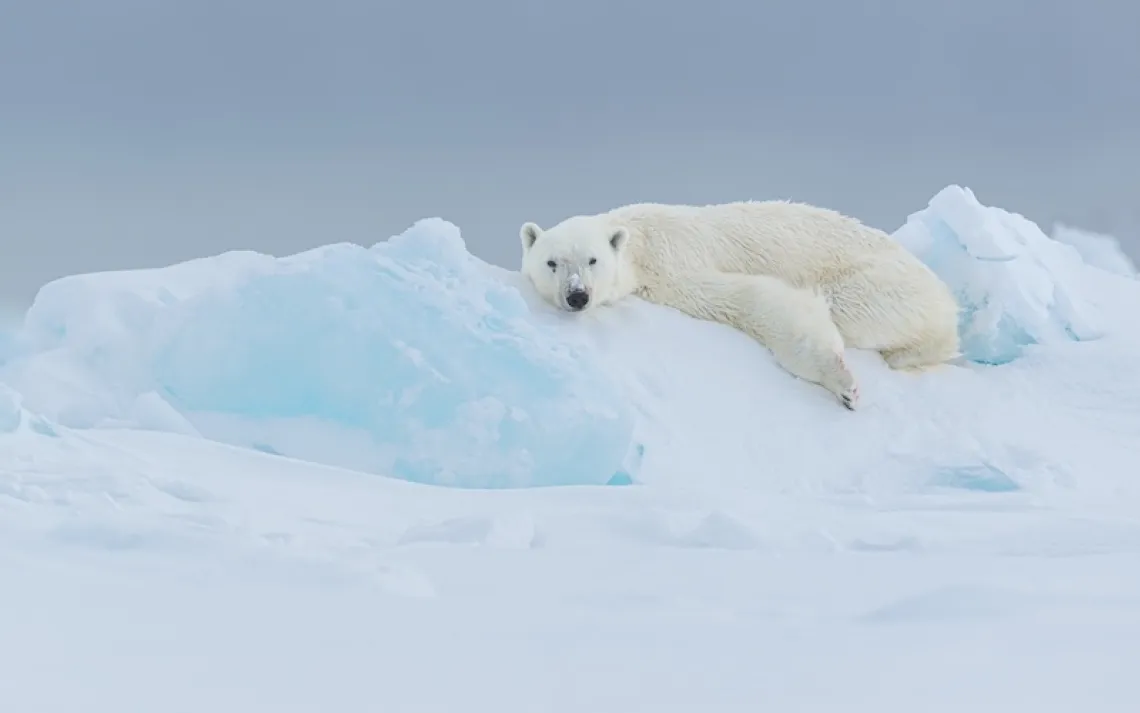
Satellite imagery from the Copernicus Marine Service shows that the ice arch to the north of the polynya that holds back the sea ice did form this winter. And now that the sun is slowly returning to the Arctic after the darkness of winter, plankton will start to bloom. As they do, it will spark one of the world’s great spring migrations of walrus, seals, polar bears, beluga, bowhead whales, and roughly 80 to 90 percent of the planet’s narwhal population. They will come, along with those who live along the shores of the polynya, to hunt, fish, and enjoy this place on top of the world—at least for now.
“What makes the North Water Polynya so productive is the existence of open water,” explained Debicki. “In early spring, that means that the sun’s energy can get into the water and create a plankton bloom, whereas if it were ice-covered, much of the sun’s energy would be radiated or reflected into the atmosphere.”