The End of an Era for Arctic Research
The loss of the Arctic Research Consortium of the United States leaves an uncertain future for science in the Far North
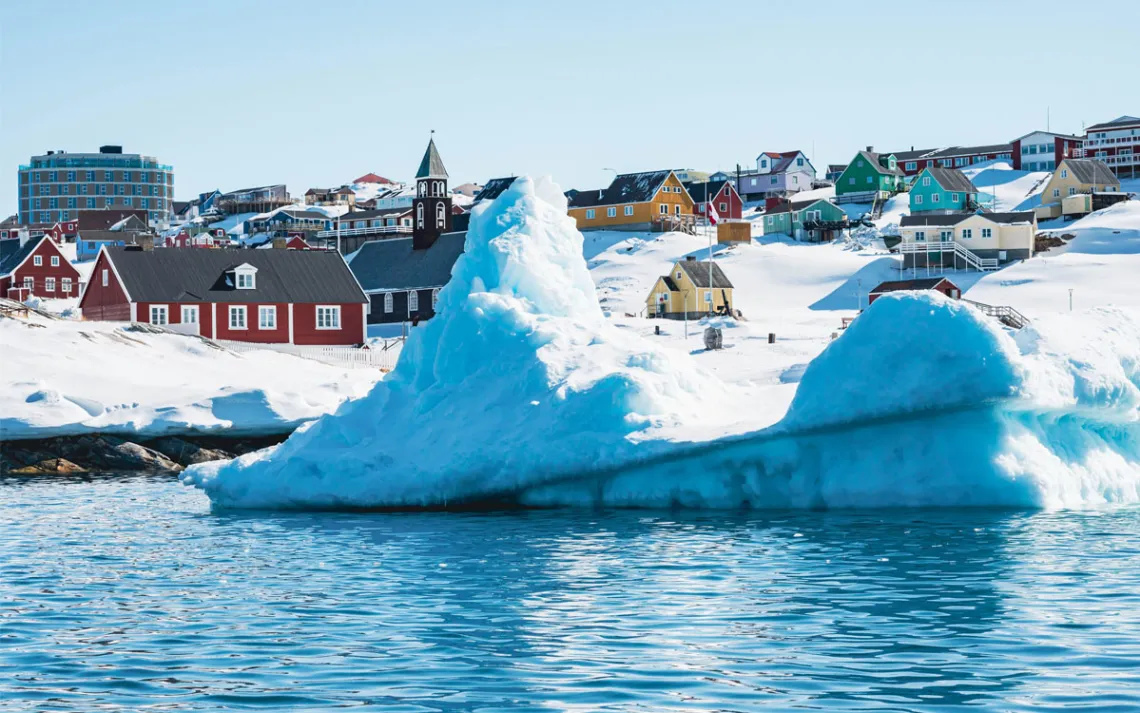
An iceberg in Ilulissat, Greenland. | Photo by Erin Towns (PolarTREC 2022), courtesy of ARCUS
Late last month, one of the most important Arctic research organizations in the country shut its doors for good. On September 30, the Arctic Research Consortium of the United States (ARCUS) officially closed after almost 40 years as the country’s hub for research and education in the Arctic. The closing is the latest blow to science and education as the Trump administration cuts funding and threatens to dismantle the scientific infrastructure of the nation.
ARCUS was born in 1988, when representatives from about a dozen institutions converged in Boulder, Colorado, to discuss the need for a coordinated effort to study the changing Arctic. By the end of the year, the group held its first official meeting in Fairbanks, Alaska, which would become the headquarters for the newly created organization.
The idea for ARCUS was to build a steady source of funding for science in the Arctic while also connecting the disparate researchers and institutions that studied the region. Focusing on topics from climate change and Indigenous foodways to sustainable development and global security, experts finally had a place to collaborate and learn from one another.
On the funding side, ARCUS worked with the National Science Foundation (NSF) to create a newly dedicated funding stream called the Arctic System Science Program, which supported decades of research on sea ice, climate change, and other aspects of Arctic science. The new consortium supported researchers and students, organized conferences, produced scientific reports, and lobbied Congress for additional support for science in the region.
By last year, ARCUS had 29 member institutions, 14 partner organizations, and over 100 individual members, according to its 2024 annual report. But its influence was much wider. It connected over 5,000 Arctic experts with its ArcticInfo mailing list, and its website became a central resource for Arctic science, with over 10,000 scientific papers, reports, and other documents.
ARCUS was a force multiplier for the efforts of its member institutions and was able to use its limited budget of less than $2 million per year to have an outsize effect on whole fields of study.
But even before the 2024 election, the funding situation had begun to change. The majority of funding over the past few decades came from the NSF. In 2023, NSF provided about 93 percent of the organization’s total budget. The foundation ended the funding stream and instead let the group know that a new request for proposals would be coming for an Arctic community hub, a program that would have been a perfect fit for ARCUS. Then came the second election of Donald Trump. Following his ascent to the White House, the community hub program, like so much federal funding, disappeared.
The yanking of funding forced the ARCUS board to make tough decisions. The board tried to adapt, but there was no replacing federal funding.
“There just was no time to adapt to that sudden loss of a $2 million a year budget from NSF that we had been existing on,” Audrey Taylor, the executive director of ARCUS, said. The organization reduced its paid staff twice, from 13 to eight and then again to just three. They went fully virtual to cut costs even more. “But it just wasn't enough.”
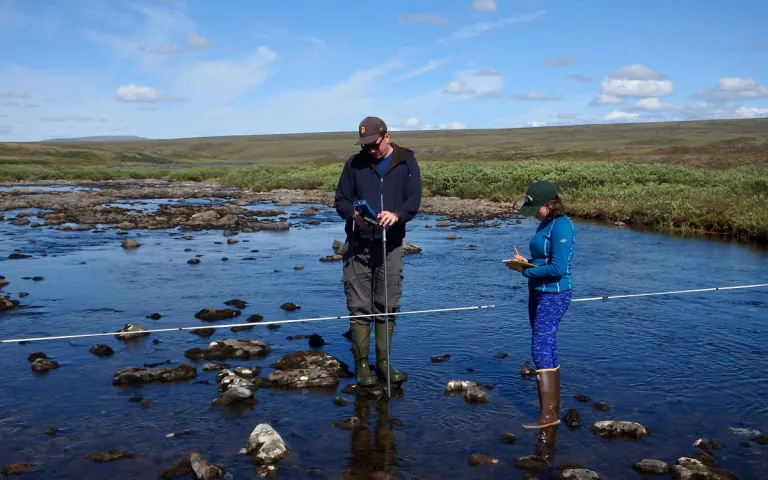
Lab manager Jason Dobkowski and research technician Em Daily at the Toolik Field Station, Alaska. | Photo by David Walker (PolarTREC 2019), courtesy of ARCUS
Taylor and the ARCUS board discussed becoming an all-volunteer organization earlier this year, but given that everyone involved had full-time jobs, that wasn’t realistic. The board made the call, and the member organizations reluctantly agreed: ARCUS would cease to exist.
“ARCUS has been so woven into the fabric of Arctic science that I don’t think [we’ll] fully realize everything they do until they’re gone,” said Rutgers University researcher Åsa Rennermalm. “Their absence will leave a big gap in our community.”
Like much of the Arctic research community, Rennermalm’s ties to ARCUS run deep. When she was still a PhD student, the organization sponsored her to attend some of her first professional meetings. Support like this for students has been at the core of ARCUS’s mission, and it runs both ways, bringing students to the Arctic and bringing Arctic residents—young and old—to the halls of power.
The Arctic Indigenous Scholars Program began in 2018 and brought both elders and students from Arctic Indigenous communities to meet with Washington policymakers. Scholars met with Senator Lisa Murkowski as well as the head of the National Oceanic and Atmospheric Administration to voice their concerns about climate change, housing, and other issues that affect them.
“For so many people in DC, the Arctic is a vast, barren tundra,” said Lisa Sheffield Guy, former project manager of the scholars program, who now works with the Alaska Ocean Observing System. “To actually meet someone from the Arctic, and hear those personal stories, was really impactful.”
Another product of the collaboration between ARCUS and policymakers was coordinating US participation in the fourth International Polar Year in 2007. The event marks a global effort to focus research, education, and policy on issues affecting the Far North. As Taylor told Sierra, it was the perfect opportunity for the organization to do what it did best: make and strengthen connections. Rather than having dozens of universities, tribal organizations, and others each representing themselves, they were able to unite under a single group.
“When the next International Polar Year comes in 2030-31 … who is representing the Arctic research community of the United States in that space?” asked Taylor. “It's just going to be every institution for itself.”
Some ARCUS projects, like the scholars program, will end with the organization’s closing. But others live on, handed off to other Arctic research groups. The Sea Ice Prediction Network will continue with support from the National Snow and Ice Data Center in Colorado. A related program, the Sea Ice for Walrus Outlook, provides information on spring ice conditions to subsistence hunters in Alaska Indigenous communities and will now be coordinated by the Alaska Ocean Observing System.
The legacy of ARCUS also survives in a number of online resources. Connect the Arctic is a website that lets Arctic experts across disciplines stay in touch, collaborate, and share knowledge. The Polar Media Archive offers high-quality images of the Arctic, free for noncommercial and nonprofit use. (The images used in this story are sourced from the archive.)
But one of the consortium’s most important legacies is a diverse generation of students, teachers, researchers, and community members who the organization supported and connected. In a time when diversity, equity, and inclusion initiatives are especially targeted for cuts, Taylor said that ARCUS helped the Arctic research community grow and evolve.
“It was a lot of stuffy old white men to begin with,” Taylor said. “I'd like to think we've changed that over the years.”
Much of that change has come by inviting Indigenous people into a research community that too often excludes them from issues that affect their regions. Kawerak, Inc, a nonprofit organization representing 16 Indigenous communities in the Bering Strait region, was a member of ARCUS, giving them an equal seat and vote alongside big research universities like Texas A&M, Syracuse, and the University of Alaska.
ARCUS is just one pixel in a much larger pattern of federal research cuts. Even if funding was restored today, damage has already been done, both to the Arctic research community and the wider American scientific enterprise, warned former staff. That will take much more than a presidential term to restore, they cautioned.
“We've lost so much momentum,” Sheffield Guy said. “A massive brain drain of intelligent, capable people choosing different careers, completely leaving science or not choosing science at their early career. And so even if we had an administration tomorrow that was really pro-science, there's probably 10 years' at least worth of damage done to get back to the point where we were.”