Can This Former Game Warden Save America’s Endangered Species?
Wildlife takes a backseat during Brian Nesvik's first hearing to lead the US Fish and Wildlife Service
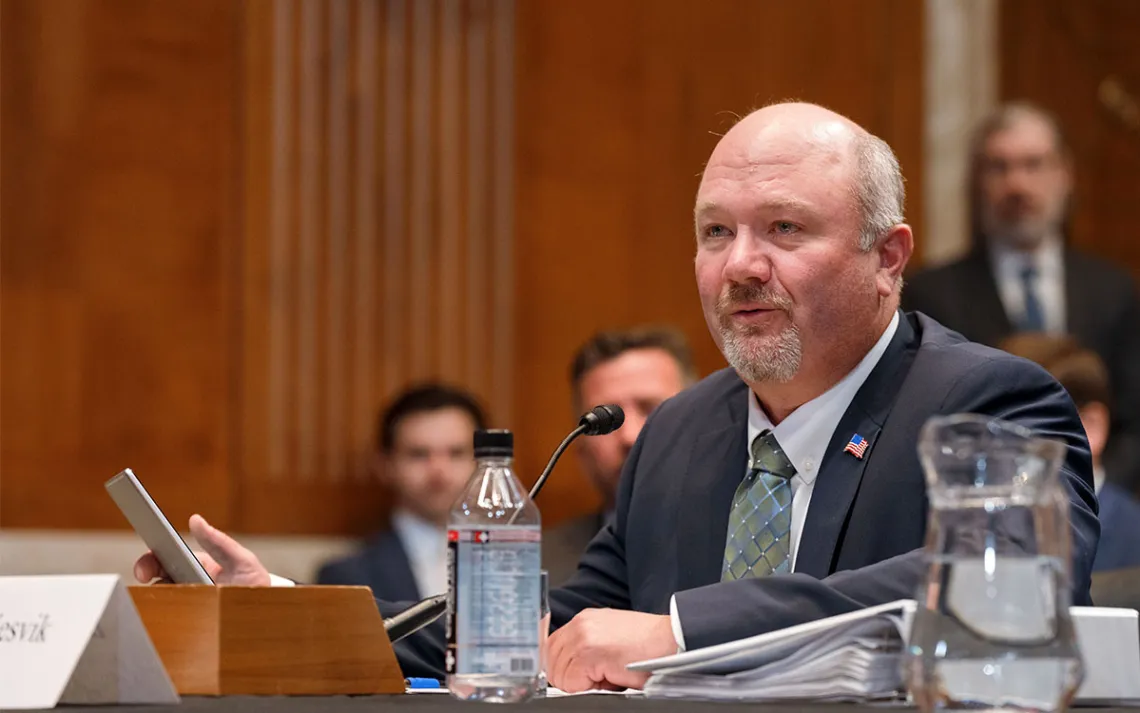
Brian Nesvik sits before the Senate Committee on Environment and Public Works. | Photo courtesy EPW Senate Photographers
On Wednesday, lawmakers on the Senate Environment and Public Works Committee held the first hearing on President Trump’s nomination to lead the US Fish and Wildlife Service. If confirmed, Brian Nesvik, a former game warden turned Wyoming Game and Fish director, would lead the federal agency whose primary charge is to protect the plants and animals most in need of conservation.
During the hearing, not one lawmaker asked Nesvik about a federally protected species.
“He's smart, he's capable, he's strategic,” Wyoming’s Republican Senator John Barrasso said during his opening remarks. “The US Fish and Wildlife Service plays a collaborative, supporting role, not the primary role,” added fellow Wyoming Republican Senator Cynthia Lummis. “Brian Nesvik understands the difference, and he's the right guy at the right time.”
While brief, Nesvik’s testimony offered a window into how he’d lead the biodiversity-focused bureau. When asked about permitting, he agreed that energy projects need to be approved faster. He also committed to unleashing Alaska’s energy, as directed by President Trump, even though doing so has often come at the expense of endangered species like polar bears and puts migratory caribou at risk.
Nesvik led Wyoming’s Department of Game and Fish in the spring of 2024 when a resident deliberately ran over a young wolf with a snowmobile, tapped her muzzle shut, paraded her around a bar, and then shot her. Despite global outcry, the department issued a $250 fine. The committee Nesvik sat on to address the issue ignored pleas to ban the use of vehicles to intentionally kill wildlife. Instead, it updated its policy to say that animals must be immediately killed after being hit.
For wildlife advocates, Nesvik’s nomination represents another instance of President Trump attempting to undermine the federal government from within. Throughout Nesvik’s 30-year career, he called for the Endangered Species Act to be “pruned,” advocated for the removal of federal protections for gray wolves and grizzlies over the objections of researchers, and pumped the breaks on the designation of a migratory route for mule deer and pronghorn at the behest of fossil fuel and ranching interests.
“[Nesvik] cares about business and industry and is not really focused on wildlife, especially wildlife that doesn't have financial benefit,” Kristin Combs, the executive director at Wyoming Wildlife Advocates, told Sierra. “The state of Wyoming very much values elk and deer species because those are the things that bring in money. Nongame wildlife does not get very much attention, does not get very much funding, and definitely does not get the conservation that it needs.”
Wildlife conservation at risk
Nesvik’s appointment comes at a pivotal time for the US Fish and Wildlife Service.
On his first day in office, President Trump issued an executive order declaring an energy emergency despite record oil and gas production (and profits). The order directs federal agencies to bypass the consultation requirements mandated by the Endangered Species Act, which are meant to bolster recovery efforts. It also directs federal agencies to revive a “God Squad” committee, which could revoke or reject species protections if it hinders industrial development.
Meanwhile, funding for recovery efforts, like those for the critically endangered black-footed ferret, has been paused. And in the short time since the current Congress has been in session, lawmakers have sponsored nearly two dozen bills that would make it harder to list threatened and endangered species and easier to remove protections, and stifle public input by barring lawsuits.
The US Fish and Wildlife Service manages over 2,000 species across more than 850 million acres, more than twice the size of Alaska. Recovering them, said Nick Gevock, the Sierra Club's Northern Rockies field organizer, requires an understanding and appreciation of ecological systems that go far beyond the commodification of wildlife. It also requires that USFWS directly curtail or control threats, such as habitat loss and overexploitation.
Under Nesvik’s leadership, the Wyoming Department of Game and Fish vigorously supported drilling and mining and even opposed attempts at furthering recovery. Such was the case in 2021 when Nesvik opposed limits on mineral and gas leasing near sage grouse habitat. These imperiled birds have declined by nearly 80 percent in the last 60 years under state management. Yet, Nesvik admonished the Biden administration when it tried to control their expansion.
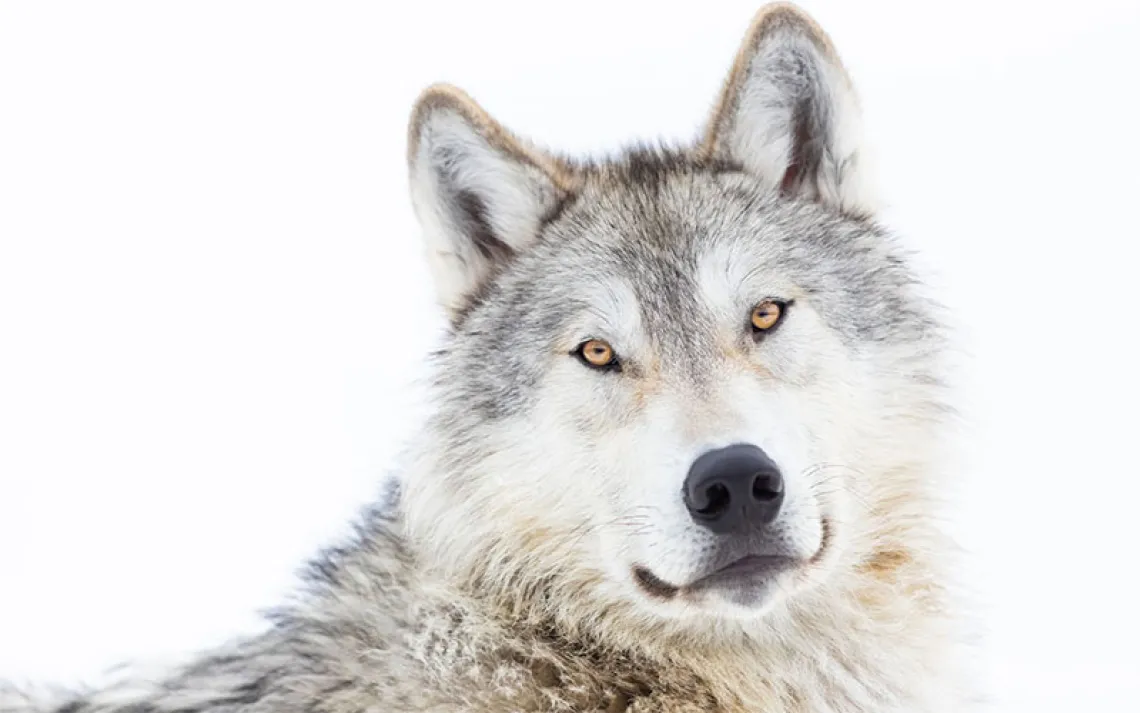
For wolves, under Nesvik's leadership, the Wyoming Game and Fish Department partnered with the state legislature to allow the killing of this keystone species across 85 percent of the state, which has led to the ecological erasure of wolves outside of Yellowstone National Park. The intense pressure to get wolf populations down to the minimum requirement of the ESA has allowed the state to persecute wolves while avoiding the scrutiny of the agency that Nesvik will very likely oversee. Wolf biologists have repeatedly stated that the requirement of having at least 100 wolves was the minimum, not a target. Yet Nesvik treated it as a goal and championed it as a success.
For grizzly bears, Nesvik claimed that grizzlies have met recovery “goals,” which is half true. Grizzlies have met the minimum requirement for removing federal protections. However, this ignores the additional requirements of the ESA. The law mandates that states have measures in place to ensure recovery continues, including state laws and conservation efforts. Grizzly populations are so few and far between, say biologists, that genetic health is a major concern. And this year, state lawmakers sponsored two bills that would increase hunting. Still, Nesvik has called for the removal of federal protections.
“Brian Nesvik has a complete record of failure managing wildlife and wild lands at Wyoming Game and Fish,” Gevock said. “Wyoming's solution to every wildlife issue is to kill more carnivore species. There's never been any talk about what the benefit to the broader ecosystem, including big game herds, could be from having these apex predators on the landscape.”
What to expect at the federal wildlife agency
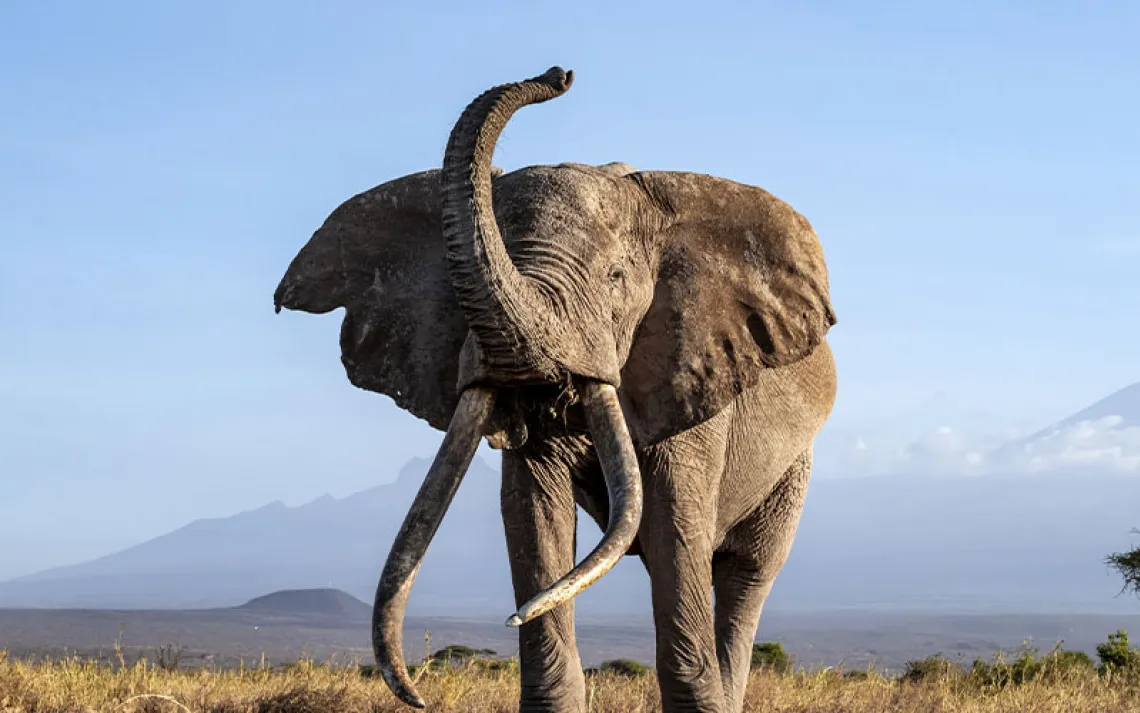
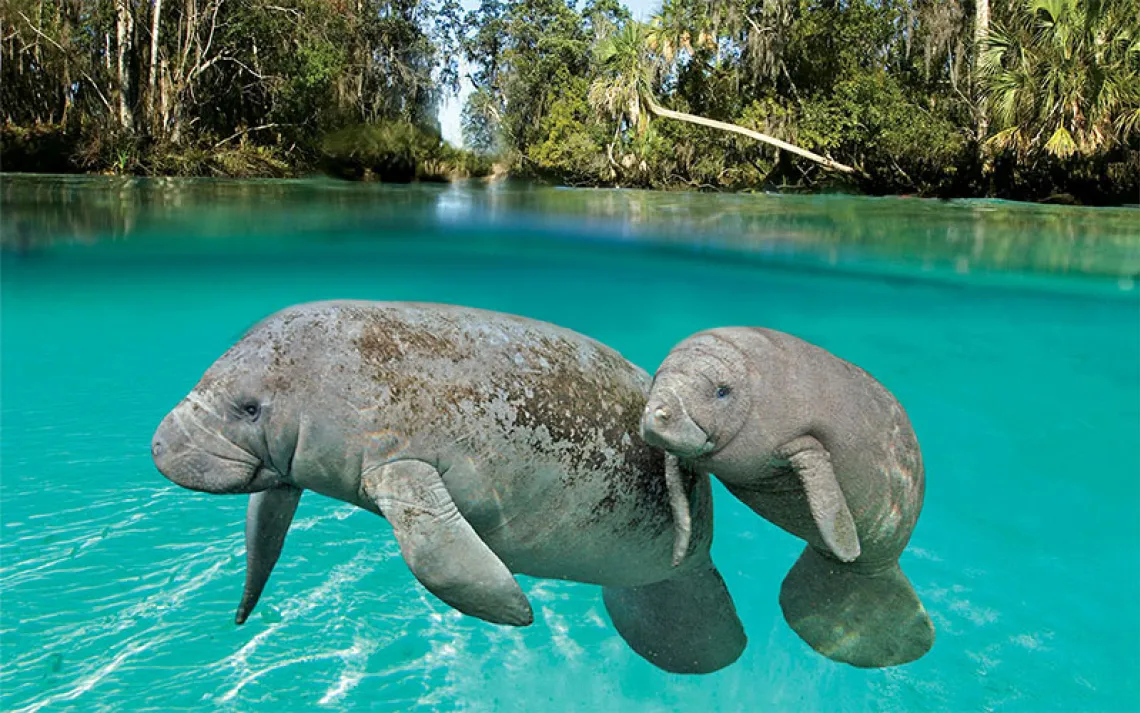
As the head of an agency charged with saving thousands of species, Nesvik would be responsible for a host of unfamiliar species, such as manatees, plants like the whitebark pine, and animals for which conservation efforts are primarily abroad—the African elephant, Sumatran rhino, and glass frog of South America.
He’ll also be in charge of executing recovery for species that the Wyoming Game and Fish is actively hostile toward. Wolves are currently in need of a national recovery plan that remains unwritten. Staff at the US Fish and Wildlife Service are currently figuring out how to return grizzlies to the Pacific Northwest. In November, the agency signed a multinational letter with Canadian environmental agencies to promote bison recovery. Nesvik will have to protect these species, even if it conflicts with activities that might have a financial incentive to subvert recovery. With the current administration, even with the best intentions, the odds of doing that are not in his favor.
During President Trump’s first administration, the president and his administration attempted to directly undermine and weaken the ESA. David Bernhardt, the secretary of the Interior Department during the first Trump administration, made it harder to designate critical habitat for species, attempted to introduce costs and expenditures into listing decisions (something the authors of the law expressly wanted to avoid), and sought to elide the impacts of climate change. All of this made protecting endangered species more difficult and easier for industrial activities like oil and gas drilling, mineral mining, logging, and agriculture.
“I'm terrified, actually, for species all across the nation,” Combs said. “And it worries me that anywhere that there is a conflict between agriculture or energy production and wildlife, the wildlife is going to lose every single time.”