 The Magazine of The Sierra Club
Climate Change Is Reshaping How Much Chocolate Costs and What It’s Made Of
Prices are soaring, pushing chocolate makers to charge more and quietly change recipes
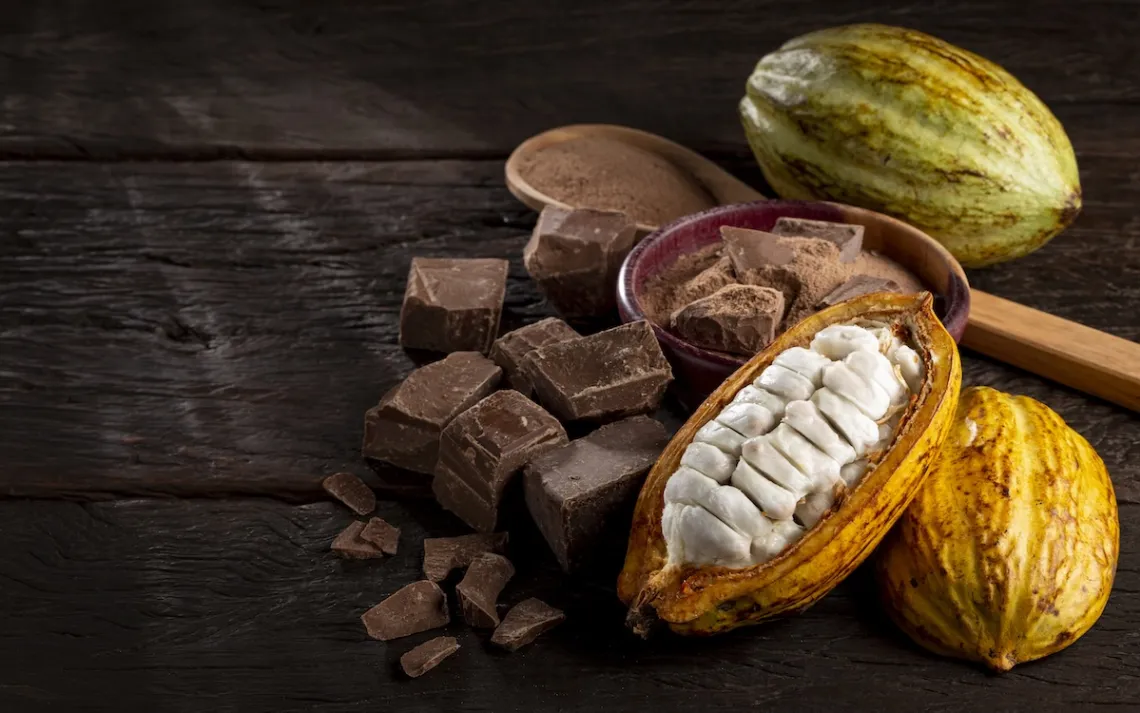
Photo by WS Studio/iStock
Chocolate is supposed to be one of the small certainties in life. Recently though, consumers have begun to notice that something has shifted. Chocolate is thinner and costs more—and, in some cases, it’s not even a given that it can be called “chocolate.”
For many American shoppers, the change has been subtle but cumulative. Packages of chocolate now routinely contain fewer pieces while costing more, a pattern consumer watchdogs have flagged as “shrinkflation.” At the same time, ingredient lists have grown longer, reflecting a shift toward cheaper vegetable fats and stabilizers that have been shown to contribute to chronic diseases and obesity.
In some cases, where a holiday treat has been altered to contain less cocoa and more substitutes, vague wording such as “chocolate flavored” becomes necessary under food-labeling rules. This shift is a sign of a supply chain in turmoil, where climate shocks, crop disease, and forest loss have triggered necessary corporate cost-cutting.
That story begins on cacao farms increasingly shaped by climate instability.
For Carolina Lescure, a chocolate maker based on Panama’s Caribbean coast, that instability is already reshaping cacao production on the ground. Lescure has been working directly in the field since 2016 through her business, Cacao Blessings, which sources cacao from a women-led farm in the region.
“Every year gets more difficult to predict the cacao production,” she says. “It rains when it’s not supposed to rain. The temperature of the ocean is warmer. Access to clean water is less. The soil is drier. The crops are scarce.”
Climate stress, she adds, is inseparable from broader ecological pressure. “There is also the disorganized growth of this tiny coastal community. Every year, more people move [here] and build projects and houses, and that badly affects the quality of life of monkeys, sloths, and many other animals and insects. We depend on a healthy ecosystem to continue to grow cacao.”
When cacao got expensive
Over the past two years, cacao production globally has been hit by a cascade of climate-related shocks. In major producing countries in Latin America, including Ecuador, Peru, Colombia, and parts of Central America, heavy and erratic rainfall linked to climate change and El Niño damaged flowers and pods, while prolonged humidity accelerated the spread of fungal diseases such as black pod and frosty pod rot. In West African regions, which grow 70 percent of the world’s cacao, drought and heat stress weakened trees and reduced yields. Many smallholder farmers, already operating on thin margins, lacked the financial buffer to respond with disease control or farm rehabilitation. Global supply tightened, and prices surged.
By 2024, cacao prices reached historic highs at above $12,000 per ton. For chocolate manufacturers, cacao suddenly became dramatically more expensive. For companies, the response was reformulation. In the United States and Europe, several seasonal products have used palm and shea oils increasingly replacing cocoa components, allowing companies to protect margins while keeping shelf prices within reach. For consumers, the effects were immediate. Prices rose sharply, bars tasted different, and boxes shrank, while seasonal chocolates edged closer to luxury items.
In the UK last year, it was reported that household brands such as Nestlé and Pladis plummeted below legal thresholds that forced them to drop the word chocolate from packaging altogether. Those types of changes helped manufacturers stabilize profits during the price spike. But they also reshaped the cacao market itself.
Who pays for cheaper chocolate?
As chocolate became more expensive, consumers bought less of it. And as manufacturers reduced the amount of cacao in each product, overall demand weakened further. By mid-2025, cocoa grindings, a key indicator of industrial demand, had fallen year on year across major consuming regions. JP Morgan analysts describe this as “demand destruction”: Sustained high prices pushed both consumers and manufacturers to adjust, reducing the volume of cacao being processed.
This helps explain why lower cacao prices are not necessarily a cause for celebration; once manufacturers redesign products around cheaper inputs, there is little immediate incentive to return to higher cocoa concentrations, even if cacao prices ease. JP Morgan’s reporting shows companies continuing to adjust recipes and product mixes in response to sustained cost pressures and softer consumer demand, reinforcing a feedback loop in which reduced cocoa use further weakens demand for the crop itself.
For farmers, this volatility offers little relief. Even during periods of record prices, most smallholder cacao producers do not earn a living income. The 2025 Cocoa Barometer report by the Voice Cocoa Network found that only 16 percent of farmers in reporting companies’ supply chains were earning enough to meet basic needs, while for most of the remainder companies either knew farmers were falling short or did not know whether they were. Persistent poverty, the report argues, drives deforestation, child labor risk, and chronic underinvestment in farms.
Lescure sees that instability pushing farmers away from cacao altogether. “Most of the farmers don’t want to work with cacao anymore because of the rise and fall,” she says. “Farmers need stability and they also need a better pay for their knowledge, maintenance of the farms, manipulation of the cacao. It’s so much work.”
She notes that many farmers choose crops that are easier and more profitable, a decision she says is entirely rational. That reality shaped the way she built her own business. “That is one of the reasons I’ve designed a business model that will always recognize a higher price. I’m aware of their efforts and their value. As a chocolate maker I just can’t imagine working differently.”
When farmers cannot earn a living income, supply becomes more fragile, reinforcing the very volatility that encourages manufacturers to dilute cacao in the first place.
Environmental pressures compound the problem. Cacao is often promoted as a forest-friendly crop, particularly when grown under shade in agroforestry systems. But when prices are volatile and support is limited, farmers often clear additional land to compensate for falling yields or abandon cacao altogether in favor of more immediately profitable activities. Deforestation, in turn, worsens local climate conditions, making farms more vulnerable to disease and extreme weather.
Meanwhile, chocolate companies are emerging from the crisis in a relatively strong position. Having raised prices during the shortage, many are now able to maintain those price levels while benefiting from cheaper cacao and lower-cost substitute ingredients. Consumers, by contrast, are often paying more for products that contain less cacao and more highly processed fats.
Lescure is blunt about the consequences. “Companies with a disconnection and misunderstanding of the work in the field sell candies and it’s promoted as chocolate,” she says. “This is wrong. Chocolate can be a superfood if cacao is the protagonist.”
She adds that consumers still play a role. “As consumers, we must mind where our money goes and support small businesses that are transparent and produce real chocolates. Less ingredients is more.”
Chocolate has always reflected global forces, from colonial trade routes to modern commodity markets. What is different now is how directly climate change is shaping what ends up in our food, and how quietly those changes are being normalized.