The Magazine of The Sierra Club
Conservation Leaders Unite to Oppose Steve Pearce BLM Nomination
The Trump pick to lead the land management agency has ties to anti-government extremists
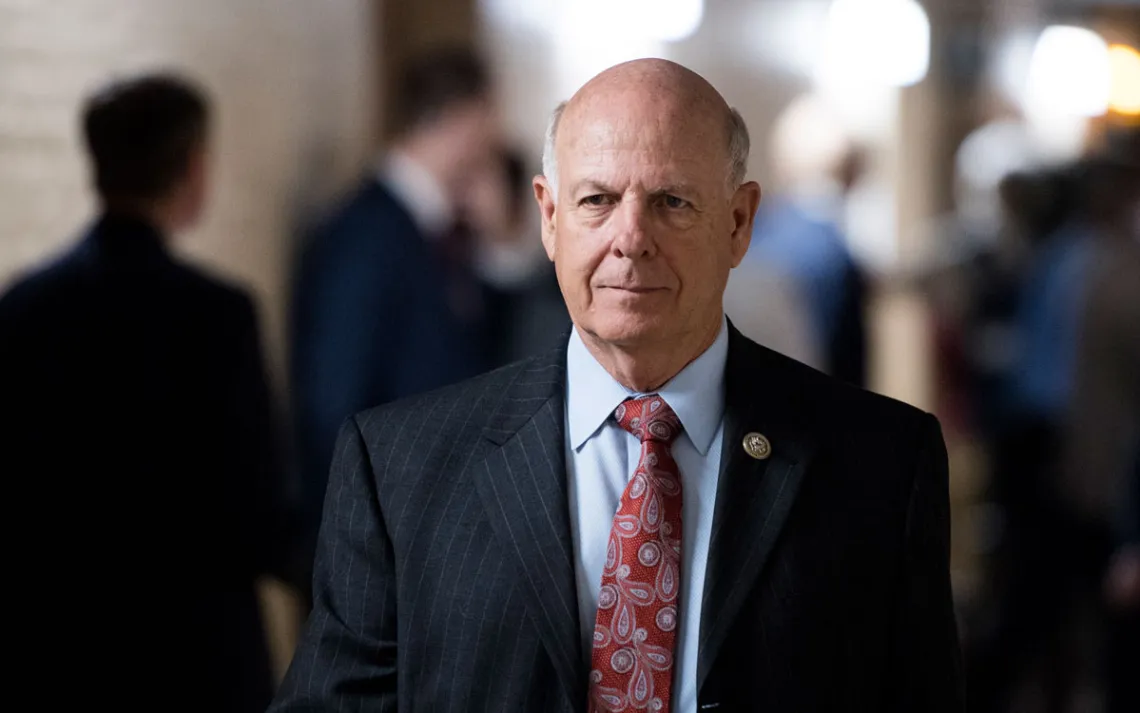
Steve Pearce. | Photo By Bill Clark/CQ Roll Call via AP Images
The Bureau of Land Management is the nation’s largest land manager, overseeing more than 245 million acres. Earlier this month, President Trump nominated former congressman Steve Pearce, who has spent his career undermining access to public lands, to lead the agency.
In response, conservation leaders around the country pulled no punches in their rejection of Pearce’s nomination to lead the BLM. They cite his anti-environmental record, a long and cozy relationship with the oil and gas industry, and his support for the selling of public land.
“Dangerous,” stated a post from the Center for Western Priorities, referring to his likely accession to lead the agency. “Uniquely unqualified,” wrote Scott Braden, the executive director of the Southern Utah Wilderness Alliance, of Pearce’s experience. The Wilderness Society simply said, “The public deserves better.”
Pearce has been a mainstay of New Mexico Republican politics for decades. Starting in the state House in 1997, he graduated to Congress in 2003 and served seven terms representing New Mexico’s 2nd Congressional District. In that time, he amassed one of the worst environmental voting records in the House, earning a 4 percent score from the League of Conservation Voters. He ran twice for statewide office, as the GOP nominee for US senator in 2008 and governor in 2018. Both times, New Mexico voters handed him sweeping double-digit losses.
“We New Mexicans have had a front-row seat to Steve Pearce’s pro-polluter career and rejected it,” said Sierra Club director of conservation Dan Ritzman. “Pearce is a climate-change denier, an ally of the oil and gas industry, and an opponent of the landscapes and waters that generations of Americans have explored and treasured.”
Pearce’s connections to oil and gas run deep. His father worked on oilfields, and Pearce lived for part of his childhood in an oil camp, according to his self-published memoir. In 1989, he and his wife Cynthia bought an oilfield services company in Lea County, New Mexico. Just after his first election to Congress, they sold the assets of their company to Key Energy for $12 million, more than twice the value Pearce had listed on his financial disclosure forms. Though Key bought the assets, the company itself remained in the Pearce family, which rebranded it and formed two new companies.
Through these new entities, Pearce continued to make money from the oil industry while in office. According to congressional financial forms, his stake in these companies paid him between $200,000 and $2 million in income in 2017. Oil and gas made Steve Pearce a millionaire, and they were his top political funders throughout his career. According to OpenSecrets, the industry gave Pearce a total of $2.3 million during his 14 years in Congress.
“Steve Pearce is a dangerous choice to lead the Bureau of Land Management,” said former secretary of the interior Deb Haaland, who is currently running for governor of New Mexico. “He routinely sides with billion-dollar companies that exploit our people, destroy our landscapes, and pollute our water and land.”
President Trump has struggled to fill the BLM director role since his first term. In 2019, after more than two years of running the bureau with interim directors, Trump appointed William Perry Pendley, another longtime opponent of public lands, as acting director. But Pendley, who was involved in a Reagan-era scandal over underpricing coal leases, never faced a Senate confirmation hearing. A federal judge ruled in 2020 that he was in the position illegally. When Trump returned to office this winter, he nominated energy industry veteran Kathleen Sgamma, who withdrew three months later after comments surfaced in which she criticized Trump for the January 6 insurrection.
Trump knows he won’t run into that problem with Pearce. The day after the Capitol riot in 2021, Pearce said that “our democracy has been tarnished” by election anomalies and issues, clearly siding with Trump in his unsuccessful attempt to stop the certification of his loss. Two days later, he reiterated his loyalty with a tweet that said, “God bless President Donald J. Trump. He will be our President forever.”
Pearce’s embrace of extremism goes beyond just January 6. When the Bundy family and other anti-government militia members took over the Malheur National Wildlife Refuge in 2016, Pearce blamed the BLM and other federal agencies for harassing ranchers. He called the Bundy revolt a “sideshow” but never condemned the armed occupation or the millions of dollars in damage it caused. Pearce himself participated in an illegal protest in Lincoln National Forest in New Mexico in 2011. Video from the protest shows him, a sitting US representative at the time, illegally cutting trees on federal property with a chainsaw. He also openly called for counties and sheriffs to seize public lands and arrest federal regulators, while pushing a law to exempt national forest logging from all environmental laws.
Throughout his decades in politics, Pearce has consistently voted and spoken against public lands. In 2012, he coauthored a letter to then-Speaker John Boehner advocating for the sale and opening of public land to oil drilling and other extractive industries. “Over 90 percent of this land is located in the western states,” he said of federal land ownership, “and most of it we do not even need.” In 2016, the Center for American Progress included him in their “Anti-Parks Caucus”, a list of 20 GOP lawmakers most opposed to public lands. He fought the creation of Organ Mountains-Desert Peaks National Monument, located in the district he represented in Congress, and later asked President Trump in his first term to reduce the size of the monument by over 80 percent.
As conservation and public lands advocates unite against Pearce’s nomination, extractive industries have lined up just as strongly to vouch for his character. A statement from the National Cattlemen’s Beef Association said he was “thoroughly qualified.” And a press release from the Western Energy Alliance, an oil and gas industry group, called him a “great pick” and “a longtime friend.”
Pearce’s nomination will face a hearing by the Senate Energy and Natural Resources Committee before a full vote on the Senate floor. The committee is chaired by Utah Republican Senator Mike Lee, who got national headlines earlier this year for suggesting a mass selloff of public land. An overwhelming and bipartisan outcry ended that push, proving that the popularity of public lands can even cross party lines.
The hearing has not yet been scheduled, but conservation advocates are already putting leaders on notice. “The Trump administration now wants the Senate to vote for someone to lead the nation’s largest public land agency who supports selling off our public lands,” said Lydia Weiss, senior director of government relations at The Wilderness Society. “The public deserves better. Future generations deserve better. The Senate needs to stand with the overwhelming majority of Americans who value public lands and reject Steve Pearce’s nomination.”