 The Magazine of The Sierra Club
COP30 Forges Ahead as World’s Biggest Emitter, the United States, Stays Absent
With no delegation, the US has left a vacuum that others are already filling
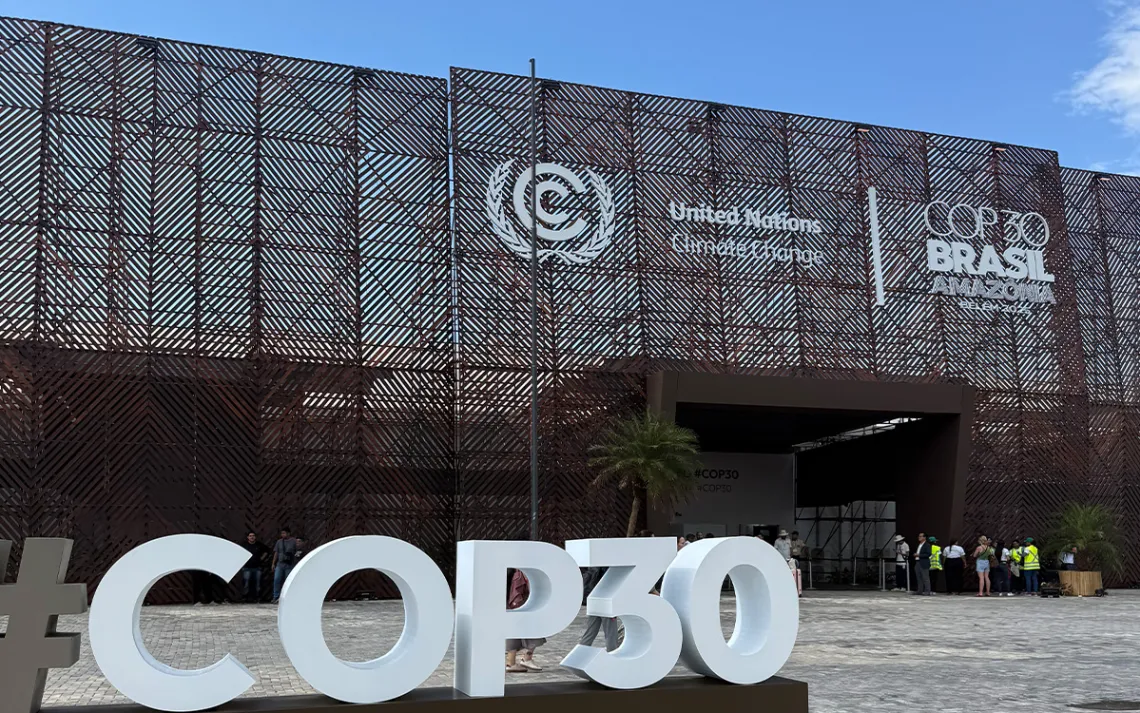
As global climate talks enter their third decade in the Amazonian city of Belém, Brazil, the world’s historically biggest greenhouse gas emitter, the United States, is absent. The Trump administration, which formally withdrew from the Paris Agreement upon taking power earlier this year, has declined to send a delegation to COP30 and shut down its Amazon operations via a diminished USAID.
“Working without an old ally like the US is obviously sad,” Martin Simonneau, acting head of advocacy at Cool Earth, told Sierra. “But working without Trump and his acolytes isn’t a setback. Losing US funding and presence in these global discussions comes with a silver lining.”
That silver lining is new leadership.
Attendees at this year’s Intergovernmental Panel on Climate Change Conference of the Parties (COP) are abuzz with talk of Chinese and Latin American leadership, South-South coalitions, and regional banks redefining climate finance without oversight from Washington, DC. Many are talking about an opportunity for new climate leadership—or what one delegate in Belém called “a gap in the market.”
“Ciao, bambino!” quipped Christiana Figueres, an architect of the Paris Agreement, reacting to the fact that Trump administration representatives were absent.
That absence has also opened the door for US local and state leaders to step in. California’s Gavin Newsom, for example, has made a splash at several appearances throughout the conference, alternately citing policy examples around green renewable technology while dismissing Trump’s climate denialism as “dumb.”
“The United States of America is as dumb as we want to be on this topic, but the state of California is not,” he said. “And so we are going to assert ourselves, we're going to lean in, and we are going to compete in this space.”
“The future of this planet won’t be determined by Trump. It will be determined, as it always has been, by people all over the world demanding action."
Simonneau believes the Trump administration will continue to shape climate negotiations with its fossil fuel agenda “even if they’re not in the room, through tariffs, sanctions, and pressure on countries that want decisive action.” But, he added, “the future of this planet won’t be determined by Trump. It will be determined, as it always has been, by people all over the world demanding action. And there are many, especially in the Global South, who will keep the Paris Agreement alive, with or without Washington’s applause.”
Diarmid Campbell-Lendrum, head of the climate change, energy, and air quality unit at the World Health Organization, agrees that the real winners are those moving forward. “The evidence speaks for itself,” he said. “Countries that strengthen health systems to cope with heat waves and climate risks, or transition to clean, cheap, renewable energy, give themselves healthier populations, environments, and economies, compared to those that don’t.”

The CDRI (Coalition for Disaster-Resilient Infrastructure) has installed cycle paths and zebra crossings to remind delegates that resilient cities start with thoughtful urban planning.
What happened to USAID?
One of the biggest shifts in the US presence involves USAID—one of the agencies the Trump administration has gutted since returning to power this year.
In 2017, during Trump’s first term, his administration formally withdrew from the Extractive Industries Transparency Initiative (EITI), a global body that promotes disclosure of payments made by oil, gas, and mining firms. In a 2019 Senate hearing on illicit mining, Jeffrey Haeni, then a senior USAID official, defended continued US backing of the EITI, saying the State Department still held a seat on its board and that “USAID provides $3 million per year to support the EITI secretariat and the implementation of EITI in other countries.”
That money has since vanished with USAID’s defunding, another casualty of Trump’s rollback of global climate and governance commitments.
For decades, USAID bankrolled conservation and Indigenous land governance. The gutting of the agency this year has left projects across the Amazon Basin stranded mid-stream. The consequences are tangible. The US produces around 25 percent of all historical carbon emissions, and its trade and investment patterns shaped much of the deforestation COP30 aims to address.
For decades, USAID tried to offset that damage, but now much of that infrastructure lies dormant. Environmental outlets report losses of at least $14.7 million in Brazil alone, halting reforestation work and Indigenous-led monitoring operations. Researchers who once relied on USAID-NASA satellite collaborations say the cuts already hinder their ability to track illegal logging.
USAID’s withdrawal dismantled decades of cooperation that kept conservation running.
“Working without the considerable funding that USAID used to provide to solve some of the world’s biggest issues, is [difficult],” said Simonneau. “[Pulling support for] community-led conservation and climate resilience in the Amazon at a time when Indigenous peoples are already dealing with fires, drought, and extractive pressure is not just shortsighted—it has real consequences for those on the front lines.”
Campbell-Lendrum said cuts in US funding and reductions from other high-income countries have already hurt developing nations.
“Climate change mainly exacerbates existing health problems,” he said, “facilitating the spread of diseases transmitted by biting insects or through contaminated food and water, and undermining food security with poorer and more vulnerable populations, such as children, the earliest and hardest hit. Cuts to programs that control these diseases not only take lives immediately but also increase the death toll from escalating climate hazards.”
“Nature is furious [at us]. The last two years have been devastating, and there will be more to come.”
The heat is on
Meanwhile, Brazil is taking the opportunity of hosting this year’s COP to assume its own leadership role. The country advanced a new initiative called the Forests Forever Facility, a proposed $125 billion endowment to pay nations to keep forests standing. Fifty-three countries have already signed its launch declaration.
Hordes of delegates ferrying to and from the shuttle buses at COP30 face one of two fates: endure the searing heat or be drenched in torrential rain. Either way, the environment is reminding everyone that the pressure is on.
Speaking to Sierra about the consequences of climate change on weather patterns and life in the Amazon, Seu Ladi, a forest guardian of Tupinambá heritage just across the Guamá River from the venue, said, “Nature is furious [at us]. The last two years have been devastating, and there will be more to come.”