Cuyahoga Valley National Park Is Both a Cautionary Tale and an Icon of Hope
National Park Service cuts could have long-term effects on Ohio’s signature park
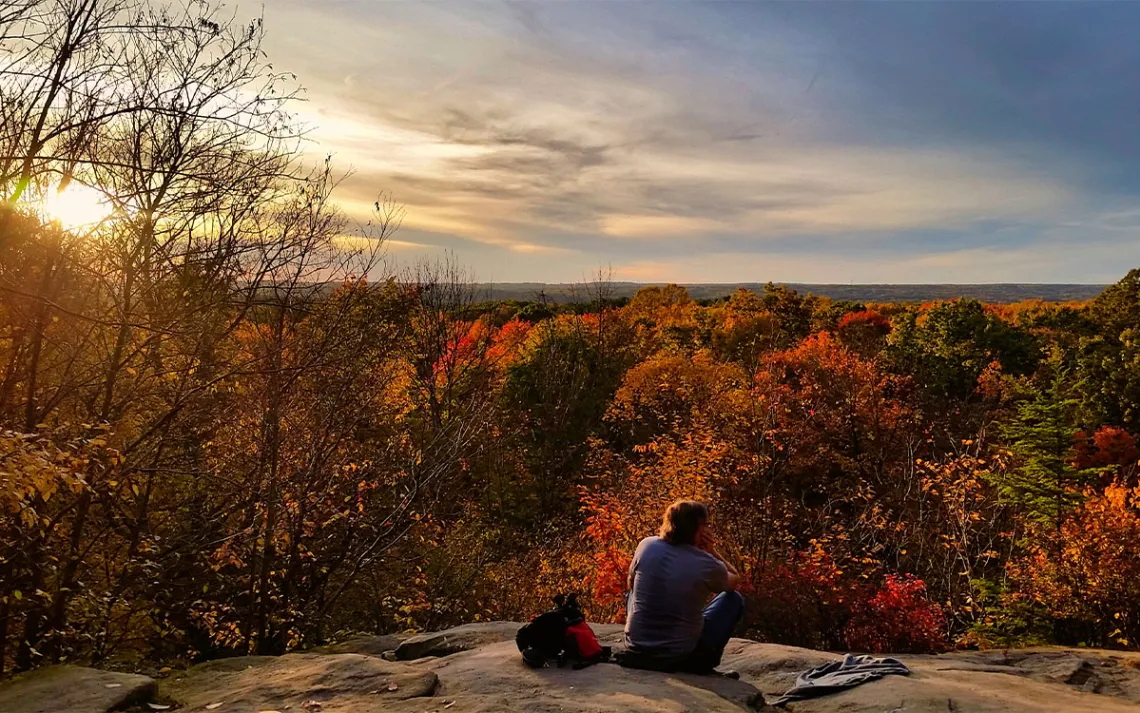
Photo by Brandon Withrow
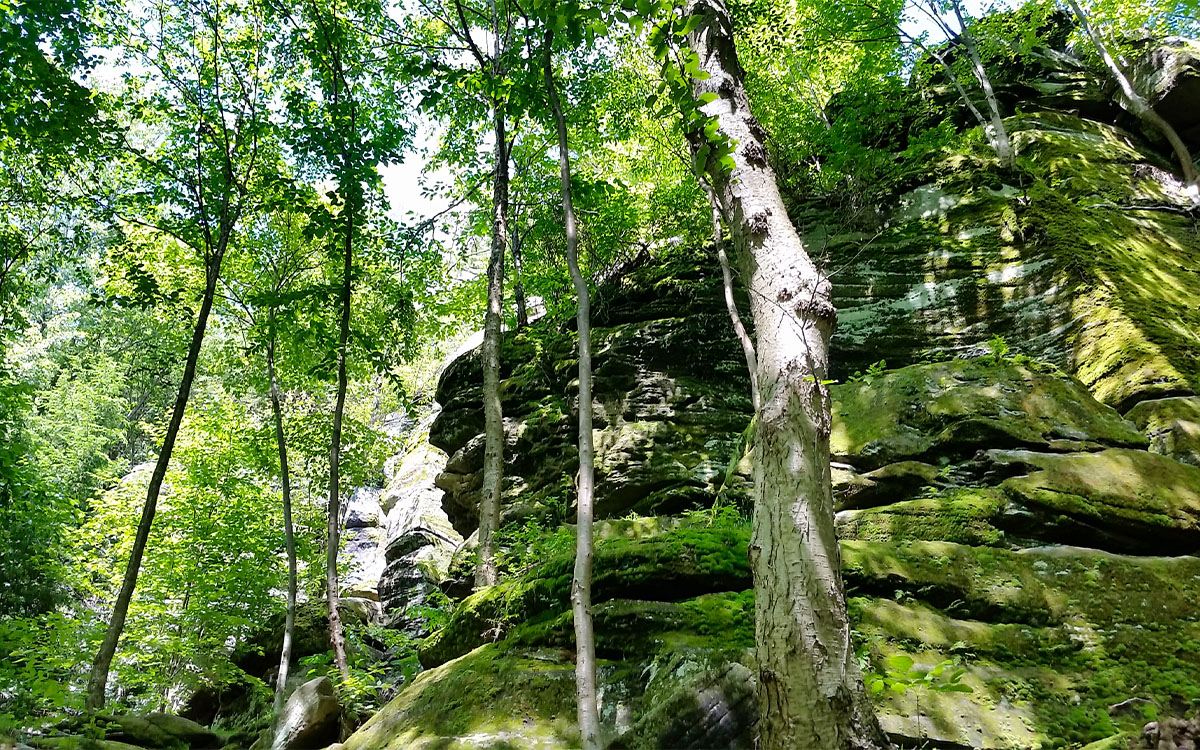
The Ledges Trail is one of my favorite spots to hike at Cuyahoga Valley National Park. A view from the cliff top in the fall opens up to a sea of orange and red hues. Below it is a winding path following old rock formations. As an Ohioan, it’s hard to imagine the once-pollution-plagued land in the park as anything but the beautiful place it is now.
At 33,000 acres, Cuyahoga Valley isn’t the largest national park, but it makes up for that in its triumphant origin story. Decades ago, the land and the Cuyahoga River that runs through it and Cleveland, were toxic. Today, it is a flourishing environmental success thanks to cleanups directed by the Environmental Protection Agency.
That success story is now in jeopardy because of the Trump administration’s ongoing effort to gut the National Park Service and neutralize the EPA.
“Right now we’re having a positive economic impact on Northeast Ohio—it's the 12th most visited in the country, of the national parks,” said Deb Yandala, the president and CEO of the Conservancy for Cuyahoga Valley National Park, the nonprofit, supporting partner for the park. (Cuyahoga Valley has made the top 10 most visited list in the past.) According to a recent report, the park supported 2,136 local jobs and had a local economic impact of $225 million on a $12 million annual budget.
Now roughly 13 percent of National Park Service employees have been pushed out of their jobs nationally since January, with more proposed cuts on the way. “It’s so questionable to me why you want to do anything to damage national parks when they're driving more money than they’re taking,” added Yandala.
“It’s so questionable to me why you want to do anything to damage national parks when they're driving more money than they’re taking."
A story of hope
For decades, the Cuyahoga River—or more accurately, the waste that chemical corporations dumped there—would catch fire. That same waste made it impossible to eat the river's fish, and it made those living in the area sick. It was said that no one drowned in that sludgy river; they only decayed.
The Cuyahoga caught fire roughly 14 times between 1868 and June 22, 1969—the last major fire that caught the attention of the nation. It was not the biggest fire the river had, nor even the only river to light up in the United States, but it happened as the environmental movement was picking up speed, and this made it a symbol for change.
“It is not an over-exaggeration that the Cuyahoga was a seminal part of establishing our modern environmental health protection system in the United States,” said Matthew Tejada, senior vice president for environmental health at the Natural Resources Defense Council. River fires, like the Cuyahoga's, were “watershed events in our society and our government.” Tejada once served as deputy assistant administrator for environmental justice within the EPA’s Office for Environmental Justice and External Civil Rights.
This critical moment caught the attention of President Richard Nixon. Never an environmental icon, Nixon still recognized the need for immediate change nationwide, leading him to form the EPA to address the nation’s problems.
“Clean air, clean water, open spaces—these should once again be the birthright of every American,” Nixon said during the State of the Union address in 1970. “If we act now, they can be.” Young Americans, he argued, will “reap the grim consequences of our failure to act … now if we are to prevent disaster later.”
The EPA and the Clean Air Act were created in December 1970. The Clean Water Act was made law in 1972. Nixon vetoed the highly bipartisan act over its cost, but his veto was immediately overridden in Congress. President Ford signed legislation to create the Cuyahoga Valley National Recreational Area in 1974, though he originally planned to veto it. (It was redesignated a national park in 2000.) Senator Robert Taft Jr. (R-Ohio) argued that it would damage the GOP in Ohio if he didn’t pass it.
The National Park Service began acquiring land from the state, like Virginia Kendall State Park, which includes The Ledges, and the EPA got to work on cleanups thanks to the 1980 Superfund Act, which used taxes and fines from polluting industries to help pay for them. Then in 1985, the EPA designated Cuyahoga’s infamous Krejci Dump a Superfund site. Krejci was a nearly 50-acre pile of industrial toxic waste that had gathered since the 1940s and was poisoning the land and water. The cleanup was completed in 2020 and the site opened to the public in 2021. Even the fish in the Cuyahoga River are finally safe enough to eat.
This year is the 50th anniversary of Cuyahoga Valley National Park. Cuyahoga has finally become a thriving natural space with restored wetlands and returning wildlife. But all that could change if the Trump administration continues to gut the National Park Service.
A cautionary tale
Among many of his environmentally destructive changes in his first term, President Trump rolled back over 100 EPA rules and cut national monuments. His second term is even more dangerous for parks, and the environment at large, as he is again eliminating important EPA rules, weakening the Clean Water Act by reducing the restrictions on some “forever chemicals,” and putting wildlife habitat at risk by redefining key terms in the Endangered Species Act.
The current direction and pace of the Trump administration’s reversals will be devastating. The elimination of EPA jobs, offices and grants, and scientists working on climate research, along with attempts to pressure NPS employees to voluntarily leave are adding up to a problem quickly.
Yandala believes the Park Service may experience a death by a thousand cuts. “I think there are numerous small tipping points, [that] are already in, that could lead to some major tipping points,” she said. She worries about volunteer management, guest management in real time, and the protection of natural resources. Loss of jobs means a loss of “institutional knowledge,” she said, “and the ability to run these parks well and safely.”
For Tejada, even with the improvements for environmental justice that happened under President Joe Biden, the EPA’s protections pushed through the government’s archaic infrastructure were never fully enough. Now, he sees the Trump administration as engaging in an assault like never seen before.
“We’re looking at generational damage,” said Tejada. “With this all-out assault, and their moves to gut the civil service—and to really dismantle the structure of our government from the inside—that’s not something you can just recover from in two years, or four, or eight. . . . We’re looking at 20 or 30 years.”