 The Magazine of The Sierra Club
Effort to Unleash Cattle on Public Land Spells Trouble for Ecosystem Health
Conservation groups warn of the consequences of more livestock grazing
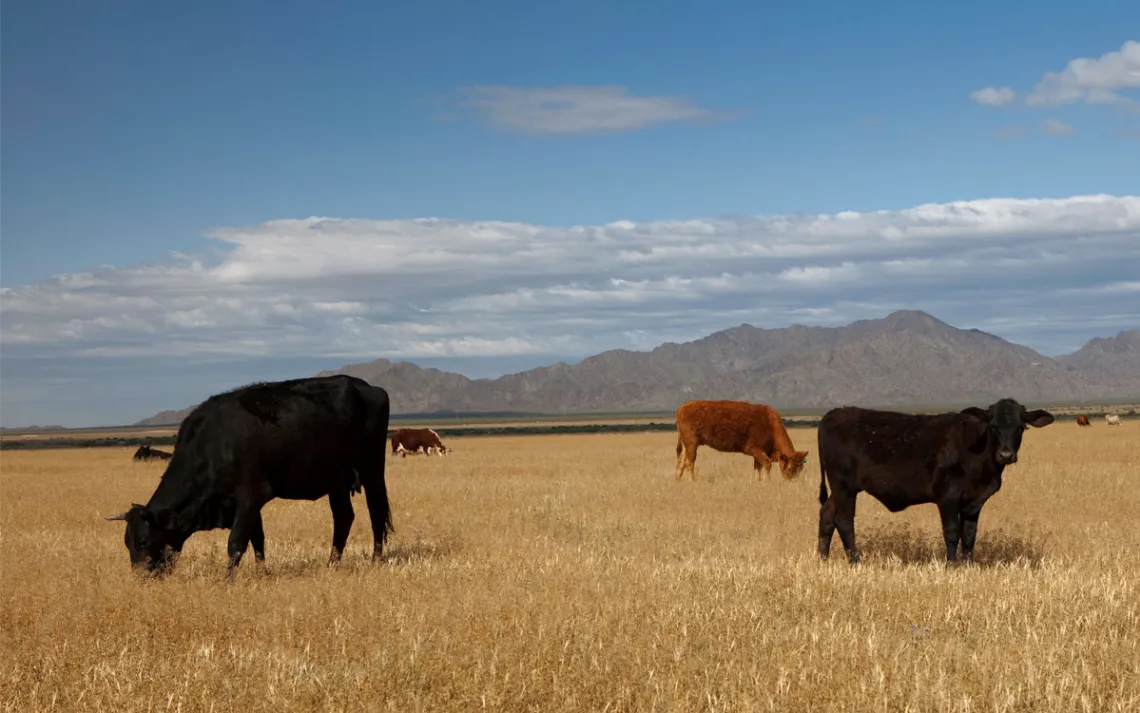
Photo courtesy of Dusty Pixel photography/Getty Images
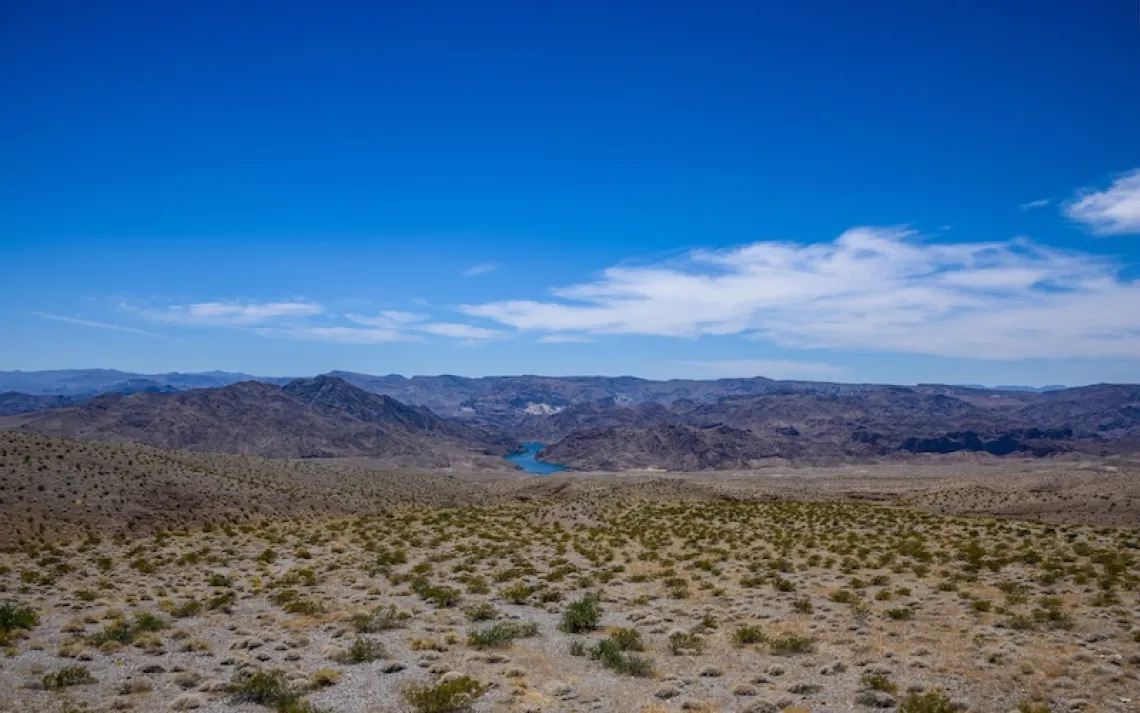
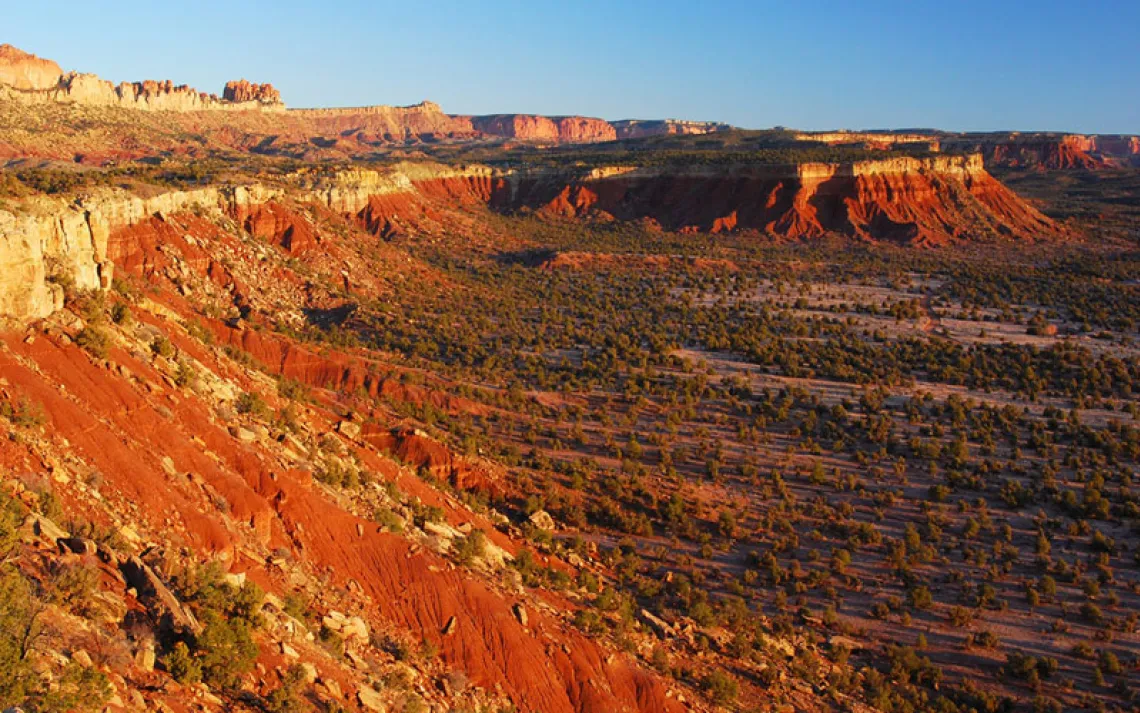
The Bureau of Land Management oversees nearly 245 million acres of public land, an area larger than Germany and France combined. Millions of cattle graze across half of that acreage. Given the scale of the federal grazing program, nearly every presidential administration has tried to reshape it, and President Trump's administration is no different.
This spring, the BLM announced a suite of proposed changes that, if finalized, would represent the first major revision to federal grazing regulations since 1995. The proposal follows an earlier effort launched in 2020 under the first Trump administration to revise federal grazing regulations. Now, the administration says that the goal is to modernize an outdated grazing system, streamline the permitting process for obtaining permission to graze on public land, and strengthen the American beef industry.
But conservation groups Sierra spoke to said the current proposal is not only disconnected from the process that started in 2020—it could have dire consequences on wildlife and other ecosystems.
“This all doesn't come without a cost,” said Josh Osher, public policy director at the Western Watersheds Project. “That cost is more degraded streams and rivers. It is forage that's not available for wildlife. It's about more fences that are going to create more conflicts for wildlife movement.”
The proposal has two main components: changes to how livestock grazing is administered and an expanded use of rangeland health standards—the benchmarks the BLM uses to evaluate the ecological condition of the land. These standards would apply to all BLM-managed lands, not just those used for grazing, which the administration says would help ensure public lands remain healthy regardless of their use. The changes would also simplify permit renewals and transfers, give ranchers greater flexibility in grazing schedules, and limit grazing permits to commercial livestock operations (conservation-focused grazing projects would no longer qualify).
Despite the administration's emphasis on improving the health of public lands, conservation groups say many grazing allotments are already degraded. Data from the Public Employees for Environmental Responsibility shows that at least 37 million acres fail to meet the BLM’s rangeland health standards because of livestock grazing. Osher told Sierra that the problem could be more widespread because roughly 30 percent of the BLM’s grazing land has never been assessed. And yet much of it borders areas that have already failed health standards.
“Even the ones that are passing often aren't healthy,” he said. “The BLM sets too low a bar for success, allowing degraded land to pass if conditions show some improvement. It's still severely degraded, but according to the agency, now it's healthy, and they're not going to do anything else to make it better.”
Osher said expanding livestock grazing, particularly into protected landscapes that evolved with native wildlife such as pronghorn, could place additional pressure on already fragile ecosystems. Much of the American West, he said, is simply not suited to increased grazing. “The grass doesn't grow fast enough,” he said. “And the landscape is actually not that resilient.”
Osher added that heavy grazing also could create conditions that allow invasive plants to replace native vegetation when livestock are the dominant presence.
Rachael Hamby, policy director at the Center for Western Priorities, said sagebrush habitats illustrate how that process unfolds. As cattle trample native vegetation, invasive cheatgrass can spread. Because cheatgrass is highly flammable, its spread increases the risk of destructive wildfires while replacing native plants that support wildlife and better withstand fire.
She also says that the impact of expanding grazing could extend beyond vegetation. “As native plants disappear, wildlife that depends on them for food and habitat is displaced into smaller areas of undisturbed land, where populations may no longer have enough resources to survive,” Hamby said. “You wreck two wildlife populations, and it's very difficult to recover from that.”
She warned that livestock could also pollute water quality through stream crossing and increased erosion. Researchers have already witnessed evidence of similar impacts on other types of public land. In 2023, conservation groups raised concerns with the Forest Service about the removal of stray cattle from New Mexico's Gila Wilderness after concluding they were trampling streams, leading to erosion and sedimentation.
Giving cattle access to sensitive areas, Osher said, could also mean more fencing in areas that currently serve as important wildlife movement corridors, hindering the movement of native species. And despite claims of boosting the beef industry, Osher said it is unlikely to significantly help because the changes primarily affect arid Western states.
“Public lands in the West produce less than 1.6 percent of the forage consumed by US livestock; they contribute very little to the country's overall beef supply,” he said. “If all of the public land ranching went away tomorrow, you wouldn't notice it in terms of prices or beef supply. It would be swallowed up by imports or production in other parts of the country that aren’t as arid as the West.”
Roughly two-thirds of livestock grazing on BLM land is controlled by just 10 percent of ranchers. According to Osher, the BLM proposal would further solidify that imbalance. Expanding into previously ungrazed areas, he said, requires significant investment in infrastructure, such as roads and fences, which many smaller ranchers cannot afford, leaving expansion largely to billionaires and large corporations.
“It’s not about forage for cows or increasing beef supply,” he said. “It’s about control of the land and the water by a select few.”
The 60-day comment period for the BLM’s proposal closed on July 13 and received more than 116,000 comments. Many opposed the changes. Ranchers criticized what they viewed as additional regulation and government oversight, while tribal commenters said the proposal's requirement that grazing permits be limited to production-oriented livestock operations could prevent tribal nations from obtaining permits for bison herds raised primarily for cultural reasons and ecological restoration.
Among the conservation groups that strongly opposed the proposed changes is Defenders of Wildlife. In a comment letter submitted to the BLM, staff with the organization stated that the changes could weaken the process the BLM uses to evaluate the condition of public lands, making it harder for land managers to identify degraded landscapes early and take corrective action before the damage becomes too severe.
“Further, shutting out scientists, conservation groups, and the general public from having a say in decisions that impact public lands is dangerous and flat-out wrong,” said Maddy Munson, senior policy and planning specialist at Defenders of Wildlife, in a July 13 press release.
Hamby said the level of opposition is a reflection of what she has seen in previous federal public lands proposals. “There are a lot of public comment periods where the Center for Western Priorities has done an analysis, and in so many cases, you'll see 90, 95, 98 percent of comments are opposed to whatever change the administration is proposing,” she said. “They know that public opinion is not on their side on these issues, especially in the West, so they're trying to do anything they can to avoid seeking public comment and having to deal with it.”
As the BLM weighs the next steps for the proposal, conservation groups say it has exposed a broader debate over how public lands should be managed in the future without degrading other ecosystems, especially in a hotter and drier West. For a start, Osher suggested that federal land managers need to assess what public lands can support rather than trying to maximize returns.
“Maybe it's time to dedicate these public lands to healthy wildlife habitat,” he said. “And if grazing is 100 percent compatible with that, then let's manage it well, let's make sure the public can be involved in the decision-making, and let's scale it to what's ecologically appropriate.”
Hamby, on the other hand, believes that the realities of a changing climate will force us to take a different approach to grazing management in the future. “It probably will eventually look like a reduction in grazing,” she said. “The vegetation's not going to be there, especially if we graze and trample all of it now. The more we adapt our public lands management to the reality that is coming, the better we'll be able to weather it.”
Editor's note: An earlier version of this article misstated the number of comments on the BLM's proposal and the acreage failing range land health standards. Instead of 6,000, the BLM received over 116,000 comments. And instead of 1 million acres, at least 37 million acres are failing to meet health standards.